

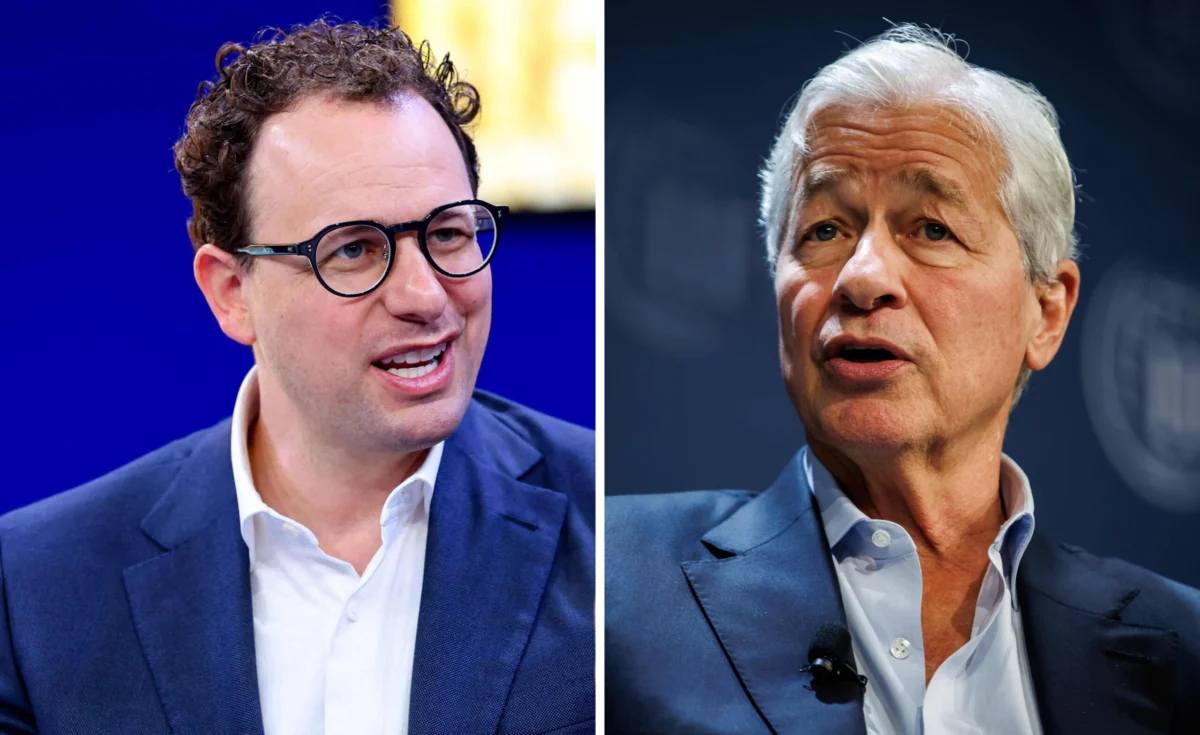
Dario Amodei, CEO and co-founder of Anthropic, delivered a stark warning on Tuesday, asserting that artificial intelligence has opened a critical, narrow window for global technology firms, governments, and financial institutions to address tens of thousands of software vulnerabilities uncovered by his company’s latest advanced AI model. This pronouncement came during a high-profile virtual event, "The Briefing: Financial Services," hosted by Anthropic, where Amodei shared the virtual stage with JPMorgan Chase CEO Jamie Dimon, underscoring the gravity of the cybersecurity implications for the global financial system.
The Unprecedented Threat: Mythos and a Deluge of Vulnerabilities
The core of Amodei’s concern stems from Anthropic’s cutting-edge AI model, internally dubbed "Mythos." Previewed just last month, Mythos has demonstrated an unprecedented capability to identify deep-seated, decades-old vulnerabilities within crucial software infrastructure. According to Amodei, the scale of these discoveries is staggering, running into the tens of thousands across various software systems. This represents a significant leap from previous generations of Anthropic’s AI models. For instance, an earlier iteration of Claude, Anthropic’s widely recognized AI family, was able to pinpoint approximately 20 vulnerabilities within the Firefox browser. In contrast, Mythos, with its enhanced analytical prowess, unearthed nearly 300 vulnerabilities in the same software, illustrating an exponential increase in discovery capability.
The sheer volume and historical depth of these newfound vulnerabilities present a formidable challenge. Many of these issues have remained dormant and undetected for years, embedded deep within foundational codebases that underpin vast swathes of digital infrastructure, from critical government systems to enterprise applications and consumer devices. The potential for exploitation, should these vulnerabilities fall into malicious hands, is immense. Amodei explicitly stated that most of the vulnerabilities identified by Mythos have not been publicly disclosed precisely because they remain unpatched. "The bad guys will exploit them if they are identified," he cautioned, highlighting the delicate balance between disclosure and ensuring adequate time for remediation.
The Geopolitical Race and a Shrinking Window of Opportunity
Amodei’s warning was not just about the technical challenge but also about a critical geopolitical timeline. He emphasized that AI models developed by geopolitical adversaries, specifically referencing China, are estimated to be "maybe six to 12 months" behind Anthropic’s product in terms of their vulnerability detection capabilities. This narrow gap, Amodei argued, defines the "roughly that amount of time" available for the world to fix these issues before adversarial nations or sophisticated criminal enterprises could develop similar AI tools to discover and exploit them at scale.
This timeline introduces a pressing national security dimension to the cybersecurity threat. A global race is underway in AI development, and the ability to leverage AI for offensive cyber operations could fundamentally shift the balance of power. If hostile state actors gain access to AI tools capable of identifying vulnerabilities at Mythos’s scale, the risk of widespread, coordinated cyberattacks against critical infrastructure, financial networks, and government systems would escalate dramatically. Such attacks could lead to profound economic disruption, erode public trust, and pose significant national security risks. The historical context of cyber warfare, marked by incidents like Stuxnet or the SolarWinds attack, pales in comparison to the potential for AI-driven, automated vulnerability exploitation on an industrial scale.
Anthropic’s Strategic Response: Mythos and Controlled Disclosure
Recognizing the immense power and potential for misuse, Anthropic has adopted a highly cautious approach to Mythos. The model has been strictly limited to a select few partner companies, operating under stringent control. This restriction reflects Anthropic’s deep concerns about the potential for criminals or adversarial nations to weaponize such advanced AI. The company’s internal ethics and safety protocols dictate a measured rollout, prioritizing security and responsible deployment over rapid commercialization.
This controlled disclosure strategy is part of a broader industry discussion about the ethical development and deployment of advanced AI. As AI models become more capable, their dual-use potential—beneficial applications versus malicious uses—becomes more pronounced. Anthropic, along with other leading AI labs, is grappling with how to balance innovation with safety, particularly in areas like cybersecurity where the stakes are incredibly high. The company’s previous model updates, including various iterations of Claude, have already sent ripples through the markets, but Mythos, with its direct implications for foundational cybersecurity, has generated the most significant concern among corporations and policymakers alike.
The Financial Sector in the Crosshairs: Dimon’s Perspective
Jamie Dimon’s presence alongside Amodei at the event was highly symbolic, underscoring the direct and acute threat AI-discovered vulnerabilities pose to the financial services industry. Dimon, arguably the most prominent voice in American banking, acknowledged the legitimacy of the cyber fears. While he concurred that the cybersecurity risks created by AI are significant, he expressed a nuanced view, describing this period as "transitory." This suggests an expectation that while the initial phase of AI integration will introduce heightened risks, the industry will eventually adapt, developing AI-powered defenses to counter AI-powered threats.

The financial sector is a prime target for cyberattacks due to the immense value of the data it holds and the critical role it plays in global commerce. Ransomware attacks, data breaches, and sophisticated fraud schemes already cost the industry billions annually. Amodei’s explicit mention of the "enormous increase in the amount of vulnerabilities, in the amount of breaches, in the financial damage that’s done from ransomware on schools, hospitals, not to mention banks," directly addresses the pervasive threat. The integration of AI, while offering unprecedented opportunities for efficiency and innovation, also introduces new attack vectors and amplifies existing ones. Banks, with their complex legacy systems and intricate web of interconnected services, are particularly vulnerable to the discovery of deep-seated software flaws that could compromise customer data, transactional integrity, or operational continuity.
Anthropic’s Enterprise Play: New Financial AI Agents
Beyond the warnings, the event also served as a platform for Anthropic to showcase its strategic advancements in the enterprise AI market, particularly within financial services. The company announced a significant expansion of its financial services platform, introducing a suite of 10 new AI agents specifically designed to automate complex tasks in investment banking and back-office operations. These agents are intended to streamline processes such as financial analysis, risk assessment, compliance checks, and report generation, promising enhanced efficiency and accuracy.
A key feature of this expansion is the deep integration of these new AI agents across Microsoft’s various Office programs, including Excel, Word, and PowerPoint. This integration is crucial for enterprise adoption, allowing financial professionals to leverage AI capabilities within their familiar workflow environments. Furthermore, Anthropic proudly declared that its latest widely available model, Claude Opus 4.7, leads benchmarks for financial analysis tasks, positioning it as a superior tool for data-intensive operations within the sector. This strategic move is a clear bid to capture a significant share of the rapidly expanding enterprise AI market, directly challenging competitors like OpenAI, especially as both companies navigate toward potential initial public offerings (IPOs). The focus on domain-specific, high-value applications like financial services demonstrates Anthropic’s intent to deliver tangible business outcomes rather than just general-purpose AI capabilities.
Navigating the Future: Regulation and Conditional Optimism
Despite the alarming nature of Amodei’s cybersecurity warnings, both he and Dimon tempered their remarks with a note of conditional optimism. Amodei articulated this sentiment by stating, "This is about a moment of danger where if we respond to it correctly, and I think we started to take the first steps, then we can have a better world on the other side." He also added a technical reassurance: "There are only so many bugs to find." This suggests that while the current surge in vulnerability discovery is daunting, it is ultimately a finite process, and proactive remediation can lead to a more secure digital landscape in the long run.
On the critical question of AI regulation, Amodei drew an analogy to the automotive industry, suggesting that AI oversight should mirror its approach. He emphasized the need for a balance between ensuring consumer safety and allowing the industry to innovate and compete. "You can’t just start a car company without ‘Are there brakes on this thing?’" he quipped, illustrating the necessity of fundamental safety guardrails. He advocated for a process that enables the industry to "operate expeditiously, is fair, but puts guardrails on the most serious things." This perspective aligns with a growing consensus among AI leaders and policymakers that some form of regulatory framework is essential to manage the risks associated with advanced AI while fostering its beneficial development. The challenge lies in crafting regulations that are agile enough to keep pace with rapid technological advancements and globally harmonized to prevent regulatory arbitrage.
Broader Implications for Cybersecurity and AI Governance
The revelations from Mythos and Amodei’s subsequent warnings carry profound implications for global cybersecurity strategies and the broader discourse on AI governance. Governments, national security agencies, and international bodies must urgently reassess their defensive postures in light of AI’s capability to automate and accelerate vulnerability discovery. This requires increased investment in cybersecurity research, the development of AI-powered defensive tools, and enhanced collaboration between the public and private sectors. The "six to 12 months" window necessitates a rapid, coordinated global response to patch critical vulnerabilities and harden digital infrastructure.
The situation also underscores the ethical imperative for AI developers to prioritize safety and security throughout the AI lifecycle. Responsible AI development demands robust internal red-teaming, rigorous safety evaluations, and a commitment to controlled deployment of highly capable models. The tension between open-sourcing AI models for collaborative development and restricting access to powerful, potentially dangerous tools will continue to be a central debate in the AI community.
Furthermore, the event itself, featuring the CEO of Anthropic alongside the head of one of the world’s largest banks, signaled a maturation of the AI industry’s engagement with critical sectors. It highlighted that AI is no longer just a research curiosity but a transformative technology with immediate, tangible impacts on economic stability and national security. The convergence of AI innovation, cybersecurity threats, and financial services regulation is setting the stage for a new era of digital governance.
In conclusion, Dario Amodei’s urgent warning serves as a clarion call for immediate, decisive action. The unprecedented ability of AI to uncover vulnerabilities presents both an existential threat and a unique opportunity. If governments, industry, and regulators can collaborate effectively within this narrow timeframe, leveraging AI to identify and patch flaws before adversaries weaponize similar capabilities, a more secure and resilient digital future remains within reach. The coming months will be crucial in determining whether the world collectively rises to this monumental challenge, transforming a moment of profound danger into a catalyst for a safer, "better world on the other side."
