

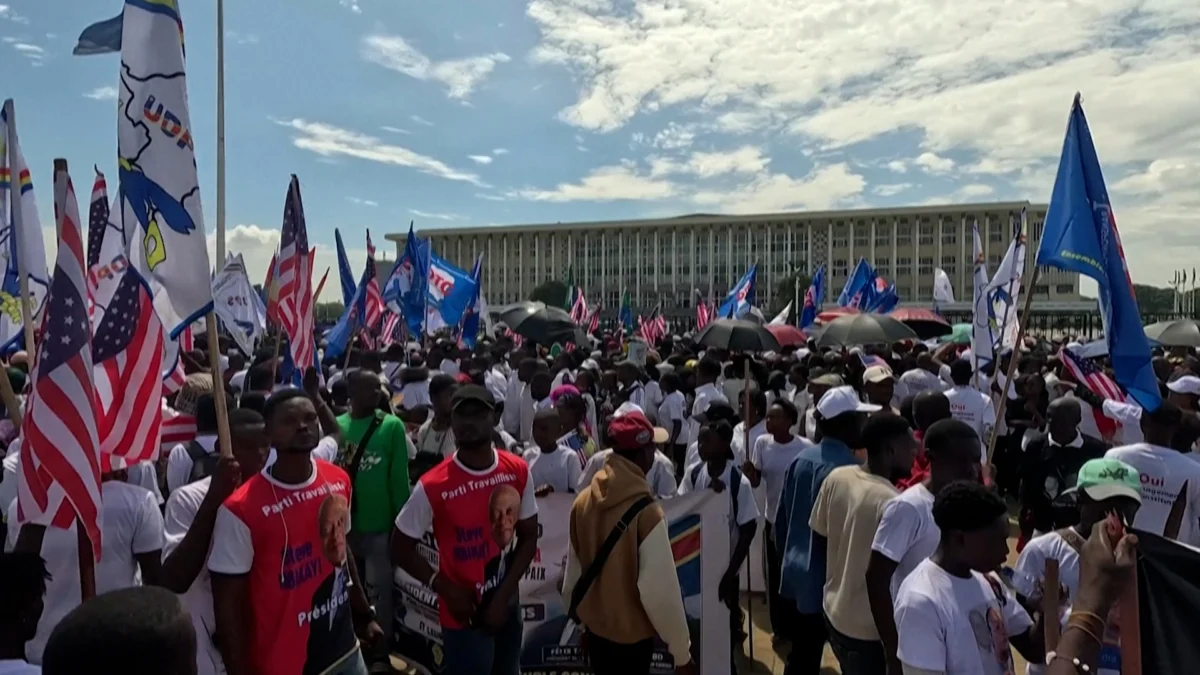
On May 5, 2026, the Democratic Republic of Congo (DRC) witnessed a dramatic escalation of political tensions when pro-government protesters in Kinshasa set ablaze the headquarters of a prominent political party widely associated with former President Joseph Kabila. The fiery demonstration was explicitly staged in solidarity with anticipated or recently announced United States sanctions against Kabila, whom protesters accuse of covertly backing various rebel groups operating in the volatile eastern regions of the country. The incident underscores the deep political fractures within the DRC and highlights the persistent shadow cast by Kabila’s legacy, even years after his official departure from the presidency.
The protest, which began peacefully in the early hours of the day, quickly gained momentum as thousands of citizens, many waving flags of the ruling Union for Democracy and Social Progress (UDPS) party and chanting anti-Kabila slogans, converged on the streets of the capital. The demonstration reached its climax when a faction of the protesters targeted the building identified as a key operational base for political entities aligned with the former head of state. Eyewitnesses reported seeing smoke billowing from the structure as emergency services struggled to navigate the impassable streets blocked by the surging crowds. While no immediate reports of serious injuries or fatalities emerged, the act of arson represents a significant and violent expression of public discontent and a direct challenge to Kabila’s enduring influence.
The Enduring Shadow of Joseph Kabila
Joseph Kabila’s tenure as president of the DRC spanned nearly two decades, from 2001 to 2019, following the assassination of his father, Laurent-Désiré Kabila. His presidency was marked by efforts to consolidate peace after years of civil war, but also by widespread accusations of corruption, human rights abuses, and a controversial extension of his term beyond constitutional limits. Despite stepping down in 2019 and overseeing the country’s first peaceful transfer of power to Félix Tshisekedi, Kabila has retained considerable political and economic influence. His political coalition, the Common Front for Congo (FCC), maintained a parliamentary majority and control over key state institutions for a significant period, leading to an often-strained cohabitation with President Tshisekedi’s administration. This complex power-sharing arrangement, which eventually dissolved, left deep fissures in the political landscape, with many seeing Kabila as a lingering obstacle to genuine reform and stability.
Critics, both domestic and international, have long pointed to Kabila’s alleged continued sway over elements of the military, intelligence services, and state-owned enterprises as evidence of his reluctance to fully relinquish power. The political party whose headquarters was targeted in the May 5th protest is widely understood to be a crucial vehicle for his residual influence, serving as a hub for his loyalists and a platform for his political maneuvering. The symbolic destruction of this facility by pro-government forces thus sends a powerful message about the current administration’s perceived mandate to dismantle the structures of Kabila’s patronage.
Allegations of Rebel Support and Regional Destabilization
The core accusation leveled against Joseph Kabila – that he is backing rebel groups – strikes at the heart of the DRC’s protracted security crisis. The eastern provinces of the DRC have been plagued by decades of conflict involving numerous armed groups, including the M23 rebels, the Allied Democratic Forces (ADF), and various Mai-Mai militias. These conflicts are driven by a complex web of factors, including ethnic tensions, competition over vast mineral resources (such as cobalt, coltan, and gold), and the spillover effects of regional proxy wars. The human cost has been staggering, with millions displaced and countless lives lost, making the DRC one of the world’s largest humanitarian crises. As of early 2026, estimates from the United Nations and humanitarian organizations indicate that over 6.9 million people are internally displaced within the DRC, with the majority concentrated in the conflict-affected eastern provinces. The proliferation of armed groups and the systematic targeting of civilians continue to exacerbate food insecurity, disrupt livelihoods, and deny access to basic services for millions.
Allegations of high-level political figures, including former presidents, secretly supporting these rebel factions are not new in the DRC. Such backing can provide armed groups with funding, logistics, and political leverage, prolonging conflicts and undermining efforts to establish peace and stability. The M23 rebellion, in particular, has seen resurgence in recent years, leading to renewed regional tensions and accusations, notably against Rwanda, of supporting the group – allegations Kigali consistently denies. Within this fraught context, any credible evidence linking a figure of Kabila’s stature to such groups would be perceived as an egregious act of treason and a direct threat to national security, justifying the strong reactions seen on the streets of Kinshasa. The US government, in considering sanctions, would likely have relied on intelligence assessments and evidence gathered from various sources, indicating a pattern of behavior or specific instances of support for groups designated as destabilizing actors.
US Sanctions: A Tool of Foreign Policy and Accountability
The United States has a long-standing policy of utilizing sanctions as a tool to promote human rights, combat corruption, and foster democratic governance globally. The potential or confirmed imposition of US sanctions against Joseph Kabila would likely fall under frameworks such as the Magnitsky Act or similar executive orders targeting individuals involved in serious human rights abuses, significant corruption, or actions that undermine peace and security. Previous US sanctions against Congolese officials have been implemented for electoral fraud, human rights violations, and obstruction of humanitarian efforts. For instance, in 2017, the US sanctioned several high-ranking Congolese officials for human rights abuses and undermining democratic processes during the protracted electoral crisis under Kabila.
Sanctions against a former head of state carry significant symbolic and practical weight. They typically involve asset freezes within US jurisdiction, prohibitions on transactions with US persons, and visa restrictions, effectively limiting the individual’s ability to travel internationally and conduct financial dealings. The US rationale behind such measures is often multi-faceted: to hold individuals accountable for their actions, to deter others from engaging in similar behavior, and to signal international support for good governance and stability. For the DRC, US sanctions against Kabila would represent a powerful endorsement of the Tshisekedi administration’s stated commitment to fighting corruption and bringing stability to the East, even as they risk further polarizing the domestic political landscape. The timing of the sanctions, coinciding with persistent insecurity in the eastern DRC, suggests a deliberate effort by Washington to address root causes of conflict and send a clear message about accountability for those perceived to be perpetuating violence.
Chronology of Mounting Tensions
The events of May 5, 2026, were not an isolated incident but rather the culmination of a period of heightened political and security tensions in the DRC:
- Late 2024 – Early 2025: Growing international concern over the resurgence of armed groups in eastern DRC, particularly M23, and increased humanitarian crises. Reports from UN experts and human rights organizations begin to hint at external support for these groups, without explicitly naming high-profile Congolese individuals.
- Mid-2025: President Tshisekedi’s administration publicly reaffirms its commitment to national security and expresses frustration with lingering destabilizing forces, often alluding to "internal enemies" without direct accusations. Diplomatic channels between Kinshasa and Washington intensify discussions on security cooperation.
- Late 2025: Confidential intelligence reports allegedly linking high-ranking former officials, including Joseph Kabila, to various rebel groups begin circulating among diplomatic circles and international security agencies. The US Treasury Department and State Department are reportedly reviewing evidence for potential targeted sanctions.
- February – March 2026: Key US officials, including Assistant Secretaries of State, make visits to the DRC and publicly reiterate the US commitment to accountability for those undermining peace and stability in the Great Lakes region. These statements are widely interpreted as a precursor to potential sanctions.
- April 2026: Media leaks, citing anonymous US government sources, indicate that sanctions against Joseph Kabila are imminent, citing his alleged support for rebel groups that destabilize the eastern DRC and perpetuate human rights abuses. This news galvanizes pro-government factions within the DRC.
- May 5, 2026: Pro-government protests erupt in Kinshasa, culminating in the burning of the Kabila-linked party headquarters, explicitly in support of the US sanctions.
Reactions from Key Stakeholders
The dramatic events in Kinshasa and the impending US sanctions elicited a range of reactions from various parties:
- DRC Government (President Tshisekedi’s Administration): While condemning any acts of violence and property destruction, official statements from the government generally acknowledged the "legitimate anger" of the Congolese people against those perceived to be undermining national security. A spokesperson for the Ministry of Interior stated, "The government respects the right to peaceful protest but urges all citizens to refrain from violence. However, the depth of public frustration against those who perpetuate conflict and suffering in our eastern provinces is undeniable, and we remain committed to working with international partners to hold all destabilizing actors accountable." This nuanced stance allows the government to appear to uphold law and order while tacitly benefiting from the public’s anti-Kabila sentiment.
- Joseph Kabila’s Political Camp (e.g., PPRD and FCC loyalists): Kabila’s allies vehemently condemned the attack on their party headquarters, labeling it an act of politically motivated terrorism and an assault on democratic institutions. In a press conference, a senior official from the former ruling party declared, "This barbaric act is a clear attempt to intimidate and silence the political opposition. The allegations against President Kabila are baseless fabrications designed to persecute him politically and divert attention from the current administration’s failures. We call for an immediate, independent investigation into this arson and for the protection of all political parties." They also denounced the US sanctions as an unwarranted interference in DRC’s sovereign affairs and a partisan move.
- United States Department of State: A statement from the US State Department acknowledged the protests and reiterated the US commitment to promoting peace and stability in the DRC. While condemning the violence, the statement emphasized the importance of accountability. "The United States remains steadfast in its support for the Congolese people’s aspirations for peace, democracy, and prosperity. We will continue to use all appropriate tools to hold accountable those who fuel conflict, commit human rights abuses, and undermine democratic processes in the Democratic Republic of Congo." The statement did not explicitly confirm the sanctions at the time of the protest but strongly hinted at their inevitability, reinforcing the US stance.
- Human Rights Organizations and Civil Society: Congolese and international human rights groups expressed alarm over the escalating violence. "While the demand for accountability for those who destabilize the East is legitimate, resorting to arson sets a dangerous precedent," stated a representative from a prominent Kinshasa-based NGO. "The government must ensure that investigations are conducted swiftly and impartially, and that justice is pursued through legal channels, not street vigilantism. The underlying issues of impunity and political manipulation must be addressed comprehensively." They also urged the international community to maintain pressure for genuine reforms and to ensure that sanctions are precisely targeted and do not inadvertently harm the wider population.
- Regional Bodies (African Union, SADC, EAC): Regional organizations generally issued calls for calm and dialogue. The African Union chairperson urged all Congolese political actors to "prioritize national cohesion and stability, and to resolve any differences through peaceful and legal means, respecting the rule of law." There was also an emphasis on the need to address the root causes of conflict in the eastern DRC and to uphold regional peace and security frameworks.
Broader Impact and Implications
The May 5th protest and the backdrop of US sanctions against Joseph Kabila carry significant implications for the DRC’s political, security, and economic future:
Political Implications: The burning of the Kabila-linked headquarters marks a new, more confrontational phase in the ongoing power struggle between the current administration and the former president’s loyalists. It could further polarize the political landscape, potentially leading to increased instability ahead of future electoral cycles. President Tshisekedi’s government may gain political capital domestically by being seen as decisive against Kabila’s alleged machinations, but this also carries the risk of alienating a significant segment of the population still loyal to the former leader. The incident could also embolden other opposition groups to voice their dissent more forcefully, either in support of or against the anti-Kabila movement.
Security Implications: The direct attack on a political party’s infrastructure by pro-government demonstrators raises concerns about the breakdown of law and order and the potential for retaliatory violence. If Kabila’s faction perceives itself under direct assault, it could lead to further unrest, potentially exacerbating the already fragile security situation, particularly in the eastern regions where armed groups are rampant. The effectiveness of the US sanctions in deterring Kabila’s alleged support for rebels will be crucial. If the sanctions prove effective, they could contribute to a reduction in conflict in the East. However, if they are seen as purely political persecution, they could inadvertently push some actors further into illicit activities. The ongoing presence of international peacekeeping forces (MONUSCO) and regional forces like the East African Community Regional Force (EACRF) underscores the persistent need for external security assistance, which might be complicated by heightened internal political strife.
Economic Implications: Political instability and violence often deter foreign investment and disrupt economic activity. The DRC, rich in critical minerals essential for global industries, relies heavily on foreign direct investment. Events like the Kinshasa protest could increase perceived risk, potentially impacting the country’s economic growth prospects and the implementation of development projects. The uncertainty could also affect humanitarian aid efforts, as access to vulnerable populations becomes more challenging in an unstable environment. Furthermore, if Kabila’s alleged illicit networks are indeed disrupted by sanctions, there could be a short-term economic shock in certain sectors, but a long-term benefit if it leads to greater transparency and legitimate resource governance. The DRC’s GDP per capita, which stands at approximately $600-$700, reflecting widespread poverty, can ill afford further economic disruption.
International Relations: The US sanctions against Kabila reinforce Washington’s commitment to accountability in the DRC and could strengthen bilateral ties with the Tshisekedi administration, provided the latter demonstrates continued progress on governance and security reforms. The move could also encourage other international partners, particularly European Union members, to consider similar measures or to increase their support for anti-corruption and stability initiatives in the DRC. However, it also risks being perceived by some nations as an infringement on national sovereignty, potentially leading to diplomatic friction. The broader implication is a stronger international stance against leaders who, even after leaving office, continue to destabilize their countries through illicit means.
In conclusion, the May 5, 2026, protest and the US sanctions against Joseph Kabila represent a pivotal moment in the Democratic Republic of Congo’s ongoing struggle for peace, stability, and democratic consolidation. While the public outpouring of anger against Kabila’s alleged actions signals a strong desire for accountability, the violent nature of the protest underscores the fragility of the political environment. The true measure of these events will be their long-term impact on the DRC’s ability to address the root causes of conflict in its eastern provinces, establish robust democratic institutions, and ensure that justice prevails for all its citizens.
