

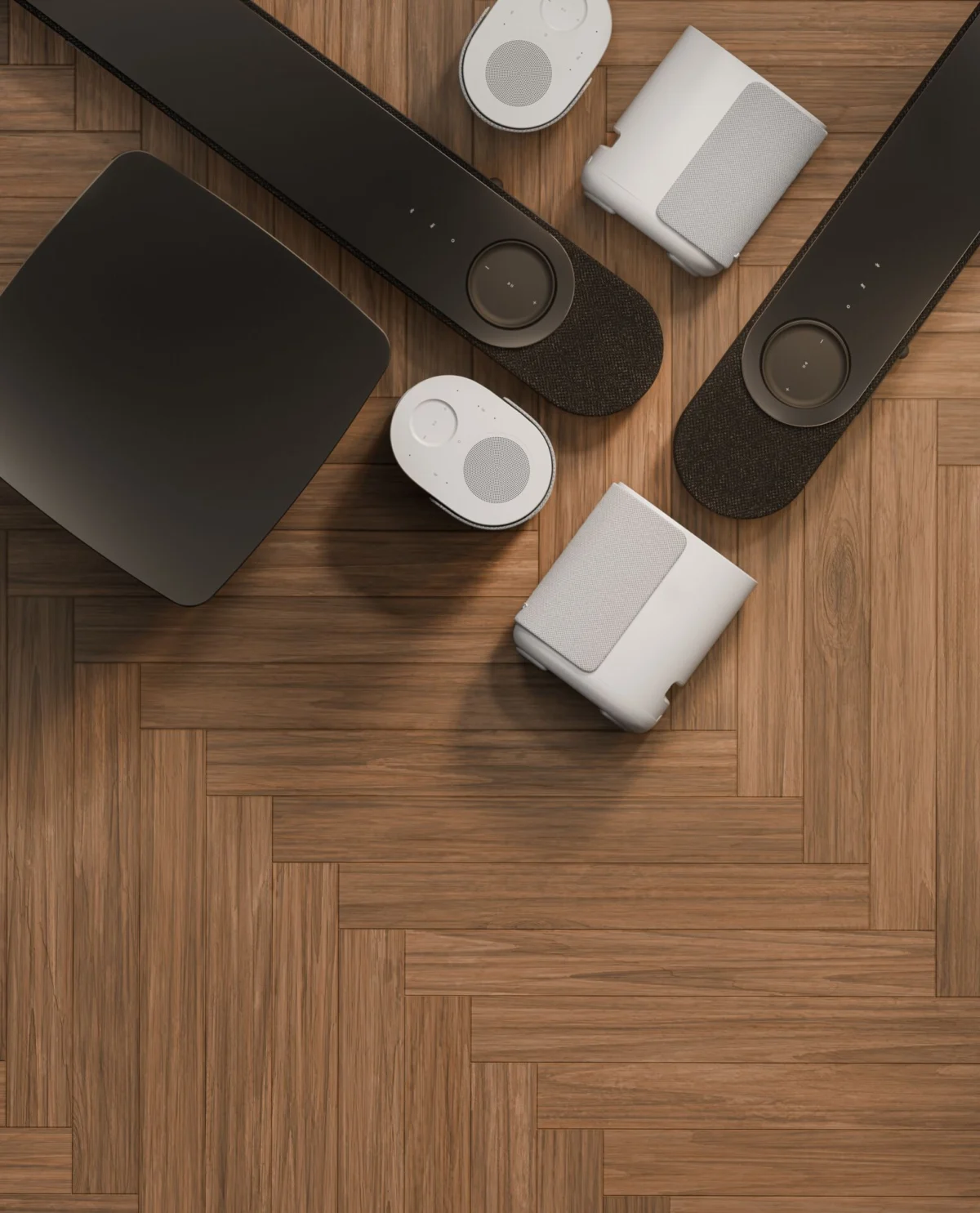
Bose Corporation has officially announced its return to the high-end home audio segment with the launch of the Lifestyle Collection, a comprehensive suite of premium products designed to integrate seamlessly into modern living spaces. The new lineup, which includes the Lifestyle Ultra Soundbar, the Lifestyle Ultra Speaker, and the Lifestyle Ultra Subwoofer, represents a strategic "re-entry" into the home speaker market for the Framingham-based company. These products feature a significant aesthetic overhaul, characterized by fabric-wrapped grilles and soft, rounded contours, signaling a shift toward "decor-friendly" technology that prioritizes both acoustic performance and interior design. The collection is scheduled to go on sale on May 15, with pre-orders currently open to the public.
The introduction of the Lifestyle Collection marks the revival of a brand name that holds significant historical weight within the audio industry. The original Bose Lifestyle series debuted in 1990 and was credited with pioneering the "home-theater-in-a-box" concept, emphasizing simplicity and a minimal footprint. For over three decades, the Lifestyle brand was synonymous with Bose’s approach to consumer electronics: high-performance audio delivered through user-friendly interfaces. However, as the industry shifted toward smart speakers and modular wireless systems, Bose retired the Lifestyle name in 2022. The 2024 revival suggests a recognition that consumers are once again seeking cohesive, high-fidelity systems that can serve as the centerpiece of a home’s entertainment ecosystem.
Technical Specifications and Product Breakdown
The flagship of the new series is the Lifestyle Ultra Soundbar, priced at $1,099. Bose executives have labeled this unit as the most advanced soundbar in the company’s storied history. The hardware configuration includes two upward-firing drivers specifically engineered for spatial audio, four front-facing drivers, a dedicated center tweeter for dialogue, and two proprietary PhaseGuide drivers. The PhaseGuide technology is designed to beam sound to the far left and right of the room, creating a "virtual" surround sound experience without the immediate need for rear satellite speakers.
Furthermore, the soundbar integrates "SpeechClarity" technology, which utilizes artificial intelligence to isolate and enhance vocal frequencies. This feature addresses a common consumer complaint regarding modern film mixing, where dialogue is often buried under loud sound effects or musical scores. The soundbar also features QuietPort technology, a flared-port design that reduces air turbulence to provide cleaner, more controlled bass response.

The Lifestyle Ultra Speaker, starting at $299, serves as the versatile entry point for the collection. It features an upward-firing driver for Dolby Atmos-style spatial audio, though the company has clarified that it does not currently support the specific Dolby Atmos Music format. For those seeking a unique aesthetic, Bose is offering a limited-edition model in "Driftwood Sand" for $349. The speaker is equipped with an auxiliary input, a rare inclusion in modern wireless speakers, which allows users to connect analog sources such as turntables—a nod to the ongoing vinyl resurgence.
Completing the trio is the Lifestyle Ultra Subwoofer, retailing for $899. The subwoofer utilizes Bose’s "CleanBass" technology, pairing a high-excursion woofer with the QuietPort acoustic opening. This combination is designed to deliver the deep, low-frequency extension typical of much larger cabinets while maintaining a compact, aesthetically pleasing form factor.
Connectivity and the Integration of Alexa+
In a significant technological milestone, the Lifestyle Collection is the first set of audio products to integrate with Alexa+, Amazon’s next-generation, LLM-powered (Large Language Model) version of its voice assistant. Available exclusively in the United States at launch, Alexa+ allows for more natural, conversational voice commands. Users can interact with the speakers using complex queries, such as asking the assistant to curate playlists based on specific moods or requesting information about the audio currently playing.
Beyond voice control, the speakers are fully Wi-Fi enabled and support a wide array of streaming protocols, including Apple AirPlay 2, Google Cast, and Spotify Connect. This marks a strategic shift in Bose’s software philosophy. While previous generations of Bose speakers relied heavily on the proprietary Bose Music app for multi-room grouping, the company is now delegating those duties to broader ecosystems. Users can group speakers via the Google Home app or Apple’s Home app, ensuring better interoperability with third-party speakers and smart home devices.
For local connectivity, the units support Bluetooth and traditional wired inputs. However, Bose has noted certain limitations regarding backward compatibility. While the new speakers can be grouped for stereo or home theater setups within the Bose app, the Lifestyle Ultra Subwoofer is only backward compatible with the older Bass Module 700. Additionally, when used with the new Lifestyle Ultra Soundbar, the subwoofer requires a wired connection to maintain the highest fidelity.

A New Era of Room Calibration
Historically, one of the barriers to achieving optimal sound in a home environment has been the physical acoustics of the room. Bose previously addressed this with its "ADAPTiQ" system, which required users to wear a specialized headset with built-in microphones while sitting in different locations around the room. The headset would measure how sound bounced off walls and furniture, allowing the system to calibrate its EQ settings accordingly.
With the Lifestyle Collection, Bose has modernized this process. The new onboarding experience, built into the redesigned Bose app, allows users to use the microphone on their iOS or Android device as the reference point for calibration. This software-driven approach eliminates the need for specialized hardware that consumers often misplaced or found cumbersome to use. By leveraging the processing power of modern smartphones, Bose claims the system can achieve a more precise acoustic map of the environment, ensuring that the spatial audio features of the Ultra Soundbar and Speaker perform optimally regardless of room shape.
Strategic Market Positioning and Industry Context
The timing of the Lifestyle Collection’s release is particularly noteworthy given the recent volatility in the premium home audio market. In 2024, Bose’s primary competitor, Sonos, faced significant backlash following a major app update that rendered many systems non-functional or stripped them of core features. This "Sonos crisis" left a vacuum in the market as long-time customers began exploring alternative ecosystems.
Gregory Haungs, Bose’s Senior Product Manager, indicated that while the company is aware of the current market dynamics, the Lifestyle Collection has been in development for approximately three years. This timeline suggests that Bose’s return to the home theater and multi-room space was a calculated, long-term strategic pivot rather than a reactive move. "This has been a plan of Bose for quite some time to enter back into this space and make sure we’re doing it right," Haungs stated in an interview with WIRED.
Market analysts suggest that Bose is positioning itself to capture the "premium-lifestyle" demographic—consumers who are willing to pay a higher price point for a brand they trust, provided the technology is reliable and the design is sophisticated. By adopting open standards like Google Cast and AirPlay, Bose is positioning itself as a more "open" alternative to the traditionally closed ecosystems of some competitors.

Chronology of the Bose Lifestyle Brand
To understand the significance of this launch, one must look at the timeline of Bose’s home audio evolution:
- 1964: Dr. Amar Bose founds Bose Corporation, focusing on psychoacoustics—the study of how humans perceive sound.
- 1990: The first "Lifestyle" music system is released, revolutionizing the market with its small "Jewel Cube" speakers and hideaway bass module.
- 2000s: Bose dominates the home theater market with various iterations of the Lifestyle system, integrating DVD and later Blu-ray capabilities.
- 2010s: The rise of the SoundTouch and later the Bose Smart Speaker lines begins to fragment the "Lifestyle" branding as the company pivots toward standalone wireless units.
- 2022: Bose officially discontinues the Lifestyle product line, focusing instead on its "Smart Soundbar" series (models 300, 600, 700, and 900).
- 2024: The "Lifestyle" name is resurrected with the "Ultra" suffix, combining the heritage of the 1990s simplicity with 2024 AI and spatial audio technology.
Broader Implications for the Audio Industry
The launch of the Lifestyle Collection highlights several broader trends in the consumer electronics sector. First, the inclusion of upward-firing drivers across multiple price points confirms that spatial audio (and Dolby Atmos specifically) has moved from a niche audiophile requirement to a mainstream consumer expectation. Second, the integration of generative AI (via Alexa+) suggests that the "smart" in smart speakers is evolving from simple voice triggers to more complex, context-aware interactions.
Finally, Bose’s emphasis on fabric-wrapped grilles and "Driftwood" colorways reflects a "softening" of tech aesthetics. As speakers become more permanent fixtures in the home, manufacturers are moving away from the industrial, plastic-heavy looks of the early 2000s toward materials that mimic high-end furniture.
As the May 15 launch date approaches, the industry will be watching closely to see if Bose’s three-year development cycle has resulted in a stable enough software platform to avoid the pitfalls seen elsewhere in the market. If the Lifestyle Ultra Collection delivers on its promise of "simplicity and ease of use," it could very well re-establish Bose as the dominant force in the premium home audio landscape.
