

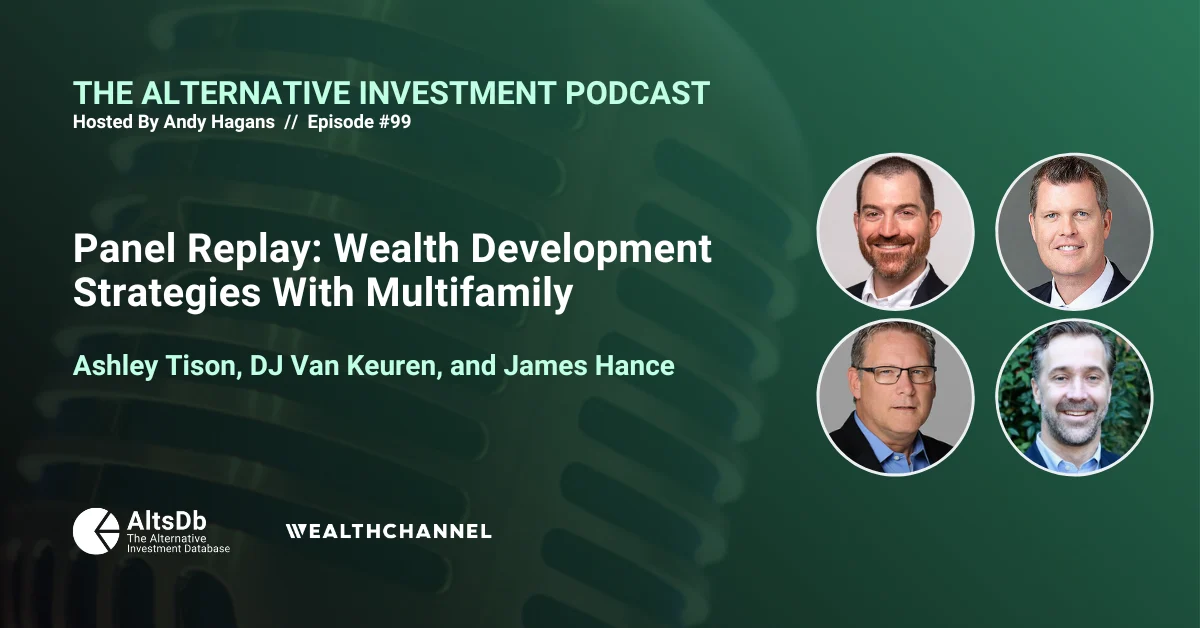
The Multifamily Investor Expo 2023, a premier event for those focused on real estate investment, recently convened a distinguished panel of experts to dissect the intricate strategies for wealth development through multifamily properties. Moderated by Andy Hagans of AltsDb and WealthChannel, the session featured insights from Ashley Tison, founder and CEO of OZPros; DJ Van Keuren, co-managing member at Evergreen Property Partners and founder of the Family Office Real Estate Institute; and James Hance, founder at Green Bison Capital. The discussion, rich with practical advice and strategic foresight, underscored the enduring appeal and robust potential of multifamily real estate as a cornerstone for building and preserving generational wealth.
The Enduring Appeal of Multifamily Real Estate
The panel opened with a fundamental question: why multifamily? James Hance articulated a core reason rooted in the intrinsic value of the asset class. "It’s where people have to live," Hance stated, emphasizing the inherent stability and consistent demand. Unlike single-family homes, multifamily properties offer diversification through multiple units, mitigating risk. Hance further highlighted the consistent cash flow potential and the ability for operators to actively drive appreciation through operational efficiencies, increasing income, and reducing expenses. From a tax perspective, Hance pointed out the significant advantages, particularly the ability for direct investors and limited partners to leverage depreciation to offset tax liabilities, positioning real estate as a powerful deferred tax strategy.
DJ Van Keuren, drawing on his extensive experience with family offices – entities managing substantial portfolios often in the tens or hundreds of millions of dollars – echoed this sentiment. His firm’s annual study on family office real estate investment consistently reveals multifamily as the preferred property type. Van Keuren attributed this to its understandability and the risk mitigation offered by a large unit count. "If one tenant leaves, you could have a pretty big problem" in other commercial real estate sectors, he noted, contrasting it with the minimal impact of a single vacancy in a 100-unit building. The current economic landscape, marked by rising home prices and student loan burdens, has amplified demand for rental housing, making multifamily an accessible and attractive solution for a broad demographic.
Ashley Tison, often referred to as "The OZ Sherpa," brought a unique perspective from his work with opportunity zone funds and high-net-worth investors seeking tax-advantaged structures. Tison emphasized the scalability and efficiency inherent in multifamily investments. "You have the ability to be able to condense an enormous amount of these people… They have to have a place to live," he explained, framing multifamily development as a more sustainable and infrastructure-light approach to housing compared to urban sprawl. He posited that this consolidation aligns with environmentally conscious principles, a point he elaborated on as a strategic advantage in navigating community development approvals and addressing NIMBYism (Not In My Backyard) sentiments. Tison also underscored the financial efficiency of managing multiple units within a concentrated area, reducing operational overhead compared to scattered single-family rentals.
Navigating Tax Advantages and Investment Wrappers
A significant portion of the discussion revolved around tax-efficient investment strategies, particularly for high-net-worth individuals and family offices. The "triple net" return – what an investor actually takes home after all expenses, taxes, and inflation – is paramount for these sophisticated investors.
Opportunity Zones (OZ) and Their Impact
Ashley Tison highlighted the substantial benefits of the Opportunity Zone program. By deferring capital gains taxes from the sale of assets into qualified OZ funds, investors can reinvest those gains into distressed communities, stimulating economic development. The program offers a three-tiered tax benefit: deferral of capital gains, potential elimination of depreciation recapture, and, crucially, a step-up in basis on the OZ investment after a 10-year holding period. Tison illustrated the financial impact, suggesting a potential increase of around 3% in Internal Rate of Return (IRR) when layering OZ benefits onto multifamily investments, effectively doubling the yield of a deal in certain market conditions. This makes OZ investments particularly attractive in scenarios where market cap rates are compressed.
The Power of 1031 Exchanges
DJ Van Keuren identified the 1031 exchange as another critical tax-advantaged strategy, noting that a significant portion of families still underutilize this mechanism. The 1031 exchange allows investors to defer capital gains taxes on the sale of investment properties by reinvesting the proceeds into a "like-kind" property. Van Keuren explained how this facilitates compounding returns, where a 15% annual return can quickly escalate to 21% and continue to grow tax-free. He also mentioned other less commonly utilized tax credits, such as Low-Income Housing Tax Credits (LIHTC) and New Market Tax Credits, as potential avenues for investment.
James Hance corroborated the widespread use of 1031 exchanges within his network, reporting that approximately 20% of capital raised by his group over the past two years originated from 1031 exchanges. He noted that these exchanges can be effectively executed through syndications, allowing investors to transition from active property management to passive investing while deferring taxes. This is particularly beneficial for individuals looking to exit self-managed portfolios and embrace a more hands-off approach, often achieving a step-up in basis and generating immediate cash flow.
Ashley Tison added a nuanced perspective on 1031 exchanges, particularly concerning estate tax implications. He cautioned that with the potential reduction of the lifetime estate tax exemption in the coming years, individuals with net estates approaching $10 million might face significant estate taxes on their appreciated assets. Tison contrasted this with Opportunity Zones, where the value contributed to the fund is frozen for estate tax purposes, offering a distinct advantage for long-term wealth preservation.

Market Dynamics and Investment Timing in 2023
The conversation then shifted to the current market environment, characterized by higher interest rates. The central question for investors was whether now is an opportune time to invest or if holding cash for future opportunities would be more prudent.
James Hance acknowledged that the era of cap rate compression is likely over. He stressed the importance of rigorous due diligence on sponsors, particularly those who are vertically integrated and possess a strong operational track record and robust capitalization. Hance indicated that the current environment is ripe for opportunities, especially concerning distressed properties and maturing debt. He cited instances where operators unable to refinance their loans are being forced to sell, creating openings for well-capitalized investors.
DJ Van Keuren shared that many family offices have been strategically holding "dry powder," having learned from past market cycles. Unlike the last recession, where many entered the market as it began to recover, families are now proactively positioning themselves to capitalize on the current downturn. While acknowledging that fundamentals like cost of living, quality of life, and demand remain critical, Van Keuren cautioned against a complete withdrawal from the market. He predicted a "reckoning" for less experienced operators and emphasized the need for thorough stress-testing of deals. Van Keuren highlighted the potential for negative leverage and the impact of floating interest rates, suggesting that investors must underwrite deals with conservative assumptions, considering scenarios like higher cap rates on exit and increased vacancy rates.
Ashley Tison, while inherently optimistic, aligned with the need for pragmatic assessment. He stressed the importance of "stress testing" investments and understanding downside scenarios. However, for those investing within Opportunity Zones, Tison noted a unique impetus to deploy capital due to the program’s time-bound nature, often leading to a more bullish outlook. He also pointed out that many OZ investments involve value-add or ground-up development, offering inherent upside potential that can buffer against market volatility.
Learning from Generational Wealth Builders
A compelling segment of the discussion focused on the lessons high-net-worth investors can glean from family offices managing generational wealth. DJ Van Keuren, despite acknowledging that wealth preservation across generations can be challenging, identified key principles. He emphasized patience and making sound decisions, noting that real estate’s illiquidity can be an advantage in fostering a long-term perspective. Van Keuren advocated for building strong relationships with trusted partners and sponsors who demonstrate a consistent track record through multiple market cycles. He also stressed the importance of quantifying risks through comprehensive stress testing and actively seeking referrals and leveraging professional networks.
Ashley Tison expanded on this by discussing the proactive development of a family’s core value statement and mission. He noted that while businesses meticulously define their purpose and guiding principles, families often neglect this crucial step when transitioning wealth. Creating a family constitution, Tison suggested, can provide a framework for communicating values, guiding trustees in wealth distribution, and ensuring that future generations understand and uphold the family’s legacy. This intentionality, he argued, is even more critical for families than for businesses.
Andy Hagans underscored the importance of humility in wealth management. He observed that individuals who amass fortunes in one sector might not automatically possess expertise in another, such as real estate. The truly effective leaders, Hagans noted, are those who recognize this and strategically surround themselves with talented professionals and reliable operators with proven track records. This collaborative approach, partnering with experts like Tison, Van Keuren, and Hance, and with sponsors who have navigated multiple market cycles, is the hallmark of smart, sustainable wealth building.
Ground-Up vs. Value-Add in the Current Market
In a rapid-fire lightning round, the panelists addressed the outlook for ground-up development versus value-add strategies in the current environment.
James Hance favored value-add, citing his personal preference for lower-risk, lower-return opportunities and a greater comfort level with the complexities and timelines of ground-up development.
Ashley Tison, with his extensive experience in Opportunity Zones, leaned towards ground-up development. He explained that the "substantial improvement" threshold required for OZ benefits often necessitates new construction or major renovations, making ground-up projects a more direct path to qualifying for the program.
DJ Van Keuren offered a more nuanced perspective, stating that the choice between ground-up and value-add depends heavily on the specific property type and market dynamics. He acknowledged that stalled development projects could present value-add opportunities, while sectors like cold storage, with significant demand and limited pipeline, might necessitate ground-up construction. His overarching advice was to always analyze the risk-return profile to ensure the potential rewards justify the inherent risks.
The panel concluded with a strong consensus on the enduring power of multifamily real estate as a wealth-building vehicle. The insights shared by the experts underscored the critical interplay of strategic investment, tax efficiency, market awareness, and disciplined execution in navigating the complexities of wealth development and preservation in today’s dynamic economic landscape.
