

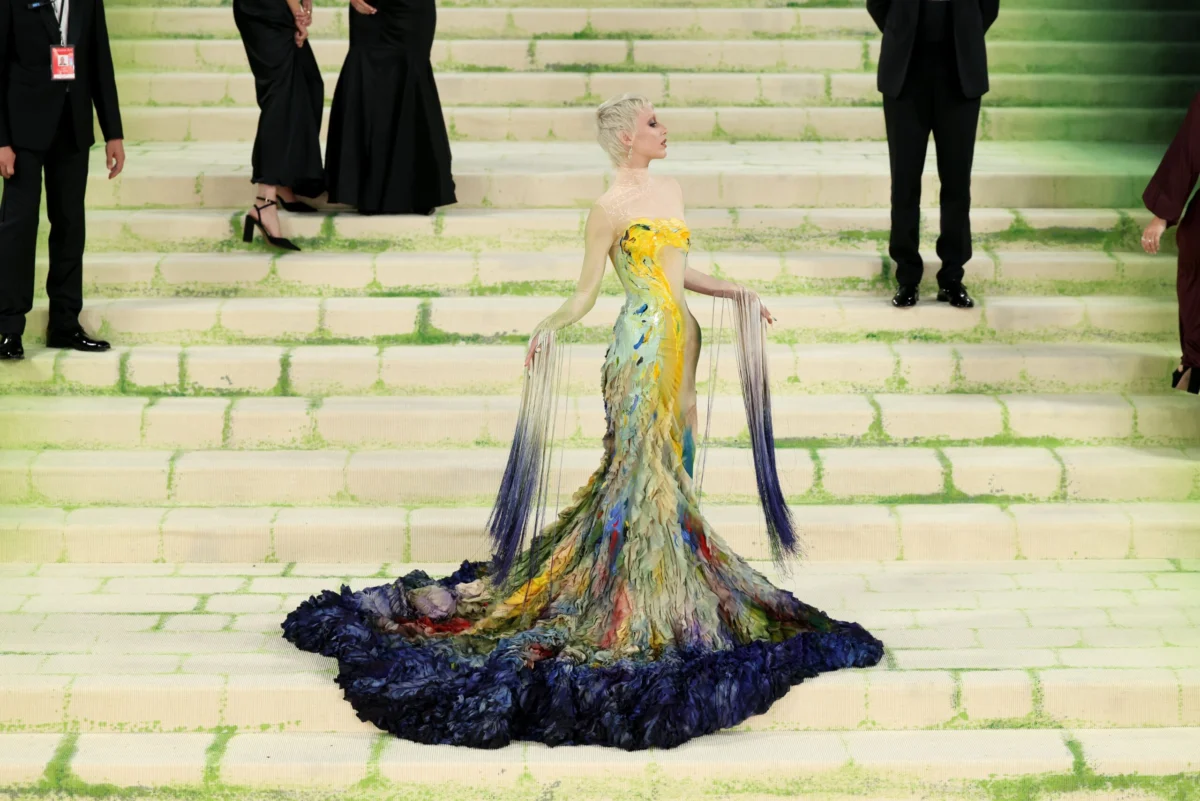
The Metropolitan Museum of Art’s annual Costume Institute Benefit, colloquially known as the Met Gala, reached a historic milestone in 2026 by formally bridging the perceived gap between high fashion and the fine arts. Themed "Fashion is Art," the event served as the official inauguration for the Costume Institute’s spring exhibition, "Costume Art." This year’s gala was not merely a display of celebrity influence but a sophisticated dialogue between the history of painting, sculpture, and contemporary couture. As guests ascended the iconic Fifth Avenue steps, the atmosphere mirrored the sentiment of Oscar Wilde’s famous observation that life imitates art far more than art imitates life.

The 2026 exhibition is a landmark for the Metropolitan Museum of Art, marking the debut of the newly completed Condé M. Nast Galleries. Spanning approximately 12,000 square feet, the space was designed by the architectural firm Peterson Rich Office to provide a neutral yet transformative backdrop for the Institute’s most ambitious display to date. Under the curatorial direction of Andrew Bolton, the "Costume Art" exhibition features 400 works drawn from the Met’s extensive, encyclopedic collections, placing garments in direct conversation with the visual masterpieces that inspired them or share their formal characteristics.

Curatorial Vision and the Evolution of the Costume Institute
Andrew Bolton, the Wendy Yu Curator in Charge of the Costume Institute, argued during the opening remarks that the dressed body is the singular element that unites visual art across different cultures and eras. The exhibition is structured around specific "body types" that have persisted throughout art history, including the "Classical Body," the "Naked Body," and the "Aging Body." This thematic organization allows visitors to see how the silhouette of a 5th-century Greek statue informs the draping of a 1930s Vionnet gown, or how contemporary designers use deconstruction to challenge traditional perceptions of the human form.

The inclusion of 400 works represents a significant increase in scale compared to previous years, reflecting the expanded footprint of the Condé M. Nast Galleries. The architectural design by Peterson Rich Office emphasizes flexibility, utilizing a modular system that allows the museum to showcase everything from fragile 18th-century court dresses to massive contemporary installations. The galleries’ integration into the museum’s flow ensures that fashion is treated with the same academic and aesthetic rigor as the Old Masters or the Egyptian wing.

Chronology of the 2026 Gala and Exhibition Launch
The timeline for the 2026 event followed a rigorous schedule that began years prior with the architectural planning of the new wing. By early 2025, Bolton and his team began the delicate process of selecting garments that could stand as peers to the Met’s permanent art collection.

- Architecture and Planning (2023–2025): Peterson Rich Office worked to create a space that could handle the specific climate and lighting requirements of ancient textiles while maintaining a modern aesthetic.
- Curatorial Selection (Mid-2025): The selection of 400 works was finalized, involving cross-departmental collaboration between the Costume Institute and the departments of European Paintings, Asian Art, and Modern and Contemporary Art.
- The Gala (May 2026): The fundraising event brought together global leaders in fashion, film, and technology, raising record-breaking funds for the Costume Institute’s operations and acquisitions.
- Public Opening (May 2026): Following the gala, the exhibition opened to the public, projected to attract over one million visitors during its summer run.
Artistic Homages on the Red Carpet
The "Fashion is Art" theme prompted attendees to move beyond traditional evening wear and embrace garments that functioned as living canvases. Several high-profile guests provided direct references to specific works within the Met’s collection or to iconic movements in art history.

Post-Impressionism and Cubism
Colman Domingo’s ensemble drew immediate comparisons to Pablo Picasso’s Harlequin and His Companion (1901). The geometric patterns and the melancholic yet structured nature of the outfit mirrored Picasso’s Blue and Rose periods, highlighting the transition from traditional representation to the fragmented perspectives of Cubism. Similarly, Emma Chamberlain’s choice of attire evoked the swirling, kinetic energy of Vincent van Gogh’s The Starry Night. The use of deep indigos and textured embroidery simulated the thick impasto technique characteristic of Van Gogh’s later works, turning the red carpet into a study of movement and light.

Floral Still Life and the Dutch Golden Age
Naomi Watts appeared in a gown that functioned as a three-dimensional recreation of Margareta Haverman’s A Vase of Flowers (1716). The intricate floral motifs and the deliberate use of shadows echoed the Dutch tradition of "Vanitas," where the beauty of nature is captured alongside reminders of its transience. The garment utilized advanced textile printing and hand-embroidery to achieve a level of detail usually reserved for oil on canvas.

Pre-Raphaelite and Victorian Influences
Chloe Malle’s ensemble paid homage to Frederic Leighton’s Flaming June (1895). The vibrant orange hues and the soft, flowing drapery captured the essence of the Victorian era’s obsession with classical form and idealized beauty. The garment’s structure emphasized the "Classical Body" theme prevalent in the museum’s galleries, focusing on the way fabric interacts with a body in repose.

Modernism and Contemporary Sculpture
The intersection of technology and art was represented by Eileen Gu, whose look mirrored Kohei Nawa’s PixCell-Deer#44. Nawa’s work, which covers taxidermied animals in glass beads to represent the "pixels" of the digital age, was reflected in Gu’s use of reflective, cellular materials. This choice underscored the exhibition’s focus on how the "Naked Body" is perceived through the lens of modern technology and fragmentation.

Suleika Jaouad provided a more industrial take on the theme, referencing El Anatsui’s Earth’s Skin. Anatsui is known for transforming found objects, such as bottle caps and copper wire, into massive, shimmering tapestries. Jaouad’s gown utilized recycled metallic elements to create a similar texture, bridging the gap between fashion, sculpture, and environmental commentary.

Supporting Data: The Met Gala’s Economic and Cultural Impact
The Met Gala remains the primary source of annual funding for the Costume Institute. In 2026, the event saw a marked increase in both ticket prices and overall revenue, driven by the prestige of the new gallery opening.

- Fundraising Totals: While official figures are kept private, industry analysts estimate the 2026 gala raised in excess of $25 million, surpassing the 2025 record.
- Exhibition Scale: The 400 items on display represent one of the largest temporary exhibitions in the Met’s history, requiring a team of over 50 conservators to prepare.
- Tourism Impact: New York City’s Economic Development Corporation (NYCEDC) noted that the "Met Gala effect" contributes an estimated $200 million to the local economy through tourism, luxury retail, and hospitality during the exhibition’s opening month.
Industry Reactions and Official Responses
The 2026 theme received praise from both the fashion industry and the academic art world for its intellectual depth. Max Hollein, the Marina Kellen French Director of the Met, stated that the exhibition "reaffirms that fashion is not merely a decorative craft but a vital form of artistic expression that reflects the social and cultural complexities of its time."

Anna Wintour, who has co-chaired the gala since 1995, noted that the 2026 event was designed to celebrate the "permanence" of fashion. By housing the exhibition in the new Condé M. Nast Galleries, the museum has made a definitive statement about the importance of costume as a scholarly discipline. Designers who contributed to the red carpet looks, such as those who referenced Gustav Klimt’s Mäda Primavesi (seen in Hunter Schafer’s attire) or Georges Braque’s À tire d’aile (mirrored by Rosé), emphasized that the project allowed them to engage with the museum’s archives in a more profound way than in previous years.

Broader Impact and Implications for the Future of Fashion
The "Costume Art" exhibition and the 2026 Met Gala signal a shift in how cultural institutions view the intersection of different creative mediums. By categorizing fashion through the lens of the "Classical," "Naked," and "Aging" body, the Met has moved away from a purely chronological or designer-focused history. This thematic approach encourages a more diverse and inclusive understanding of how clothing shapes human identity.

Furthermore, the integration of contemporary figures like Damien Hirst—whose aesthetic was referenced in Anna Wintour’s own attire—highlights the blurring lines between the artist and the designer. As fashion brands increasingly function as multimedia houses and artists move into the realm of wearable art, the Met Gala 2026 stands as a definitive record of this convergence.

The legacy of the 2026 event will likely be measured by the continued use of the Condé M. Nast Galleries and the standard it has set for future Costume Institute exhibitions. By proving that a 400-piece fashion exhibition can be as intellectually rigorous as a collection of Greek antiquities or Renaissance paintings, the Metropolitan Museum of Art has ensured that the dialogue between the canvas and the catwalk will continue to evolve for decades to come.
