

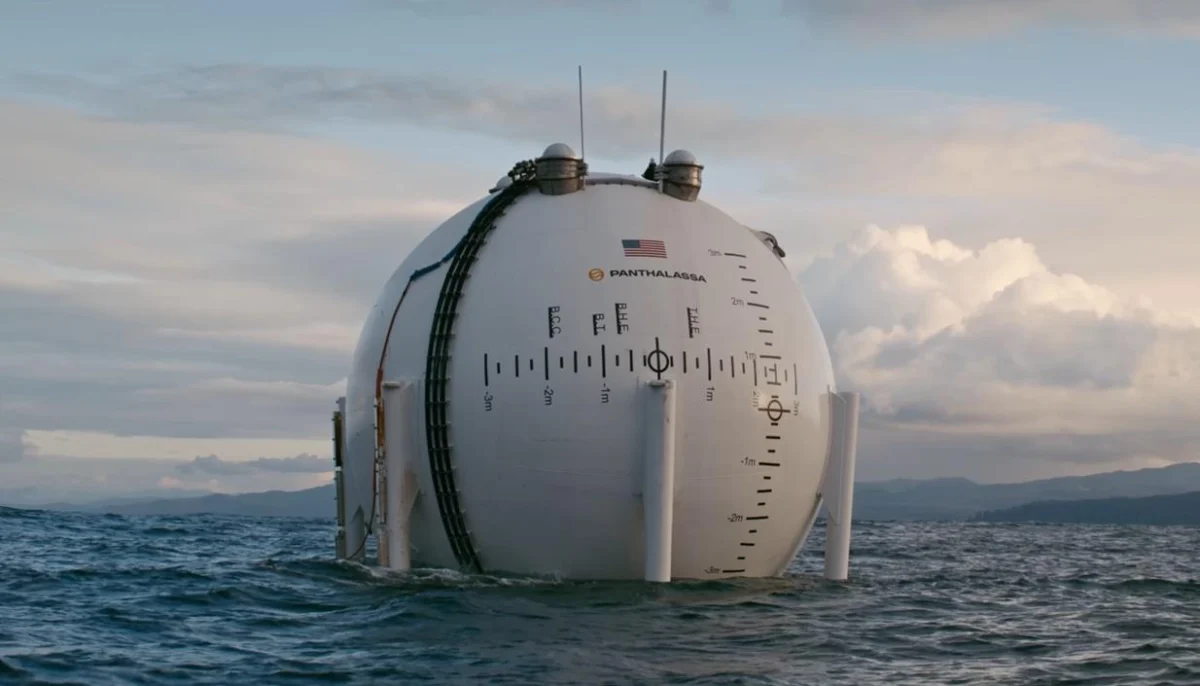
Panthalassa, a pioneering clean energy and ocean technology firm based in Portland, Oregon, has successfully closed a $140 million Series B funding round aimed at scaling its unique infrastructure that powers artificial intelligence (AI) computing using zero-emission energy harvested directly from ocean waves. The financing round, led by PayPal and Palantir co-founder Peter Thiel, marks a significant milestone in the intersection of renewable energy and high-performance computing. The capital injection is intended to transition the company from prototype testing to industrial-scale manufacturing and deployment, addressing the urgent global need for sustainable power sources to fuel the burgeoning AI sector.
The investment comes at a critical juncture for the technology industry. As terrestrial data centers face escalating challenges—ranging from electricity grid saturation and freshwater scarcity for cooling to regulatory delays and community opposition—Panthalassa’s offshore solution offers a radical departure from traditional land-based infrastructure. By bypassing the terrestrial grid entirely and processing data at sea, the company seeks to decouple the growth of AI from the constraints of land-based energy and environmental resources.
A High-Profile Coalition of Strategic Investors
The Series B round attracted an extraordinary roster of high-profile investors from the worlds of venture capital, technology, and industrial sustainability. Beyond Peter Thiel, the round included participation from John Doerr, the chairman of Kleiner Perkins and a legendary figure in green technology investment. Other notable participants included Marc Benioff’s TIME Ventures, Max Levchin’s SciFi Ventures, and Susquehanna Sustainable Investments.
The diversity of the investor pool—spanning from Silicon Valley veterans to heavy industrial players like Hanwha Asset Management (USA), Fortescue Ventures, and Super Micro Computer—underscores the multifaceted appeal of Panthalassa’s value proposition. Returning investors such as Founders Fund, Gigascale Capital, Lowercarbon Capital, and WovenEarth also contributed, signaling strong internal support for the company’s progress since its previous funding cycles.
Peter Thiel, known for his early-stage bets on paradigm-shifting technologies, emphasized the necessity of radical thinking in the face of AI’s energy demands. “The future demands more compute than we can imagine,” Thiel stated during the funding announcement. “Extra-terrestrial solutions are no longer science fiction. Panthalassa has opened the ocean frontier.” His reference to "extra-terrestrial" solutions highlights the shift toward environments outside the traditional terrestrial landscape, positioning the open ocean as the next great territory for industrial expansion.
Technological Innovation: Computation at the Wave’s Edge
Founded in 2016, Panthalassa has spent nearly a decade developing a proprietary technology platform that integrates energy generation with high-performance computing. At the heart of its operations are specialized "nodes"—autonomous floating structures designed to operate in the energy-dense regions of the open ocean.
These nodes perform two primary functions. First, they act as wave energy converters (WECs), capturing the kinetic and potential energy of ocean swells to generate clean electricity. Second, they house onboard AI computing hardware, including advanced GPUs (Graphics Processing Units) and specialized AI chips. Unlike traditional offshore wind or wave farms that transmit electricity back to shore via expensive and fragile subsea cables, Panthalassa’s nodes use the energy in situ. The data processed on these nodes is then transmitted to users via low-Earth-orbit (LEO) satellite constellations, such as Starlink or Kuiper, ensuring high-speed connectivity regardless of the node’s distance from the coast.
This "compute-at-source" model eliminates the massive energy losses associated with long-distance power transmission and reduces the infrastructure costs inherent in subsea cabling. Furthermore, the ocean environment provides a natural solution to one of the most pressing problems in data center management: heat. AI chips generate immense amounts of thermal energy, requiring sophisticated and water-intensive cooling systems on land. Panthalassa’s nodes utilize the surrounding seawater for "supercooling," providing a virtually infinite heat sink that allows the chips to operate at peak efficiency without consuming precious freshwater resources.
Solving the Global Data Center Crisis
The urgency of Panthalassa’s mission is driven by the explosive growth of generative AI and large language models (LLMs). According to reports from the International Energy Agency (IEA), data centers currently account for approximately 1% to 1.5% of global electricity consumption. However, with the rapid adoption of AI, this figure is projected to double by 2026, potentially consuming as much energy as the entire country of Japan.
Terrestrial data centers are increasingly hitting "the wall." In major hubs like Northern Virginia, Dublin, and Singapore, local utilities have struggled to keep pace with demand, leading to moratoriums on new data center construction. Additionally, the environmental footprint of these facilities is under intense scrutiny. A single large data center can consume millions of gallons of water per day for cooling, often in regions already facing water stress.
Garth Sheldon-Coulson, Co-Founder and CEO of Panthalassa, frames the ocean as the only logical solution to this resource bottleneck. “There are three sources of energy on the planet with tens of terawatts of new capacity potential: solar, nuclear, and the open ocean,” Sheldon-Coulson explained. “We’ve built a technology platform that operates in the planet’s most energy-dense wave regions, far from shore, and turns that resource into reliable clean power.”
By moving compute to the ocean, Panthalassa addresses the "NIMBY" (Not In My Backyard) issues that plague land-based energy projects. Offshore nodes do not compete for land with agriculture or housing, do not impact local viewsheds when deployed far from shore, and do not strain the existing municipal infrastructure of local communities.
Chronology of Development and Future Roadmap
Panthalassa’s journey from a 2016 startup to a $140 million-backed industry leader has been marked by a methodical approach to engineering and validation. The company’s development timeline reflects a phased strategy of increasing complexity and scale:
- 2016–2020: Research and development phase focused on wave energy physics, marine engineering, and the integration of ruggedized computing hardware.
- 2021: Launch of Ocean-1, the company’s first prototype. This deployment focused on validating the wave-to-electricity conversion efficiency and testing the durability of the hull design in real-world maritime conditions.
- 2024: Deployment of Ocean-2. This second-generation prototype integrated full AI computing stacks and satellite communication systems, proving the viability of the "compute-on-buoy" concept.
- 2025–2026: Utilization of Series B funds to complete a pilot manufacturing facility near Portland, Oregon. This facility will enable the assembly of the Ocean-3 series, which represents the company’s first pre-commercial fleet.
- 2026: Planned deployment of the Ocean-3 fleet in the northern Pacific Ocean, a region known for its consistent and powerful wave energy.
- 2027: Targeted commencement of full-scale commercial operations, offering AI-compute-as-a-service to global technology firms and research institutions.
The manufacturing aspect is a significant component of the company’s strategy. By building its pilot facility in Oregon, Panthalassa is tapping into the region’s existing maritime and high-tech manufacturing expertise, creating high-skilled jobs and reinforcing the "Silicon Forest" ecosystem.
Strategic and Economic Implications for the Blue Economy
The success of Panthalassa could signal the beginning of a new era for the "Blue Economy"—the sustainable use of ocean resources for economic growth. John Doerr, a vocal advocate for the "Speed & Scale" approach to the climate crisis, noted the strategic importance of this technology. “Panthalassa’s autonomous wave power system is a game changer in addressing global energy needs and clean power generation,” Doerr said. “It is a triple win: workers benefit, communities benefit, and we gain a strategic asset that strengthens American technological leadership.”
From a geopolitical perspective, the ability to deploy mobile, scalable, and self-powering compute nodes offers unique advantages. These nodes can be relocated based on seasonal wave patterns or shifting demand, providing a level of flexibility that fixed terrestrial assets cannot match. Furthermore, by generating and consuming power in international waters or exclusive economic zones (EEZs), Panthalassa provides a way for the United States and its allies to expand their technological footprint without being tethered to vulnerable land-based grids.
Technical Challenges and Environmental Considerations
While the potential is vast, Panthalassa faces significant technical hurdles. The open ocean is one of the harshest environments on Earth. Saltwater corrosion, biofouling (the growth of marine organisms on structures), and the mechanical stress of extreme storm events pose constant threats to hardware longevity. The company has reportedly invested heavily in advanced materials science and autonomous maintenance systems to ensure the nodes can operate for years with minimal human intervention.
Environmentally, the company must also navigate the impact of its presence on marine ecosystems. While wave energy is "clean" in terms of emissions, the physical presence of large fleets of nodes and the potential for noise or electromagnetic interference require ongoing study. Panthalassa has stated its commitment to environmental stewardship, working with marine biologists to ensure that its deployments do not disrupt migratory paths or local marine life.
The Broader Context of AI Energy Consumption
Panthalassa’s rise coincides with a broader industry trend toward "off-grid" energy solutions. Major tech firms like Microsoft, Google, and Amazon have recently signed massive deals for nuclear power and geothermal energy to support their data centers. However, wave energy remains a largely untapped frontier. According to the U.S. Department of Energy, the total theoretical wave energy resource off the coasts of the United States is estimated to be 2.64 trillion kilowatt-hours per year—equivalent to about 64% of total U.S. electricity generation in 2021.
By successfully tapping into even a fraction of this resource, Panthalassa could provide a crucial safety valve for the AI industry. The $140 million Series B funding provides the runway necessary to prove that the ocean is not just a barrier to be crossed, but a powerhouse to be harnessed. As the company moves toward its 2027 commercial target, the tech world will be watching closely to see if the future of intelligence truly lies beneath the waves.
