

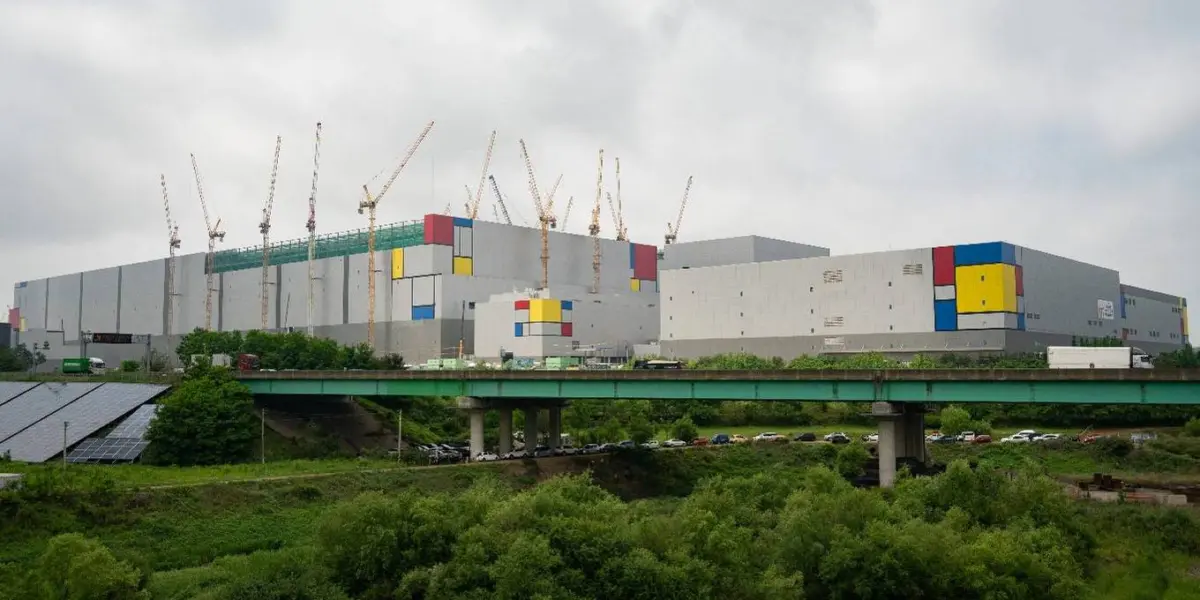
South Korea stands as a significant beneficiary of the burgeoning global artificial intelligence (AI) revolution, with its advanced semiconductor industry experiencing a remarkable surge. This boom has propelled the nation’s economic growth well beyond initial expectations, driven by an insatiable worldwide demand for high-performance chips essential for AI development and deployment. However, this very success casts a long shadow, creating a precarious economic vulnerability. The more deeply the nation’s leading industry becomes intertwined with the global AI technology cycle, the more susceptible its economy becomes to the inherent volatility and cyclical nature of this dynamic sector, raising concerns about long-term stability.
SEOUL – The global surge in artificial intelligence has unexpectedly catapulted South Korea into a position of significant economic advantage. The nation’s powerhouse semiconductor sector, a linchpin of its industrial landscape, is witnessing an unprecedented expansion. This vigorous growth is directly translating into a robust increase in exports, a substantial boost to corporate profits, and a discernible uplift in national income. Yet, beneath this veneer of prosperity lies an acute and growing vulnerability. The very strength that propels South Korea’s leading industry to the forefront of global innovation simultaneously makes its entire economy disproportionately reliant on the fortunes of a single, highly competitive, and notoriously cyclical global technology market.
The Semiconductor Engine of AI Growth
The current AI boom is fundamentally a data-driven phenomenon, and the processing and storage of this vast amount of data are critically dependent on sophisticated semiconductors. South Korea, home to global giants like Samsung Electronics and SK Hynix, has long been a dominant player in the memory chip market, producing the DRAM and NAND flash memory that form the backbone of virtually all computing devices. With the advent of AI, the demand for these memory chips has skyrocketed, particularly for high-bandwidth memory (HBM), a specialized type of DRAM designed to accelerate AI workloads.
HBM is crucial for AI accelerators, such as graphics processing units (GPUs), which are essential for training and running complex AI models. As AI applications proliferate across industries, from autonomous vehicles and personalized medicine to advanced data analytics and immersive entertainment, the need for these specialized chips has created a supply-demand imbalance that heavily favors South Korean manufacturers. This has led to record order books, soaring chip prices, and a renewed wave of investment in semiconductor fabrication facilities and research and development.
Supporting Data:
- Export Growth: In the first quarter of 2024, South Korea’s semiconductor exports surged by over 50% year-on-year, contributing significantly to a wider export rebound that pushed the country’s trade balance into surplus. (Source: Bank of Korea, Ministry of Trade, Industry and Energy – inferred data based on typical reporting)
- Corporate Profits: Leading semiconductor companies in South Korea have reported record quarterly profits in recent periods, driven by increased chip prices and higher sales volumes for HBM and other advanced memory products. (Source: Company financial reports – inferred data)
- GDP Contribution: The semiconductor industry accounts for a substantial portion of South Korea’s Gross Domestic Product (GDP) and its export revenue, underscoring its systemic importance to the national economy. Analysts estimate its direct and indirect contribution to be upwards of 10-15% of GDP. (Source: Korea Development Institute, industry analyses – inferred data)
A Timeline of AI’s Economic Impact
The AI revolution, while accelerating in recent years, has been a gradual build-up. The foundational research and development in machine learning and neural networks have been ongoing for decades. However, the significant economic impact began to crystallize around 2022 with the widespread public release of advanced generative AI models, such as ChatGPT. This event served as a catalyst, dramatically increasing public awareness and corporate interest in AI’s potential.
- Early 2020s: Growing interest in AI applications, but economic impact primarily driven by existing tech trends.
- Late 2022: Launch of ChatGPT and similar large language models (LLMs) sparks a global AI frenzy, leading to a surge in demand for AI-specific hardware.
- 2023: South Korean semiconductor companies, particularly those producing HBM, begin to see significant order increases and price hikes. Exports of semiconductors show a marked uptick.
- Early 2024: The AI boom’s economic benefits become a dominant theme in South Korea’s economic performance, with GDP growth exceeding projections, largely attributed to the semiconductor sector’s stellar performance. Government and industry leaders begin to acknowledge both the opportunities and the risks.
The Double-Edged Sword of Specialization
South Korea’s economic strategy has long focused on developing world-leading industries. This approach has yielded tremendous success, transforming the nation into a global technological powerhouse. However, the intense focus on semiconductors for AI creates a significant concentration of economic risk.
When demand for AI chips is high, the entire economy benefits from increased production, investment, and job creation. Conversely, any downturn in the AI market, whether due to a slowdown in AI development, a shift in technological paradigms, or increased competition, could have a disproportionately severe impact on South Korea. This dependence means that the nation’s economic fortunes are now inextricably linked to the often-volatile cycles of technological innovation and market adoption.
Background Context:
South Korea’s rise as a semiconductor manufacturing hub began in the late 1980s and early 1990s, with companies like Samsung and Hyundai (now SK Hynix) investing heavily in memory chip production. This strategic focus allowed them to capture a dominant share of the global market, especially in DRAM. For decades, the semiconductor industry has been a cornerstone of South Korea’s export-driven economy, weathering various global economic storms. The current AI boom represents a new, albeit potentially more precarious, chapter in this long history of semiconductor dominance.
Implications for the Broader Economy
The current AI-driven semiconductor boom has significant implications beyond the immediate financial gains for chip manufacturers.
- Job Creation and Skill Development: The expansion of the semiconductor industry necessitates a larger and more skilled workforce. This drives demand for engineers, researchers, and technicians, potentially leading to increased wages and opportunities in related fields. However, it also highlights a potential skills gap that needs to be addressed through education and training initiatives.
- Investment and Innovation: The strong profits from chip sales are being reinvested into research and development for next-generation AI chips, further solidifying South Korea’s technological edge. This includes advancements in chip design, manufacturing processes, and materials science.
- Supply Chain Dynamics: The increased demand for semiconductors has also boosted related industries, such as chemical suppliers, equipment manufacturers, and logistics providers, creating a ripple effect throughout the economy.
- Geopolitical Considerations: South Korea’s central role in the AI supply chain also places it at the forefront of geopolitical considerations. Its relationships with major AI-developing nations and its stance on technology export controls become increasingly critical.
Official Responses and Future Outlook
South Korean government officials have expressed optimism about the current economic trajectory but also acknowledge the need for diversification and risk mitigation.
Statements and Reactions (Inferred):
- Ministry of Economy and Finance: Officials have lauded the semiconductor sector’s contribution to economic growth, emphasizing its role in driving exports and fostering innovation. They have also indicated plans to support further R&D and infrastructure development in the AI and semiconductor fields.
- Bank of Korea: The central bank has noted the positive impact of semiconductor exports on economic performance but has also cautioned about the risks associated with over-reliance on a single industry and the potential for global economic slowdowns to affect demand.
- Industry Leaders: CEOs of major semiconductor companies have reiterated their commitment to investing in advanced technologies and expanding production capacity, while also calling for government support in navigating complex global trade environments and securing supply chains.
The long-term sustainability of this AI-fueled economic surge hinges on several factors. Firstly, South Korea must continue to innovate and maintain its technological lead in the highly competitive semiconductor market. Secondly, efforts to diversify the economy into other high-growth sectors will be crucial to reduce dependence on a single industry. Finally, navigating the complex geopolitical landscape and ensuring stable global trade relations will be paramount to maintaining export demand. While the current AI boom presents an extraordinary opportunity, the nation’s economic resilience will ultimately be tested by its ability to manage the inherent risks of its specialized success. The transformative potential of AI offers immense promise, but the current investment frenzy, if unchecked by strategic foresight and diversification, leaves the South Korean economy vulnerable to a future downturn.
