

The rural landscape of central Montana is currently the site of a profound socioeconomic experiment as White Sulphur Springs, a town of approximately 1,000 residents, weighs the promise of a high-tech copper mine against the preservation of its pristine natural resources. Nestled at the crossroads of the Great Plains and the Continental Divide, White Sulphur Springs is a community defined by its proximity to the Smith River and its history of agricultural production. However, as the global transition to renewable energy accelerates, the town’s geological wealth—specifically the Johnny Lee copper deposit—has placed it at the center of a national conversation regarding the "green" energy transition and the local impacts of mineral extraction.

For decades, Meagher County has grappled with the volatility of resource-based economies. In 2021 and 2022, the county was ranked among the poorest in the United States, a statistic that underscores the community’s need for stable, high-paying employment. Sandfire Resources America, the U.S. subsidiary of the Australian mining firm Sandfire Resources Ltd, has proposed the Black Butte Copper Mine Project as a solution. This underground facility aims to extract high-grade copper, a mineral essential for the production of electric vehicles (EVs), wind turbines, and solar power infrastructure. Yet, the project has reignited long-standing fears about environmental degradation, leading to the development of a proactive Community Benefits Agreement (CBA) designed to break the historic cycle of "boom and bust" extraction.
The Strategic Importance of Copper in the Energy Transition
The push for the Black Butte Copper Mine is driven by a global surge in demand for critical minerals. According to reports from the International Energy Agency (IEA), reaching net-zero emissions by 2050 will require a sixfold increase in mineral inputs by 2040. Copper, often referred to as the "metal of electrification," is indispensable due to its superior electrical conductivity. A typical electric vehicle requires nearly four times as much copper as a conventional internal combustion engine vehicle, and offshore wind farms require miles of copper cabling to transmit power to the grid.

In White Sulphur Springs, this global demand translates into a potential local windfall. The Johnny Lee deposit is noted for its exceptionally high grade of copper, making it one of the most attractive undeveloped deposits in North America. For a town that has historically relied on logging and ranching—industries that have seen significant consolidation and automation—the mine offers 300 projected jobs for a minimum of 12 years. Proponents argue that these positions, which typically offer wages significantly higher than the county average, could revitalize local businesses and stabilize the population.
A Legacy of Skepticism: The Shadow of Butte and the Berkeley Pit
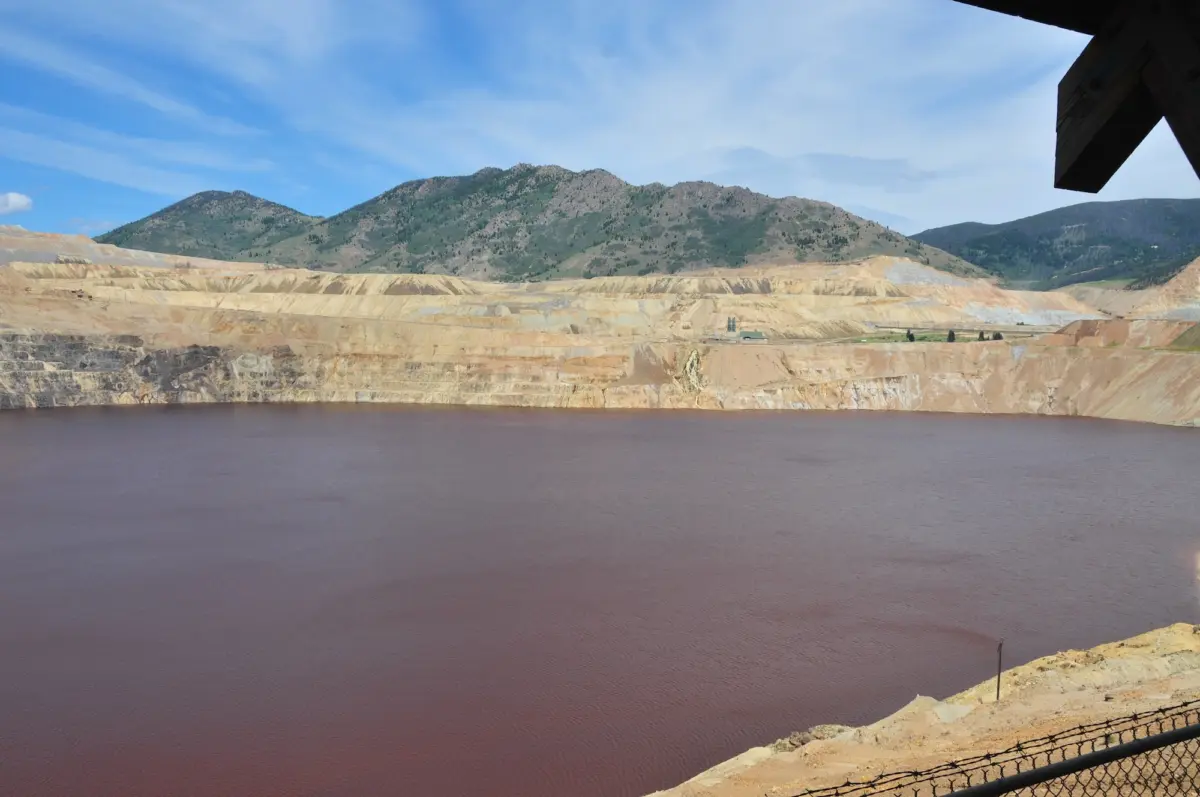
The primary hurdle for Sandfire Resources is not the lack of economic need, but rather the heavy weight of Montana’s mining history. Only two hours southwest of White Sulphur Springs lies Butte, once known as the "Richest Hill on Earth." During the late 19th and early 20th centuries, Butte was the world’s leading copper producer, but the environmental cost was staggering. The Berkeley Pit, a former open-pit mine, eventually filled with highly acidic water laced with heavy metals like arsenic, cadmium, and zinc. Added to the federal Superfund list in 1987, it remains one of the largest and most expensive environmental cleanup sites in the nation.

This legacy informs the "not in my backyard" sentiment shared by many residents of Meagher County. Opponents, including local business owners and conservationists, argue that no amount of economic gain is worth the risk of a similar catastrophe. The Smith River, which flows near the proposed mine site, is a "blue-ribbon" trout fishery and the only river in Montana that requires a permit for floating due to its immense popularity and ecological sensitivity. For outfitters and agricultural producers, the river is the lifeblood of the local economy, supporting 36,000 acres of irrigated farmland.
The Meagher County Stewardship Council and the CBA Framework
Recognizing that traditional permitting processes often leave communities in a reactive position, Meagher County residents organized early to negotiate a Community Benefits Agreement. Formalized in concept in 2026, the CBA is guided by the Meagher County Stewardship Council (MCSC), an independent body of 16 community members representing diverse interests, from ranching to education.

The CBA is designed to be more than a simple compensation package; it is a governance tool. Key provisions of the agreement include:
- Annual Investment Fund: Sandfire has pledged annual contributions projected to reach up to $1.8 million, which will be directed toward youth education, affordable housing, and local infrastructure.
- Environmental Oversight: The agreement allows for independent water monitoring, ensuring that the community does not have to rely solely on data provided by the mining company or state regulators.
- Economic Sustainability: The mine has committed to prioritizing local hiring and investing in programs that diversify the economy so that the town can survive after the mine eventually closes.
- Legal Durability: Negotiators are currently working to ensure the CBA is a "run-with-the-land" contract, meaning it would remain legally binding even if Sandfire Resources America were sold to another entity.
This model draws inspiration from the Stillwater Good Neighbor Agreement, established in 2000 for a palladium mine in nearby Stillwater County. That agreement has successfully survived five changes in mine ownership and is widely regarded as the gold standard for community-led mining oversight.

Technical Safeguards and Environmental Challenges
To address concerns regarding the Smith River, Sandfire Resources has proposed an underground mining method rather than an open-pit design. Underground mines generally have a smaller surface footprint and produce less waste rock. Sandfire has also stated that the project will utilize a "closed-loop" water system, meaning no water used in the mining process will be discharged into surface streams. Instead, water will be treated to standards exceeding state requirements and returned to the groundwater system through an underground infiltration gallery.
Nancy Schlepp, Vice President of Communications for the project and a lifelong resident of the county, emphasizes the depth of the environmental baseline data collected. "We have 15 years of baseline environmental data to help inform how we move forward," Schlepp noted, pointing out that this exceeds industry standards.

However, hydrologists and critics like fishing outfitter Joe Sowerby remain wary. The Smith River basin is prone to drought, and any additional withdrawal of water—even from deep aquifers—could potentially impact the flow of the river and the senior water rights of downstream farmers. "This mine could be the straw that breaks the camel’s back on the whole system," Sowerby warned, highlighting the thin margins of error in a changing climate.
Socioeconomic Implications: Housing, Infrastructure, and the "Bust"
Beyond environmental concerns, the town of White Sulphur Springs faces a logistical challenge. An influx of 300 workers in a town of 1,000 could lead to a housing crisis, driving up rents and displacing long-term residents. This phenomenon, common in Western energy towns, often sees a surge in public service demands—such as law enforcement and healthcare—that outpaces the tax revenue generated by the industry.

Katie Bodecker, owner of the Showdown Montana ski resort, expresses concern that the mine represents a "hit it and quit it" industry. While her business might see a short-term increase in customers, she argues that the long-term character of the town is at stake. "I think what’s in the long-term best interest of our county is to protect our resources and build up long-term sustainable industry," Bodecker said. The CBA aims to mitigate these impacts by funding housing initiatives and infrastructure upgrades before the peak of mining operations begins.
Chronology of the Black Butte Copper Mine Project
- 1985: Discovery of the Johnny Lee copper deposit.
- 2011: Sandfire Resources America begins extensive environmental baseline monitoring.
- 2017: The company submits its formal Mine Operating Permit application to the Montana Department of Environmental Quality (DEQ).
- 2020: Montana DEQ issues the final permit, though it is immediately met with legal challenges from environmental groups.
- 2021-2022: Meagher County is identified as one of the poorest in the nation, heightening local interest in the mine’s economic potential.
- 2024-2025: Courts uphold the validity of the mining permits, clearing a path for construction.
- 2026: The Meagher County Stewardship Council and Sandfire Resources formalize the framework for the Community Benefits Agreement.
Analysis of Broader Impacts
The situation in White Sulphur Springs is a microcosm of a global dilemma. As the world seeks to decarbonize, the demand for raw materials will inevitably lead to more mining projects in sensitive rural areas. The Meagher County CBA represents a shift toward "Social License to Operate" (SLO), where companies must go beyond legal compliance to earn the trust of local stakeholders.

If successful, the White Sulphur Springs model could serve as a blueprint for other communities in the "Critical Mineral Belt." It suggests that the path to a green energy future must be paved with local agency and rigorous environmental accountability. However, the true test of the agreement will not come during the negotiation phase, but in the years of operation and the eventual decommissioning of the mine. Whether the CBA can truly protect the Smith River and prevent a "bust" remains to be seen, but the proactive stance of the Meagher County Stewardship Council ensures that, for the first time in the town’s history, the residents are not just bystanders to their own economic destiny.
