

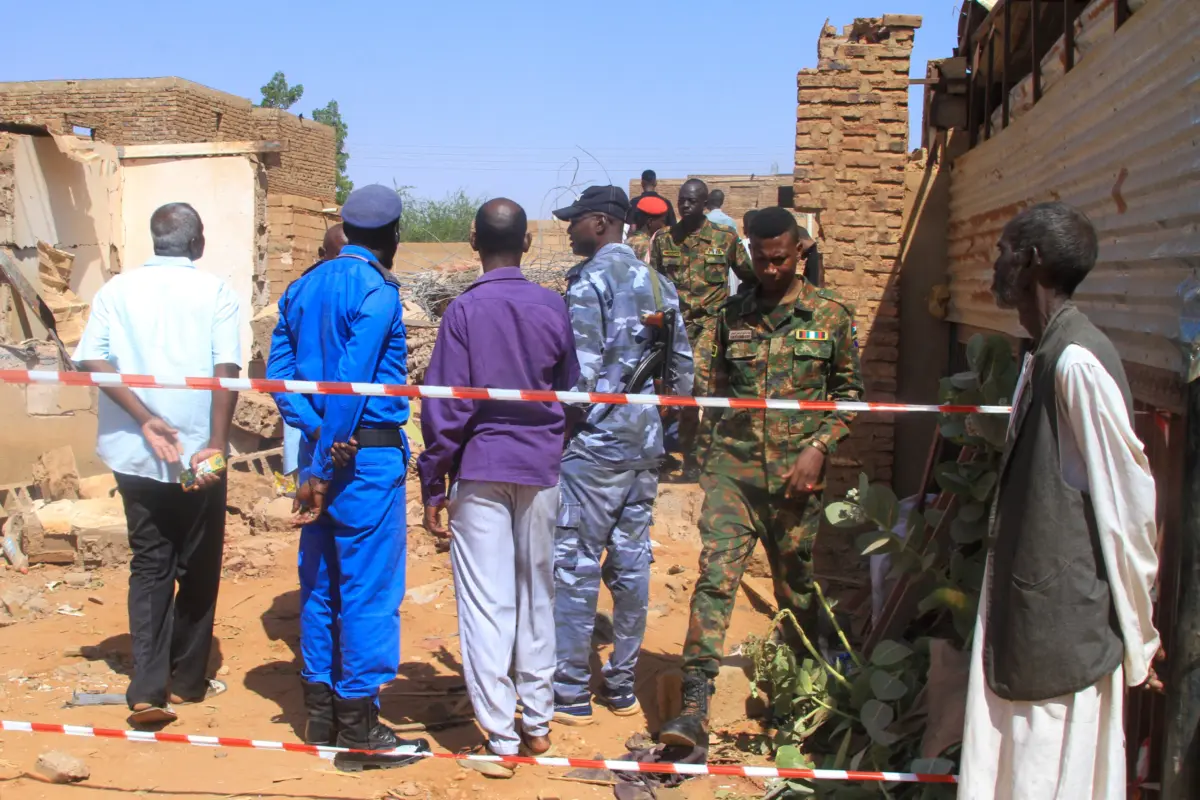
The Sudanese capital and its surrounding regions have witnessed a significant escalation in aerial warfare as a series of coordinated drone strikes, attributed to the paramilitary Rapid Support Forces (RSF), targeted critical government infrastructure, the international airport, and United Nations facilities. According to local health officials, eyewitness accounts, and international monitors, the attacks, which occurred in the early hours of Sunday, resulted in at least four civilian deaths, including a child, and left nearly a dozen others wounded. These strikes represent a deepening of the technological dimensions of the Sudanese civil war, which has increasingly transitioned from conventional ground skirmishes to a sophisticated and lethal reliance on unmanned aerial vehicles (UAVs).
The primary wave of the assault began approximately at 2:00 AM local time (00:00 GMT) and persisted until nearly 4:30 AM. Residents of Khartoum reported the heavy thud of explosions and the distinct, high-pitched whine of drone motors, followed by the rapid response of Sudanese Armed Forces (SAF) anti-aircraft batteries. The SAF attempted to intercept multiple projectiles over central Khartoum, where government administrative buildings and the strategically vital Khartoum International Airport are located. While the military claimed to have neutralized several threats, the fallout from the interceptions and successful strikes caused widespread damage to residential zones.
Casualties and Civil Impact in the Tri-City Area
The human toll of the Sunday morning attacks was felt most acutely in Omdurman, the city situated directly across the Nile from the capital. Al Jazeera reports and local medical sources confirmed that a single drone strike on a residential dwelling in northern Omdurman killed three individuals and wounded nine others. Emergency responders and neighbors were seen digging through the rubble of the home throughout the morning, highlighting the vulnerability of civilians in densely populated urban centers that have become the primary theaters of this conflict.
Further south, in the village of Jebel Aulia—located roughly 45 kilometers (28 miles) from the heart of Khartoum—the violence claimed the life of a child. Witnesses described a harrowing scene where a drone struck the residence of a prominent local mosque official, known as the muezzin, who traditionally calls the faithful to prayer. The strike reduced the structure to debris, sparking a frantic search for survivors among the official’s extended family. The targeting of residential areas, whether intentional or as a byproduct of failed interceptions, has intensified the atmosphere of terror for the remaining inhabitants of the Khartoum metropolitan area.
Targeting of International Personnel and UN Infrastructure
The drone strikes have also heightened the risks for the dwindling number of international humanitarian workers remaining in the country. Denise Brown, the United Nations Humanitarian Coordinator in Sudan, confirmed on Sunday that a UN building was struck and damaged during the barrage. At the time of the impact, UN personnel were inside the facility. While no international staff members were reported killed in this specific incident, the UN’s humanitarian office (OCHA) issued a scathing condemnation, labeling the endangerment of aid workers and the strike on civilian-occupied neighborhoods as "entirely unacceptable."
This incident follows a pattern of deteriorating safety for humanitarian operations. Since the conflict began in April 2023, dozens of aid workers have been killed, and warehouses containing life-saving food and medical supplies have been systematically looted or destroyed by both sides of the conflict. The damage to the UN facility on Sunday underscores the growing difficulty of maintaining a humanitarian presence in a conflict zone where the distinction between military and civilian targets is increasingly blurred.
The Technological Shift: Sudan’s Deadly Drone War
The reliance on drones marks a pivotal shift in the military strategy of both the SAF and the RSF. While the SAF initially held a monopoly on air power through its fleet of fighter jets and attack helicopters, the RSF has increasingly integrated sophisticated drone technology into its arsenal. These drones, often small, low-cost, and difficult to detect on conventional radar, are used for both reconnaissance and offensive strikes.
Data provided by the United Nations indicates a staggering rise in drone-related fatalities. In the first six months of 2026 alone, more than 1,100 people were killed by drone operations across Sudan. The impact on the youth is particularly devastating; the UN Children’s Fund (UNICEF) recently reported that drone strikes are responsible for approximately two-thirds of all children killed or injured in the conflict between January and September. The precision—or lack thereof—of these remote-controlled weapons has turned residential streets into frontlines, leaving families with no safe haven.

Geopolitical Tensions and Allegations Against Ethiopia
The Sunday attacks have also reignited diplomatic friction between Sudan and its eastern neighbor, Ethiopia. A senior Sudanese military source, speaking on the condition of anonymity, alleged that the drones involved in the Khartoum strikes were launched from Bahir Dar airport in Ethiopia. This claim suggests a level of regional entanglement that could broaden the scope of the war.
The Sudanese government has previously accused Addis Ababa of providing logistical support and a safe haven for RSF operations, allegations that Ethiopia has consistently and vehemently denied. In response to these perceived provocations, the Sudanese administration has lodged formal complaints with the United Nations Security Council and the African Union. These complaints allege that Ethiopia is violating Sudanese sovereignty by facilitating drone incursions. Analysts suggest that the historical tensions between the two nations—primarily regarding the Grand Ethiopian Renaissance Dam (GERD) and the disputed Fashaga border region—are providing a volatile backdrop to these latest accusations.
Allegations of Summary Executions in Blue Nile State
As the drone war intensified in the north, reports of atrocities emerged from the southeastern regions of the country. On Sunday, the Sudanese government accused RSF fighters of executing a group of captured SAF soldiers in the Blue Nile state, which borders Ethiopia. The government characterized these killings as a flagrant violation of International Humanitarian Law and the Geneva Conventions regarding the treatment of prisoners of war.
While these reports have not yet been independently verified by international monitors, they align with a broader pattern of reported summary executions and ethnic violence that have characterized the war. The RSF has faced numerous accusations of war crimes, particularly in the Darfur region, while the SAF has been criticized for indiscriminate aerial bombardment of civilian infrastructure. Both sides have been accused by the International Criminal Court (ICC) and human rights organizations of failing to protect non-combatants.
A Nation in Collapse: The Broader Humanitarian Context
The conflict between the SAF, led by General Abdel Fattah al-Burhan, and the RSF, led by Mohamed Hamdan "Hemedti" Dagalo, has triggered what the UN describes as one of the most severe humanitarian crises in modern history. Since the initial outbreak of violence in April 2023, approximately 13 million people have been displaced from their homes, creating the world’s largest internal displacement crisis.
The economic and agricultural foundations of the country have been decimated. In regions such as North Darfur, particularly around the Zamzam displacement camp, famine has already been officially declared. Across the rest of the country, millions more are on the brink of starvation as the war prevents the planting of crops and blocks the delivery of essential food aid. The continued targeting of transport hubs like Khartoum International Airport further complicates the logistics of any potential large-scale relief effort.
Analysis: The Implications of Prolonged Urban Warfare
The Sunday drone strikes signify more than just a tactical maneuver; they represent the "new normal" of the Sudanese conflict—a war of attrition where technology compensates for a lack of ground-level territorial control. For the RSF, drones provide a way to project power into the heart of the capital without needing to maintain large, vulnerable troop concentrations. For the SAF, the challenge of defending against such asymmetric threats is straining their resources and forcing a defensive posture in areas they previously considered secure.
Furthermore, the international community’s inability to broker a lasting ceasefire is becoming increasingly evident. Multiple rounds of talks in Jeddah and Geneva have failed to produce more than temporary lulls in fighting. As long as regional actors are perceived to be fueling the conflict through the supply of advanced weaponry and drone technology, the prospects for a diplomatic resolution remain dim. The Sunday strikes on UN facilities may serve as a catalyst for renewed international pressure, but for the residents of Khartoum and Omdurman, the immediate reality remains a deadly wait for the next siren or the next explosion from above.
