

The United States corporate governance landscape is poised for a significant transformation, with proposed regulatory changes from the Securities and Exchange Commission (SEC) signaling a potential recalibration of shareholder rights and engagement mechanisms. A recent report by ISS STOXX, drawing on insights from the 2026 ISS Global Benchmark Policy Survey, indicates that institutional investors are actively contemplating how to navigate this evolving environment, with a pronounced focus on maintaining robust avenues for board accountability. Subodh Mishra, Global Head of Communications at ISS STOXX, highlights that the survey results suggest investors are not merely seeking to preserve existing tools but are strategically preparing for a future where established methods of engagement may be less readily available.
The core of this impending shift lies in a series of proposed regulatory adjustments that could fundamentally alter how investors communicate with management, influence corporate direction, and ensure transparency. These proposals encompass critical areas such as the shareholder proposal process, exempt solicitations, executive compensation disclosure, and advisory say-on-pay votes. The SEC’s stated rationale, as articulated by former Chair Paul Atkins, centers on a re-evaluation of the balance between federal and state authority in corporate regulation, particularly in light of increasing competition among states to attract corporate domicile. This suggests a potential decentralization of certain governance oversight functions.
SEC Proposes Significant Rollback of Shareholder Oversight Mechanisms

Central to the impending changes is the SEC’s proposal to rescind Rule 14a-8, the federal framework that governs the inclusion of shareholder proposals in company proxy materials. This move, if enacted, would largely shift the responsibility for regulating shareholder proposals to individual states, depending on a company’s jurisdiction of incorporation. This could lead to a fragmented governance landscape across the United States, with varying rules and legal interpretations governing shareholder advocacy. While the current framework is widely expected to remain in effect through the 2027 proxy season, the implications of this potential shift are profound. Companies and investors alike will need to adapt to a potentially more complex and jurisdiction-specific approach to shareholder engagement.
The implications for investor activism are substantial. Historically, Rule 14a-8 has provided a standardized pathway for shareholders to bring forward resolutions on a wide range of issues, from environmental, social, and governance (ESG) concerns to corporate governance reforms. The rescission of this rule could make it more challenging and costly for shareholders to introduce proposals, potentially empowering management and boards at the expense of shareholder voice. This could also spur increased competition among states to attract corporations by offering more or less favorable governance regimes for businesses, a dynamic that could be scrutinized by investors concerned about a race to the bottom in corporate accountability.
Beyond shareholder proposals, the SEC has also put forth substantial changes to the exempt solicitation framework. This mechanism allows shareholders to publicly communicate their views on matters subject to a shareholder vote through filings on the SEC’s EDGAR platform, without needing to conduct a full proxy solicitation. Previous reforms had already limited exempt solicitation filings to shareholders holding over $5 million in a company’s stock, thereby increasing the hurdles for smaller investors and for certain shareholder-led engagement efforts like "Vote No" campaigns. The new proposal aims to eliminate exempt solicitation filings altogether.
This proposed elimination represents a significant curtailment of a key channel through which investors have historically coordinated engagement and publicly voiced concerns. It removes a vital tool for collective action and transparency, potentially making it more difficult for shareholders to rally support for their positions on critical company matters. The impact of this change could be felt across the investment community, from large institutional investors to shareholder advocacy groups.
Executive Compensation Under Scrutiny Amidst Disclosure Rule Changes
The proposed regulatory shifts extend to the critical area of executive compensation. In May 2026, the SEC proposed a rule that would significantly reduce executive compensation disclosure requirements for a vast majority of U.S. public companies, effectively exempting them from advisory say-on-pay votes. Companies with a two-year average public float below $2 billion, as well as newly public companies in their first five years of listing, would be eligible for these accommodations. The SEC estimates that approximately 81% of U.S. public companies would qualify for these exemptions.
If adopted, this rule would represent the most significant alteration to U.S. executive compensation oversight since the introduction of say-on-pay votes. The reduction in disclosure requirements could diminish the transparency surrounding executive pay, particularly concerning long-term incentive performance targets. Investors often rely on this information to assess the alignment between executive rewards and company performance, as well as to evaluate the potential for pay-for-performance alignment.
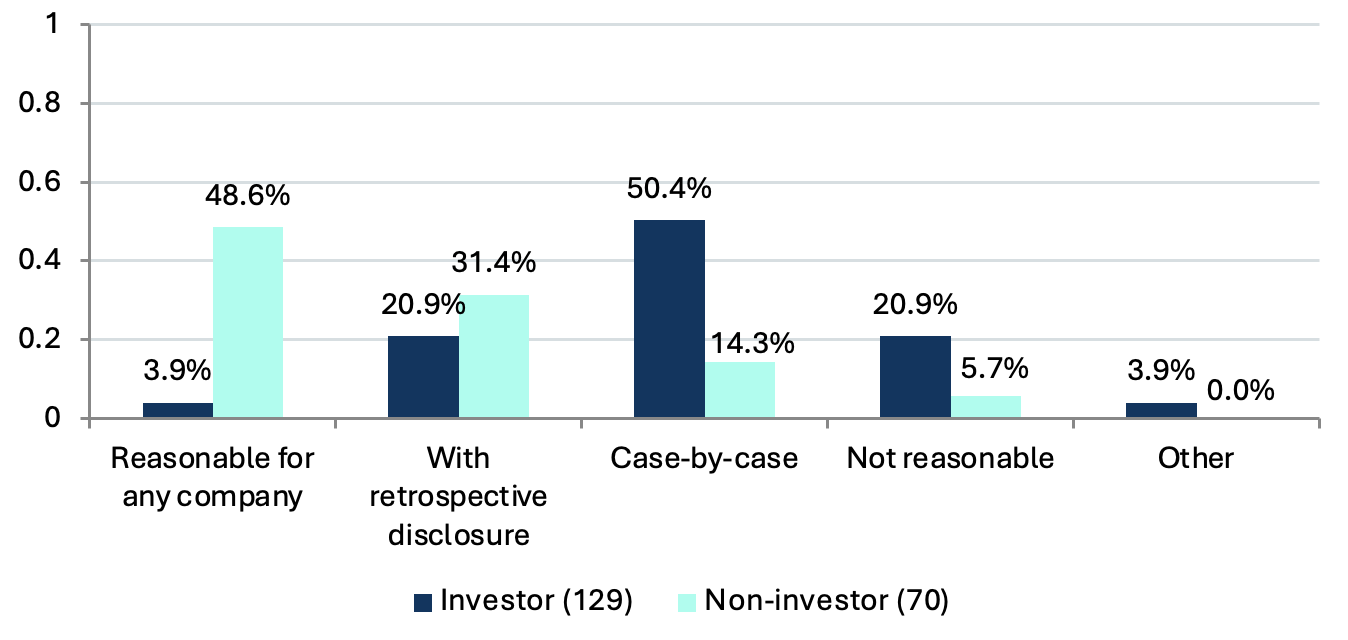
The ISS Global Benchmark Policy Survey delved into investor perspectives on these disclosure changes. While investors expressed a nuanced view, with over 70% acknowledging that competitive harm could justify non-disclosure of long-term incentive targets under specific circumstances (either on a case-by-case basis or with retrospective disclosure), they also demonstrated a clear preference for transparency. Notably, investors were considerably more skeptical of competitive harm arguments when companies sought to withhold relative performance metrics compared to absolute performance targets. Nearly 80% of respondents supported a distinction between the two, indicating a strong desire for insight into how executive pay is benchmarked against peers. This suggests that investors value transparency around incentive design, even while acknowledging legitimate commercial sensitivities.
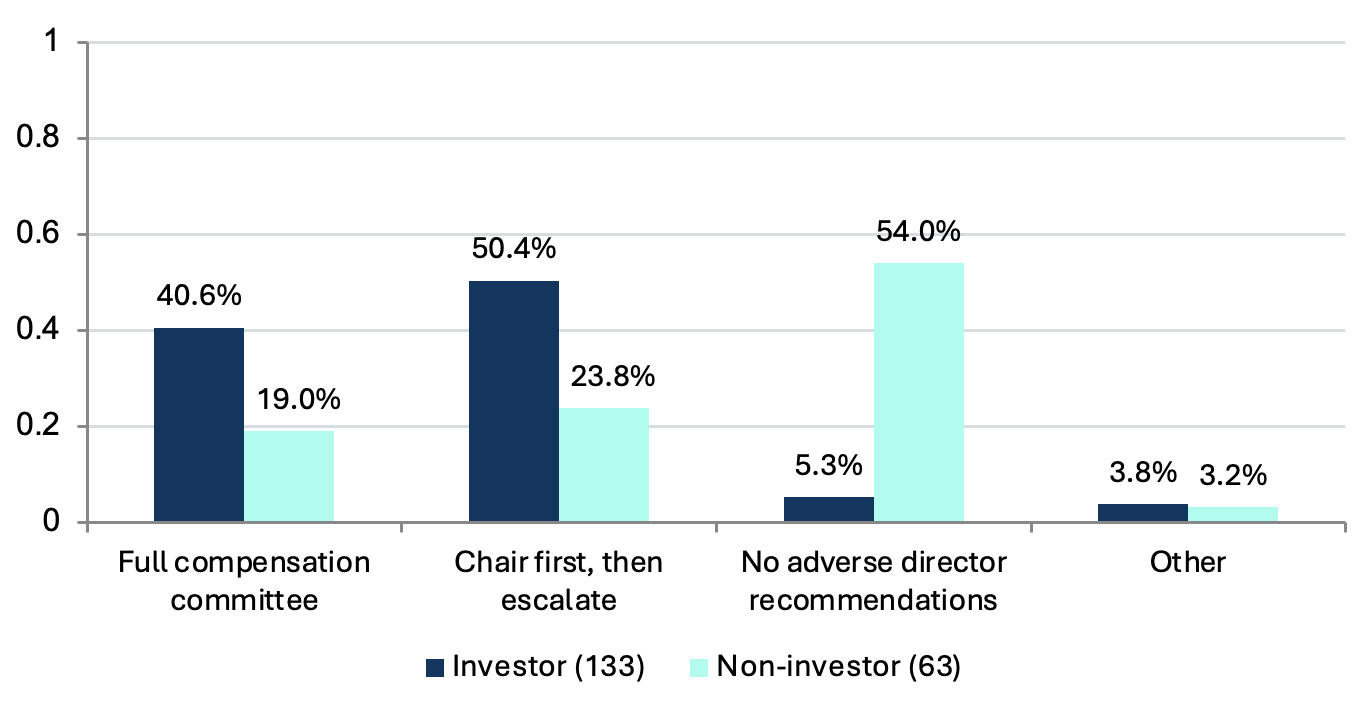
The potential exemption from say-on-pay votes raises a critical question: how will investors express concerns about executive compensation if they can no longer cast a direct advisory vote? The survey results point towards director elections as a potential alternative avenue for accountability. A significant majority of investor respondents favored maintaining some form of director accountability. While 41% suggested directing concerns towards compensation committee members, a more substantial 50% advocated for a targeted approach that would initially focus on the compensation committee chair and escalate if concerns persisted over multiple years. This approach reflects a strategic shift, mirroring a return to pre-say-on-pay frameworks where investors often used votes against directors to signal dissatisfaction with compensation practices.
Investor Priorities in a Changing Governance Landscape
The ISS Global Benchmark Policy Survey offers early indications of how institutional investors are preparing for these potential regulatory changes. A key theme emerging from the survey is the investor focus on preserving meaningful avenues for accountability, even as established mechanisms evolve.
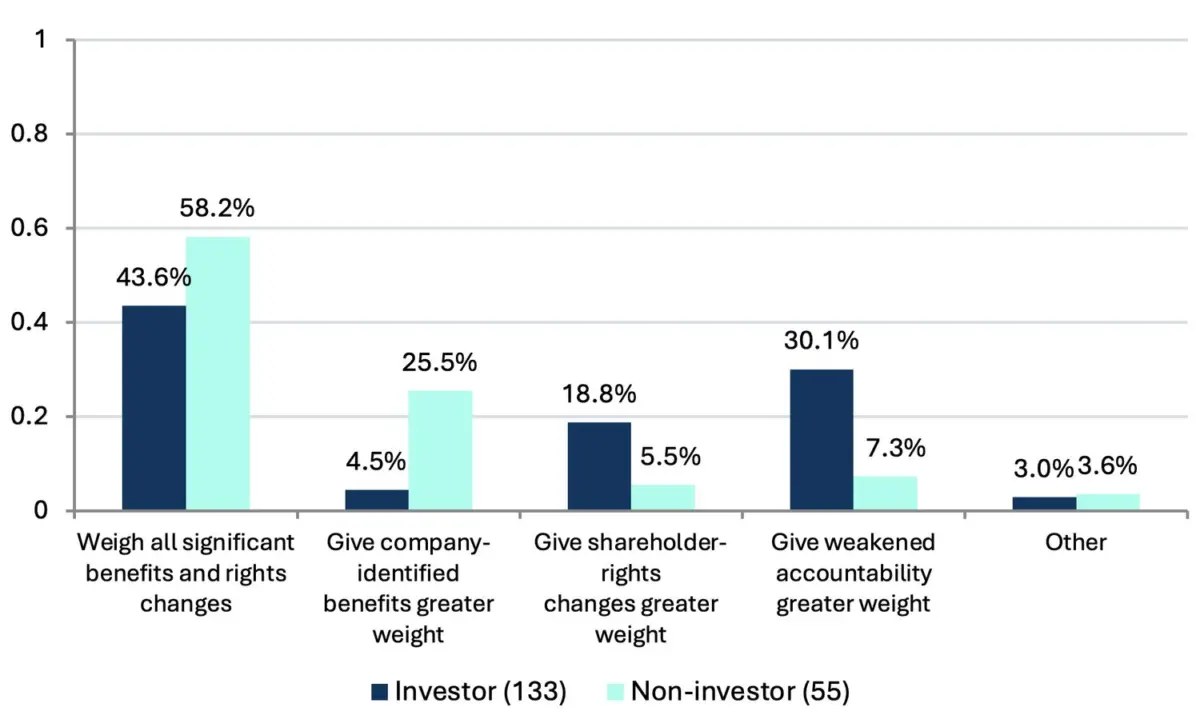
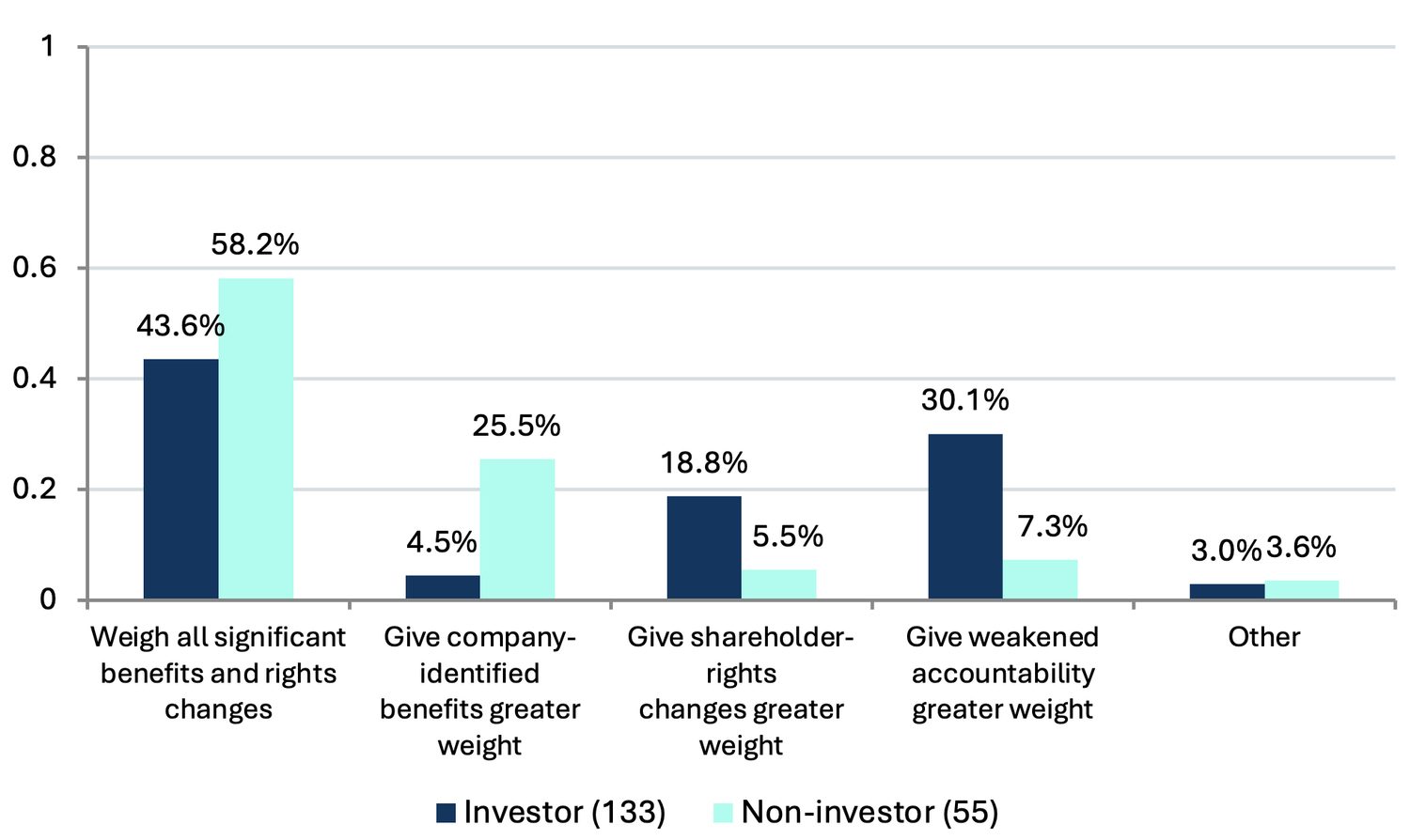
When it comes to re-incorporation proposals, which companies may consider in light of potential shifts in state-level governance, investors appear to prioritize a balanced assessment. While a majority of all respondents favored considering all material factors together, including company benefits and impacts on shareholder protections, investors demonstrated a notably stronger inclination to weigh changes that could weaken accountability to shareholders. This underscores a commitment to safeguarding shareholder rights amidst corporate restructuring.
Director Independence and Tenure Take Center Stage
As shareholder proposals and exempt solicitations become potentially less accessible, and with the prospect of reduced say-on-pay votes, director elections are increasingly likely to become the primary tool for investors to express concerns and drive accountability. This heightened reliance on director votes places a greater emphasis on director independence, tenure, and overall board composition.
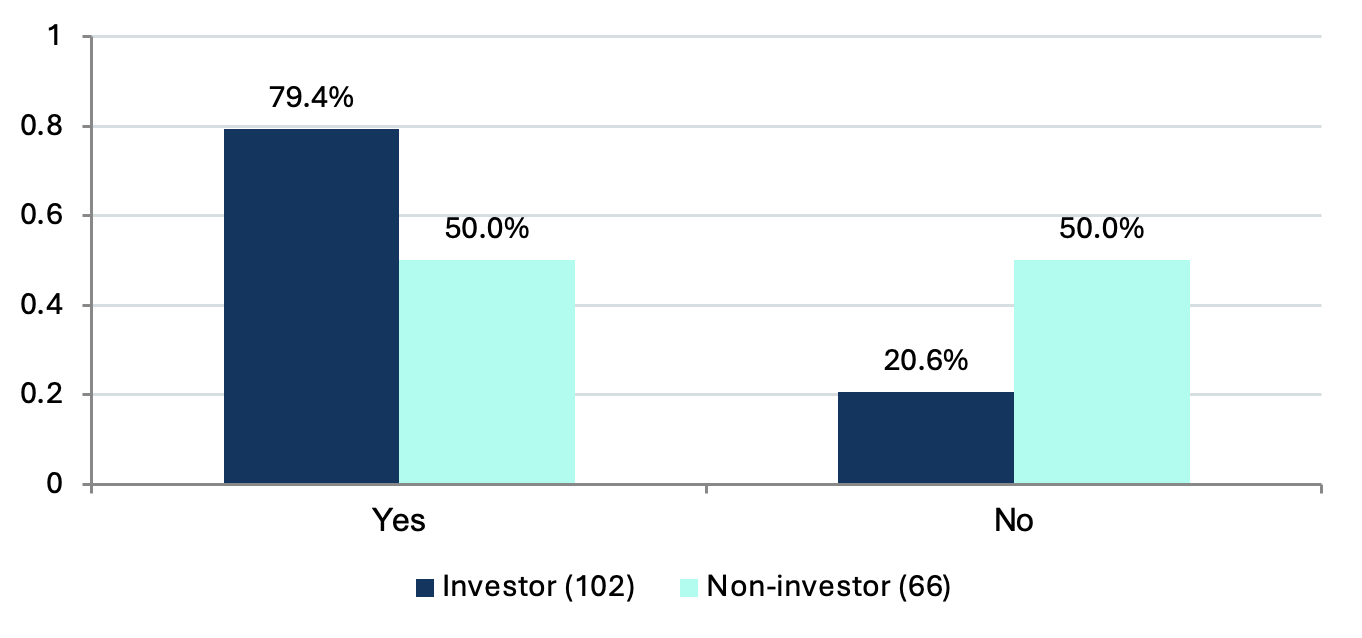
The survey results reveal that a significant portion of investor respondents (approximately 64%) believe that lengthy tenure should be a factor in assessing director independence at U.S. companies, even though lengthy tenure alone is not typically considered determinative in the U.S. market. This suggests a growing sentiment that prolonged service on a board could potentially diminish a director’s objectivity or willingness to challenge management.
When asked about how tenure should be assessed, respondents generally did not favor a rigid, tenure-only standard. Instead, a majority preferred a more comprehensive evaluation that incorporates factors such as board refreshment, the duration of tenure, and potential overlaps with key board leadership, including the CEO and the chair. This indicates a nuanced understanding of independence, viewing it as a contextual concept deeply intertwined with the broader dynamics of board oversight and composition.
Broader Implications and the Future of Corporate Accountability
The proposed regulatory changes by the SEC, coupled with the insights from the ISS STOXX survey, paint a picture of a U.S. corporate governance system in transition. The potential reduction in established shareholder rights and engagement tools could compel investors to reassess how they exercise their influence. The emphasis is likely to shift from adapting to individual rule changes to a broader strategic re-evaluation of where and how governance concerns can be effectively escalated and expressed.
As traditional shareholder advocacy channels become less available, director elections, board leadership, committee oversight, and rigorous assessments of director independence are poised to gain even greater prominence. This evolution could lead to a more direct and potentially confrontational approach to holding boards accountable, as investors may leverage their voting power to signal dissatisfaction with management and board performance.
The challenge for investors in the coming years will be to navigate this evolving landscape by understanding the new dynamics of accountability and adapting their engagement strategies accordingly. The future of corporate governance in the U.S. hinges on the ability of investors to find effective new avenues for oversight and influence, ensuring that the principles of accountability and transparency remain at the forefront of corporate decision-making. The proposed changes, while aimed at streamlining certain regulatory processes, may ultimately lead to a more robust and direct form of shareholder oversight through the electoral process for directors.
