

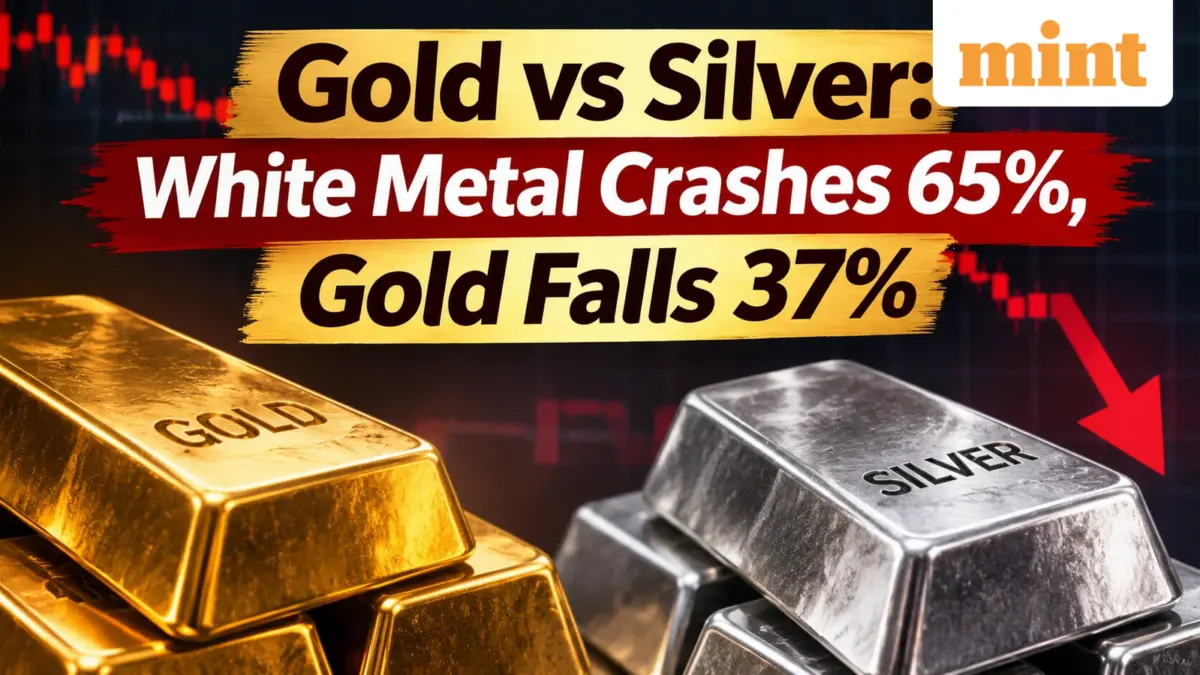
The precious metals market, which began 2026 with an extraordinary rally that saw record-breaking valuations, has transitioned into a period of severe correction, leaving investors to grapple with a dramatic erosion of wealth. While both gold and silver have surrendered significant portions of their year-to-date gains, the scale of the decline has been disproportionately felt in the silver market. As of late November 2026, the Multi Commodity Exchange (MCX) has recorded a staggering 65% plunge in silver prices from their January peak, dwarfing the 37% decline observed in gold. This divergence has fundamentally altered the investment narrative for the year, shifting the advantage back to gold after silver had dominated the performance charts through the first three quarters of the year.
The pivotal moment in this market cycle occurred during the session on November 20, 2026. This date marked a "washout" for precious metals, where silver—which had outperformed gold on a percentage basis through mid-October—lost nearly the entirety of its annual advance. For investors who entered the market in late 2025, the November correction acted as a great equalizer, stripping away the high-beta gains of silver and reinforcing gold’s traditional role as a more stable store of value during periods of high volatility. On that single day, silver prices tumbled by 6.7%, while gold saw a sharp but relatively more contained decline of 4.7%.
Statistical Deep-Dive: The January Peak vs. the November Trough
To understand the magnitude of the 2026 crash, one must examine the heights from which these assets fell. On January 29, 2026, a confluence of geopolitical instability and aggressive retail participation pushed both metals to lifetime highs. At the time, market sentiment was overwhelmingly bullish, fueled by fears of currency devaluation and regional conflicts that drove safe-haven demand to unprecedented levels.
On the MCX, gold’s December futures contract reached an all-time high of ₹1,93,096 per 10 grams. By the intraday lows of November 20, however, the price had retreated to ₹1,21,424. This represents a nominal loss of ₹71,672 per 10 grams, or a total percentage correction of 37.12%. While significant, this decline is modest when compared to the carnage witnessed in the silver market.
Silver, often referred to as "the restless metal" due to its dual role as both an investment asset and an industrial commodity, scaled a record height of ₹4,20,048 per kg on January 29. The subsequent reversal saw it crash to an intraday low of ₹1,46,868 on November 20. This translates to a staggering wipeout of ₹2,73,180 per kg, a 65.04% decline from the peak. The sheer velocity of this move is underscored by the recovery requirements: at current levels, gold would need to rally approximately 59% to reclaim its record high, whereas silver would require a monumental 186% surge to return to its January status.
Chronology of the 2026 Precious Metals Cycle
The trajectory of gold and silver in 2026 can be categorized into four distinct phases, each defined by different macroeconomic drivers:
- The January Surge (January 1 – January 29): The year began with a parabolic move. Retail investors in India and across the globe rushed into precious metals as geopolitical tensions in several key regions intensified. This "FOMO" (fear of missing out) buying pushed MCX silver up nearly 78% in less than a month, while gold rose steadily to cross the ₹1.9 lakh mark.
- The Plateau and Initial Softening (February – June): Following the January 29 peak, prices entered a period of consolidation. While the initial euphoria cooled, prices remained historically high as investors waited for cues from global central banks. During this phase, silver began to show signs of its inherent volatility, fluctuating more wildly than gold.
- The Silver Outperformance Phase (July – mid-October): Despite being off its record highs, silver maintained a strong lead over gold in terms of year-to-date returns. Industrial demand for silver, particularly in the green energy and electronics sectors, provided a floor for prices even as gold began to face headwinds from rising US Treasury yields.
- The Great Reversal (October 16 – November 20): This phase was characterized by a sharp change in US monetary policy expectations. As the US Federal Reserve adopted a more hawkish stance, the dollar strengthened, and bond yields surged. This created a "perfect storm" that triggered the November 20 crash, where silver’s gains for the year were effectively liquidated in a matter of weeks.
Comparative Returns: The Importance of Entry and Exit Timing
The 2026 market has served as a masterclass in the importance of market timing. For much of the year, silver was the undisputed champion for portfolio growth. According to data from Kotak Neo, an investor who purchased MCX silver on October 1, 2025, and held it until the peak of the mid-October 2026 rally (October 16), would have seen a return of 47.41%. During this same window, silver prices climbed from ₹1,44,566 per kg to ₹2,13,100.
In contrast, gold delivered a more modest return of 26.26% over that same period, rising from ₹1,17,558 to ₹1,48,431 per 10 grams. At that juncture, silver appeared to be the superior investment.
However, the picture changed dramatically for those who held their positions through the November correction. By factoring in the intraday lows of November 20, the total return for the October 2025 entry point saw gold retaining a positive return of 3.29%, whereas silver’s return plummeted to a meager 1.59%. This reversal highlights gold’s superior ability to preserve capital during systemic market selloffs, despite its lower upside during bull runs.
The Triad of Pressures: Why Prices Collapsed
Analysts point to three primary macroeconomic factors that combined to break the rally in precious metals:
1. Hawkish Signals from the US Federal Reserve
The primary catalyst for the selloff was a shift in tone from the US Federal Reserve. Throughout late 2025 and early 2026, markets had priced in a pivot toward lower interest rates. However, persistent inflation forced Fed officials to reconsider. Chicago Federal Reserve President Austan Goolsbee’s recent comments, indicating that further interest-rate increases remained on the table to tackle "stubborn" inflationary pressures, sent shockwaves through the commodities market. Because gold and silver are non-yielding assets, higher interest rates increase the opportunity cost of holding them, leading institutional investors to rotate capital into interest-bearing instruments.
2. Elevated US Treasury Yields
The bond market has provided stiff competition for precious metals. The 10-year US Treasury yield recently marked a significant milestone, recording 29 consecutive closes above the 5% threshold—a level of persistence not seen since 2007. High yields act as a gravitational pull on gold prices; when investors can earn a guaranteed 5% return on "risk-free" government debt, the relative appeal of gold and silver diminishes.
3. A Resurgent US Dollar
The US dollar index (DXY) saw a 0.7% gain in the week leading up to the November 20 crash. Since gold and silver are priced in dollars on the international market, a stronger greenback makes these metals more expensive for holders of other currencies, such as the Indian Rupee. This currency dynamic often leads to a reduction in global demand, further weighing on prices.
Industry Reactions and Expert Sentiment
The scale of the silver crash has led to a reassessment of the metal’s role in diversified portfolios. Commodity strategists have noted that while silver’s industrial utility provides a long-term bullish case, its high "beta" makes it a dangerous asset for risk-averse retail investors during a liquidity crunch.
Inferred reactions from institutional trading desks suggest that the November 20 move was exacerbated by technical selling. As silver broke through key support levels established earlier in the year, automated trading algorithms and margin calls likely accelerated the downward momentum. In the Indian context, MCX traders have noted a significant cooling of retail "gold-buying" sentiment, which had been at a fever pitch in January. The current environment is one of caution, with many advisors suggesting that the "easy money" phase of the precious metals rally has concluded.
Broader Impact and Implications for Investors
The 2026 price crash has several long-term implications for the Indian investment landscape. First, it reinforces the necessity of diversification. Investors who were "over-indexed" in silver experienced a wealth destruction far greater than those with a balanced gold-to-silver ratio.
Second, the crash has impacted the jewelry and bullion industries in India. High volatility often leads to a "wait-and-see" approach among consumers, which could dampen demand during upcoming festive or wedding seasons if prices do not stabilize.
Finally, the recovery path remains uncertain. With silver needing to nearly triple in value to reach its January highs, the metal may face a long period of base-building. Gold, while closer to its peak, remains at the mercy of US monetary policy. Investors are now closely watching upcoming inflation data and Federal Reserve meetings, as these will likely determine whether the November 20 lows represent a floor or merely a pause in a longer-term downtrend.
As the dust settles on the November 20 session, the primary lesson for 2026 is clear: in the world of precious metals, volatility is a double-edged sword, and gold’s reputation as the "ultimate hedge" has been reaffirmed by its relative resilience in the face of a historic market rout.
