

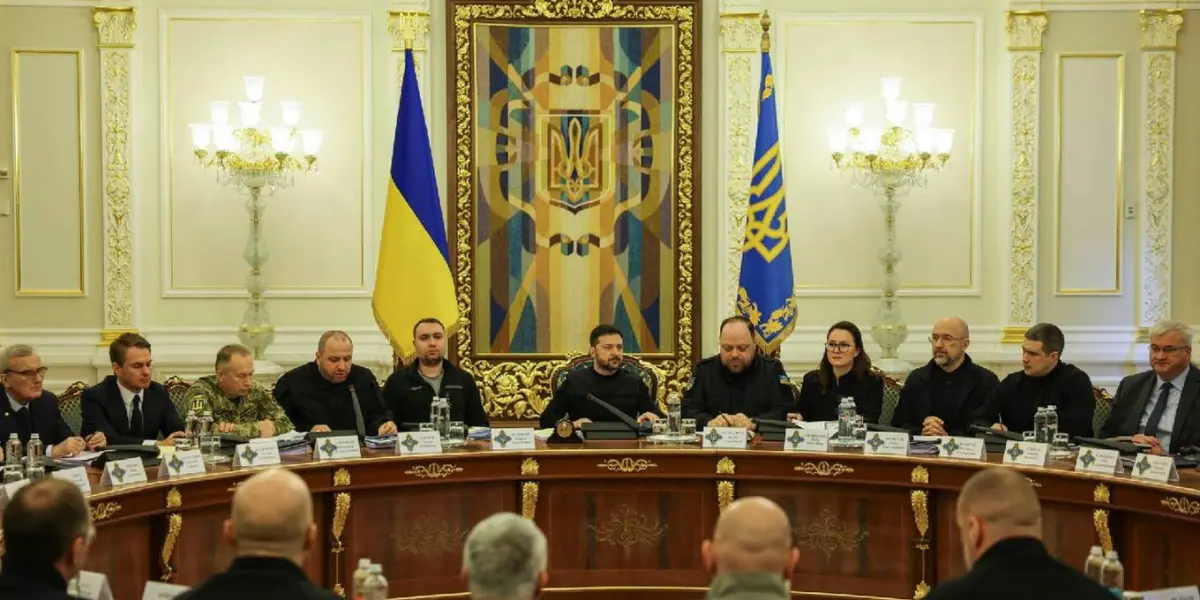
Ukrainian President Volodymyr Zelensky has repeatedly expressed his opposition to the formation of a national unity government. However, a compelling argument exists that incorporating opposition leaders into the cabinet is now a critical step to reinforce the essential checks on corruption and to curb wayward bureaucratic actions, which Zelensky’s current administration appears increasingly unable to provide. This situation arises against a backdrop of evolving geopolitical realities and domestic challenges that demand a robust and transparent governance structure.
The concept of a national unity government typically involves the inclusion of representatives from multiple political parties, including those in opposition, to form a broader, more inclusive governing coalition. Such arrangements are often considered during times of national crisis, war, or significant political transition, aiming to foster a sense of shared purpose and collective responsibility. While President Zelensky has consistently favored a more streamlined executive approach, the evolving circumstances within Ukraine and the pressures of ongoing conflict necessitate a re-evaluation of this stance.
Background: The Evolution of Ukrainian Governance
Since gaining independence in 1991, Ukraine has navigated a complex path toward democratic consolidation and economic reform. The nation has faced numerous challenges, including political instability, economic transition, and external pressures, particularly from its eastern neighbor, Russia. The Orange Revolution of 2004 and the Euromaidan Revolution of 2014 were pivotal moments that underscored the Ukrainian people’s desire for closer integration with Europe and a commitment to democratic principles, including the rule of law and the eradication of corruption.
President Zelensky, a former actor and comedian, was elected in 2019 on a wave of popular support, promising to fight corruption and bring an end to the conflict in the Donbas. His initial approach to governance was characterized by a desire to consolidate power and implement reforms rapidly. However, the full-scale Russian invasion in February 2022 fundamentally altered the political landscape, placing Ukraine under immense pressure to demonstrate unity and resilience.
The Argument for a National Unity Government
The rationale for a national unity government in Ukraine, despite President Zelensky’s reservations, centers on several key considerations:
1. Strengthening Checks and Balances Against Corruption:
Corruption has been a persistent challenge in Ukraine, undermining public trust and hindering economic development. While Zelensky’s administration has made efforts to combat this endemic issue, the concentration of power within a single political force can, paradoxically, create vulnerabilities. Introducing opposition figures into key ministerial positions would create a more robust system of internal oversight. These individuals, often with their own political mandates and constituencies, would be more inclined to scrutinize government decisions, identify potential conflicts of interest, and challenge any instances of malfeasance.
- Supporting Data: Transparency International’s Corruption Perception Index has consistently ranked Ukraine as a country facing significant corruption challenges. While there have been improvements in recent years, the perception of widespread corruption remains a concern for both domestic and international stakeholders. For instance, in the 2022 index, Ukraine scored 33 out of 100, placing it at 96th out of 180 countries, indicating a persistent problem. A more inclusive government structure could provide additional mechanisms to tackle this.
2. Enhancing Bureaucratic Accountability:
The Ukrainian bureaucracy, like that in many post-Soviet states, can be prone to inertia, inefficiency, and resistance to reform. Without strong political will and effective oversight, bureaucratic drift can lead to delayed implementation of critical policies, misallocation of resources, and a general disconnect between government intentions and on-the-ground realities. Bringing in experienced opposition leaders, who may have different perspectives on administrative processes and a track record of engaging with various sectors of society, could inject fresh impetus into bureaucratic reform. They could act as advocates for greater transparency and efficiency within their respective portfolios.
3. Fostering Political Stability and National Cohesion:
In a time of existential threat, a broad-based government can project an image of national unity and resilience to both domestic and international audiences. While Zelensky’s Servant of the People party holds a significant majority in parliament, a national unity government would signal a commitment to inclusivity that transcends partisan politics. This could be particularly important for maintaining morale and unity on the home front, and for reassuring international partners of Ukraine’s stable governance.
- Analysis: The current wartime environment demands a unified national effort. By bringing opposition leaders into the fold, President Zelensky could demonstrate a willingness to prioritize national interests over partisan considerations. This could strengthen Ukraine’s bargaining position on the international stage and potentially unlock further support from allies who value democratic solidarity.
4. Reassuring International Partners:
For international partners providing crucial financial and military aid, a government perceived as broadly representative and demonstrably committed to good governance is often a prerequisite for sustained support. A national unity government, by its very nature, could signal a heightened level of political maturity and a shared commitment to democratic principles, which would likely be viewed favorably by organizations like the International Monetary Fund (IMF), the European Union (EU), and individual donor nations.
- Inferred Statements/Reactions: While no official statements from international partners specifically calling for a national unity government have been publicly released, many have emphasized the importance of strong institutions, rule of law, and combating corruption as conditions for continued aid. A move towards a more inclusive government would likely align with these expressed priorities.
Potential Challenges and Considerations
Despite the compelling arguments, forming a national unity government is not without its challenges. Historically, such coalitions can be fraught with internal disagreements and power struggles.
- Political Compromise: President Zelensky would need to be prepared to cede significant influence and share power with opposition figures, some of whom may have fundamentally different political ideologies and policy approaches. This would require a delicate balancing act to maintain a cohesive policy agenda.
- Public Perception: The public might perceive the inclusion of opposition figures as a sign of weakness or a lack of confidence in Zelensky’s own team. Managing public perception and clearly communicating the strategic rationale behind such a move would be crucial.
- Logistical Hurdles: The practicalities of integrating new ministers and their teams into the existing government apparatus, ensuring smooth transitions, and aligning policy objectives would require significant administrative effort.
A Timeline for Consideration
The debate over a national unity government in Ukraine has surfaced at various points, particularly during periods of heightened political tension or external threat. While President Zelensky has consistently resisted the idea, the current geopolitical climate and the persistent challenges of corruption and bureaucratic reform might necessitate a shift in his approach.
- Pre-2022: Prior to the full-scale invasion, discussions around governance reform and anti-corruption measures were ongoing. However, the political will for a broad coalition government was not as pronounced.
- February 2022 onwards: The immediate aftermath of the invasion saw a surge in national unity, with many political leaders pledging to work together. However, this was largely symbolic and did not translate into a formal restructuring of the government.
- Current juncture: With the war entering a protracted phase and the long-term implications for Ukraine’s reconstruction and democratic development becoming clearer, the argument for a more inclusive governance model gains traction.
Broader Impact and Implications
The decision to form or not to form a national unity government will have profound implications for Ukraine’s future:
- Domestic Governance: A national unity government could lead to more effective policy implementation, greater public trust in institutions, and a more robust fight against corruption. Conversely, a continued reliance on a single-party government, without sufficient checks, risks exacerbating existing governance challenges.
- International Relations: Ukraine’s ability to secure continued international support, including crucial reconstruction aid and progress towards EU membership, could be influenced by its demonstrated commitment to democratic governance and transparency. A move towards a national unity government would likely be a positive signal to international partners.
- Long-Term Stability: By broadening the base of political support and incorporating a wider range of perspectives, a national unity government could contribute to greater long-term political stability in Ukraine, helping it to navigate the post-war reconstruction period and beyond.
In conclusion, while President Zelensky’s initial reluctance to form a national unity government is understandable, the evolving realities of war, the persistent challenge of corruption, and the need for robust bureaucratic accountability present a strong case for re-evaluating this position. Incorporating opposition leaders into the cabinet could significantly strengthen Ukraine’s governance framework, enhance its international standing, and ultimately contribute to the nation’s long-term stability and democratic resilience. The current juncture demands a pragmatic approach that prioritizes national unity and effective governance above partisan considerations.
