

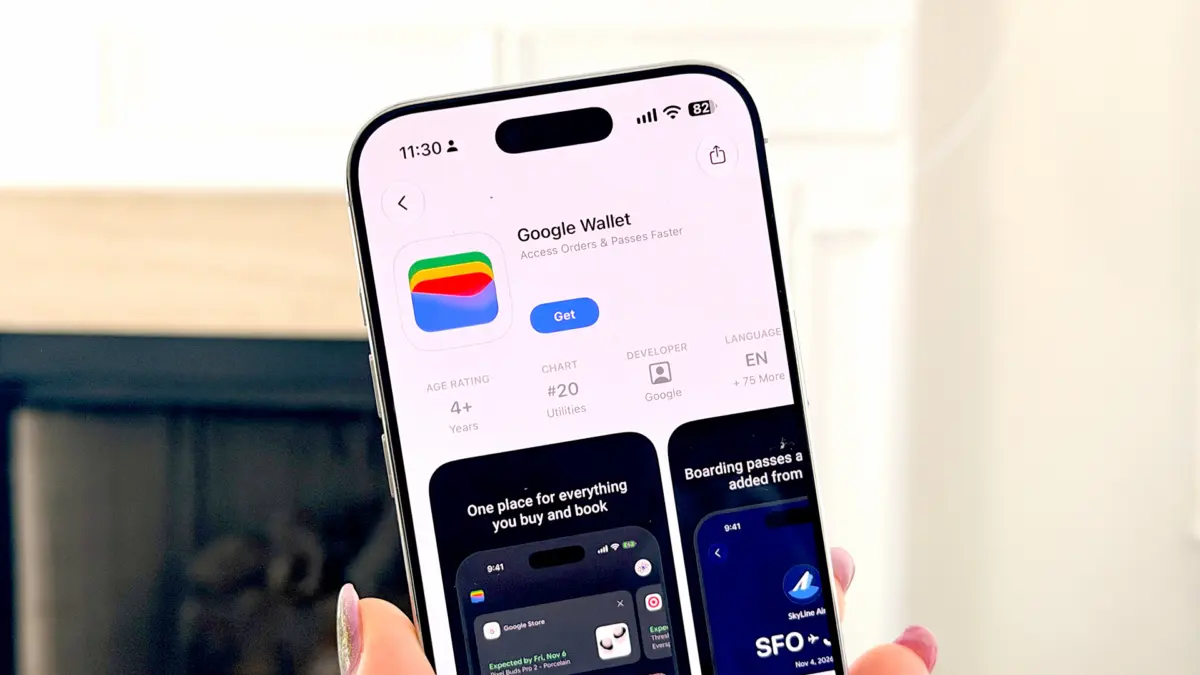
Google has officially expanded the availability of its Google Wallet application to iPhone users in the United States, marking a significant strategic shift in the company’s mobile ecosystem strategy. This launch introduces a sophisticated digital management tool to the iOS platform, designed to serve as a comprehensive hub for payment cards, loyalty programs, boarding passes, and digital receipts. However, the release arrives with a notable technical limitation: due to Apple’s long-standing restrictions on third-party access to its Near Field Communication (NFC) hardware, Google Wallet on iOS cannot support contactless tap-to-pay functionality. Despite this hurdle, the move signals Google’s broader ambition to dominate the emerging field of "agentic commerce," utilizing its Gemini artificial intelligence to redefine how consumers interact with digital marketplaces.
The introduction of Google Wallet to the iOS App Store follows the 2024 discontinuation of the legacy Google Pay app in the U.S. market. While the previous application offered a fragmented experience focused largely on peer-to-peer transfers and basic loyalty card storage, the new Google Wallet is built on a unified architecture intended to streamline the user’s financial and logistical life. For iPhone users, the app provides a centralized location to digitize physical assets, including credit and debit cards for online transactions, membership cards, and travel documents. Furthermore, the application features deep integration with Gmail, allowing it to automatically extract and display order tracking information and digital receipts, creating a holistic view of a user’s spending habits and upcoming travel plans.
The Strategic Shift Toward Agentic Commerce
The most significant aspect of the Google Wallet launch on iOS is its role as the foundational infrastructure for agentic commerce. This term refers to a paradigm shift in retail where autonomous AI agents, such as Google’s Gemini, perform commercial tasks on behalf of the user. Unlike traditional e-commerce, where a consumer manually navigates a website to make a purchase, agentic commerce allows a user to delegate the entire process—from product discovery and price comparison to final checkout—to an AI.
Within the Google Wallet app for iPhone, a dedicated "Agents" section allows users to monitor and manage purchases initiated through Gemini. Through the "Tasks" feature, users can grant Gemini permission to execute transactions within specific budgetary constraints. For example, a user might instruct the AI to "buy a specific brand of coffee when it goes on sale for under twenty dollars." Google Wallet then serves as the command center where the user can view active tasks, approve authorizations, and review completed transaction records. This evolution positions Google not just as a payment processor, but as a sophisticated intermediary in the decision-making process of the consumer.
Technical Foundations: UCP and AP2 Protocols
To support the complex requirements of AI-led transactions, Google has spearheaded the development of two critical technical frameworks: the Universal Commerce Protocol (UCP) and the Agent Payments Protocol (AP2). These protocols are designed to solve the interoperability challenges that arise when non-human agents attempt to interact with diverse retail systems.
The Universal Commerce Protocol (UCP) serves as a standardized technical language. It enables AI agents to "read" and understand the structured data of various retailers, including product catalogs, inventory levels, and promotional offers. By establishing a common language, UCP ensures that an AI agent can navigate a boutique Shopify store with the same efficiency as a massive enterprise platform like Walmart or Target. This protocol has already garnered significant industry support, with major stakeholders including Etsy, Shopify, and various global retail giants participating in its refinement.
Complementing UCP is the Agent Payments Protocol (AP2). While UCP handles the "shopping" phase, AP2 governs the "payment" phase. This framework establishes the rules for how an AI agent proves it has the authorization to spend a user’s funds and how it securely transmits payment credentials to a merchant. AP2 is designed to provide a secure "handshake" between the user’s digital wallet and the retailer’s point-of-sale system. The development of AP2 involves a massive coalition of over 60 organizations, including financial heavyweights like Mastercard, American Express, and PayPal, as well as technology leaders like Salesforce.

The NFC Barrier and the Competitive Landscape
The absence of tap-to-pay functionality on the iOS version of Google Wallet highlights the ongoing tension between Google and Apple regarding ecosystem control. On Android devices, Google Wallet is the primary method for contactless payments, utilizing the phone’s NFC chip to communicate with physical terminals. On iOS, however, Apple has historically restricted NFC access to its own Apple Pay service, citing security and privacy concerns.
While recent regulatory pressure in the European Union through the Digital Markets Act (DMA) has forced Apple to open its NFC hardware to third-party developers in that region, these changes have not yet been fully implemented or mandated in the United States. Consequently, while iPhone users in the US can use Google Wallet to store cards for "Google Pay" checkouts on websites and in-app purchases, they must still rely on Apple Pay for physical, in-store contactless transactions. This creates a bifurcated experience for the user, but one that Google appears willing to accept in order to establish its AI agent presence on the world’s most popular premium smartphone platform.
A Chronology of Google’s Mobile Payment Evolution
The launch of Google Wallet on iOS is the latest chapter in a long and often confusing history of Google’s fintech efforts. To understand the current strategy, one must look at the timeline of its development:
- 2011: Google launches the original "Google Wallet," one of the first mobile payment apps to utilize NFC technology.
- 2015: Google introduces "Android Pay" to compete more directly with Apple Pay, while the "Google Wallet" brand is pivoted toward peer-to-peer (P2P) payments.
- 2018: Google merges Android Pay and Google Wallet into a single brand called "Google Pay" to simplify the user experience.
- 2020: A major redesign of Google Pay is launched, focusing on personal finance management and social features.
- 2022: Google announces the return of the "Google Wallet" brand, focusing on a secure digital wallet for cards, IDs, and passes, while keeping Google Pay as the underlying payment technology.
- 2024: The standalone Google Pay app is officially discontinued in the United States, with all core features migrated to Google Wallet.
- Late 2024: Google Wallet arrives on iOS in the US, marking the first time the modern iteration of the app is available to iPhone users in this market.
Industry Implications and Future Outlook
The arrival of Google Wallet on iOS is expected to have broad implications for the retail and financial sectors. By providing a cross-platform hub for AI-driven commerce, Google is creating a powerful incentive for retailers to adopt the UCP and AP2 protocols. For merchants, the benefit is clear: by supporting these standards, they make their storefronts "AI-ready," allowing them to capture sales from users who prefer to let Gemini handle their shopping logistics.
From a data perspective, Google Wallet on iOS allows Google to maintain a continuous thread of consumer behavior data across devices. Even if an iPhone user utilizes Safari or other native iOS apps, their interactions with Gemini and the subsequent records stored in Google Wallet provide Google with valuable insights into purchase intent and brand loyalty. This data is critical for refining AI models and improving the accuracy of agentic commerce recommendations.
However, the launch also raises questions about consumer privacy and the security of autonomous payments. As AI agents gain the ability to spend real money, the industry must address potential vulnerabilities, such as "prompt injection" attacks where an AI might be tricked into making unauthorized purchases. Google has emphasized that Google Wallet acts as a "consumer-facing record," ensuring that users always have oversight of what their agents are doing.
As the digital wallet landscape continues to evolve, the distinction between a simple storage app and an active commercial assistant is blurring. Google’s entry into the iOS space with a wallet centered on agentic commerce suggests that the future of mobile finance will not be defined by who owns the NFC chip, but by who provides the most intelligent and frictionless shopping experience. While Apple retains its grip on the physical checkout counter for now, Google is betting that the next generation of commerce will happen in the background, powered by AI agents and managed through a unified digital wallet.
