

Following the conclusion of the 2026 Chery International User Summit in Wuhu, China, Chery Auto has formally initiated a comprehensive expansion of its new energy ecosystem strategy. This transition marks the company’s entry into what it defines as "Globalization 3.0," a strategic phase characterized by the deployment of localized energy solutions and the integration of automotive hardware into the broader power infrastructure. As the global automotive industry shifts from simple electrification to intelligent energy management, Chery is positioning its New Energy Vehicles (NEVs) not merely as transport tools, but as dispatchable, distributed mobile energy nodes. This initiative aims to support flexible grid management, promote sustainable urban development, and optimize the utilization of local energy resources across diverse international markets.
The Evolution of Globalization 3.0
Chery’s strategy represents a significant departure from traditional automotive export models. While Globalization 1.0 focused on the export of finished vehicle units and Globalization 2.0 involved the establishment of overseas manufacturing facilities and localized supply chains, Globalization 3.0 seeks to integrate the vehicle into the socio-economic fabric of the host country. By focusing on energy ecosystems, Chery is addressing a critical bottleneck in EV adoption: the strain on local power grids.
The company’s roadmap involves the creation of a "Smart Energy Ecosystem" that bridges the gap between the automotive and utility sectors. With a global user base now exceeding 21 million, Chery possesses a massive potential network of mobile batteries. If even a fraction of these vehicles are utilized as energy storage units, they could collectively represent a significant buffer for national power grids, particularly in regions where renewable energy penetration is high but storage capacity is lacking.
The Mechanics of Vehicle-to-Grid (V2G) Integration
At the heart of this ecosystem is Vehicle-to-Grid (V2G) technology. Traditional electric vehicle charging is a unidirectional process that can exacerbate peak demand on power grids, leading to higher costs and potential instability. V2G transforms this relationship into a bidirectional exchange. Under this model, vehicles store electricity during off-peak hours—when supply is high and prices are low—and discharge that energy back into the grid during periods of peak demand.
For the consumer, the benefits extend beyond environmental stewardship. V2G allows vehicle owners to participate in energy arbitrage, potentially generating revenue or reducing household electricity bills by selling power back to the utility at peak rates. Chery’s approach emphasizes "commercial feasibility," recognizing that user participation depends on the ease of use and the economic incentives provided by local energy markets. By automating these processes through smart software, Chery aims to make energy management a seamless part of the ownership experience.
Validating Scenarios: From Households to Industrial Parks
Chery’s energy strategy is being validated across three primary application scenarios, each targeting a different level of the energy hierarchy:
1. The Household Scenario: The Energy Cube
For individual homeowners, Chery has introduced the "Energy Cube," an integrated system that combines rooftop solar panels, stationary home energy storage, and bidirectional charging stations. This setup allows a Chery NEV to serve as a backup power source for the home during outages or to optimize the use of self-generated solar power, reducing reliance on the central grid.
2. The Community Scenario: Wuhu V2G Demonstration
In its home city of Wuhu, Chery has established a large-scale Alternating Current (AC) V2G demonstration station. This facility allows private vehicle owners to connect to the grid using standard onboard chargers with minimal modifications. The project serves as a blueprint for how urban residential communities can contribute to grid stability, providing "peak shaving" services that prevent local transformers from overloading during evening hours.
3. The Industrial Scenario: The Spanish Microgrid Project
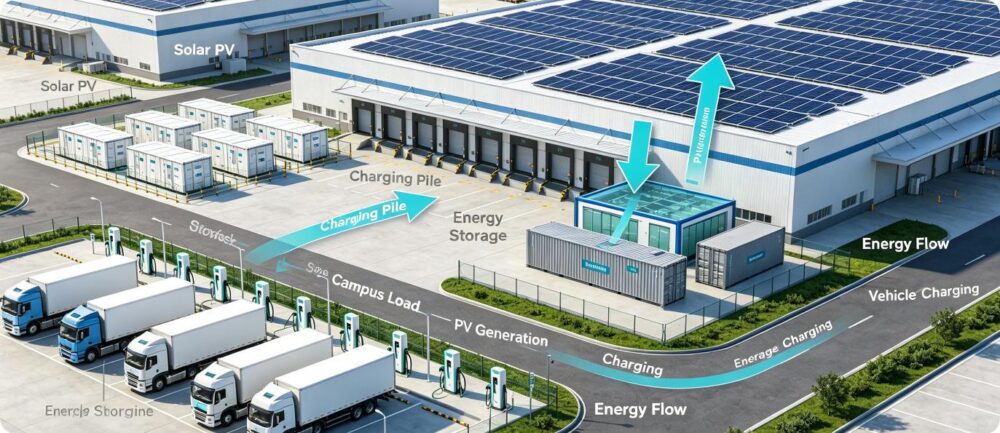
In Spain, where Chery has established a significant manufacturing and operational presence, the company is implementing industrial park microgrids. These systems utilize green electricity generated on-site to power manufacturing processes and charge fleet vehicles. By managing energy flows locally, these microgrids reduce carbon emissions and lower energy costs, providing a model for sustainable industrialization that aligns with the European Union’s stringent environmental regulations.
Engineering the Future: Rhino Batteries and Volt-dragon Charging
The success of a V2G-centric ecosystem depends heavily on battery durability and charging speed. Frequent charging and discharging cycles associated with V2G can accelerate battery degradation if not managed correctly. To address this, Chery has unveiled a suite of proprietary technologies designed for longevity and high performance.
The "Volt-dragon" Ultra-Fast Charging technology is a cornerstone of this effort. Capable of providing 500 kilometers of range in just five minutes of charging, the system minimizes downtime for the user. More importantly, the power electronics involved are designed to handle high-frequency bidirectional transfers without compromising the vehicle’s electrical architecture.
On the hardware side, Chery is developing the "Rhino Battery" series. This lineup includes Lithium Iron Phosphate (LFP) and Nickel Cobalt Manganese (NCM) variants, as well as the cutting-edge "Rhino S" solid-state battery. The Rhino S targets an energy density of 400 Wh/kg, a significant leap over current industry standards. Solid-state technology is particularly well-suited for V2G applications due to its inherent thermal stability and resistance to the "dendrite" growth that can plague liquid-electrolyte batteries during rapid cycling. Furthermore, Chery’s hybrid engines have achieved a thermal efficiency of 48.57%, ensuring that even in plug-in hybrid (PHEV) configurations, the combustion element operates with maximum resource efficiency.
Adapting to Global Grid Diversities
A primary challenge in Chery’s global rollout is the disparity in grid infrastructure across different continents. Chery’s strategy is modular, allowing it to adapt to regional conditions.
In the European market, where electricity markets are highly liberalized and renewable energy adoption is advanced, Chery is focusing on integrating vehicles into formal energy trading platforms. Here, the focus is on sophisticated software that can respond to real-time price signals from the grid.
In contrast, in regions with less stable or developing infrastructure, Chery is prioritizing the deployment of microgrids and localized storage. In these markets, the vehicle acts as a critical lifeline, providing essential power to homes or small businesses where grid reliability is low. By establishing the microgrid infrastructure first, Chery creates a foundation that can eventually support full V2G integration as the local grid matures.

Economic Implications and Market Analysis
Industry analysts view Chery’s pivot toward energy ecosystems as a necessary evolution in a crowded EV market. As hardware margins for electric vehicles face downward pressure due to intense competition, the ability to offer value-added energy services provides a new revenue stream for both the manufacturer and the consumer.
Furthermore, by positioning its vehicles as "energy assets," Chery addresses the total cost of ownership (TCO) in a way that traditional internal combustion engine (ICE) vehicles cannot. The ability of a vehicle to "pay for itself" through grid services could become a decisive factor for budget-conscious buyers in emerging markets.
From a regulatory perspective, Chery’s strategy aligns with the global push toward "Net Zero" emissions. By facilitating the storage of intermittent renewable energy (like wind and solar) in vehicle batteries, Chery is helping utilities solve the problem of "curtailment"—where excess green energy is wasted because there is no place to store it. This positions the company as a partner to national governments and municipal planners rather than just a commercial importer.
The Road Ahead: Smart Cities and Mobile Energy
The long-term vision presented at the 2026 International User Summit involves the total integration of the automobile into the "Smart City" framework. In this future, energy flow is managed by AI-driven systems that predict grid demand based on weather patterns, traffic flow, and urban activity. Chery’s NEVs would serve as the flexible "connectors" in this system, moving energy to where it is needed most.
The transition to Globalization 3.0 is not without hurdles. It requires intense collaboration with local utility providers, the establishment of common communication protocols for V2G, and the navigating of complex regulatory landscapes regarding energy resale. However, Chery’s proactive approach in establishing demonstration zones in Wuhu and industrial microgrids in Spain suggests a commitment to solving these challenges through empirical testing.
As Chery Auto continues to scale its presence in over 80 countries and regions, the transformation of the vehicle from a consumer product into a distributed energy resource marks a pivotal moment in the history of the company. By leveraging its 21-million-strong user base and its advancements in solid-state batteries and ultra-fast charging, Chery is not just moving people; it is moving the energy that powers their lives. The success of this smart energy ecosystem could redefine the relationship between the automotive industry and the global power grid, setting a new standard for how manufacturers contribute to a sustainable, electrified future.
