

The electric bicycle industry has undergone a radical transformation over the past decade, evolving from a niche luxury for early adopters into a cornerstone of modern urban mobility. At the center of this evolution is Pedego Electric Bikes, a company that helped define the American e-bike market. In a move that signals a significant pivot in its business strategy, Pedego has introduced the Element 2, a versatile, high-performance e-bike priced at $2,195. This launch represents more than just a new product; it is a calculated effort by the California-based manufacturer to reclaim market share in an increasingly crowded mid-tier segment that has recently been dominated by direct-to-consumer (DTC) brands.
The Evolution of the Pedego Business Model
Founded in 2008, Pedego was one of the first companies to recognize the potential of lithium-ion battery technology applied to two-wheeled transport. For years, the company’s "boomer-centric" marketing and high-touch retail model allowed it to command premium prices, often exceeding $4,000 per unit. This model relied heavily on a nationwide network of independently owned branded stores that offered sales, rentals, and on-site servicing.

However, as the 2020s progressed, the e-bike market bifurcated. On one end, premium European brands like Specialized and Trek integrated high-end mid-drive systems, while on the other, aggressive DTC startups like Rad Power Bikes and Lectric drove prices down to the $1,000–$2,000 range. Pedego found itself in a challenging middle ground, where its legacy pricing felt increasingly uncompetitive against newer models offering similar or superior specifications for half the cost. The Element 2 is the company’s direct response to this market pressure, blending Pedego’s reputation for service and reliability with a price point designed for the mass market.
Technical Deep Dive: Engineering the Element 2
The Pedego Element 2 is built upon a low-step aluminum frame, a design choice that maximizes accessibility for a wide demographic of riders, from teenagers to seniors. The frame is finished in a modern satin paint, with the "sand" colorway serving as a flagship aesthetic that aligns with contemporary outdoor gear trends.
One of the most critical upgrades in the Element 2 is the inclusion of a sophisticated torque sensor. Unlike more affordable cadence sensors, which simply detect if the pedals are turning, a torque sensor measures the actual force the rider applies to the pedals. This allows the mid-drive motor to provide assist that feels natural and intuitive. The motor’s programming is designed to integrate seamlessly with the rider’s cadence, eliminating the "surging" sensation often found in budget-tier electric bikes.

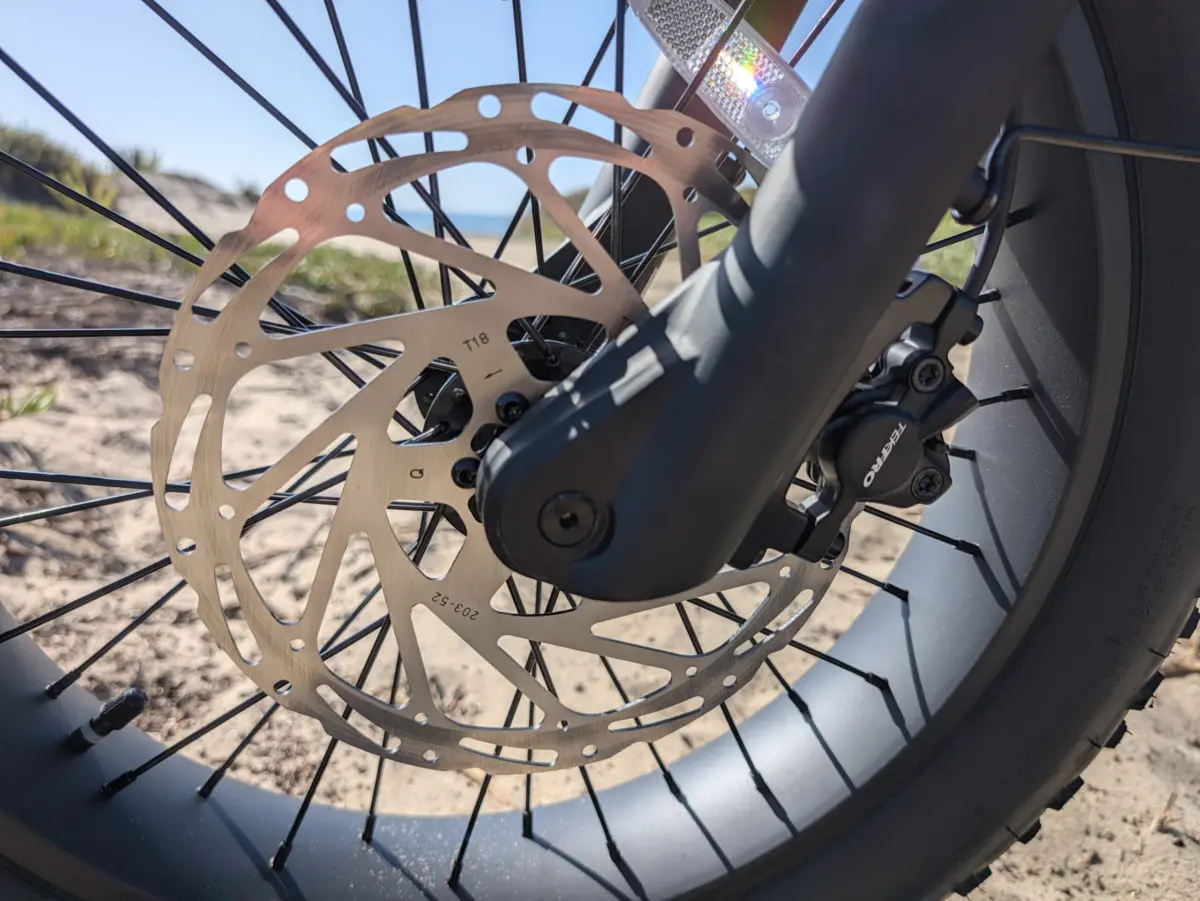
To ensure the bike remains a viable car replacement for errands, Pedego has integrated a heavy-duty rear rack. The model tested was equipped with custom panniers, highlighting the bike’s utility as a cargo-capable machine. For stopping power, the company opted for front and rear hydraulic disc brakes. This is a significant inclusion at the $2,195 price point, as hydraulic systems offer superior modulation and require less maintenance than mechanical cable-actuated brakes, especially when the bike is under heavy load or navigating steep descents.
Ride Quality and Versatility
On the road, the Element 2 distinguishes itself through its "fat tire" configuration. The oversized knobby tires provide a high volume of air that acts as a secondary suspension system, absorbing vibrations from cracked pavement and gravel. When paired with the front suspension fork, the result is a ride quality that is exceptionally stable.
While the knobby tires and suspension suggest off-road capability, industry analysts categorize the Element 2 as a "crossover" or "all-road" bike rather than a dedicated mountain bike. It is designed to handle "Class 4" gravel roads and light dirt trails with ease, but its geometry and componentry are optimized for the stability and comfort required for urban commuting and coastal cruising.

The user interface features a high-contrast, integrated color display. In an era where "range anxiety" remains a concern for new e-bike owners, the Element 2’s display provides real-time data, including a power output chart. This allows riders to see exactly how much energy the motor is consuming at various assist levels, helping them manage battery life more effectively during long-distance excursions.
Chronology of the Mid-Tier E-Bike Surge
To understand the importance of the Element 2, one must look at the timeline of the e-bike industry’s recent growth:
- 2019–2021: The COVID-19 pandemic triggers a global bicycle boom. E-bike sales in the United States grow by 145% in 2020 alone. Pedego expands its retail footprint but faces supply chain hurdles.
- 2022–2023: The market sees an influx of low-cost imports. Safety concerns regarding non-certified batteries lead to new regulations, such as New York City’s UL-certification requirements.
- 2024–2025: High-end brands begin discounting inventory as the post-pandemic surge cools. Consumers start demanding more value, moving away from $4,000 "cruisers" toward $2,000 "utility" bikes.
- 2026: Pedego releases the Element 2, marking its most aggressive pricing strategy to date, aimed at bridging the gap between its premium retail experience and the affordability of DTC competitors.
Market Implications and Competitive Analysis
The release of the Element 2 at $2,195 places Pedego in direct competition with the Aventon Adventure.2 and the Velotric Nomad 1. While those brands often beat Pedego on raw specs per dollar, Pedego maintains a "moat" through its physical presence.

"The greatest challenge for direct-to-consumer brands has always been after-sales support," notes a report from the Light Electric Vehicle Association (LEVA). "When a bike purchased online breaks, the owner often struggles to find a local shop willing to service a brand they don’t sell. Pedego’s model solves this by providing a physical location for every purchase."
By pricing the Element 2 within $500 of the major DTC players, Pedego is betting that consumers will pay a slight premium for the peace of mind that comes with a local warranty and a professional assembly. This "hybrid" approach—competitive pricing backed by traditional retail support—is expected to be a dominant trend in the 2026–2027 market cycle.
Safety and Infrastructure: The Broader Impact
The shift toward bikes like the Element 2 also reflects broader changes in urban planning. As more cities in North America implement "Slow Streets" and dedicated bike lanes, the demand for "Class 2" e-bikes (which include both pedal assist and a throttle up to 20 mph) has surged. The Element 2 fits perfectly into this regulatory framework, offering the versatility of a throttle for quick starts at intersections while maintaining the fitness benefits of a pedal-assist system.

Furthermore, the inclusion of integrated front and rear lighting systems is no longer an optional luxury but a safety standard. The Element 2’s lights are powered directly by the main battery, ensuring that riders are visible in low-light conditions without the need for separate charging. This focus on "conspicuity" is a response to the growing number of e-bike commuters sharing the road with automotive traffic.
Sustainability and the Future of Transportation
From an environmental perspective, the democratization of e-bikes through lower price points like that of the Element 2 is a critical component of decarbonization. A study by the Transportation Research Board found that e-bike owners tend to replace 20% to 50% of their short-distance car trips with bike rides. By making a high-quality, reliable e-bike available for just over $2,000, Pedego is lowering the barrier to entry for households looking to reduce their carbon footprint and fuel expenditures.
The Element 2 also addresses the "longevity" aspect of sustainability. Unlike "disposable" budget bikes that end up in landfills due to a lack of replacement parts, the Element 2 is built with standardized components. Whether it is the hydraulic brake pads or the Shimano-compatible drivetrain, most local bike shops can service the mechanical aspects of the bike, extending its lifecycle well beyond that of its cheaper counterparts.

Conclusion
The Pedego Element 2 represents a milestone for a brand that was once synonymous with high-priced luxury cruisers. By embracing a more competitive pricing structure without sacrificing the core features that made the brand a success—such as the torque sensor, hydraulic brakes, and integrated utility—Pedego has positioned itself to capture a new generation of riders.
As the e-bike market continues to mature, the success of the Element 2 will likely serve as a case study for how legacy brands can adapt to the digital-first, value-conscious economy. For the consumer, the result is a win: a high-performance, cargo-ready electric bike that offers the reliability of a national retail network at a price that finally competes with the online giants. The Element 2 is not just a new model; it is Pedego’s blueprint for the future of the American electric bicycle.
