

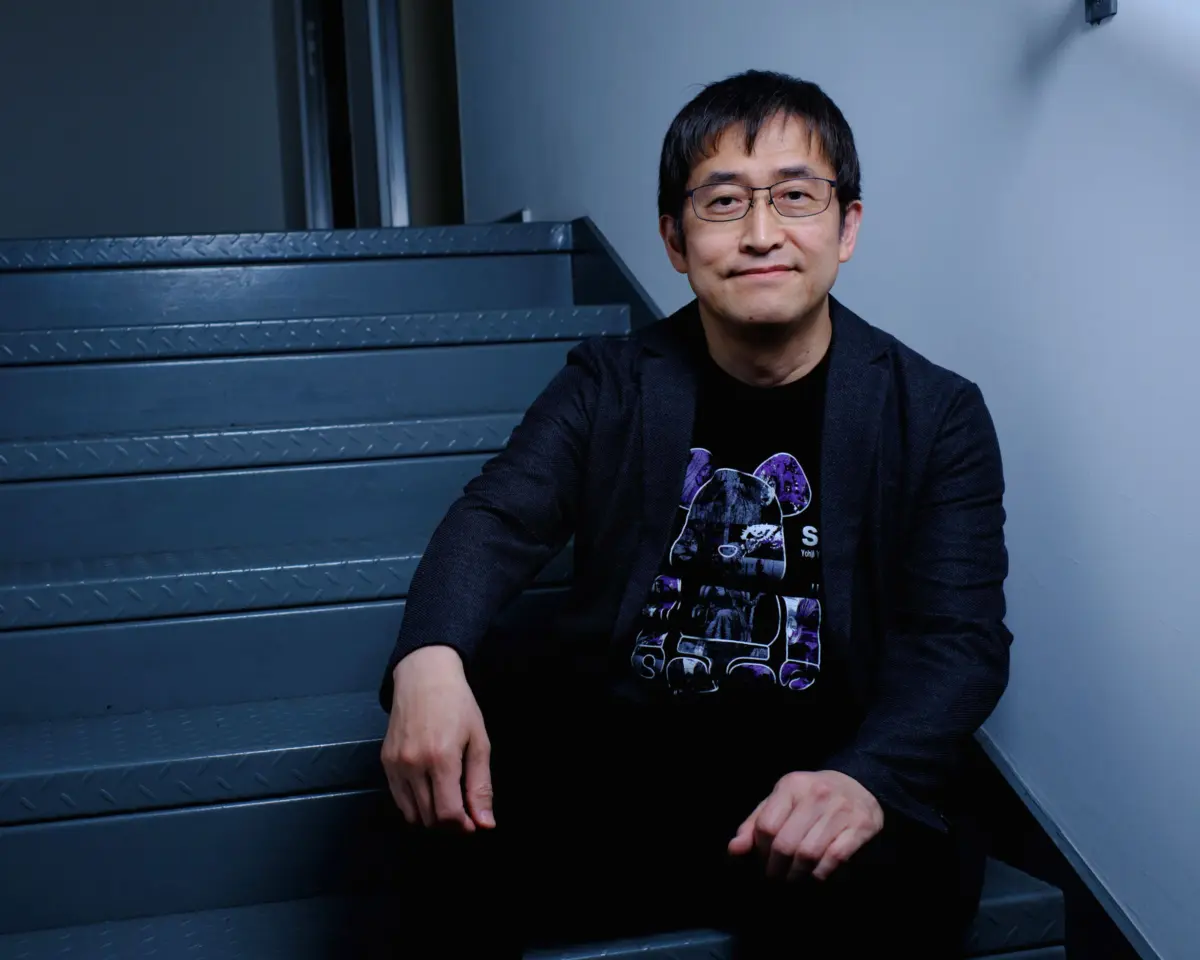
The arrival of the live-action anthology series on HBO Max marks a significant expansion of Japanese horror’s footprint in Western streaming markets, bringing the surreal and often grotesque visions of legendary manga artist Junji Ito to a broader audience. Director Yûta Shimotsu, tasked with helming several episodes of the 12-part series, recently appeared at New York Comic Con (NYCC) to provide insight into the creative philosophy behind the adaptations. During the presentation, Shimotsu emphasized a central theme that permeates Ito’s work: the ambiguity of villainy. By questioning who the "real monster" is in these narratives, the series seeks to transcend traditional horror tropes, moving away from simple jump scares toward a more profound, psychological exploration of the human condition.
Originally broadcast on TV Tokyo during the summer of 2024, the series—titled Strange: Junji Ito’s Tales for Sleepless Nights—serves as a television omnibus inspired by the classic manga magazine Nemuki (which translates to "Sleepless Nights"). The show’s U.S. rollout began with the release of "Lovesickness" and "The Bully," two of Ito’s most celebrated stories. However, it was the North American premiere of "Face Thief" at NYCC that sparked the most intense discussion regarding the series’ ability to translate Ito’s intricate, ink-heavy illustrations into a live-action medium.
The Narrative Mechanics of Face Thief and Identity Erosion
The episode "Face Thief," based on the 1987 story "The Face Burglar," explores the unsettling dynamics of high school social hierarchies. The plot follows Machida, played by Nanami Yamazaki, a transfer student who finds herself the target of an uncomfortably persistent classmate named Kamei, portrayed by Anna Hoshino. The horror escalates when Machida discovers that Kamei is not merely socially awkward but possesses a supernatural, chameleon-like ability to physically manifest the facial features of the girls she befriends.
As the episode progresses, Kamei’s visage begins to shift and distort during close-range interactions, a visual representation of her desire to consume the identity of others. While the initial reaction is one of repulsion, the narrative takes a complex turn when Kamei utilizes her metamorphic abilities—including the growth of a third eyeball on her cheek—to protect Machida from school bullies. This moment of "monstrous" intervention creates a bond between the two, complicating the viewer’s perception of Kamei as a purely antagonistic force.
Shimotsu’s direction focuses on the "slow burn" of this transformation. Unlike modern Western horror, which often relies on rapid editing and loud auditory cues, Shimotsu employs a technique of stillness. By keeping the camera steady and allowing the performances to carry the weight of the uncanny, he replicates the experience of reading a manga panel, where the horror is found in the frozen, detailed realization of something unnatural.
Cultural Context: Conformity and the Japanese Social Fabric
A critical element of the adaptation is its pointed critique of Japanese societal norms. Following the NYCC screening, Shimotsu elaborated on the subtext of "Face Thief," noting that the story serves as a metaphor for the intense pressure to conform within Japanese culture. In a society where the proverb "the nail that sticks out gets hammered down" remains a prevalent social guideline, the concept of a "face thief" takes on a literalized meaning of losing one’s individuality to fit a prescribed mold.
"We have social pressure that we are supposed to not be too different from others," Shimotsu told the audience. "Individuality is not very respected." By altering the ending of the original story for the live-action version, Shimotsu aimed to sharpen this critique, suggesting that the "monster" is not just the girl who steals faces, but the social environment that demands such a loss of self. This thematic depth is a hallmark of Junji Ito’s work, which frequently uses body horror to explore anxieties regarding puberty, social isolation, and the fragility of the human ego.
The Evolution of Junji Ito: From Dental Technician to Horror Icon
The series’ source material is rooted in the early career of Junji Ito, who is now 63 years old. In a video message recorded for the NYCC fans, Ito reflected on the origins of "The Face Burglar," describing it as a breakthrough that came after several rejected submissions to publishers. He noted that the concept was inspired by the biological mechanism of chameleon camouflage rather than traditional ghost stories. This scientific, almost clinical approach to the supernatural is what has distinguished Ito’s career for over three decades.
Ito’s career began in earnest in 1987 with the publication of Tomie in Monthly Halloween. That same year saw the release of "The Face Burglar." Over the following decades, Ito has amassed a global following, winning multiple Eisner Awards and becoming a cornerstone of the "J-horror" movement. His work is characterized by a "creeping dream" quality, a term he used during his NYCC message to describe the ideal horror atmosphere.
The production of Tales for Sleepless Nights represents a "fresh team" approach, according to Ito. By utilizing upcoming actors and directors like Shimotsu, the production aims to revitalize the material for a modern audience while maintaining the "bizarre, unique aesthetics" that have made the manga world-famous.
Technical Challenges and the Aesthetic of Stillness
Adapting Junji Ito into live-action or animation has historically been a difficult task. The artist’s style is defined by incredibly dense line work and a specific use of shadow that is hard to replicate in motion. This difficulty was recently highlighted by the 2024 anime adaptation of Ito’s magnum opus, Uzumaki, produced for Adult Swim. While the first episode was lauded for its visual fidelity, the subsequent episodes suffered from a significant drop in animation quality, leading to public criticism and the absence of a director credit on the series finale.
Shimotsu is acutely aware of these challenges. To capture the "essence" of Ito, he focuses on the relationship between the actor and the frame. He informed fans that he is advocating for a second season to include at least one episode shot entirely in black-and-white. This choice would be a direct homage to Ito’s preferred medium and would help bridge the gap between the stark, high-contrast world of the manga and the reality of live-action cinematography.
The use of practical effects over excessive CGI is another strategy employed to maintain the "grounded" horror of the series. The physical manifestation of Kamei’s facial shifts in "Face Thief" relies on subtle makeup and prosthetic work, which Shimotsu believes creates a more visceral reaction in the viewer than digital manipulation.
Future Implications: Uzumaki and Hollywood Aspirations
The success of Tales for Sleepless Nights on a global platform like HBO Max could pave the way for more ambitious adaptations. When asked by NYCC attendees which of Ito’s works he would like to tackle next, Shimotsu’s answer—Uzumaki—was met with significant applause. Uzumaki, which tells the story of a town obsessed with spiral shapes, is considered Ito’s masterpiece and has been adapted into a live-action film in 2000 and the aforementioned 2024 anime.
A live-action version of Uzumaki under Shimotsu’s direction would likely focus on the atmospheric dread and social decay of the story, rather than the more fantastical elements. Furthermore, Shimotsu revealed that he is currently developing a project in Hollywood. This move follows a tradition of Japanese horror directors, such as Hideo Nakata (The Ring) and Takashi Shimizu (The Grudge), who successfully transitioned to the American film industry during the J-horror boom of the early 2000s.
Analysis of Global Distribution and the J-Horror Renaissance
The release of this anthology on HBO Max signifies a broader trend in the streaming industry: the high demand for localized, high-quality horror content with an established intellectual property (IP) pedigree. Junji Ito’s name alone carries significant marketing weight, as evidenced by Netflix’s previous investment in the animated Junji Ito Maniac: Japanese Tales of the Macabre.
However, the shift to live-action represents a different strategic move. Live-action adaptations often have a higher "prestige" value and can attract viewers who may not typically consume anime. By grounding Ito’s surrealism in a recognizable, contemporary Japanese setting, Tales for Sleepless Nights offers a gateway for international audiences to explore the cultural anxieties specific to Japan, while still tapping into the universal fears of bodily invasion and the loss of identity.
As the first season continues its run on HBO Max, the industry will be watching closely to see if Shimotsu’s "slow burn" approach resonates with a Western audience accustomed to the faster pacing of Hollywood horror. If successful, Strange: Junji Ito’s Tales for Sleepless Nights could establish a new blueprint for how manga-to-live-action adaptations are handled, prioritizing thematic depth and atmospheric fidelity over superficial spectacle. For now, the series stands as a testament to the enduring, haunting power of Junji Ito’s imagination and the capable hands of a new generation of filmmakers dedicated to bringing his nightmares to life.
