

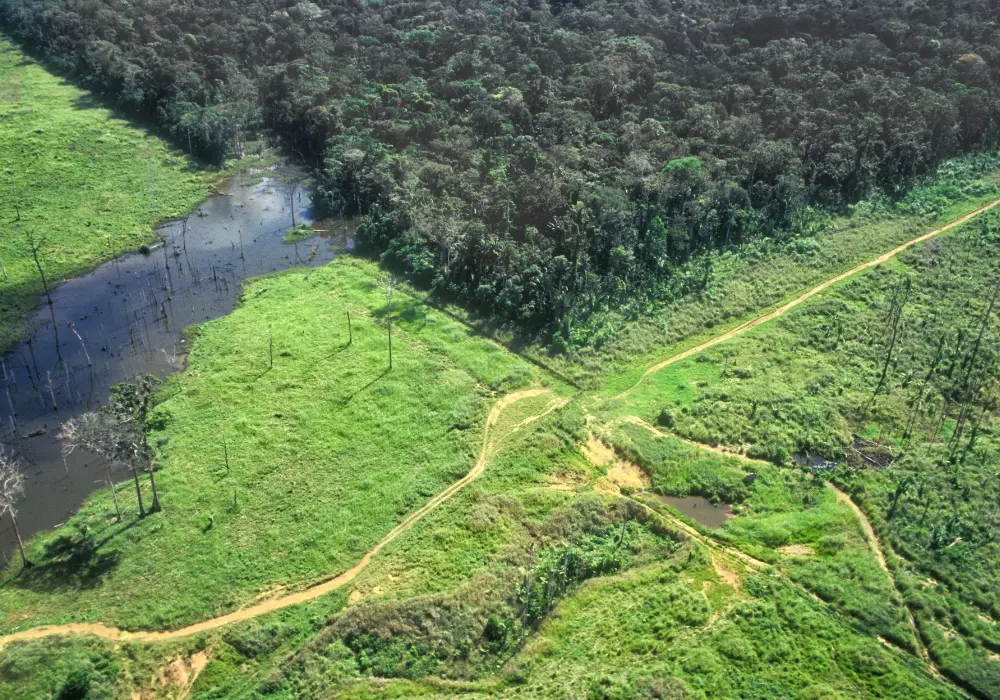
Along the rugged Pacific coast of British Columbia lies a sprawling emerald expanse known as the Great Bear Rainforest. Spanning approximately 6.4 million hectares—an area roughly the size of Ireland—this temperate wilderness represents one of the most significant environmental assets on the planet. While the Amazon often dominates the global conversation regarding carbon sequestration, the Great Bear Rainforest is quietly outperforming its tropical counterparts. According to Great Bear Carbon, an Indigenous-led carbon-offsetting initiative, the old-growth and second-growth stands within this region store more carbon per hectare than the Amazonian jungle. This ecological powerhouse has become the site of a revolutionary economic model: a carbon-credit system that prioritizes Indigenous sovereignty and long-term environmental stewardship over short-term industrial gain.
The Great Bear Carbon project is currently the largest of its kind in Canada and serves as a rare beacon of success in a global carbon-credit market that has faced intense scrutiny and skepticism in recent years. Managed by an alliance of nine Coastal First Nations, the project generates approximately one million carbon credits annually. These credits are sold to corporations—either voluntarily or through a compliance market mandated by the British Columbia provincial government—to offset their greenhouse gas emissions. The resulting revenue, which reached a cumulative milestone of $85 million as of 2024, is channeled directly back into the communities that have called this land home for millennia, funding everything from wildlife conservation to essential healthcare infrastructure.
The Mechanics of Carbon Offsetting and the Compliance Market
To understand the significance of the Great Bear Carbon project, one must first navigate the complexities of the carbon market. In theory, the system operates on a simple premise: one carbon credit represents one metric ton of carbon dioxide that has been either removed from the atmosphere or prevented from being released. These credits allow large emitters, such as industrial manufacturers or airlines, to "balance" their carbon accounts.
In British Columbia, this is facilitated through a compliance market. Under this regulatory framework, the provincial government sets a "cap" on the total amount of emissions allowed for large industrial players. If a company exceeds this cap, it must purchase credits to cover the overage. However, the efficacy of this system depends heavily on the stringency of the government-mandated caps. Dave Sawyer, principal economist at the Canadian Climate Institute, notes that if caps are set too high, an oversupply of credits occurs. When the market is flooded with cheap, excess credits, the financial incentive for corporations to actually reduce their internal emissions evaporates.
The Great Bear Rainforest project avoids many of the pitfalls associated with "junk" credits by focusing on high-quality, verifiable sequestration. While many global projects have been accused of "greenwashing"—claiming environmental benefits that do not exist—the Indigenous-led initiative in British Columbia has maintained a reputation for integrity through rigorous third-party auditing and a transparent methodology.
A History of Conflict and the 2009 Landmark Agreements
The current success of the Great Bear Carbon project is the result of decades of intense advocacy and political negotiation. For much of the late 20th century, the region was the site of the "War in the Woods," a period of high-tension conflict between environmentalists, Indigenous groups, and the logging industry. During this era, the Great Bear Rainforest was viewed primarily as a source of high-value timber, and industrial clear-cutting threatened to destroy the delicate balance of the ecosystem.
The turning point came in 2009 with the signing of the Great Bear Rainforest agreements. This landmark series of conservation deals between the British Columbia provincial government and the Coastal First Nations fundamentally altered the land-use landscape. The agreements established a new framework for "Ecosystem-Based Management," which prioritized the health of the forest and the well-being of the local communities over industrial extraction.
A critical component of these deals was the recognition of the First Nations’ right to issue carbon credits based on the protected land. By deciding to forgo large-scale logging on 85% of the forest’s territory, the Nations transformed the forest from a potential carbon source (which it would have become if the trees were cut and processed) into a permanent carbon sink. This act of "inaction"—the deliberate choice not to log—is what provides the project with its environmental value.
The Crucial Test of Additionality and Verification
In the world of environmental finance, the most important metric for a carbon project is "additionality." This concept asks a fundamental question: would the carbon sequestration have happened anyway without the funding from the credit sales? If a forest was already protected by law or was never at risk of being logged, selling credits for its preservation is considered fraudulent because it doesn’t represent a "new" benefit to the atmosphere.
Joseph Pallant, the CEO of Great Bear Carbon, asserts that the project is "very additional." Without the revenue generated from carbon credits, the economic pressure to resume industrial logging would be immense. The credits provide the financial bridge that allows the Nine Coastal First Nations to transition away from an extraction-based economy toward a conservation-based one.
This stands in stark contrast to other regional projects. For instance, an audit of the BigCoast Forest Climate Initiative, another B.C.-based project, recently resulted in a zero score for transparency and additionality. Meanwhile, the global certifier Verra faced a massive scandal in 2023 when an investigation by The Guardian revealed that over 90% of its rainforest credits were essentially worthless. By contrast, Great Bear Carbon received "sufficient" and high-performance scores in a 2023 audit by Standard Carbon, reinforcing its status as a gold standard in the industry.
Funding the Eyes and Ears on the Land
The financial dividends of the Great Bear Carbon project are not merely abstract figures on a balance sheet; they manifest as tangible improvements in the lives of the people living within the rainforest. One of the most significant programs funded by the credit sales is the Indigenous Guardians program.
Described by Pallant as the "eyes and ears on the landscape," the Guardians are community members employed to monitor the vast wilderness. Their duties are diverse, ranging from tracking the health of grizzly bear and salmon populations to conducting search-and-rescue operations in the treacherous fjords. This program ensures that the forest is not just "protected" on paper, but actively managed by those with the deepest ancestral knowledge of the terrain.
In the community of Haida Gwaii, the revenue has had a direct impact on public health and scientific advancement. Funds have been used to construct a new healthcare unit, providing vital services to a remote population. Additionally, the project supports research into endangered species, such as the northern goshawk, a bird of prey whose survival is intricately linked to the health of the old-growth canopy.
Accounting for Climate Change and Wildfire Risks
While the Great Bear Rainforest is a wet, temperate environment, it is not immune to the growing threats of climate change. Wildfires and pest infestations, such as the mountain pine beetle, pose a risk to any forest-based carbon project. If a protected forest burns down, the stored carbon is released back into the atmosphere, effectively canceling out the offsets sold to companies.
To mitigate this risk, Great Bear Carbon employs a "buffer pool" strategy. Every year, 10% of the credits that would normally be available for sale are instead held back as insurance. If a catastrophic event like a wildfire occurs, the corresponding amount of credits is "retired" from this buffer pool to account for the lost carbon. This ensures that the credits already in the hands of buyers remain valid. To date, the project has not had to dip into its buffer pool, placing it in a strong position as it navigates an increasingly volatile climate.
Broader Implications and the Future of Conservation
The Great Bear Carbon project is currently 15 years into a 25-year carbon-credit issuance agreement. As the project matures, it offers a blueprint for how other nations might approach the dual challenges of climate change and Indigenous reconciliation. By placing the tools of the carbon market in the hands of Indigenous leaders, the project demonstrates that economic development does not have to come at the expense of the environment.
The success of this model suggests that the future of global conservation may lie in decentralized, community-led initiatives rather than top-down government mandates. For Joseph Pallant and the Coastal First Nations, the work is far from over. "We haven’t run out of land to protect," Pallant says, signaling a commitment to a vision where the forest remains standing for generations to come.
As global leaders continue to debate the merits of carbon markets at international summits, the Great Bear Rainforest stands as a living testament to what is possible when ecological integrity is valued as highly as industrial output. It is a rare instance where the "inaction" of human industry—the simple, profound choice to let a forest be—has become one of the most valuable commodities in the fight against global warming.
