

New York, NY – September 10, 2026 – In a market characterized by persistent volatility, the traditional timelines for private equity (PE) ownership of portfolio companies are undergoing a significant transformation. Sponsors are increasingly opting to hold onto their investments for extended durations, presenting a complex and evolving challenge for the chief executive officers (CEOs) of these PE-backed entities. This strategic shift, driven by a confluence of economic headwinds and market dynamics, necessitates a recalibration of leadership strategies and operational priorities.
The backdrop for this extended ownership is a formidable array of market pressures. Rising interest rates have increased the cost of capital and impacted valuation multiples, leading to a phenomenon known as multiple contraction. Concurrently, limited partners (LPs), the investors in PE funds, are exerting greater pressure for distributions of capital, creating a tension between the desire for liquidity and the reality of a challenging exit environment. The sheer volume of PE-backed companies awaiting divestment, coupled with a more selective buyer pool, further exacerbates the situation. Add to this a pervasive economic uncertainty, and the environment for running a PE-backed company becomes, as described by industry leaders, “sticky.”
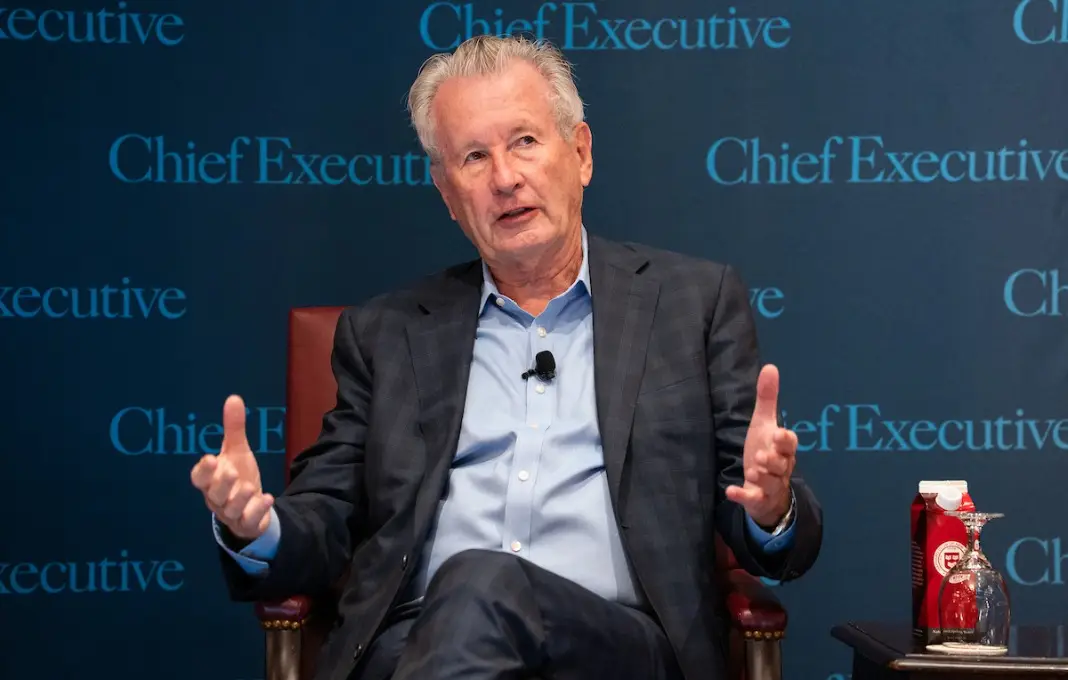
This evolving reality was a central theme at the 2026 PE-Backed Leadership Summit, held yesterday at a prominent venue in New York City. The event convened a cohort of CEOs and CFOs from private equity-backed firms to gain a collective understanding of the current industry pulse and to exchange actionable strategies for navigating this intricate terrain. The consensus, articulated by industry veterans, is that the current climate is undeniably “tricky.”
“You can’t necessarily implement all the value creation blueprint, particularly in an uncertain economy in under five years. That takes longer: six, seven, eight,” stated Paul Aversano, managing director and global practice leader at Alvarez & Marsal, a prominent professional services firm. This sentiment underscores a fundamental departure from historical PE models, which often relied on a more rapid investment lifecycle. The extended holding periods imply that the strategic roadmap for value creation must be more robust, adaptable, and geared towards long-term, sustainable growth rather than a short-term exit.
The scale of the current exit backlog is staggering. Ted Bililies, global head of transformative leadership practice and managing director at AlixPartners, highlighted the magnitude of the challenge: “More than 33,000 portfolio companies remain unsold at this point, which says buyers have lots and lots of options. This is more than twice the number just six years ago.” This abundance of choice for potential buyers fundamentally alters the dynamics of exit readiness. “So exit readiness then doesn’t become a one-week sprint or a one-year sprint. Exit readiness really becomes an operational discipline that ends when the deal closes, quite frankly,” Bililies elaborated. This reframing of exit readiness from a discrete event to an ongoing operational imperative is a critical takeaway for leadership teams.
The Imperative of Operational Value Creation
With the traditional financial engineering levers of PE becoming less reliable in the current market, the emphasis has decisively shifted towards operational value creation. Buyers are no longer solely underwriting past performance; their focus is firmly on future potential. “Buyers are underwriting the future, not the past. Organic revenue is necessary, but it’s not sufficient, so they’re really looking for ways in which you’re going to expand and grow,” Bililies explained. This necessitates a proactive and strategic approach to business development, innovation, and market expansion.
The insights shared at the summit offered practical guidance for CEOs grappling with these challenges:
H2: Strategic Reset: Embracing the "Clean Slate" Mentality
A recurring piece of advice from seasoned leaders is the importance of periodically re-evaluating the fundamental structure and strategy of the business, as if starting anew. Dan Glaser, operating partner at CD&R and former president and CEO of Marsh & McLennan, urged CEOs to “throw out the status quo.” He posed a series of critical questions for self-assessment: “If you started with a clean slate, would you structure yourself this way? Would you go to the market this way? Would you have these divisions together?” Glaser emphasized that the core purpose of running a company is not merely to sustain existing operations but to actively create and evolve. “The whole purpose of running a company is to create things and destroy things. It’s not to sustain them,” he asserted. This perspective encourages a culture of continuous improvement and a willingness to dismantle outdated structures or strategies that no longer serve the business’s future growth.
H2: Architecting the Next Growth Narrative: The Buyer’s Thesis
Understanding the potential future trajectory of the business from the perspective of a prospective buyer is paramount. Nigel Travis, senior advisor at Blackstone and chair of several prominent companies including Abercrombie & Fitch, Servpro, Tropical Smoothie Café, and Jersey Mike’s Subs, identified the “growth story” as a primary consideration during any potential acquisition. He stressed that CEOs must proactively consider the “next buyer’s thesis right from the start.” The question to be answered is: “When someone else buys it, what will they do with it?” Travis posited that this foresight should inform the company’s strategic plan of action today. This forward-looking perspective ensures that the business is not only optimized for current performance but also positioned for future value creation under new ownership.
H2: Fortifying the Competitive Moat: Building Sustainable Advantages
In an increasingly competitive landscape, a strong and defensible "moat" is essential for long-term success. Gabriel Anaya, CFO of medical device manufacturer Irrimax, elaborated on this concept, stating that a robust moat extends beyond just a superior product. “You need to have several layers in there,” he advised. Anaya’s framework for a comprehensive moat includes multiple interconnected elements: “the product itself, clinical adaptation, IP, brand awareness, customer relationships, supply chain.” When these elements are cohesively integrated, they create a formidable barrier to entry. “When you [have] all those together, that’s when it’s going to be something really hard to replicate,” Anaya concluded. This holistic approach to competitive advantage is crucial for ensuring resilience and sustained market leadership.
H2: Navigating Pricing in an Inflationary Environment
The current inflationary climate presents a delicate balancing act for pricing strategies. Suzanne Yoon, founder and managing partner at PE investment firm Kinzie Partners, addressed the complexities of pricing decisions. While acknowledging the understandable hesitation of business leaders to alienate customers, she argued that the objective is not to adopt an aggressive stance. “It’s not about being a hawk out there,” Yoon clarified. Instead, the focus should be on “figuring out how you can leverage your advantages to bring a win-win to the customers and improve your own economics.” This suggests a strategic approach to pricing that considers value proposition, market dynamics, and the potential for mutual benefit, rather than simply imposing price hikes.
H2: The Paramount Importance of Leadership Talent
Despite the multitude of operational and strategic levers available, private equity investors consistently rank leadership talent as the most critical value-creating factor. Research from AlixPartners indicates that a significant majority of PE investors lack full confidence in their portfolio companies’ current leadership teams. Ted Bililies underscored the urgency of this issue: “If you’re not talking about your talent with your board and with your sponsors on a regular basis, you really need to be. [It is a] critical lever.” This highlights the necessity for transparent and ongoing dialogue between CEOs, boards, and sponsors regarding talent acquisition, development, and retention. Building and nurturing a high-performing leadership team is not a secondary concern but a primary driver of value creation and success.
H2: Cultivating a High-Performance Culture: The Power of "Unreasonable People"
Beyond just having the right people, the type of people can significantly impact performance. Dan Glaser offered a provocative perspective on team composition, stating, “At the end, you don’t have a team of friends. You don’t need to have a team of rivals, but what you do need is a team of people who are driven for performance.” He further characterized these individuals as “Usually highly intelligent, highly motivated, highly insecure and agitated. Unreasonable people get better results than reasonable people.” This perspective suggests that fostering an environment where individuals are driven by a relentless pursuit of excellence, even if it leads to challenging conventional norms, can unlock superior outcomes. The emphasis is on performance and a potent internal drive rather than mere collegiality or avoidance of conflict.
Broader Economic and Political Considerations
Looking ahead, some industry observers anticipate potential shifts in the economic and political climate that could offer a degree of stability. Paul Aversano noted the potential impact of the upcoming midterm elections, suggesting that they “may bring some relief, or at least slightly more direction to the political and economic climate.” He added, “There may be a handbrake on some of what’s gone on, that may be just enough so that people, whatever the expectations will be, at least there will be some defined expectations.” While not a definitive solution, a clearer policy landscape could provide a more predictable environment for strategic planning and investment decisions, potentially easing some of the current market uncertainties.
The extended holding periods by sponsors are a clear indicator of the prevailing market conditions. This trend necessitates a fundamental reorientation for PE-backed companies. CEOs are now tasked with not only driving operational excellence but also with cultivating a strategic foresight that anticipates the needs and expectations of future buyers, all while building robust and adaptable organizations capable of sustained growth in a complex and dynamic global economy. The lessons learned and strategies discussed at the 2026 PE-Backed Leadership Summit offer a roadmap for navigating this new era of private equity ownership.
