

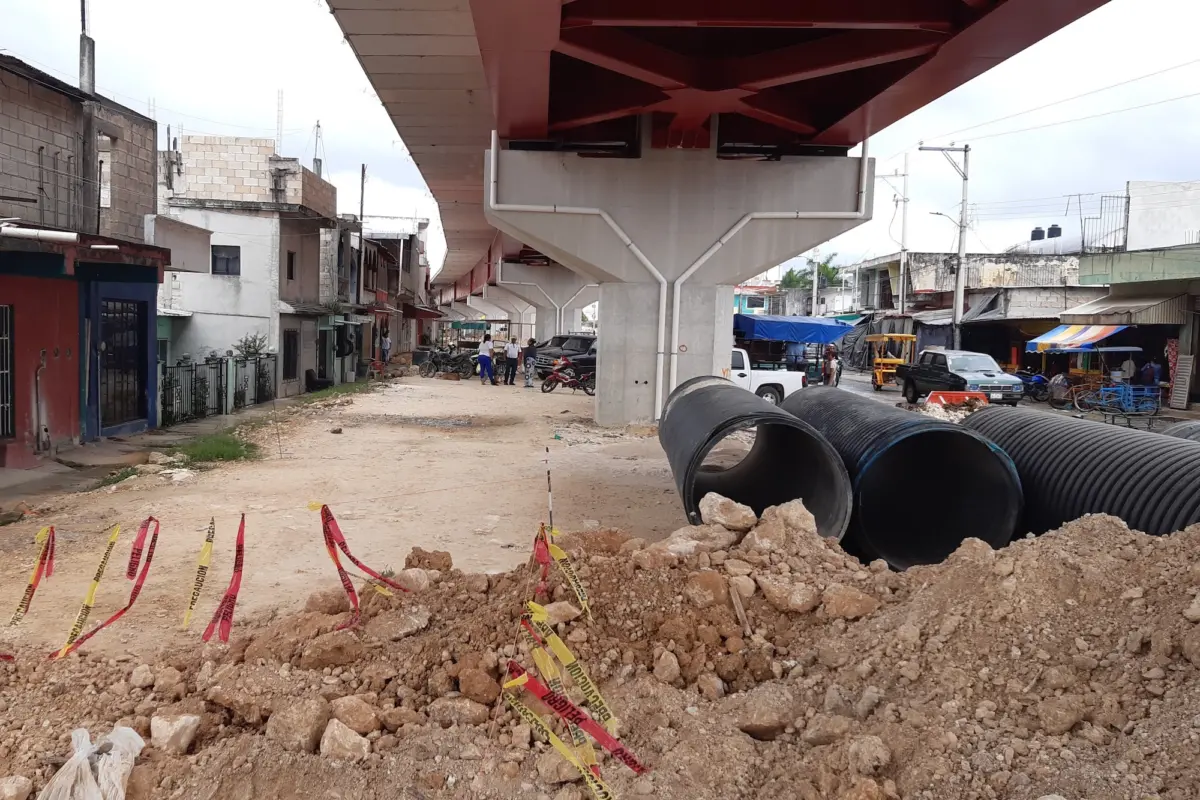
Nearly three years after its grand inauguration, the Maya Train—once hailed as the "monumental work" of the century by the Mexican government—has become a symbol of unfulfilled promises, environmental degradation, and fiscal excess. Spanning nearly 1,000 miles across the Yucatán Peninsula, the rail project was designed to bridge the gap between world-class coastal resorts like Cancún and the impoverished, culturally rich Maya heartland. However, as of late 2026, data from economists, environmentalists, and local residents suggest that the project has not only failed to spark the promised economic boom but has also introduced a wave of insecurity and ecological destruction to one of the world’s most delicate ecosystems.
A Vision of Connectivity and Its Divergent Reality
The Maya Train (Tren Maya) was envisioned as a catalyst for "sustainable development," intended to funnel a portion of the millions of tourists who visit the Riviera Maya into the interior states of Campeche, Chiapas, Tabasco, and Yucatán. The objective was to create a "circuit" of travel that would encourage visitors to explore ancient ruins like Palenque and Calakmul, thereby distributing tourist dollars to marginalized Indigenous communities.

While federal officials continue to maintain that the train is a success, citing its role in modernizing regional infrastructure, the operational reality paints a different picture. The train currently runs largely empty. According to government figures from 2025, the system averaged roughly 3,320 daily users—a figure that pales in comparison to the 74,000 daily passengers originally projected by the National Fund for Tourism Development (FONATUR). Social media reports and local testimonies frequently describe "ghost stations" and carriages occupied by only a handful of passengers, even during peak travel seasons.
Chronology of a Controversial Megaproject
The trajectory of the Maya Train is marked by rapid construction, legal battles, and shifting budgets.
- July 2018: Following his landslide victory, then-President Andrés Manuel López Obrador announces the Maya Train as a flagship project of his administration.
- December 2018: The project begins with a symbolic Indigenous ceremony, though critics argue that genuine "prior and informed consent" was never obtained.
- 2020–2022: Construction accelerates despite dozens of legal injunctions filed by environmental groups and Indigenous collectives. The project is eventually handed over to the Mexican Secretariat of National Defense (SEDENA), shielding it from certain transparency requirements under the guise of "national security."
- December 2024: The first phases of the train are inaugurated. The President declares that "no other work like it exists in the world."
- 2025: Operational data begins to show a massive shortfall in ridership. Reports of technical glitches and scheduling inconsistencies emerge.
- 2026: Economic data reveals a recession in key states like Quintana Roo, while crime rates in previously peaceful interior villages see a sharp uptick.
Fiscal Overruns and Economic Disappointment
One of the most significant criticisms of the Maya Train involves its ballooning cost. Initially pitched to the Mexican public with a price tag of approximately US$8.5 billion, the final cost has soared to nearly US$30 billion, according to studies by the Mexican Institute for Competitiveness (IMCO). This nearly fourfold increase was driven by route changes, the logistical challenges of building on porous limestone, and the accelerated pace of construction demanded by the federal executive.

The economic "spillover" promised to local communities has also proven elusive. While the state of Quintana Roo experienced a 13 percent boost in economic activity during the height of construction in 2023, this proved to be a "construction bubble." By 2024, the state’s economy had entered a recession, and by the first half of 2025, economic activity had plummeted by over 9 percent.
Economists point to the "extractive" nature of the labor used during construction as a primary cause. Much of the workforce was brought in from central and northern Mexico. "There was no economic spillover," noted Javier Becerril, an economics professor at the Autonomous University of Yucatán. "People who came from outside received a paycheck and sent that money back to their home states. Meanwhile, the influx of high-earning outsiders caused the price of housing and basic goods to double or triple, leaving locals worse off than before."
Logistical Failures: The Case of the Out-of-Town Stations
A critical factor in the train’s low ridership is the location of its stations. To avoid the logistical nightmare of relocating thousands of residents or navigating dense urban centers, many stations were built on the far outskirts of the cities they serve.

In Meringa and Campeche, for instance, plans for downtown stations were scrapped in favor of peripheral locations. This decision effectively decoupled the train from the existing urban transport networks. For a tourist arriving in Cancún, the convenience of the train is often outweighed by the need to take a costly taxi or bus just to reach the station.
Furthermore, the decision to move the "Riviera Maya" segment of the track five kilometers inland—following protests from hotel owners who feared highway disruptions—rendered the train useless for the thousands of hotel workers who commute daily along the coast. These workers continue to rely on private vans and buses, while the multi-billion dollar train runs parallel to them, largely inaccessible.
Environmental and Archaeological Devastation
The Yucatán Peninsula sits atop the "Great Mayan Aquifer," one of the world’s most extensive and fragile underground river systems. The region is characterized by "karst" topography—porous limestone that creates thousands of cenotes (natural sinkholes) and caves.

Environmentalists such as Guillermo Christy have documented the "irreversible" damage caused by the project. To stabilize the tracks over the hollow ground, construction crews drove thousands of giant steel and concrete pylons directly into the cave systems.
- Deforestation: Government data confirms that over 7 million trees were felled to clear the right-of-way.
- Cave Perforation: Approximately 130 caves were either filled in or perforated by pylons, contaminating the pristine freshwater that serves as the region’s primary water source.
- Archaeological Risk: Many of these caves contain Pleistocene-era animal remains and ancient Mayan artifacts. The vibration of the trains and the physical intrusion of the pylons risk destroying undiscovered history.
"A forest can be replanted, but a cave formation that took millions of years to create is lost forever once it is fractured," Christy warned.
The Social Cost: Insecurity and Broken Promises
Perhaps the most distressing outcome for local Maya communities is the rise in violence. For decades, the interior of the Yucatán Peninsula was considered one of the safest regions in Mexico. However, the infrastructure that made the jungle accessible to tourists also made it accessible to organized crime.

Pedro Uc, a prominent Mayan community leader, reports that the arrival of the train coincided with an influx of extortion, abductions, and "cobro de piso" (protection rackets). In Yucatán state, crime increased by 50 percent in 2026 compared to the previous year. "Indigenous communities were promised schools, hospitals, and clean water," Uc said. "Instead, what arrived in the train cars were bodies in bags and a sense of fear that we have never known."
The United Nations has repeatedly raised concerns regarding the project. In 2022, the UN High Commissioner for Human Rights called on the Mexican government to ensure that Indigenous communities were not just "consulted" in a performative manner but were allowed to meaningfully participate in the decision-making process. Critics argue that the "popular vote" held to approve the train was flawed, as it polled the entire nation rather than focusing on the specific communities whose land and resources were being repurposed.
Analysis: The Lessons of a "White Elephant"
As the Maya Train enters its third year of full operation, it stands as a case study in the dangers of "top-down" infrastructure planning. Analysts suggest that the project’s failure to achieve its goals stems from a prioritization of political optics over technical and social viability.

The speed of construction—reportedly 600 percent faster than similar international rail projects—meant that comprehensive environmental impact assessments and urban integration plans were often bypassed. The result is a "white elephant": a project that requires massive state subsidies to remain operational while failing to provide the intended public service.
For the Maya Train to become viable, experts suggest a radical shift in strategy, including:
- Lowering Fares: Currently, a ticket from Mérida to Cancún costs more than the daily minimum wage, pricing out the very people the project was supposed to help.
- Last-Mile Connectivity: Massive investment is needed in local transit to connect peripheral stations to city centers.
- Community-Led Tourism: Rather than focusing on large-scale resorts, the government must support small-scale, Maya-owned enterprises that can actually benefit from the presence of the train.
Without these changes, the Maya Train remains a stark reminder of the cost of progress when it is disconnected from the needs of the people and the limits of the environment. The "monumental work" continues to roll through the jungle, but for the communities watching it pass, the promised prosperity remains just out of reach.
