

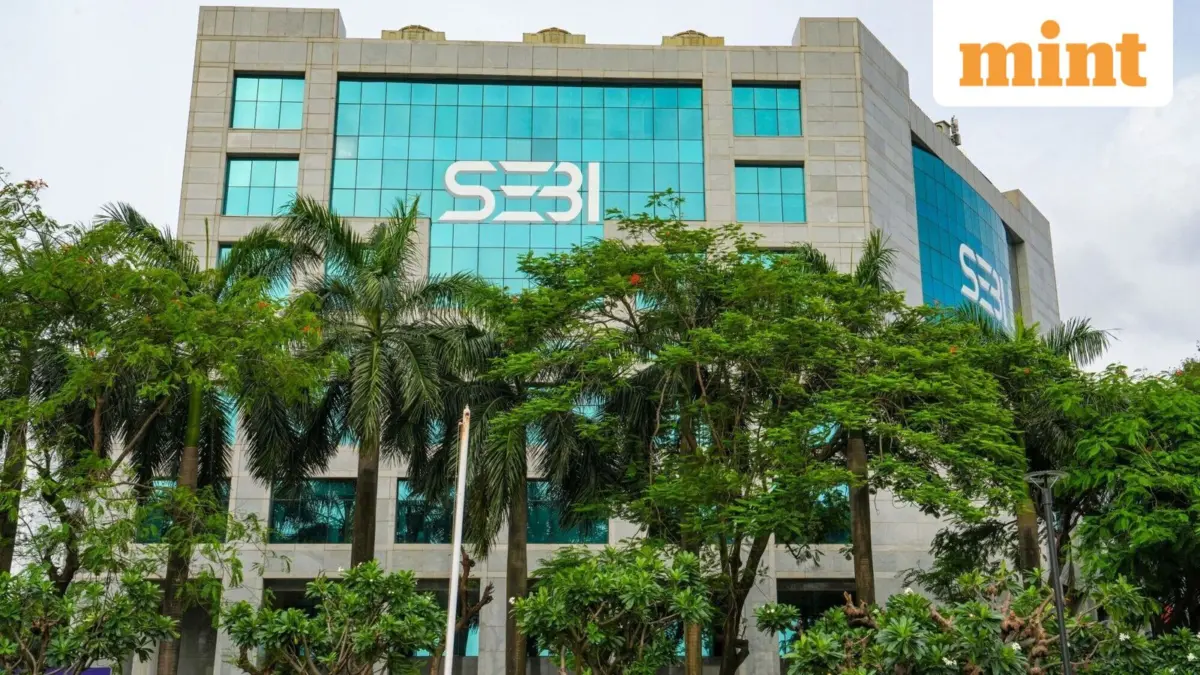
The Securities and Exchange Board of India (SEBI) has issued a significant confirmatory order upholding its previous restrictions on Rajesh Exports Limited and its Managing Director, Rajesh Mehta, following an intensive investigation into what appears to be one of the most substantial financial misrepresentation cases in recent Indian corporate history. The regulator’s latest directive reinforces a ban on Mehta from dealing in the company’s securities and demands absolute cooperation with a forensic audit designed to untangle a staggering ₹15.15-trillion discrepancy in revenue reporting. This decision underscores SEBI’s commitment to maintaining market integrity and protecting minority shareholders from potential systemic accounting irregularities within large-cap entities.
The case centers on allegations that Rajesh Exports, a dominant player in the global gold and jewelry trade, misrepresented its operational scale and financial health over a five-year period spanning from the 2020-21 financial year (FY21) to the 2024-25 financial year (FY25). According to SEBI’s prima facie findings, the company may have overstated its revenue by an amount that rivals the GDP of several medium-sized nations. The regulator has alleged that approximately 99.8% of the revenue attributed to the company’s various subsidiaries during this period was misrepresented, leading to a massive inflation of the group’s consolidated financial statements.
The Magnitude of the Discrepancy: A ₹15-Trillion Mismatch
The crux of SEBI’s investigation lies in a profound disparity between the consolidated revenue reported by Rajesh Exports and the standalone revenue of its primary international operations. Rajesh Exports is the parent company of Valcambi SA, a Swiss-based gold refinery that is widely regarded as one of the largest in the world. Given that Valcambi is the crown jewel of the Rajesh Exports portfolio, market analysts and regulators naturally expected its financial performance to constitute the bulk of the group’s consolidated figures.
However, SEBI’s analysis revealed a gap that is difficult to reconcile through standard accounting practices. Between FY21 and FY25, Rajesh Exports reported a consolidated revenue of ₹15.45 trillion. In sharp contrast, Valcambi SA’s standalone revenue for the same period was recorded at just ₹3,027.38 crore. This means that the primary known subsidiary accounted for a negligible fraction of the total revenue claimed by the parent group.
SEBI pointed out that between 97% and 99% of the company’s consolidated revenue was reported to originate from "overseas subsidiaries and step-down subsidiaries." The inability of the company to provide verifiable data regarding these other entities has raised alarms. The regulator noted that such a massive difference between the performance of the known Swiss subsidiary and the consolidated total suggests that the vast majority of the company’s reported business may be illusory or inadequately documented. This lack of verifiability strikes at the heart of the reliability of the company’s financial disclosures.
Chronology of Regulatory Action and Non-Cooperation
The regulatory pressure on Rajesh Exports began to intensify earlier this year. On June 3, 2024, SEBI issued an interim order after preliminary observations suggested that the company’s financial reporting did not align with the actual flow of goods and capital. The interim order placed immediate curbs on Rajesh Mehta and the company, citing a lack of transparency and a failure to provide necessary documentation to the investigating authority.
Following the interim order, the company was given an opportunity to present its defense and provide the requested information. However, the confirmatory order issued this Wednesday suggests that the company’s response was insufficient. SEBI flagged several instances where information requests remained entirely unanswered or were only partially addressed.
Furthermore, the regulator highlighted inconsistencies in the data that was submitted. For instance, customer-wise sales figures provided to SEBI varied across different filings. Some customers appeared in one dataset but were conspicuously absent from another, despite the datasets covering the same periods. Additionally, the sales figures for identical customers differed across various submissions made by the company. SEBI noted that Rajesh Exports has, to date, failed to provide a credible rebuttal to these allegations of data inconsistency.
The Role of the Forensic Auditor and Investigative Mandate
In light of the company’s failure to clear the air, SEBI has appointed a new forensic auditor to conduct a deep-dive examination of the company’s books. The confirmatory order directs this auditor to complete the task "expeditiously." The scope of the forensic audit is expected to cover the verification of existence of the various overseas subsidiaries, the authenticity of sales transactions, the trail of funds, and the validity of the reported ₹15.15-trillion revenue.
SEBI has also instructed its internal investigating authority to conclude the ongoing probe without further delay. While the confirmatory order maintains the status quo regarding the trading ban on Rajesh Mehta, SEBI clarified that these findings are currently limited to determining whether the initial concerns raised in the June interim order have been adequately addressed. The regulator emphasized that the order does not constitute a final judgment on whether securities laws were violated, but it serves as a necessary protective measure while the full truth is unearthed.

Background: The Rise and Profile of Rajesh Exports
To understand the impact of these allegations, one must consider the stature of Rajesh Exports in the Indian and global markets. Headquartered in Bengaluru and founded by Rajesh Mehta and his brother Prashant Mehta, the company rose from a small jewelry manufacturing unit to a massive conglomerate. It owns the entire value chain of gold, from refining and manufacturing to wholesale and retail.
The acquisition of Valcambi SA in 2015 for approximately $400 million was a watershed moment for the company, theoretically making it the largest gold refiner in the world by capacity. At its peak, Rajesh Exports was a fixture on the Fortune 500 list, often ranked as one of the largest Indian companies by revenue. This high profile makes the current allegations of a ₹15-trillion revenue mismatch even more shocking to the investor community.
The company’s business model is characterized by high volumes and thin margins, which is typical of the gold refining and bullion trading industry. However, the scale of revenue reported—trillions of rupees—placed it in an elite bracket of global corporations. If the revenue figures are proven to be misrepresented, it would represent a significant blow to the credibility of Indian corporate governance on the international stage.
Broader Implications for Corporate Governance and Market Sentiment
The SEBI order against Rajesh Exports comes at a time when the Indian regulator is under increasing pressure to tighten oversight of large conglomerates and their international subsidiaries. The use of complex "step-down" subsidiary structures in foreign jurisdictions has often been a blind spot for domestic regulators. By demanding transparency into these overseas entities, SEBI is signaling a more aggressive stance toward "offshore-heavy" financial structures.
The market reaction to the ongoing investigation has been predictably negative. Shares of Rajesh Exports have faced significant volatility and downward pressure since the initial interim order in June. Investors are particularly concerned about the potential for a complete restatement of earnings, which could lead to a massive devaluation of the company’s assets and book value.
Furthermore, the company’s legal troubles have already begun to impact its participation in government-led initiatives. Earlier reports indicated that Rajesh Exports was left out of the extension for the government’s Production Linked Incentive (PLI) scheme for advanced chemistry cell (ACC) battery storage. While other major players like Reliance and Ola Electric remained part of the scheme, the lack of financial clarity and the ongoing SEBI probe likely made the government hesitant to extend fiscal incentives to the gold major. This highlights how regulatory scrutiny can have a domino effect on a company’s broader business interests and growth prospects.
Legal Requirements and Compliance Directives
In the confirmatory order, SEBI was explicit about the obligations of the company and its management. Rajesh Exports and Rajesh Mehta are legally bound to provide all documents, information, and explanations sought by the investigating authority. The order mandates that the company must ensure "truthful, accurate, and complete disclosures" in its financial statements, particularly regarding related-party transactions and other material information.
Under the SEBI (Listing Obligations and Disclosure Requirements) Regulations, listed companies are required to provide a fair and transparent view of their financials. The allegation of a 99.8% misrepresentation of subsidiary revenue suggests a systemic failure in the company’s internal controls and audit mechanisms. If the final investigation confirms these findings, the company and its directors could face severe penalties, including permanent bans from the capital markets, heavy fines, and potential criminal proceedings.
Conclusion and Future Outlook
The SEBI confirmatory order serves as a stern reminder that the regulator will not overlook discrepancies, regardless of the size or pedigree of the corporation involved. The figure of ₹15.15 trillion is unprecedented in Indian regulatory history, and the resolution of this case will likely set a benchmark for how accounting frauds involving international subsidiaries are handled in the future.
For now, the focus remains on the forensic auditor and the investigating authority. Their ability to trace the alleged "missing" revenue or prove its non-existence will be the deciding factor in the fate of Rajesh Exports. For Rajesh Mehta, the restriction on trading in his company’s securities remains a significant personal and professional hurdle, effectively locking him out of the market as the investigation proceeds.
As the probe continues, the broader Indian corporate sector will be watching closely. The case highlights the critical importance of robust auditing and the need for companies to maintain transparent relationships with regulators. For the shareholders of Rajesh Exports, the road ahead is fraught with uncertainty, as they await a final determination that will either clear the company’s name or confirm one of the largest financial scandals in the country’s history. The regulator’s insistence on an "expeditious" conclusion suggests that the final verdict may not be far off, but the complexity of the ₹15-trillion trail ensures that the process will be thorough and exhaustive.
