

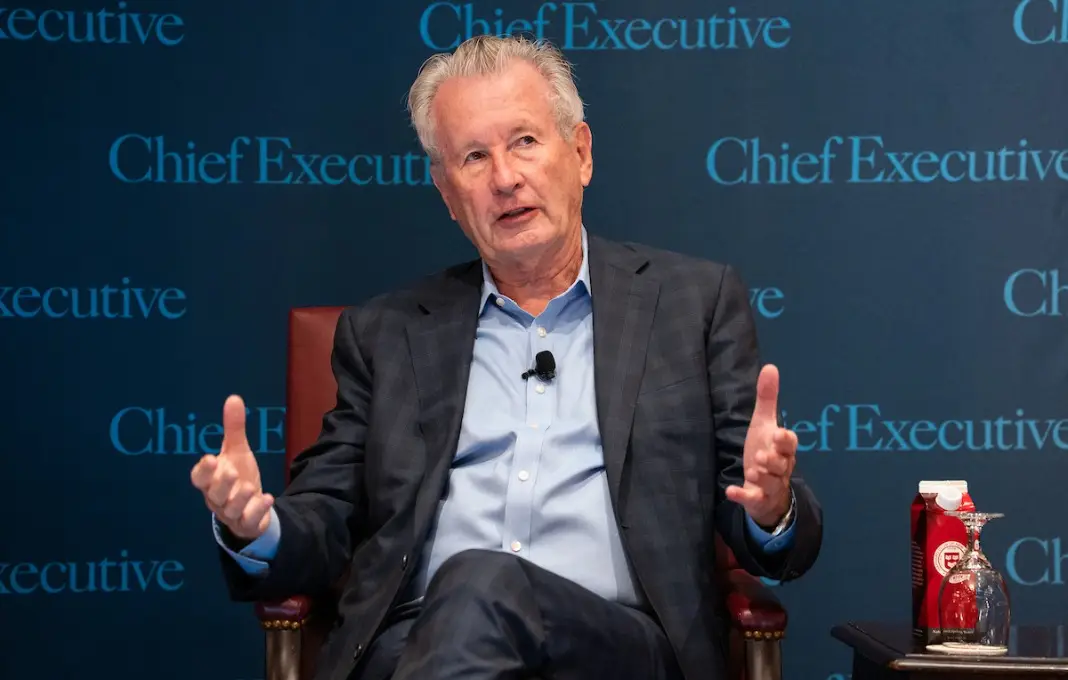
New York City – September 10, 2026 – In a significant shift driven by a confluence of economic headwinds and market dynamics, private equity (PE) sponsors are increasingly extending their holding periods for portfolio companies. This trend, underscored by insights shared at the 2026 PE-Backed Leadership Summit in New York City, is compelling chief executive officers (CEOs) of PE-backed firms to recalibrate their strategic blueprints and embrace a more protracted approach to value creation. The prevailing economic landscape, characterized by elevated interest rates, contracting valuation multiples, and mounting pressure from limited partners (LPs) for distributions, has created a challenging exit environment, leaving a substantial backlog of companies awaiting divestment.
The summit, held at a time when the financial markets are navigating a period of heightened uncertainty, brought together a cohort of CEOs and CFOs from PE-backed organizations. Their discussions revealed a collective understanding that the traditional five-year value creation timeline, once a common benchmark in PE investments, is no longer a reliable paradigm. Experts at the event articulated that realizing a company’s full potential and preparing it for a successful exit now necessitates a significantly longer horizon, often stretching to six, seven, or even eight years.
"You can’t necessarily implement all the value creation blueprint, particularly in an uncertain economy in under five years. That takes longer: six, seven, eight," stated Paul Aversano, managing director and global practice leader at Alvarez & Marsal, a leading global professional services firm. His observation highlights the evolving nature of PE value creation strategies, which must now account for extended periods of operational enhancement and market adaptation.
The sheer volume of unsold portfolio companies presents a stark indicator of the current market conditions. Ted Bililies, global head of the transformative leadership practice and managing director at AlixPartners, noted that "more than 33,000 portcos remain unsold at this point, which says buyers have lots and lots of options. This is more than twice the number just six years ago." This abundance of choices for potential buyers fundamentally alters the exit landscape. Consequently, the concept of "exit readiness" has transcended a short-term sprint to become an ongoing, embedded operational discipline. "So exit readiness then doesn’t become a one-week sprint or a one-year sprint. Exit readiness really becomes an operational discipline that ends when the deal closes, quite frankly," Bililies emphasized.
The Imperative of Operational Value Creation
With the historical reliance on financial engineering and market timing for PE returns diminishing, the focus has irrevocably shifted towards robust operational value creation. Buyers are no longer solely underwriting past performance; they are increasingly scrutinizing a company’s future growth prospects.
"Buyers are underwriting the future, not the past. Organic revenue is necessary, but it’s not sufficient, so they’re really looking for ways in which you’re going to expand and grow," Bililies elaborated. This sentiment underscores the critical need for PE-backed companies to demonstrate a clear and compelling pathway to sustained organic growth and market expansion, rather than relying on incremental improvements or favorable market conditions.
Navigating the Extended Holding Period: Key Strategies for CEOs
The extended holding periods necessitate a fundamental reevaluation of corporate strategy and operational execution. Several key themes emerged from the PE-Backed Leadership Summit that offer actionable insights for CEOs navigating this complex terrain.
Rethinking the Status Quo: The "Clean Slate" Approach
A pivotal piece of advice offered by Dan Glaser, operating partner at CD&R and former president and CEO of Marsh & McLennan, was to challenge existing structures and strategies through a "clean slate" lens. He urged CEOs to question whether their current organizational design, market approach, and divisional configurations would be the same if they were building the company from scratch today.
"If you started with a clean slate, would you structure yourself this way? Would you go to the market this way? Would you have these divisions together?" Glaser posed. He further articulated a core principle of effective business leadership: "The whole purpose of running a company is to create things and destroy things. It’s not to sustain them." This philosophy encourages a proactive approach to innovation and transformation, recognizing that continuous evolution is essential for long-term relevance and value creation. The implication for CEOs is a mandate to rigorously assess and, where necessary, dismantle outdated structures or processes that may hinder future growth or adaptability.
Anticipating the Next Buyer’s Thesis
In an environment where exit timelines are extended, understanding the potential future owners’ strategic objectives becomes paramount. Nigel Travis, senior advisor at Blackstone and chair of several prominent portfolio companies including Abercrombie & Fitch, Servpro, Tropical Smoothie, and Jersey Mike’s, highlighted the importance of considering the "next buyer’s thesis" from the outset.
"When someone else buys it, what will they do with it? That’s your plan of action today," Travis explained. This forward-looking perspective suggests that strategic planning should not solely focus on the current PE sponsor’s objectives but should also incorporate the likely strategic imperatives of future acquirers. For CEOs, this means actively identifying potential strategic buyers and understanding their growth drivers, market consolidation opportunities, or synergistic advantages. By proactively aligning the company’s development with these future scenarios, CEOs can enhance its attractiveness and accelerate its eventual sale.
Fortifying the Competitive Moat
In a market characterized by increased competition and a discerning buyer base, building a robust and defensible competitive advantage – a "moat" – is no longer a supplementary strategy but a foundational requirement. Gabriel Anaya, CFO of medical device manufacturer Irrimax, stressed that this involves a multi-layered approach beyond just a superior product.
"You need to have several layers in there," Anaya stated. "For me, it will be the product itself, clinical adaptation, IP, brand awareness, customer relationships, supply chain. When you [have] all those together, that’s when it’s going to be something really hard to replicate." This holistic view of competitive advantage underscores the need for sustained investment in intellectual property, deep customer relationships, resilient supply chains, and strong brand equity. The extended holding periods provide an opportunity for companies to meticulously build and strengthen these layers, making them more resilient to competitive pressures and more valuable to potential buyers.
Strategic Pricing in an Inflationary Environment
The current economic climate, marked by persistent inflation, presents a delicate balancing act for businesses regarding pricing strategies. Suzanne Yoon, founder and managing partner at PE investment firm Kinzie Partners, offered a nuanced perspective, moving beyond a simplistic "hawkish" approach to pricing.
"It’s not about being a hawk out there," Yoon argued. "It’s about figuring out how you can leverage your advantages to bring a win-win to the customers and improve your own economics." This suggests that pricing decisions should be informed by a deep understanding of a company’s unique value proposition and its ability to deliver tangible benefits to customers. Instead of simply passing on cost increases, companies should explore how optimized pricing can reinforce their competitive advantage, enhance customer loyalty, and ultimately drive profitability in a sustainable manner. The extended holding period allows for more thoughtful and iterative pricing strategies that can be refined over time.
The Critical Role of Leadership and Talent
Despite the emphasis on operational and strategic initiatives, private equity investors consistently identify leadership as the paramount value-creating lever within portfolio companies. Research from AlixPartners indicates that a majority of PE investors lack full confidence in their portfolio companies’ leadership teams.
"If you’re not talking about your talent with your board and with your sponsors on a regular basis, you really need to be. [It is a] critical lever," Bililies emphasized. This underscores the imperative for CEOs to prioritize talent management, development, and retention. The extended holding periods provide a valuable window for identifying, nurturing, and, if necessary, recruiting high-caliber leadership talent that can navigate the complexities of long-term value creation. Building a robust leadership pipeline is crucial for sustained performance and successful execution of strategic objectives.
Cultivating a High-Performance Culture: The Power of "Unreasonable People"
Beyond technical skills and strategic acumen, the summit discussions also touched upon the intangible qualities that drive exceptional performance. Dan Glaser revisited the idea of building a team that is not necessarily composed of friends or even rivals, but rather "unreasonable people" driven by performance.
"At the end, you don’t have a team of friends. You don’t need to have a team of rivals, but what you do need is a team of people who are driven for performance," Glaser stated. He further elaborated on the characteristics of such individuals: "Usually highly intelligent, highly motivated, highly insecure and agitated. Unreasonable people get better results than reasonable people." This provocative assertion suggests that a culture that fosters high standards, relentless ambition, and a degree of healthy discontent can be a powerful engine for achieving superior outcomes. For CEOs, this means creating an environment where challenging the status quo is encouraged, and where individuals are empowered to push boundaries in pursuit of ambitious goals, even if it leads to occasional friction.
The Broader Economic and Political Context
While the operational and strategic implications of extended holding periods are significant, the macroeconomic and political environment continues to cast a long shadow. Paul Aversano expressed a cautious optimism regarding the potential impact of the upcoming midterm elections on the economic climate.
"There may be a handbrake on some of what’s gone on," Aversano suggested, "that may be just enough so that people, whatever the expectations will be, at least there will be some defined expectations." This sentiment suggests that a degree of political and economic stabilization, however modest, could provide much-needed clarity and predictability, enabling businesses to plan with greater confidence. The interplay between market forces, investor sentiment, and geopolitical developments will continue to shape the landscape for PE-backed companies, underscoring the need for adaptability and resilience.
The extended holding periods, driven by a complex interplay of financial market conditions and economic uncertainty, are fundamentally reshaping the strategic imperatives for CEOs of private equity-backed companies. The shift from a short-term exit focus to a long-term value creation strategy necessitates a profound reevaluation of organizational structure, competitive positioning, leadership development, and operational execution. As the market continues to evolve, companies that embrace these evolving dynamics and proactively build enduring competitive advantages are best positioned to thrive.
