


Canada stands at a pivotal crossroads in its industrial and environmental history as it prepares to overhaul its national electricity grid to meet the demands of a net-zero future. Currently, approximately 80% of Canada’s electricity is generated from emissions-free sources, including vast hydroelectric reserves, nuclear power, and a growing portfolio of wind and solar installations. However, maintaining this lead while decarbonizing the remaining 20% of the grid—and simultaneously doubling the nation’s total power output—represents one of the most significant capital undertakings in the country’s history. According to the 2026 levelized-cost-of-energy report by the global financial firm Lazard, wind and solar remain the most cost-effective methods for adding new capacity to the grid. Yet, the scale of the required expansion is staggering. The Canadian government estimates that as the nation’s transportation, residential, and industrial sectors shift away from fossil fuels, the grid must double its production capacity in less than 25 years to accommodate electric vehicles, heat pumps, and the energy-intensive demands of modern data centres.
The Financial Roadmap for Decarbonization
The transition to a fully electrified and decarbonized economy is not merely a matter of environmental policy but a massive exercise in capital mobilization. A comprehensive analysis by Corporate Knights, titled "Climate Dollars," provides a sector-by-sector breakdown of the investment required to reach these goals. The report concludes that Canada will need approximately $2.17 trillion in capital investments over the next quarter-century. This total is divided into two primary categories: $1.26 trillion dedicated to grid infrastructure—including generation, transmission, and storage—and $915 billion for end-use sectors, such as building retrofits and industrial electrification.
For the grid component, this necessitates an average annual investment of roughly $50 billion for the next 25 years. To put this in perspective, capital investments in the grid totaled $32 billion in 2024 and rose to $34 billion in 2025. While these figures represent the largest baseline capital expenditure in the nation’s energy sector—surpassed only by the $42 billion spent on oil and gas extraction—they still fall short of the $50 billion annual target required to meet the 2050 net-zero commitments. Experts suggest that the gap between current spending and required investment must be bridged through a combination of aggressive public policy and the de-risking of private capital.
A Chronology of National Energy Strategy
The evolution of Canada’s energy landscape has been marked by shifting federal priorities and provincial tensions. The current trajectory was solidified on May 14, 2026, when the government, led by Prime Minister Mark Carney, announced a landmark National Electricity Strategy. This strategy was designed to provide a unified framework for a fragmented regulatory environment where provinces traditionally hold jurisdiction over their own energy assets.
A timeline of recent developments illustrates the accelerating pace of change:
- 2009: Ontario passes the Green Energy Act, aiming to fast-track renewable projects but sparking significant municipal resistance due to the removal of local planning authorities.
- 2016: Renewable energy co-ops peak in Canada before a decline following the discontinuation of guaranteed, long-term fixed-price energy contracts in several provinces.
- 2024-2025: Grid investments hit record highs of $32B and $34B respectively, signaling a shift in investor confidence toward electrification.
- May 2026: The Carney government unveils the National Electricity Strategy, earmarking $13 billion annually for clean-energy initiatives and prioritizing interprovincial grid connections.
- June 2026: New federal commitments are made to advance "Powering Canada," a plan focused specifically on reliable and affordable energy through enhanced interprovincial transmission.
Infrastructure Hurdles and the "Trans-Canada" Vision
One of the primary technical challenges facing the nation is its geography. Canada’s vast landmass and sparse population make centralized grid management exceptionally difficult. Currently, more than 200 remote communities remain entirely dependent on diesel generators for their year-round energy needs. Transitioning these communities to renewable micro-grids is a humanitarian and environmental priority, yet it requires localized solutions that are often more expensive than large-scale urban projects.
On a macro scale, the National Electricity Strategy emphasizes the need for a "trans-Canada transmission line." This proposed infrastructure would function as an energy highway, allowing provinces with surplus clean energy to sell power to those still reliant on fossil fuels. For instance, offshore wind power generated in the Maritimes could be transmitted to meet peak demand in southern Ontario. Corporate Knights researchers estimate that while such a line would carry a $100-billion price tag, it would ultimately result in $255 billion in savings by optimizing energy distribution and reducing the need for redundant local generation. Furthermore, other grid improvements could save hundreds of billions more in fuel and infrastructure costs, eventually lowering electricity rates for millions of Canadians.
The Fragmentation of Power: Provincial and Municipal Resistance
Despite the federal push for a unified grid, the regulatory landscape remains deeply fragmented. Provinces administer their own electricity systems, and political alignment between federal and provincial capitals is rarely permanent. This friction is compounded at the municipal level. In Ontario, the legacy of the 2009 Green Energy Act continues to haunt the renewable sector. Approximately 155 municipalities in the province formally denounced wind turbine projects that were erected across rural farmlands, citing a lack of local consultation.
This "top-down" approach has made wind power a difficult sell in many regions, highlighting the need for community buy-in. Analysts argue that for the National Electricity Strategy to succeed, it must move away from purely centralized mandates and embrace decentralized solutions that provide local benefits. Without social license, even the most well-funded infrastructure projects can be stalled by legal challenges and political backlash.
The Opportunity in Community Financing
If 20% to 25% of the $1.26-trillion grid funding comes from government sources—such as tax credits and the Smart Renewables and Electrification Pathways Program—the remaining 75% to 80% must come from private players. While institutional investors like pension funds and private utilities will provide the bulk of this, "community bonds" are emerging as a vital tool for democratizing the energy transition.
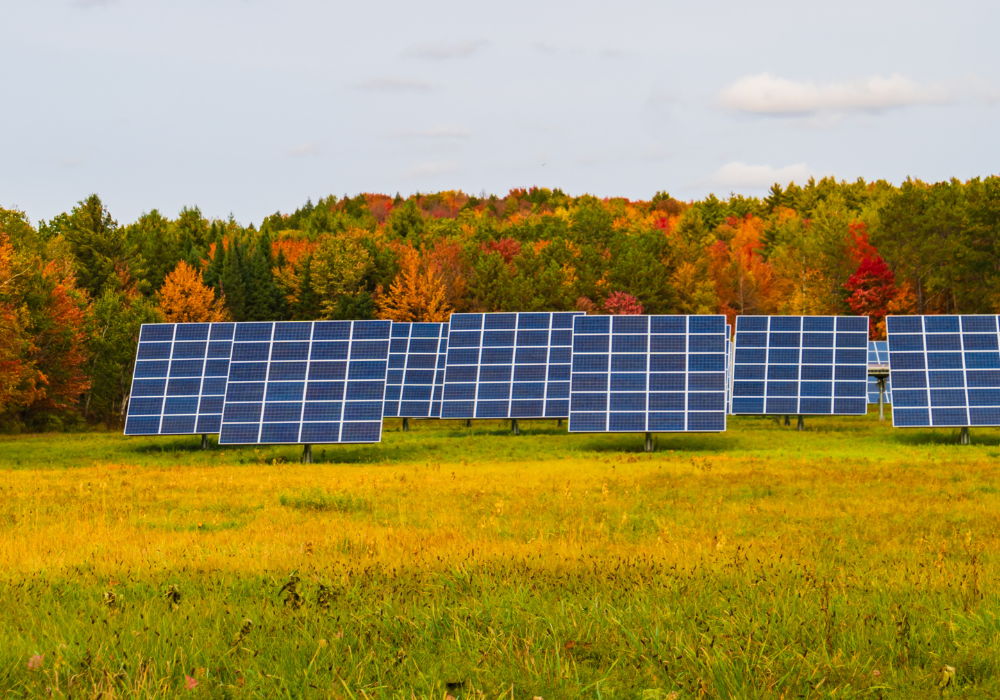
Community bonds allow retail investors to become direct stakeholders in renewable energy projects with a minimum investment often as low as $1,000. These investments function as loans to co-operatives, which are repaid with interest. SolarShare, Canada’s largest renewable-energy co-op, serves as a primary example of this model’s success. Since its founding in 2010, SolarShare has grown to over 2,000 members who have invested $80 million into 51 solar projects across Ontario. These projects, ranging from rooftop installations in the Greater Toronto Area to massive arrays in Timiskaming, generate enough power for 2,000 homes annually and have returned over $17 million in interest to investors.
Brian Chang, General Manager of SolarShare, notes that while bond rates were once significantly higher than GICs due to generous government contracts, they now remain competitive at around 4% for three- to seven-year terms. Crucially, the co-op model offers a level of democratic engagement that corporate stocks do not: every member receives one vote, regardless of whether they invested $1,000 or $100,000. This structure helps build the "social license" necessary for project approval, as local residents become the primary financial beneficiaries of the infrastructure in their backyards.
International Benchmarking: Canada vs. Europe
While the co-operative model shows promise, Canada lags significantly behind its European counterparts. A study from Royal Roads University estimates that Canada has only 82 active energy co-ops owning or co-owning 214 projects. In contrast, Germany boasts 847 energy co-ops, and the Netherlands has 713. The number of active co-ops in Canada has actually halved since 2016, a decline attributed to burdensome legal requirements, expensive fundraising regulations, and tight restrictions on selling electricity back to the grid.
To match the success of European nations, Canadian policy must evolve to support decentralization. This involves not only generating power locally but also creating decentralized storage solutions, such as community-scale battery arrays. Experts suggest that if the federal government were to streamline the regulatory hurdles for small-scale energy producers, the influx of private "neighborhood" capital could significantly reduce the burden on the public purse.
Broader Impact and Economic Implications
The transition to a decarbonized grid is as much an economic imperative as an environmental one. The "Climate Dollars" analysis suggests that while the initial capital outlay is high, the long-term savings are transformative. By shifting from a fuel-heavy system (where prices are subject to global commodity volatility) to a capital-heavy system (where costs are fixed once the infrastructure is built), Canada can achieve greater energy price stability.
Furthermore, the doubling of the grid is essential for the "Second Industrial Revolution" of green manufacturing. Without a reliable and massive supply of clean electricity, Canada cannot attract the battery plants, green steel mills, and AI data centres that are expected to drive GDP growth in the 2030s and 2040s. The investment in the grid is, therefore, the foundational investment for the entire future economy.
The success of this $2.17-trillion endeavor depends on three factors: political will to maintain long-term funding, the technical ability to integrate a vast array of decentralized power nodes, and the capacity to win over skeptical local communities. If these elements align, Canada’s grid will not only be one of the cleanest in the world but also one of the most resilient and economically efficient. The use of community bonds and co-operative models may prove to be the "secret weapon" that turns local opposition into local ownership, ensuring that the path to net-zero is paved with broad public support.
