

The landscape of higher education is undergoing a seismic shift, marked by a growing number of colleges, particularly smaller private institutions, choosing to drastically reduce their advertised tuition rates. This move represents a significant departure from the long-standing practice of inflating sticker prices and then offering substantial discounts through merit scholarships. The underlying drivers are a confluence of declining high school enrollment, increasing skepticism among students and parents about the return on investment of a four-year degree, and the unsustainable financial models that have characterized much of the sector for decades.
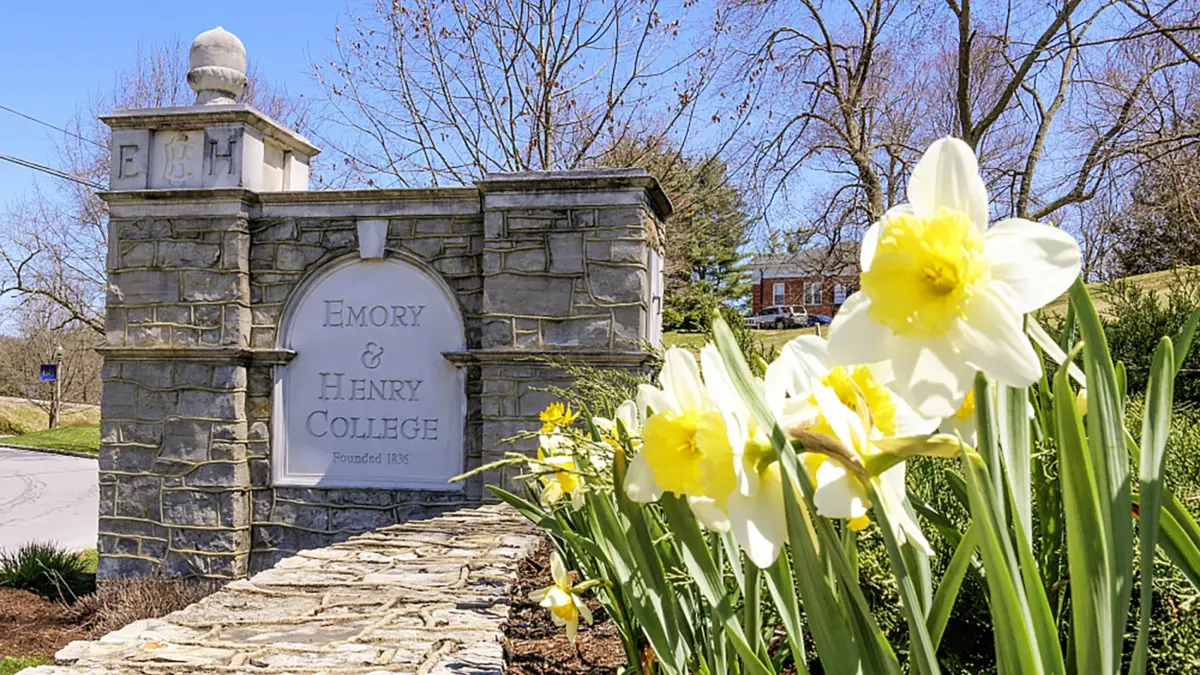
For years, institutions like Emory & Henry University in rural Virginia operated on a model that, while seemingly offering value, was becoming increasingly precarious. The university previously offered generous merit scholarships, sometimes reaching up to $23,000, to offset its near-$40,000 tuition price tag. This strategy aimed to make the private college competitive against more affordable public universities. However, this fall, Emory & Henry has taken a bold step, slashing its tuition by half to $19,990. This decision is not an isolated incident but part of a burgeoning movement of small private colleges re-evaluating their financial strategies to attract a shrinking pool of prospective students.
"We just knew that we couldn’t be a school with a price tag of $40,000 and attract students, particularly those in the socioeconomic groups that are in our region," stated Emory & Henry University President Lou Fincher. "We couldn’t continue on that same path." This candid admission underscores the growing realization that the traditional pricing model, which relied heavily on perceived value through discounts, was no longer resonating with today’s cost-conscious students and their families.
The trend of tuition reduction is gaining momentum. At least five colleges have announced plans to implement such cuts for the fall 2027 academic year. Concordia University in St. Paul, Minnesota, a pioneer in this strategy, first lowered its prices in 2013 and is now planning an additional $5,500 reduction. More dramatically, the University of Tulsa in Oklahoma is set to slash its tuition and fees to $25,000 from the current $54,000, beginning next year. University officials project this move will establish it as the "most affordable private research university" in the American heartland, a significant repositioning in the market.
These adjustments come at a time when American colleges are facing unprecedented challenges. The cost of a four-year degree can now approach $400,000, a figure that understandably prompts scrutiny from an increasingly skeptical public. Eighteen-year-olds and their parents are questioning the tangible return on such a substantial financial commitment, especially as the perceived value of a bachelor’s degree faces its own set of challenges. Compounding these concerns is the demographic reality of a declining number of high school graduates, a trend projected to continue and intensify in the coming years. This demographic cliff is forcing higher education leaders to adopt more drastic measures to ensure institutional viability and attract new cohorts of students.
The reality is that very few students ever pay the published sticker price for college. Merit scholarships, while often presented as financial aid, have long served as a sophisticated "pricing tool" for institutions. A report by the Brookings Institution highlighted how colleges strategically use these scholarships to attract higher-income students who might otherwise be deterred by the initial high price. This practice, while common, has contributed to a perception of opacity and a complex financial negotiation process for prospective students.
Data further illustrates this point. A survey of over 250 private, nonprofit universities revealed that, on average, these institutions provided enough aid to discount tuition and fees by a significant 57% for first-time students during the last academic year. This figure underscores the vast gap between advertised prices and the actual cost borne by the majority of students.
The debate over whether to slash published tuition prices is now a central concern for leadership teams at nearly every private college, according to Robert Bielby, a managing director at Huron, a consulting firm that advises universities. "The question is, when do we hit the tipping point where it seems like it’s a viable pathway forward?" Bielby mused. "At some point, we’re probably going to see a full-scale reset in the industry. We’re just not there yet." This sentiment suggests that while the current trend is notable, a complete industry-wide overhaul may still be on the horizon.
However, the efficacy of simply lowering tuition prices as a strategy to boost enrollment is not a guaranteed outcome. A 2022 study indicated that tuition resets, defined as price reductions of at least 5%, yielded minimal evidence of long-term enrollment increases. This phenomenon is partly attributed to a cognitive bias: individuals tend to favor situations where they receive larger awards to offset costs, even if the initial price is higher. As Bielby explained, "People really like scholarships and getting money. People like to go home to grandma and tell them they got a $25,000 scholarship." The psychological appeal of receiving a scholarship, a tangible reward, often outweighs the straightforward appeal of a lower overall price.
Furthermore, the financial implications of a lower tuition base are significant for universities. A reduced tuition price means less incremental revenue from the typical annual tuition increases, which historically hover around 3% to 4%. This can exacerbate budget strains for institutions already operating on tight margins.
Despite these potential challenges, some institutions are projecting positive enrollment outcomes. The University of Tulsa, for instance, anticipates a 10% to 12% increase in freshman and transfer student enrollment following its tuition reset. This projected surge is critical for the university, which received a downgrade to "junk" status by Moody’s Ratings in August, citing "massive structural deficits." The tuition cut is, therefore, a strategic move to improve its financial standing and market position.
The Tuition-Cut Playbook: Concordia’s Influence
Concordia University, St. Paul, has emerged as a vocal advocate for tuition resets, sharing its experience with other college leaders. After implementing a 33% tuition reduction at the start of the 2013 academic year, the university witnessed a remarkable surge in traditional undergraduate enrollment, climbing by over 70%. This success story has prompted other institutions to seek guidance from Concordia.
Provost Eric LaMott regularly engages with college officials through virtual and in-person meetings, detailing the steps Concordia took to implement its price reduction strategy. "When students and families see that high sticker price and then they don’t apply, that’s not great for the students and it’s not great for institutions," LaMott stated, highlighting the negative impact of prohibitive pricing on both prospective students and the institutions themselves.
Carroll College, currently the most expensive college in Montana, consulted with Concordia regarding its own tuition reset plans. Historically, Carroll College has utilized financial aid to discount its sticker price by approximately 66%. However, it is now poised to slash tuition by 40%, bringing it down to $26,800 next year, a move designed to shed its costly reputation.
"It’s a more honest look at what that true cost will be," said Carroll President Jennifer Glowienka, who assumed leadership this year. "They’ll be looking at institutions like ours and seeing that that is a realistic pathway for them to receive a college education." This sentiment reflects a desire for greater transparency and a more direct alignment between the advertised price and the actual financial burden on students.
Like Buying a Car: Shifting Perceptions of Value
At Emory & Henry, President Fincher and her team are actively working to educate prospective students and their families about the new $19,990 tuition. Merit scholarships have been recalibrated to $5,000 or less, and the university is implementing the "Emory & Henry Promise," which covers the full cost of tuition for Virginia students with a household income below $85,000, subject to certain conditions.
Fincher acknowledged the prevailing mindset among many students and parents, comparing the college search process to purchasing a car. "No one wants to pay sticker price when you drive off the parking lot," she observed. This analogy captures the deep-seated expectation of negotiation and discounts in major financial decisions.
The initial results of Emory & Henry’s lower-tuition strategy appear promising. The university reported an increase of 100 new students this fall compared to the previous year. This enrollment boost is part of a broader strategic initiative that includes attracting more commuter students and intensifying recruitment efforts in local high schools. "What you see is a lot more student energy on campus," Fincher added. "It’s hard to describe what having 100 more students on campus can do." This indicates a tangible improvement in campus vibrancy and a renewed sense of community, driven by increased student presence.
Broader Implications and Future Outlook
The current wave of tuition cuts signifies a critical juncture for the higher education sector. For decades, the rising cost of college has been a persistent concern, exacerbated by a lack of transparency and an over-reliance on complex financial aid packages. As demographic trends shift and student skepticism grows, institutions that fail to adapt risk becoming financially unsustainable.
The long-term implications of this shift are multifaceted. For students, a move towards more transparent and lower published tuition could democratize access to higher education, reducing the anxiety and complexity associated with navigating financial aid. It could also lead to a more competitive market, forcing institutions to differentiate themselves based on program quality, student experience, and post-graduation outcomes, rather than solely on their ability to offer discounts.
For institutions, the challenge lies in balancing reduced tuition revenue with the need to maintain program quality, invest in faculty and facilities, and ensure financial stability. The success of tuition resets will likely depend on a strategic approach that integrates pricing adjustments with comprehensive enrollment management, operational efficiency, and a clear articulation of institutional value.
The "college tuition reckoning" is not merely a financial adjustment; it is a fundamental re-evaluation of the value proposition of higher education. As more institutions embrace transparency and affordability, the industry may be poised for a significant transformation, one that could ultimately benefit students and ensure the long-term health of educational institutions themselves. The coming years will be crucial in determining whether this trend represents a temporary correction or the beginning of a profound and lasting reset in how higher education is priced and perceived.
