

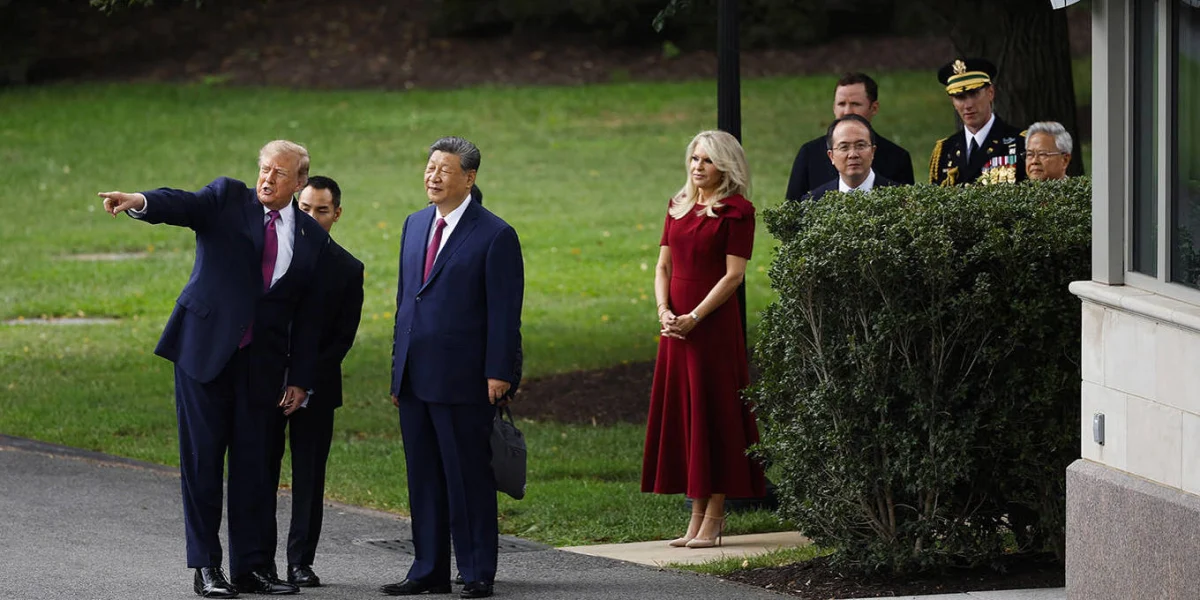
NEW HAVEN – September 30, 2026 – The highly anticipated summit between United States President Donald Trump and Chinese President Xi Jinping concluded this week, leaving observers largely underwhelmed by a palpable deficit of substantive breakthroughs on a range of pressing global challenges. While the meeting was framed by considerable ceremonial fanfare, a critical analysis of the proceedings reveals a concerning prioritization of optics and diplomatic theater over meaningful dialogue and actionable agreements on issues spanning trade, artificial intelligence, geopolitical tensions surrounding Taiwan, and China’s complex role in multiple active conflict zones. The summit, despite being characterized by some as a necessary step in ongoing communication, ultimately underscored the persistent chasm in strategic alignment between the two global superpowers.
The summit, which took place against a backdrop of heightened global uncertainty, was meticulously orchestrated to project an image of robust engagement. However, beneath the polished veneer of diplomatic protocols and carefully curated photo opportunities, the core issues that have defined the complex US-China relationship remained largely unaddressed. President Trump’s public pronouncements during the summit, often characterized by effusive praise for President Xi, were met with widespread commentary suggesting a misplaced emphasis on personal admiration rather than a strategic assessment of national interests. This approach, critics argue, risks devaluing the gravity of the challenges at hand and potentially emboldening a more assertive posture from Beijing without commensurate concessions or clear commitments to de-escalation.
Background and Context of the Summit
The Trump-Xi summit was convened following months of escalating rhetoric and a series of diplomatic and economic standoffs. Relations between the United States and China had deteriorated significantly in recent years, marked by a protracted trade war, ongoing disputes over intellectual property rights, and growing concerns about China’s expanding military influence in the Indo-Pacific. The summit was presented by both administrations as an opportunity to reset the often-turbulent dialogue and explore avenues for cooperation, even as fundamental disagreements persisted.
The initial planning for the summit was shrouded in strategic ambiguity, with both sides carefully managing expectations. U.S. officials, speaking on background prior to the event, emphasized the importance of maintaining open lines of communication to prevent miscalculation, particularly in light of increasing tensions in the South China Sea and across the Taiwan Strait. Chinese state media, meanwhile, highlighted the summit as a crucial moment for fostering global stability and economic interdependence.
A Chronicle of Missed Opportunities
The summit’s agenda, as publicly outlined, included discussions on several critical areas:
- Trade Imbalances and Tariffs: The ongoing trade dispute, initiated in 2018, had seen the imposition of billions of dollars in tariffs by both nations, impacting global supply chains and consumer prices. While discussions were held, no significant de-escalation or new framework for resolving these trade grievances emerged. Existing tariffs remained in place, and the fundamental structural issues contributing to the trade deficit were not substantively addressed. Data from the U.S. Bureau of Economic Analysis indicated that the bilateral trade deficit, though fluctuating, remained a significant concern for American policymakers throughout the preceding years.
- Artificial Intelligence and Technological Competition: The rapid advancement of Artificial Intelligence (AI) presents both immense opportunities and significant risks, including concerns about national security, ethical deployment, and potential misuse. Discussions were reportedly held on AI governance and the ethical development of this transformative technology. However, concrete agreements on joint research, data sharing protocols, or standards for AI safety were notably absent. The global race for AI dominance, with its implications for economic competitiveness and military capabilities, continues unabated.
- Taiwan Strait Tensions: The status of Taiwan remains one of the most sensitive and potentially explosive issues in U.S.-China relations. China views Taiwan as a renegade province and has repeatedly vowed to bring it under its control, by force if necessary. The United States, while acknowledging Beijing’s "one China" policy, maintains unofficial relations with Taiwan and provides it with defensive armaments. The summit provided a platform to discuss de-escalation strategies and confidence-building measures in the strait. However, there was no public indication of a shift in either nation’s fundamental stance or a reduction in military posturing by Beijing. U.S. Department of Defense reports have consistently highlighted an increase in Chinese military exercises and incursions into Taiwan’s Air Defense Identification Zone in recent years, a trend that shows no sign of abating.
- China’s Role in Global Conflicts: The international landscape is currently marked by multiple theaters of war, with China playing an increasingly influential, albeit often ambiguous, role. Discussions were expected to address China’s economic ties with nations involved in conflicts, its stance on international sanctions, and its potential influence in promoting peace or exacerbating hostilities. While dialogues occurred, there was no discernible progress in securing China’s commitment to specific actions that would either alleviate humanitarian crises or contribute to diplomatic resolutions. China’s continued economic engagement with sanctioned entities and its cautious approach to condemning certain military actions have drawn criticism from Western nations.
The Specter of Pageantry Over Substance
A recurring theme throughout the summit coverage was the pervasive emphasis on ceremonial elements, which appeared to overshadow the substantive discussions. President Trump’s public expressions of admiration for President Xi, often delivered in a style that critics have labeled as performative and overly personal, dominated media narratives. These declarations, while potentially aimed at fostering a more amiable personal rapport, were seen by many as a deviation from the sober and strategic diplomacy required to address complex geopolitical challenges.
This inclination towards pageantry over concrete outcomes has been a hallmark of previous interactions, leading to a perception that the summits are more about the optics of leadership and personal diplomacy than about achieving tangible policy advancements. The lack of concrete deliverables from this summit reinforces that perception, leaving many to question the true value and purpose of such high-level engagements when critical issues remain unresolved.
Data and Economic Implications
The economic ramifications of the unresolved trade disputes are substantial. According to the International Monetary Fund (IMF), global economic growth forecasts have been consistently dampened by trade tensions and geopolitical uncertainty, with the U.S.-China trade war being a significant contributing factor. The continued imposition of tariffs and the absence of a clear path towards resolution prolong the disruption to global supply chains, increase costs for businesses and consumers, and hinder investment.
Furthermore, the technological competition, particularly in AI, has profound economic implications. Countries that lead in AI development and deployment stand to gain significant economic advantages. The lack of a collaborative framework between the U.S. and China on AI governance could lead to fragmented standards, increased cybersecurity risks, and a potentially destabilizing arms race in autonomous technologies.
Official Responses and Expert Analysis
Following the summit, official statements from both the U.S. and Chinese administrations offered carefully worded summaries that highlighted areas of agreement, however limited, while downplaying the lack of significant breakthroughs. White House press releases emphasized the importance of continued dialogue and the establishment of a "more stable and constructive relationship." Beijing’s official statements echoed similar sentiments, stressing mutual respect and cooperation.
However, reactions from political analysts and foreign policy experts were largely critical. Dr. Evelyn Reed, a senior fellow at the Brookings Institution, commented, "While dialogue is always preferable to silence, this summit appears to have been a missed opportunity. The persistent reliance on ceremony over substance suggests a lack of political will to confront the deeply entrenched issues that divide the two powers. We needed to see concrete steps on trade, verifiable commitments on de-escalation in the Taiwan Strait, and a more robust framework for AI governance. Instead, we witnessed a performance."
Broader Impact and Future Implications
The long-term implications of a summit that prioritizes pageantry over substance are concerning. For the United States, it raises questions about the efficacy of its diplomatic strategy in managing relations with a rising global power. The perception of U.S. foreign policy being driven by personal dynamics rather than strategic imperatives could undermine its credibility on the international stage.
For China, a summit that yields no substantive concessions from the U.S. while projecting an image of strong leadership can be seen as a strategic success. However, it also risks further alienating key trading partners and allies who are increasingly concerned about China’s assertive foreign policy and its commitment to international norms.
The absence of significant progress on critical issues like trade, AI, and Taiwan leaves the global community vulnerable to continued instability. Without robust dialogue and a willingness to engage in difficult compromises, the potential for miscalculation and escalation remains high. The world will be watching to see if future engagements between these two global giants can move beyond the realm of ceremony and deliver the substantive progress that the current geopolitical landscape demands. The path forward requires a fundamental shift from symbolic gestures to tangible actions that address the root causes of friction and foster a more predictable and stable international order.
