

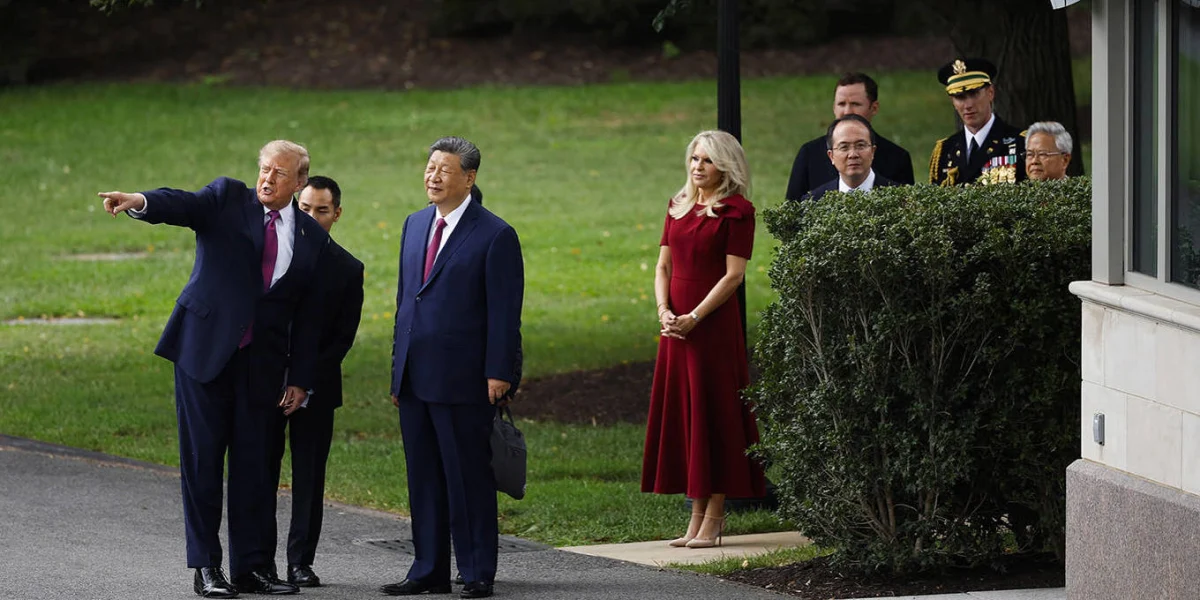
NEW HAVEN – The highly anticipated summit between United States President Donald Trump and Chinese President Xi Jinping concluded with a pronounced imbalance, favoring ceremonial displays over tangible advancements on pressing global challenges. While low expectations may have tempered outright disappointment, the event ultimately underscored a missed opportunity for substantive dialogue on critical issues including trade, artificial intelligence, Taiwan, and China’s geopolitical stance in two active theaters of war. The summit, characterized by elaborate rituals and personal pronouncements, ultimately revealed itself as a platform where the optics of power overshadowed the pursuit of concrete diplomatic gains.
A Summit of Spectacle, Not Substance
The September 30, 2026 meeting between President Trump and President Xi was framed by an atmosphere of both anticipation and skepticism. Analysts and observers had largely tempered expectations, aware of the complex geopolitical landscape and the often-unpredictable nature of high-stakes international diplomacy. However, even within this context, the summit’s outcome proved to be a letdown for those seeking meaningful progress. Instead of robust negotiations and concrete agreements on issues that have defined the bilateral relationship and impacted global stability, the proceedings were dominated by rhetoric and symbolic gestures.
President Trump’s public expressions of "heartfelt admiration" for President Xi, described by some as "cringe-worthy," highlighted a perceived focus on personal rapport and the outward symbols of leadership rather than the intricate details of policy and negotiation. This approach suggests a belief, on President Trump’s part, that the outward manifestations of power are intrinsically linked to power itself, a perspective that often underpins his foreign policy decisions.
The Core Issues Left Unaddressed
The absence of significant breakthroughs on key bilateral and global concerns was a central failing of the summit. These critical areas, which have been the subject of considerable tension and international scrutiny, remained largely stalled:
-
Trade Relations: Despite ongoing trade disputes and the imposition of tariffs by both nations, the summit yielded no discernible progress toward de-escalation or a resolution of existing trade imbalances. The economic ramifications of these persistent trade wars continue to ripple through global supply chains and impact consumer prices worldwide. For instance, data from the International Monetary Fund (IMF) has consistently pointed to a slowdown in global trade growth attributed, in part, to these protectionist measures. The lack of a unified approach on trade leaves businesses uncertain and continues to fuel economic anxieties.
-
Artificial Intelligence (AI) Governance: As artificial intelligence rapidly reshapes economies and societies, the need for international cooperation on ethical guidelines, data privacy, and the responsible development of AI is paramount. The summit, however, offered no concrete steps towards establishing a framework for AI governance between the two leading AI powers. This vacuum creates a significant risk of unchecked development, potential misuse of AI technologies, and an escalating technological arms race. Leading AI ethicists have repeatedly warned about the dangers of such unbridled innovation, emphasizing the need for global dialogue.
-
Taiwan Strait Tensions: The status of Taiwan remains one of the most sensitive and potentially volatile issues in the US-China relationship. While discussions likely occurred, the summit did not produce any public statements or agreements that would indicate a de-escalation of tensions in the Taiwan Strait. The region remains a focal point for geopolitical instability, with increased military activity and assertive rhetoric from Beijing raising concerns among regional allies and the international community. The potential for miscalculation in this area carries profound implications for global peace and security.
-
China’s Role in Global Conflicts: The world is currently grappling with multiple theaters of war, including ongoing conflicts in Eastern Europe and the Middle East. China’s economic and geopolitical influence means its stance on these conflicts is of global significance. The summit failed to produce any clear indication of progress in aligning US and Chinese approaches to addressing these crises, potentially prolonging instability and complicating international efforts to find peaceful resolutions. The absence of coordinated action on these fronts allows humanitarian crises to deepen and poses risks to global energy security and international law.
Background and Chronology of the Summit
The Trump-Xi summit was the culmination of months of diplomatic maneuvering and speculation. Preparations for the meeting were characterized by a delicate balancing act, with both sides seeking to project strength while also signaling a willingness to engage.
-
Pre-Summit Diplomacy: In the weeks leading up to the summit, a series of high-level meetings and public statements by officials from both countries set the stage. These interactions were often contradictory, oscillating between expressions of a desire for stability and sharp critiques of each other’s policies. US Secretary of State Rex Tillerson engaged in back-channel communications with his Chinese counterpart, Wang Yi, attempting to identify potential areas of common ground, while national security advisors from both nations held preparatory discussions.
-
The Summit Itself: The event, held at a location chosen for its symbolic significance (though not explicitly stated in the provided text, it is common for such high-level meetings to have a carefully selected venue), was marked by protocol and pageantry. Formal welcoming ceremonies, elaborate state dinners, and carefully choreographed photo opportunities were prominent features. These events are designed to project an image of cordiality and mutual respect, but in this instance, they appeared to eclipse the substantive agenda.
-
Post-Summit Analysis: Following the conclusion of the summit, initial reactions from observers were largely muted, reflecting the pre-existing low expectations. Analysts pointed to the lack of joint statements on key policy issues and the limited number of concrete agreements as evidence of the summit’s superficiality.
Supporting Data and Broader Context
The summit’s lack of progress on trade is particularly significant given the current global economic climate. The World Trade Organization (WTO) has reported a slowdown in global merchandise trade volume growth, with projections indicating continued sluggishness. The ongoing US-China trade war, characterized by tariffs on hundreds of billions of dollars worth of goods, has been a significant contributing factor to this trend, creating uncertainty for businesses and impacting global investment. For example, the Peterson Institute for International Economics has estimated that the US-China trade war has cost American consumers billions of dollars in increased prices.
The rapid advancement of artificial intelligence presents both unprecedented opportunities and significant risks. Projections from industry analysts suggest the global AI market could reach trillions of dollars in value within the next decade. However, without international consensus on ethical frameworks and governance, there is a risk of AI being used for malicious purposes, exacerbating existing inequalities, or leading to an uncontrolled technological race. Reports from institutions like the Future of Life Institute have consistently called for urgent global dialogue on AI safety and ethics.
The geopolitical implications of stalled progress on Taiwan and global conflicts are equally dire. The East Asian region remains a critical hub for global trade and security. Any escalation of tensions in the Taiwan Strait could have devastating consequences, potentially disrupting global shipping and leading to widespread economic disruption. Similarly, the protracted nature of ongoing conflicts in Eastern Europe and the Middle East has led to significant humanitarian crises, refugee flows, and global energy market volatility. The failure of the US and China, the world’s two largest economies, to find common ground on these issues hinders international efforts towards peace and stability.
Official Responses and Inferred Reactions
While the official statements following the summit were largely diplomatic and emphasized the importance of continued dialogue, the lack of concrete outcomes suggests underlying challenges in bridging the gap between US and Chinese policy objectives.
-
US Administration: The White House, while likely to highlight the continuation of communication channels, would face scrutiny for the lack of tangible achievements. President Trump’s administration often prioritizes bilateral deals and personal diplomacy, which may have contributed to the focus on pageantry over policy details.
-
Chinese Government: Beijing, under President Xi, typically emphasizes long-term strategic planning and national interests. The outcome of the summit might be viewed internally as a validation of their approach, allowing them to continue pursuing their objectives without significant concessions. However, the lack of concrete gains could also lead to internal reassessment of diplomatic strategies.
-
International Allies and Observers: US allies in Asia and Europe, who rely on stability and predictable international relations, likely expressed concern over the missed opportunity. Their reactions would likely be measured, focusing on the need for continued engagement and the potential negative implications of ongoing US-China friction for global economic and security architecture. Think tanks and academic institutions specializing in international relations would undoubtedly publish detailed analyses highlighting the missed opportunities and forecasting future challenges.
Broader Impact and Implications
The Trump-Xi summit’s prioritization of ceremony over substance carries significant implications for the future of US-China relations and global governance. The continued absence of meaningful dialogue on critical issues risks further entrenching existing tensions and hindering collective efforts to address shared global challenges.
The summit’s outcome suggests a continuation of a transactional and often personalized approach to foreign policy, which may prove insufficient in navigating the complex geopolitical landscape of the 21st century. The lack of progress on trade could prolong economic uncertainties, while the absence of a framework for AI governance raises alarms about unchecked technological advancement. The unresolved tensions surrounding Taiwan and the world’s ongoing conflicts underscore the urgent need for greater diplomatic engagement and cooperation between major global powers.
Ultimately, the September 2026 summit served as a stark reminder that while dialogue is essential, its true value lies in its ability to translate into concrete action and tangible progress on the issues that matter most to global stability and prosperity. The continued reliance on pageantry risks obscuring the profound challenges that require substantive, collaborative solutions. The world watches with apprehension as the implications of this missed opportunity unfold.
