

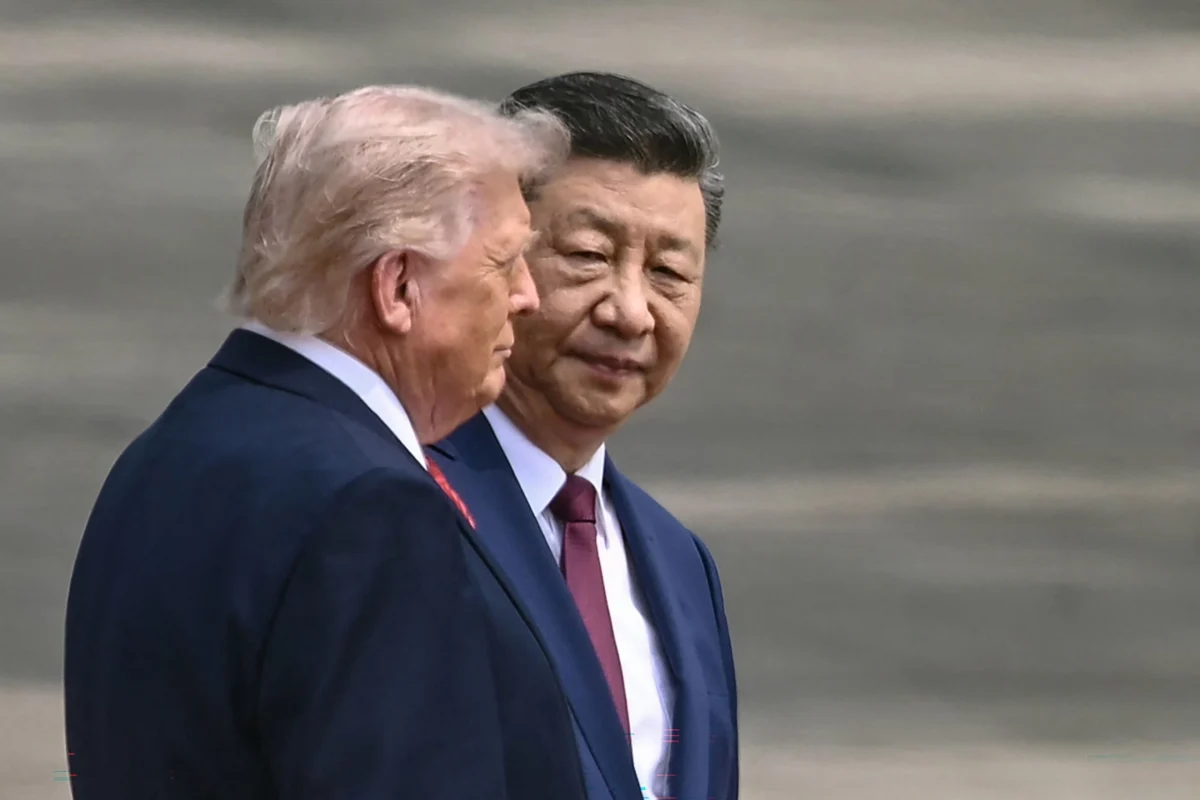
The upcoming bilateral meeting between United States President Donald Trump and Chinese President Xi Jinping is poised to be the defining moment of this week’s United Nations General Assembly. While the world’s diplomatic focus typically centers on the assembly halls of New York City, the most consequential discussions are slated to occur in Washington, D.C. In a move that underscores the gravity of the relationship, President Trump is scheduled to personally welcome President Xi at Joint Base Andrews on Wednesday, September 23. This gesture represents a significant departure from standard diplomatic protocol, as American presidents rarely travel to the airport to greet foreign heads of state, usually reserving such honors for the most critical strategic partners or symbolic state visits.
The meeting comes at a time when the world’s two largest economies are navigating a complex web of trade disputes, technological rivalry, and regional security concerns. Ahead of the formal summit, a high-level American delegation led by Treasury Secretary Scott Bessent and United States Trade Representative Jamieson Greer has been engaged in intensive preparatory talks with He Lifeng, China’s Vice Premier of the State Council. These preliminary negotiations are designed to finalize an agenda that balances immediate economic needs with long-term geopolitical strategies. According to briefings from the World Economic Forum, the summit will grapple with the expiration of existing trade agreements, the security of global supply chains, and the volatile situation regarding Taiwan, all against the backdrop of a deepening crisis in the Middle East.
The Looming Expiration of the Busan Trade Truce
Central to the discussions is the fate of the trade truce established during the previous meeting between Trump and Xi in Busan. That agreement, which provided a necessary reprieve from a spiraling trade war, is set to expire on November 10. The Busan accord was instrumental in lowering the immediate threat of new tariffs and pausing various port fees that had begun to stifle trans-Pacific commerce. As the deadline approaches, both administrations face the choice of extending the current framework or allowing a return to more aggressive protectionist measures.
Negotiators are currently exploring a "Phase Two" style expansion of the truce. This could involve specific purchase targets for American exports, particularly in the agricultural and energy sectors. China has historically been a massive consumer of American soybeans and corn, and the Trump administration is keen to secure long-term commitments that support the U.S. "heartland." Furthermore, discussions are underway regarding the purchase of Boeing aircraft, a move that would provide a significant boost to the American manufacturing sector while helping China modernize its commercial aviation fleet.
A more complex element of the negotiations involves a proposed $30 billion package of "non-sensitive" goods. This package covers approximately ten categories of products that do not carry high national security risks. However, the exact scope of these categories remains a point of contention. While the U.S. seeks to increase its export volume, Beijing is pushing for more favorable terms and the removal of specific "entity list" designations that restrict certain Chinese firms from accessing the American market.
Critical Minerals and the Leverage of Rare Earths
One of the most significant achievements of the Busan agreement was China’s decision to lift export limits on rare earth elements and critical minerals. These materials are the lifeblood of modern industry, essential for the production of electric vehicle (EV) batteries, advanced defense systems, and high-performance hardware for artificial intelligence. China currently dominates the global supply chain for these minerals, controlling a vast majority of the world’s processing and refining capacity.
The United States has made "de-risking" its supply chain a top priority, seeking to reduce its vulnerability to potential export bans from Beijing. However, building domestic capacity or securing alternative sources in Africa or Australia is a process that will take years, if not decades. In the interim, Beijing has utilized its dominant market position as a powerful lever at the negotiating table. The U.S. delegation, led by Bessent, is expected to push for a more permanent guarantee of mineral access, arguing that supply chain stability is in the mutual interest of global economic health. Conversely, China views its mineral wealth as a strategic asset to be traded for concessions in other areas, such as the easing of high-tech export controls.
The Artificial Intelligence Arms Race and Safety Protocols
As the digital frontier becomes the primary theater of superpower competition, Artificial Intelligence (AI) has moved to the forefront of the bilateral agenda. Treasury Secretary Scott Bessent has confirmed that "AI safety" will be a cornerstone of the White House talks. This inclusion follows intense lobbying from the American business community, though the private sector remains deeply divided on the issue.
Major tech firms in Silicon Valley are caught in a paradox. On one hand, there is a growing international movement to implement "guardrails" or safety pauses in AI development to prevent catastrophic unforeseen consequences. On the other hand, many American executives fear that any domestic regulation would merely grant China a competitive advantage, allowing Beijing to achieve "AI supremacy" while the U.S. is hampered by self-imposed restrictions.
Beijing’s primary objective in this arena is the relaxation of U.S. restrictions on Chinese technology. For years, the U.S. has maintained a strict regime of export controls on the high-end semiconductors and lithography machines required to train massive AI models. China argues these restrictions are a violation of free trade principles. President Trump’s stance on this issue remains a wildcard; while he has historically favored deregulation to spur domestic growth, he has also been the primary architect of the "America First" approach to technological containment. The intersection of trade, national security, and innovation makes the AI discussion one of the most unpredictable elements of the summit.
Geopolitical Flashpoints: Taiwan and the Middle East
The economic discussions are inextricably linked to sensitive geopolitical realities. The most volatile of these is the status of Taiwan. In the lead-up to the Washington summit, Beijing issued stern warnings, suggesting that the entire meeting could be jeopardized if the United States proceeds with new arms sales to the island. China views Taiwan as a breakaway province and has repeatedly stated that its "reunification" is a non-negotiable national interest. The U.S., while officially recognizing the "One China" policy, maintains the Taiwan Relations Act, which mandates providing the island with the means to defend itself.
Simultaneously, the two leaders must address the deteriorating situation in the Middle East. The U.S. is deeply concerned about China’s burgeoning economic and energy ties with Iran. As Washington seeks to tighten sanctions on Tehran to curb its nuclear ambitions and regional influence, China has emerged as a primary buyer of Iranian oil, providing a vital lifeline to the Iranian economy. The summit will likely feature a delicate dance where the U.S. asks for Chinese cooperation in Middle Eastern stability in exchange for concessions on trade or technology.
Furthermore, the issue of detained foreign nationals remains a persistent thorn in the relationship. Both sides have accused the other of "hostage diplomacy," and any progress on the release of high-profile detainees would be seen as a major symbolic victory for the summit.
Chronology of the US-China Relationship (2023–Present)
To understand the stakes of the Washington meeting, it is essential to review the timeline of events that led to this moment:
- May 2023: High-level talks in Beijing. The meeting was characterized by symbolic gestures but resulted in few substantive concessions from either side.
- August 2023: The U.S. expands export controls on advanced computing chips, prompting a formal complaint from Beijing to the World Trade Organization.
- Late 2023: The Busan Summit. Trump and Xi agree to a temporary trade truce, lowering tariffs and ensuring the flow of critical minerals.
- January–June 2024: Incremental progress on "non-sensitive" trade categories, though tensions rise over Chinese "dual-use" technology found in global conflict zones.
- September 2024: Preparatory meetings in D.C. between Bessent, Greer, and He Lifeng to set the stage for the September 23 airport greeting and subsequent White House summit.
Analysis of Global Implications
The outcome of this meeting will have profound implications for the global economy. If a new trade agreement is reached, markets are expected to respond with a significant rally, particularly in the tech and agricultural sectors. Conversely, a failure to extend the Busan truce could trigger a new wave of inflation as tariffs drive up the cost of consumer goods and industrial components.
The "status quo" remains the most likely outcome, according to many seasoned analysts. Anna Ashton, a prominent China trade analyst and founder of Ashton Intelligence, told CNBC that while there may be some "show of deliverables" to justify the high-profile nature of the summit, a fundamental breakthrough is unlikely. Both sides are currently entrenched in their respective positions: Washington wants access to markets and security commitments, while Beijing wants relief from the "containment" policies of the U.S. government.
The broader impact also extends to third-party regions. Both the U.S. and China are actively competing for influence in Africa and Latin America, using infrastructure projects and trade deals as tools of soft power. The result of the D.C. summit will signal to the rest of the world whether the two superpowers are heading toward a managed competition or an unmitigated "Cold War 2.0."
As President Trump prepares to meet President Xi on the tarmac of Joint Base Andrews, the world watches with bated breath. The unusual nature of the welcome suggests that both leaders recognize the high stakes. Whether this meeting results in a lasting peace or merely a temporary pause in hostilities will determine the trajectory of the 21st-century global order. In the absence of a major breakthrough, the maintenance of the status quo—preventing a complete collapse of the economic relationship while managing intense rivalry—may be the best that either side can hope to achieve.
