

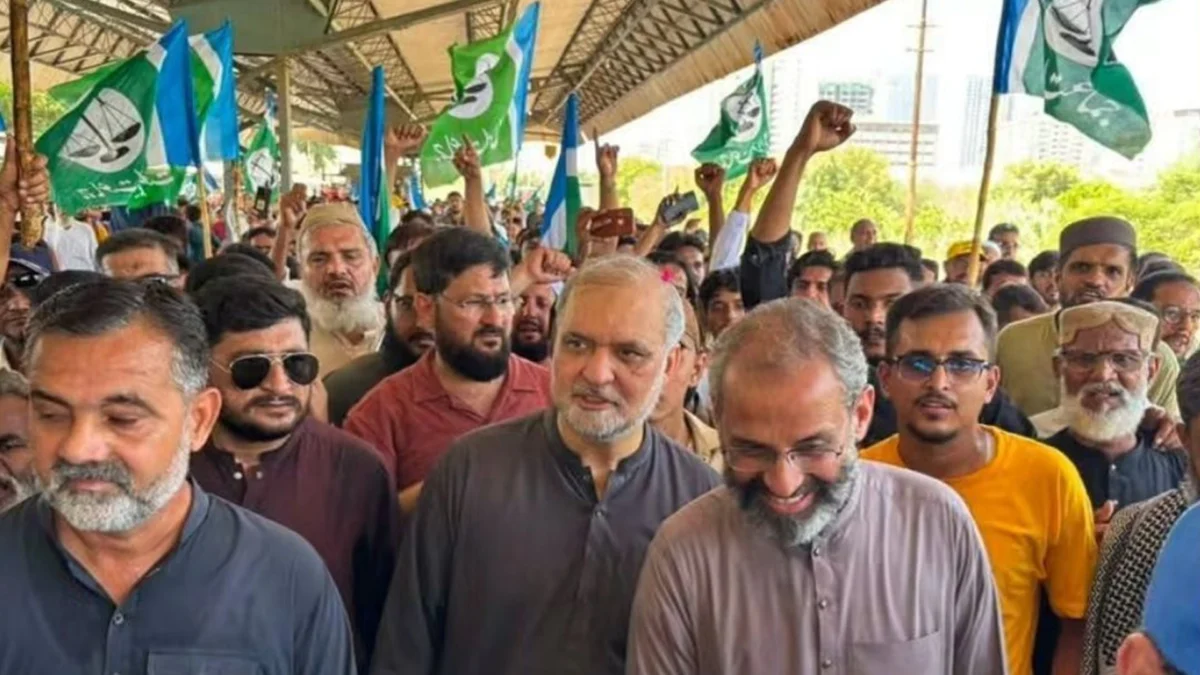
The political landscape of Pakistan is once again gripped by escalating tensions as the Jamaat-e-Islami (JI) party has launched a formidable protest march towards Islamabad, demanding the immediate scrapping of the petroleum levy. This significant mobilization, commencing on September 21, 2026, adds another layer of complexity to an already precarious security situation, with the government simultaneously bracing for a separate, potentially larger, demonstration by the Pakistan Tehreek-e-Insaf (PTI) party, which continues to demand the release of its incarcerated leader, Imran Khan. The twin threats of widespread public discontent and political agitation have prompted the federal government to significantly step up security measures across major arteries leading to the capital and within Islamabad itself, signaling a period of heightened vigilance and potential confrontation.
The Jamaat-e-Islami’s Call Against Soaring Fuel Prices
The Jamaat-e-Islami’s "Haqooq-e-Awam" (Rights of the People) march is a direct response to what it describes as "unbearable" and "unjustified" increases in fuel prices that have crippled the common citizen and choked economic activity. Led by its Ameer, Siraj-ul-Haq, the party initiated its long march from a prominent city, rallying thousands of supporters who are traveling towards Islamabad. Their primary demand is the complete abolition of the petroleum levy, a tax component that forms a substantial part of the final price of petrol and diesel at the pumps. JI leaders argue that while global crude oil prices fluctuate, the government’s persistent reliance on the levy to generate revenue disproportionately burdens the populace, especially when coupled with other taxes and duties. They contend that this regressive tax mechanism has directly fueled record-high inflation, making essential commodities unaffordable for a vast majority of Pakistanis. The party has presented an economic charter, calling for immediate relief measures, including a significant reduction in electricity tariffs, gas prices, and the implementation of pro-poor policies. The march is characterized by fervent speeches condemning the government’s economic policies, chanting slogans against inflation, and displaying banners highlighting the plight of the common man.
Pakistan’s Deepening Economic Crisis: A Backdrop to Unrest
The current wave of protests is not an isolated event but rather a symptom of Pakistan’s protracted and deepening economic crisis. For several years leading up to 2026, the nation has grappled with a complex web of challenges, including a persistent current account deficit, dwindling foreign exchange reserves, a depreciating rupee, and spiraling inflation. The government’s reliance on International Monetary Fund (IMF) bailout packages has come with stringent conditionalities, often including fiscal consolidation measures such as increasing tax revenues and rationalizing subsidies. The petroleum levy has emerged as a crucial, albeit politically unpopular, instrument for the government to meet its revenue targets and demonstrate fiscal responsibility to international lenders.
Supporting Data and Economic Context (Inferred for 2026):
- Inflation: As of late 2026, Pakistan’s year-on-year Consumer Price Index (CPI) inflation is inferred to be hovering around historically high levels, potentially exceeding 25-30% on average, with food inflation often significantly higher, making daily sustenance a struggle for millions.
- Fuel Price Hikes: Throughout 2025 and 2026, fuel prices have seen successive and substantial increases. For instance, analysts suggest that petrol prices could have surged by over 40-50% in a 12-month period leading up to September 2026, reaching unprecedented levels per liter. Diesel, critical for agriculture and transport, would have seen similar or even steeper increases.
- Petroleum Levy: The petroleum levy, initially designed to stabilize prices and generate non-tax revenue, has become a significant fiscal component. Inferred data suggests that the levy could be contributing anywhere from PKR 50-70 per liter on petrol and PKR 40-60 per liter on diesel, making it a substantial portion of the final consumer price. This levy is separate from the General Sales Tax (GST) and other duties.
- Impact on Sectors: The ripple effect of high fuel prices is profound. The transport sector faces increased operational costs, leading to higher fares for commuters and elevated freight charges. This directly translates into increased prices for all goods, from agricultural produce to manufactured items. Farmers bear the brunt of higher diesel costs for tractors and tube wells, affecting agricultural output and food security. Small and medium-sized enterprises (SMEs), which form the backbone of the economy, struggle with rising input costs and reduced consumer purchasing power.
The government’s argument for maintaining the levy often centers on the need to protect the national exchequer from external shocks, particularly volatility in global crude oil markets, and to avoid further borrowing to cover fuel subsidies, which have historically strained public finances.
Government’s Response: Security and Fiscal Realities
In anticipation of the JI march and the looming PTI protest, the federal government has activated a comprehensive security plan. Thousands of law enforcement personnel, including the Pakistan Police, Rangers, and Frontier Corps (FC), have been deployed in and around Islamabad. Key entry and exit points are being monitored, and containers have been placed at strategic locations, reminiscent of past attempts to seal off the capital during major protests. The Interior Ministry has issued stern warnings against any attempts to disrupt law and order or damage public property, asserting the government’s resolve to maintain peace and protect state assets.
From an economic standpoint, government officials, particularly from the Finance and Energy Ministries, have consistently reiterated the fiscal constraints that limit their ability to drastically reduce fuel prices. They often cite the global commodity market trends and the conditionalities imposed by international lenders, especially the IMF, which strictly monitor Pakistan’s fiscal space and revenue generation. Reducing the petroleum levy, they argue, would create a massive revenue shortfall, potentially derailing the ongoing IMF program and exacerbating the country’s debt crisis. While acknowledging the public’s hardship, officials have called for patience and understanding, emphasizing that difficult decisions are necessary for long-term economic stability. They may also point to targeted subsidy programs for vulnerable populations as an alternative to universal fuel price reductions.
The Looming Shadow of the PTI March
Adding another layer of political instability is the persistent threat of a large-scale protest by the Pakistan Tehreek-e-Insaf (PTI) party. Since the arrest and subsequent incarceration of its chairman, Imran Khan, on various charges (inferred to be related to corruption, incitement, or other political cases), the PTI has been engaged in a sustained campaign of civil disobedience and protest. Their primary demands revolve around Khan’s immediate release, fair and transparent general elections, and an end to what they perceive as political victimization.
The PTI has a history of mobilizing large crowds for marches towards Islamabad, often resulting in clashes with law enforcement, property damage, and significant disruption to daily life. Past events, such as the "Azadi March" and "Haqeeqi Azadi March," have seen violent confrontations, tear gas shelling, and mass arrests. The current political climate, characterized by deep polarization and mistrust between the PTI and the ruling establishment, suggests that any future PTI march could quickly escalate into a volatile situation. The government’s heightened security preparations are therefore not solely for the JI march but equally, if not more so, for the potential mass mobilization by the PTI, whose supporters are known for their fervent loyalty and willingness to confront authorities. The confluence of these two distinct but equally potent protest movements presents an unprecedented challenge to the government’s ability to maintain order and govern effectively.
A Chronology of Escalation (Inferred Timeline)
The events leading up to this dual protest scenario have unfolded over several months, marked by economic distress and political turmoil:
- Late 2025 – Early 2026: A period of continued economic strain, characterized by consistent rupee depreciation, high inflation, and frequent increases in fuel and utility prices, often linked to IMF conditionalities.
- March-April 2026: Significant fuel price hikes announced by the government, attributing them to rising international crude oil prices and the need to meet fiscal targets. Public discontent begins to mount, with smaller, localized protests emerging across the country.
- May 2026: Jamaat-e-Islami, along with other opposition parties, intensifies its criticism of the government’s economic policies, holding press conferences and small rallies demanding relief for the masses.
- June-July 2026: Further fuel price adjustments are made, pushing prices to new record highs. JI formally announces its intention to launch a "Haqooq-e-Awam" march towards Islamabad if the government fails to address public grievances, specifically demanding the abolition of the petroleum levy.
- August 2026: The political temperature remains high due to ongoing legal proceedings against Imran Khan and other PTI leaders. PTI reiterates its call for Khan’s release and fair elections, threatening another major march on the capital if demands are not met.
- Early September 2026: Government issues warnings against any attempts to destabilize the country through protests. Security agencies begin to assess potential threats from both JI and PTI mobilizations.
- September 21, 2026: Jamaat-e-Islami formally launches its long march towards Islamabad, galvanizing support from various cities. Simultaneously, the government initiates stringent security protocols across Islamabad and its surrounding regions, anticipating not only the JI’s arrival but also the potential for a simultaneous or subsequent PTI mobilization.
Broader Impact and Implications for Pakistan’s Stability
The current confluence of protests carries profound implications for Pakistan’s already fragile political and economic stability:
- Political Instability: The dual pressure from JI’s economic protest and PTI’s political demands could severely test the government’s authority and capacity to govern. Any violent clashes or prolonged blockades could further erode public trust in democratic processes and fuel anti-establishment sentiments. It risks creating a perception of a state unable to manage dissent peacefully, potentially inviting international criticism.
- Economic Repercussions: Even peaceful protests can have significant economic costs. Disruptions to transportation, commerce, and daily life can deter foreign investment, impact local businesses, and further depress economic activity. If the government succumbs to demands to significantly reduce the petroleum levy, it risks jeopardizing the IMF program, leading to a balance of payments crisis and a further devaluation of the rupee. Conversely, ignoring public sentiment could lead to more widespread unrest, which also carries economic costs.
- Social Cohesion: The deep polarization between political factions, exacerbated by economic hardship, threatens social cohesion. The frustration over inflation, coupled with political grievances, creates a fertile ground for social unrest that could extend beyond organized political parties. This could lead to a breakdown of law and order in various regions, stretching the capacity of security forces.
- Government’s Dilemma: The government faces a formidable dilemma: how to address legitimate public grievances regarding economic hardship without compromising fiscal stability and international commitments. Balancing the demands of an angry populace with the imperatives of economic reforms is a tightrope walk. A heavy-handed approach to protests could backfire, intensifying public anger, while a lenient approach could be perceived as weakness, encouraging further agitation.
- International Perception: The spectacle of continuous political instability and economic protests could negatively impact Pakistan’s image on the international stage. This could make it harder to attract foreign direct investment, secure favorable loan terms, and maintain diplomatic relations with key partners. International financial institutions, like the IMF and World Bank, will be closely monitoring the situation, potentially influencing future aid and loan disbursements.
- Future Outlook: The resolution of this crisis will likely shape Pakistan’s political trajectory in the short to medium term. It could either lead to a negotiated settlement that offers some public relief while maintaining fiscal discipline, or it could escalate into a deeper political crisis, potentially necessitating early elections or further political realignments. The government’s ability to navigate these challenges will be a crucial test of its legitimacy and effectiveness.
In conclusion, Pakistan finds itself at a critical juncture, with two powerful protest movements converging on the capital, each representing a significant challenge to the state. The Jamaat-e-Islami’s march against fuel price hikes highlights the severe economic distress faced by ordinary citizens, while the looming threat of a PTI rally underscores the deep political divisions and the ongoing demand for judicial and electoral reforms. The government’s robust security response reflects the high stakes involved, as it strives to maintain law and order amidst profound economic hardship and intense political polarization, all while balancing its fiscal responsibilities with the urgent need for public relief. The coming days are poised to be a defining moment for Pakistan’s stability and its path forward.
