

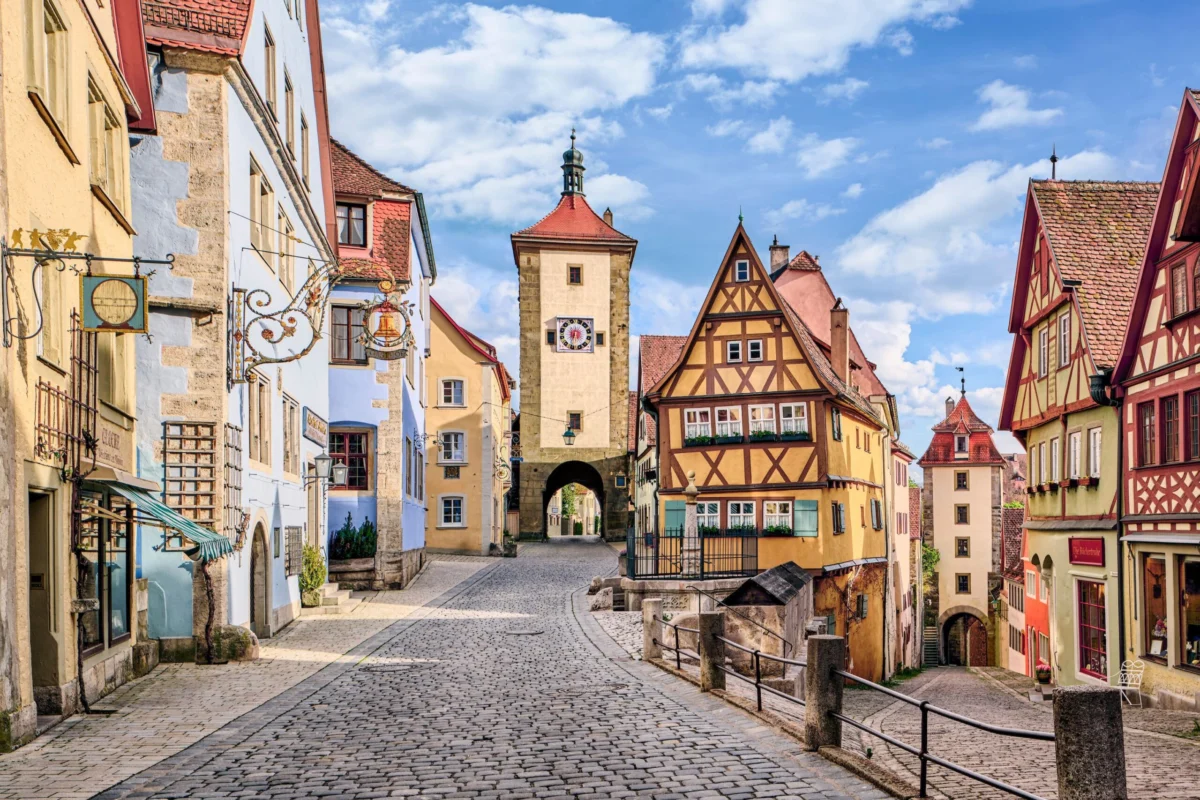
The global travel landscape is undergoing a significant transformation as travelers increasingly pivot away from hyper-commercialized hubs toward secluded destinations that offer a synthesis of historical integrity, architectural distinction, and environmental serenity. While iconic locations such as Oia in Greece and Positano in Italy continue to draw millions of visitors annually, the resulting "overtourism" has prompted a shift in preference for "slow travel" and under-the-radar locales. This movement is not merely a search for aesthetic novelty but a pursuit of authentic cultural immersion in places where the pace of life remains dictated by tradition rather than the demands of mass tourism.

From the thatched-roof hamlets of the English countryside to the vibrant, relief-carved streets of the Colombian Andes, the world’s most beautiful villages serve as living museums. These destinations offer more than just a picturesque backdrop; they represent centuries of human adaptation to local topographies and climates. As the travel industry recalibrates in the post-pandemic era, these 17 villages have emerged as essential entries for the discerning traveler’s bucket list, promising a rare combination of solitude and architectural wonder.
The Global Shift Toward Rural and Sustainable Tourism
The rise of rural tourism is supported by data from the United Nations World Tourism Organization (UNWTO), which has highlighted "Rural Development through Tourism" as a key pillar for sustainable growth. In 2023, the UNWTO’s "Best Tourism Villages" initiative saw a 40% increase in applications, signaling a global effort by local governments to preserve traditional landscapes while opening them to controlled, high-value tourism. This trend is a direct response to the saturation of major cities, where the quality of the visitor experience has often been compromised by infrastructure strain.
Industry analysts suggest that the appeal of these villages lies in their "undisturbed" nature. According to a 2023 report by American Express Travel, 85% of Gen Z and Millennial travelers are looking for destinations where they can experience local culture and "hidden gems" rather than popular tourist traps. This demographic shift is driving economic investment into smaller municipalities, allowing for the restoration of historic structures and the maintenance of traditional crafts.
1. Castle Combe, England: The Quintessential Cotswold Hamlet
Located in the Wiltshire Cotswolds, Castle Combe is frequently cited as the most beautiful village in England. The village is characterized by its strict adherence to historical preservation; no new houses have been built here since the 1600s. Its honey-colored limestone cottages, topped with split-stone tiles, represent the pinnacle of English vernacular architecture. The absence of modern streetlights and overhead cables further enhances the feeling of stepping back into the medieval era. Historically, the village was a center for the wool industry, a legacy reflected in the "weaver’s cottages" that line the Bybrook River.

2. Guatapé, Colombia: A Masterpiece of Color and Relief
In the Antioquia department of Colombia, Guatapé stands out for its unique "zócalos"—vibrant, hand-painted bas-relief carvings that adorn the lower half of every building. These carvings depict everything from local flora and fauna to the occupations of the homeowners. Beyond its colorful streets, the village is the gateway to El Peñol, a massive granite monolith offering panoramic views of the surrounding man-made reservoir. The village has successfully transitioned from an agricultural hub to a cultural destination, maintaining its traditional aesthetic while accommodating a growing influx of design-focused travelers.
3. Shirakawa-go, Japan: Engineering for the Elements
A UNESCO World Heritage site, Shirakawa-go is famous for its "Gassho-zukuri" style farmhouses. These structures feature steeply pitched thatched roofs designed to withstand the heavy snowfall of the Gifu Prefecture. The name "Gassho" refers to "praying hands," a nod to the shape of the roofs. Some of these houses are over 250 years old and are constructed without a single nail, utilizing intricate joinery and rope bindings. This village serves as a testament to communal living, as the re-thatching of a single roof requires the collective effort of the entire village.

4. Alberobello, Italy: The Conical Wonders of Puglia
While Positano attracts the coastal crowds, the inland village of Alberobello offers a different architectural marvel: the Trulli. These white-washed limestone dwellings with conical roofs are unique to the Itria Valley. Originally built as "temporary" structures to evade property taxes in the 14th century, the dry-stone construction technique has persisted for centuries. Today, the village is a protected site, with over 1,500 Trulli serving as homes, shops, and boutique lodgings, providing a stark, monochromatic beauty against the Mediterranean sky.
5. Giethoorn, Netherlands: The Village With No Roads
In the Dutch province of Overijssel, Giethoorn offers an alternative to the crowded canals of Amsterdam. Known as the "Venice of the North," the village’s older quarter is accessible only by boat or on foot across 176 wooden bridges. The architecture consists of 18th-century farmhouses with thatched roofs, surrounded by manicured gardens and interconnected waterways. The lack of vehicular traffic has made Giethoorn a global model for quiet, low-impact tourism and environmental preservation.

6. Monsanto, Portugal: Living Between the Rocks
Monsanto is often called "the most Portuguese village in Portugal," but its architecture is anything but typical. Built into a steep mountainside, the village is famous for houses integrated into massive granite boulders. In many cases, a single 200-ton boulder serves as a roof or a wall for a residence. This geological integration dates back to the Lusitanian period and offers a profound example of human ingenuity in the face of challenging terrain.
7. Sidi Bou Said, Tunisia: A Mediterranean Palette
Overlooking the Gulf of Tunis, Sidi Bou Said is a cliffside village defined by its strict blue-and-white color palette. Established in the 13th century, the village became a sanctuary for artists and writers in the early 20th century. Its cobblestone streets are lined with ornate ironwork and intricately carved doorways, reflecting a blend of Andalusian and Ottoman influences. The village’s aesthetic was legally protected in 1915, making it one of the first protected sites in the world.

8. Reine, Norway: The Arctic’s Architectural Gem
Located in the Lofoten Islands, Reine is a fishing village situated above the Arctic Circle. It is characterized by "rorbuer"—red wooden cabins built on stilts over the water. Originally used by seasonal fishermen, these cabins have been meticulously restored to provide authentic accommodation. The village is framed by the dramatic peaks of the Reinefjorden, offering a stark, rugged beauty that changes with the seasons, from the midnight sun to the Northern Lights.
9. Hallstatt, Austria: A Legacy of Salt and Stone
Hallstatt is so architecturally significant that a full-scale replica of the village was built in China. The original, nestled between the Dachstein mountains and Lake Hallstatt, has a history rooted in salt mining dating back 7,000 years. Its 16th-century Alpine houses are built on a steep incline, resulting in a tiered architectural layout that maximizes the limited space between the mountain and the water.

10. Gordes, France: The Crown of the Luberon
Perched on the edge of the Vaucluse plateau in Provence, Gordes is a "village perchée" built entirely of dry stone. The village’s layout is a labyrinth of "calades" (narrow stone alleys) that lead to a Renaissance castle at its summit. The architectural uniformity of Gordes, using local beige limestone, creates a luminous effect at sunset, a feature that has long attracted world-renowned artists such as Marc Chagall and Victor Vasarely.
11. Bibury, England: The Most Photographed Row
While Castle Combe offers the overall atmosphere, Bibury is home to Arlington Row, a group of 14th-century stone cottages that originally served as a monastic wool store. Later converted into weaver’s cottages, these structures are among the most photographed in the United Kingdom. The village sits along the River Coln and exemplifies the "Old World" charm that defines the Cotswold District Council’s rigorous conservation efforts.

12. Ouchisuku, Japan: A Glimpse of the Edo Period
Ouchisuku was a former "post town" along the Shimotsuke Kaido trade route during the Edo period. Unlike many Japanese towns that modernized, Ouchisuku preserved its unpaved main street and thatched-roof buildings. The village allows visitors to experience the exact environment of 17th-century travelers. The preservation of this site is managed by a local association that ensures traditional building techniques are passed down to younger generations.
13. Itchan Kala, Uzbekistan: The Silk Road Fortress
Itchan Kala is the inner fortress of the oasis of Khiva. It was the first site in Uzbekistan to be inscribed as a World Heritage site. The village is enclosed by 10-meter-high brick walls and contains over 50 historic monuments and 250 old houses. The architecture is a masterclass in Central Asian Islamic design, featuring turquoise-tiled minarets, madrasas, and mosques that have remained largely unchanged for six centuries.

14. Popeye Village, Malta: From Film Set to Cultural Landmark
Originally built as a film set for the 1980 musical Popeye, this village in Anchor Bay has been preserved as an open-air museum. While its origins are modern, the village’s whimsical, rustic wooden architecture has become a significant part of Malta’s cultural tourism. It serves as a unique example of how "pop culture architecture" can be repurposed for long-term heritage value.
15. Penglipuran, Indonesia: The Harmony of Balinese Design
Located in the Bangli Regency of Bali, Penglipuran is consistently ranked as one of the cleanest villages in the world. Its layout is based on the "Tri Hita Karana" philosophy, which emphasizes the balance between humans, nature, and the divine. The village features uniform bamboo-shingled gates and traditional Balinese architecture, with a strictly pedestrianized main axis that prevents pollution and noise.

16. Mawlynnong, India: Sustainable Living in the Clouds
Mawlynnong, located in the East Khasi Hills of Meghalaya, is known as "God’s Own Garden." The village is famous for its cleanliness and its "Living Root Bridges," which are engineered from the roots of rubber trees by the local Khasi people. The village operates on a community-based eco-tourism model, where every resident participates in maintaining the landscape and the traditional bamboo structures.
17. Eze, France: A Medieval Eagle’s Nest
Eze is a fortified medieval village perched 1,400 feet above the Mediterranean Sea. Its location provided a strategic defensive advantage for centuries. Today, its narrow, winding paths are home to artisan boutiques and a world-famous botanical garden located at the ruins of a 12th-century castle. The village offers a vertical architectural experience, where every level provides a different perspective of the French Riviera.

Chronology of Preservation Efforts
The survival of these villages is not accidental. A timeline of global preservation shows a concerted effort to protect these sites:
- 1915: Sidi Bou Said, Tunisia, becomes the first protected site of its kind.
- 1966: The UK’s Cotswolds are designated as an Area of Outstanding Natural Beauty (AONB).
- 1972: The UNESCO World Heritage Convention is established, providing a framework for protecting sites like Hallstatt and Shirakawa-go.
- 1990s: The "Slow Food" and "Cittaslow" movements begin in Italy, encouraging small towns to resist globalization.
- 2021: UNWTO launches the "Best Tourism Villages" initiative to promote rural tourism as a tool for poverty alleviation and heritage conservation.
Implications for the Future of Travel
The continued popularity of these secluded villages suggests a permanent shift in the tourism industry. Travelers are no longer satisfied with "sightseeing"; they seek "lifeseeing"—the opportunity to witness a way of life that is fundamentally different from their own. However, this trend brings challenges. As these "hidden gems" are discovered, they face the risk of becoming the very crowded destinations they were meant to replace.

Local authorities in places like Hallstatt and Giethoorn have already begun implementing "visitor management systems," including caps on tour buses and the introduction of entry fees during peak hours. The goal is to ensure that the village remains a functional home for its residents rather than just a backdrop for photography.
Ultimately, the 17 villages listed here represent the resilience of local culture in a globalized world. Their architectural beauty is a byproduct of their history, and their future depends on a delicate balance between welcoming the world and protecting the very qualities that make them worth visiting. For the bucket-list traveler, these destinations offer a profound reminder that the most meaningful journeys are often found far from the beaten path.
