

For American businesses, from the nimble workshops of the Midwest to the sprawling logistics networks spanning the nation, a formidable trifecta of economic pressures is forcing profound operational shifts and strategic recalculations. Tariffs enacted under former President Donald Trump’s trade policies, surging fuel prices exacerbated by ongoing geopolitical conflicts including the Iran war, and a series of aggressive interest rate hikes by the Federal Reserve have created a complex and challenging environment, compelling executives to make difficult choices that ripple through supply chains and consumer markets. The consequences manifest as fewer, pricier flights, steep freight surcharges, manufacturers hoarding critical inventory, and, in some dire cases, outright bankruptcy.
A Microcosm of Macroeconomic Headwinds: The Original Saw Co. Experience
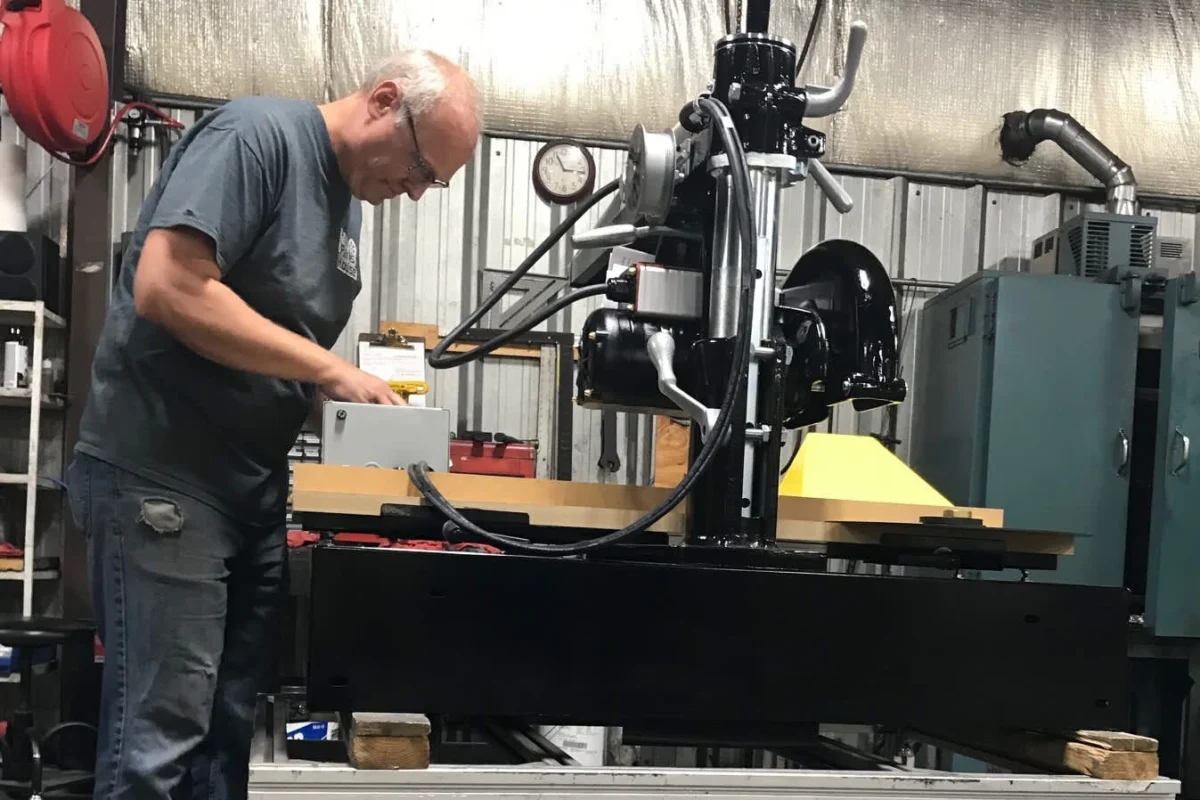
In Britt, Iowa, Allen Eden, the 56-year-old owner and president of Original Saw Co., encapsulates the struggles faced by countless small to mid-sized manufacturers. His 25-person business, a cornerstone of industrial power saw production for wood and metalwork, is battling a relentless tide of escalating input costs. "It’s awful," Eden told CNBC, describing how spiking prices for essential materials like aluminum and steel, alongside critical components, are squeezing his margins. He recounted a stark example: a seemingly minor "little bracket" used in his saw motors more than doubled in price over a single summer, rocketing from $42 to an astonishing $87. This unpredictable volatility has driven Eden to adopt a strategy of hoarding inventory, a defensive measure born from uncertainty. "Just trying to keep more of the stuff around because I don’t know if we can get it down the road," he explained, highlighting the pervasive fear of future supply disruptions and further price hikes.
The situation at Original Saw Co. is a vivid illustration of the "three-way squeeze" impacting businesses across the manufacturing, transportation, and retail sectors. Tariffs have inflated the cost of raw materials and imported goods, while higher fuel prices have simultaneously driven up the expense of producing and transporting them. Concurrently, rising interest rates have made it significantly more expensive for companies to finance the inventory, equipment, and operational capital necessary to sustain their activities and pursue growth.
The Genesis of the Squeeze: A Chronology of Economic Pressures
The current economic landscape is a culmination of several distinct yet interconnected developments over recent years, each adding layers of complexity to business operations.
- The Tariff Era (2018-present): The imposition of tariffs under President Trump marked a significant shift in U.S. trade policy. Utilizing Section 232 of the Trade Expansion Act of 1962, which allows for tariffs on imports deemed a threat to national security, the administration levied duties on steel (25%) and aluminum (10%) imports from numerous countries starting in 2018. Subsequent Section 301 tariffs targeted a wide range of goods from China. While intended to protect domestic industries and encourage reshoring, these tariffs directly increased the cost of raw materials for American manufacturers, who often rely on global supply chains for specialized grades of metals and components. The initial hope was that domestic production would ramp up to offset costs, but the immediate effect was higher prices for imported inputs, a burden that many U.S. manufacturers, like Original Saw Co., were forced to absorb or pass on.
- Geopolitical Tensions and Energy Volatility (Ongoing): The article specifically references "the Iran war" as a driver of surging fuel prices. Geopolitical instability in key oil-producing regions, particularly the Middle East, invariably creates volatility in global energy markets. Threats to vital shipping lanes, such as the Strait of Hormuz, through which a significant portion of the world’s oil supply passes, can trigger immediate price spikes due to supply concerns. For businesses, this translates directly into higher operational costs, especially for transportation-dependent sectors. Diesel, the lifeblood of the trucking industry, has seen record prices, directly impacting freight costs and, consequently, the final price of goods on shelves. These energy shocks are notoriously difficult for businesses to predict or hedge against effectively, leading to significant budget strains.
- The Federal Reserve’s Inflation Fight (Beginning 2023, per article’s implied timeline): Following a period of unprecedented monetary stimulus during and after the pandemic, inflation began to surge. In response, the Federal Reserve, tasked with maintaining price stability and maximum employment, initiated a cycle of interest rate hikes. The article notes the Fed raised rates for the first time in three years, signaling further increases. While aimed at cooling the economy and curbing inflation by making borrowing more expensive, this policy has a direct and often painful impact on businesses. Higher rates increase the cost of capital for everything from financing inventory and purchasing new equipment to expanding operations. Small and medium-sized enterprises (SMEs) are particularly vulnerable as they often rely on shorter-term lending, meaning Fed hikes pass more directly into their operational costs.
Sectoral Impacts: A Widening Economic Divide
The confluence of these pressures has not been evenly distributed across the American economy. While few sectors are entirely immune, certain industries find themselves in a particularly tight vise.
Manufacturing: Caught in the Crosshairs
Middle-market manufacturers, like Original Saw Co., are disproportionately affected. They lack the negotiating power of larger corporations to secure bulk discounts or absorb significant price fluctuations, nor do they always have the flexibility to quickly pivot supply chains. The rising costs of steel, aluminum, and fuel directly impact their production expenses. To survive, they are compelled to pass at least some of these expenses onto their customers through higher prices, inadvertently contributing to the very inflation the Federal Reserve is trying to curb. This creates a difficult balancing act: raise prices too much, and risk alienating customers; absorb too much, and jeopardize profitability and long-term viability. Mark Costa, CEO of industrial giant Eastman Chemical, which produces plastics and other materials for diverse products, articulated this dilemma in May, stating, "Everyone had their back against the wall and had no room to absorb these increases… Everyone is very quickly raising prices faster than I’ve ever seen in 20 years."
Automotive Supply Chain: Structural Vulnerabilities Exposed
The domestic automobile supply chain represents one of the hardest-hit segments. Its intricate global nature, reliance on just-in-time inventory, and high capital intensity make it acutely sensitive to tariffs and commodity price swings. Lucerne International, a privately held auto parts maker based in suburban Detroit, serves as a stark example. CEO Mary Buchzeiger confirmed that the company ceased U.S. manufacturing operations and canceled plans for a $50 million aluminum forging plant in Michigan. She directly attributed this pivot to "Trump tariffs 2.0" which "really torn holes in our global supply chains and increased costs significantly," citing aluminum and finished parts. Lucerne International has since shifted its U.S. focus to warehousing, distribution, and tariff-mitigation solutions for other companies, finding these services offer "much better margins."
The financial strain is evident across the industry. Paul McCarthy, CEO of the vehicle supplier trade association MEMA, acknowledged, "There’s no doubt that there’s margin pressure for suppliers. Some of it, we try to absorb… and then some of it does have to be passed on." Data from consulting firm Berylls by AlixPartners underscores this point, showing that growth, measured by earnings before interest and taxes (EBIT), for the top 100 auto suppliers fell to 4.2% last year, down from over 6% in 2021. For the top 10 automakers, EBIT dropped from nearly 8% in 2022 to 5.2%. The extreme pressures have even led to bankruptcies, such as that of Spanish auto parts maker Grupo Antolin, a supplier to giants like Ford, GM, Volkswagen, and Stellantis, which filed for Chapter 15 bankruptcy protection in the U.S. in July, citing tariffs, higher raw-material and energy costs, and supply-chain disruptions.
Logistics and Retail: Passing the Buck or Taking the Hit
The transportation sector, particularly trucking, is on the front lines of surging fuel costs. Record diesel prices translate directly into higher freight charges, which are then passed along the supply chain. This impacts retailers, who then face a choice: absorb the increased costs and accept lower margins, or raise consumer prices, risking demand destruction. Home Depot CFO Richard McPhail highlighted this challenge, noting that unexpected pressure from energy and raw material costs would "fully offset" the benefit of $730 million in tariff refunds, illustrating the magnitude of the cost increases. At a recent conference, McPhail expressed the prevailing uncertainty, stating, "There’s just so much uncertainty right now. You think inflation, interest rates, fuel prices."
The Divide in Corporate America: Pricing Power as the Great Separator
The ability to navigate these economic headwinds largely hinges on one crucial factor: pricing power. This capability to pass higher costs onto consumers without significantly dampening demand is what separates the thriving from the struggling in the current environment.
Large Corporations: Resilience and Strategic Advantage
Giants of the corporate world, particularly tech and finance companies within the S&P 500, generally find themselves in a more resilient position. These firms typically boast substantial cash reserves and access to long-term debt financing, insulating them somewhat from the immediate sting of rising interest rates. JPMorgan Chase global strategy head Dubravko Lakos-Bujas noted that most larger companies can thrive until borrowing costs rise much further, suggesting a critical threshold when the yield on the 10-year Treasury bond reaches 6%, up from around 5% currently, based on historical data spanning 80 years. Their scale often grants them greater negotiating power with suppliers and the financial wherewithal to invest in efficiencies or absorb temporary margin compression.
Industries with Pricing Power: Airlines as a Case Study
Some industries have demonstrated a remarkable ability to readily pass higher costs onto consumers. The airline industry is a prime example. Despite soaring fuel prices, airline executives have boasted of higher fares as customer demand, particularly for international travel, remains robust. This allows them to effectively transfer increased fuel costs to travelers. Airlines have also strategically scaled back growth plans, cutting less profitable routes, even following the collapse of Spirit Airlines earlier in the year. Fewer flights inevitably lead to pricier airline tickets, with fares reportedly up more than 23% in August from the previous year. United Chief Financial Officer Mike Leskinen acknowledged this strategy, stating, "The consumer has been incredibly, incredibly resilient… But there’s some marginal routes that don’t make sense in a higher fuel environment. So we cut them. You should see us continue to… behave that way." This demonstrates a calculated approach to maintaining profitability by optimizing routes and leveraging strong demand.
The Federal Reserve’s Dilemma and Broader Economic Risks
Federal Reserve Chair Kevin Warsh, as referenced in the original article’s implied timeline, faced the challenging task of raising the benchmark Fed rate, reportedly against the wishes of President Trump. The persistence of inflation, coupled with significant borrowing by the U.S. government, continues to exert upward pressure on interest rates, suggesting that borrowing costs are likely to remain elevated for the foreseeable future.
While much of corporate America has shown resilience, with profit margins for major companies hovering near historic highs—propelled by strong productivity gains, controlled labor costs, and surging artificial intelligence investment—the Fed’s strategy carries inherent risks. Raising rates, a blunt monetary tool, doesn’t directly address the root causes of some of the current inflationary pressures, such as the geopolitical impacts of the Iran war, the structural implications of the Trump administration’s tariffs, or the demand-side pressures from the AI boom (which drives up prices for electricity, memory chips, copper, and land required for data centers).
EY-Parthenon chief economist Gregory Daco warns that tapping the brakes too hard on the U.S. economy could lead to an excessive slowdown or even send stock markets into a tailspin. "The economy is resilient, but it’s exposed to growing pockets of risk," Daco stated. "A shock could materialize faster than we all think." This sentiment underscores the delicate balance the Fed must strike and the inherent unpredictability of an economy navigating a complex web of domestic policy choices, international conflicts, and technological revolutions. The current economic climate demands adaptability, strategic foresight, and a keen understanding of interconnected global forces from American businesses of all sizes.
