

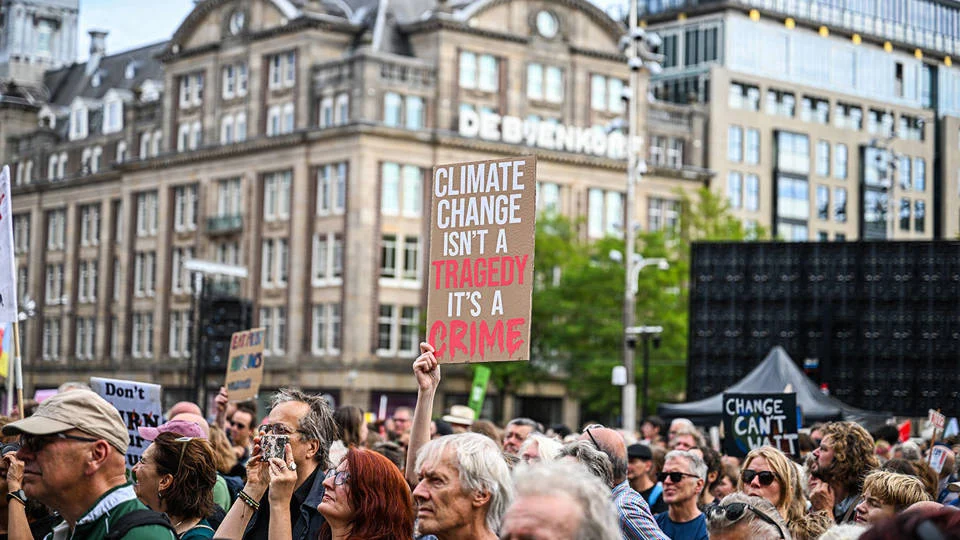
A profound and growing disconnect between public desire for climate action and political support for it is undermining governments’ ability to address the escalating climate crisis. This critical juncture, characterized by widespread economic insecurity and a deep-seated erosion of trust in institutions, demands a fundamental re-evaluation of how climate policies are framed and implemented. To secure the sustained public backing necessary for a meaningful transition, governments must demonstrably prove that climate action can lead to tangible benefits for households, foster the creation of decent and sustainable jobs, and ensure that the largest contributors to emissions bear their equitable share of the transition’s costs.
The Core of the Crisis: A Divide Between Ambition and Action
At the heart of contemporary climate politics lies a stark paradox. An overwhelming global consensus exists among citizens who unequivocally want their governments to confront and mitigate global warming. Yet, paradoxically, in many of the world’s leading economies, a significant segment of the electorate is increasingly backing political movements that either deny the existence of the climate crisis or actively downplay its severity. This divergence is not merely a matter of differing opinions; it is deeply rooted in a pervasive sense of economic unfairness and a disillusionment with existing power structures.
Recent data underscores the depth of this economic anxiety. Earlier this year, a comprehensive survey conducted by Ipsos for the Earth4All initiative revealed a startling reality: across major global economies, nearly 40% of individuals expressed fears that their households would struggle to afford basic necessities within the next twelve months. This economic precarity is even more acute in lower-income nations, where the daily struggle for survival overshadows long-term environmental concerns. The survey, which polled 13,516 individuals across 17 countries (G20 members, plus Sweden, excluding China, Russia, and Saudi Arabia), found that a staggering 70% believe economic inequality in their nation is excessively high, and 65% perceive the economic system as "rigged to benefit the rich and powerful." More than two-thirds of respondents indicated a desire for significant changes to the economic system, a sentiment shared by a mere 8% who disagreed.
A Legacy of Broken Promises and Shifting Risks
This widespread economic insecurity is not a recent phenomenon; it is the culmination of four decades of unfulfilled promises and a persistent failure of the "trickle-down" economic model. The neoliberal vision, which posited that wealth generated at the top would eventually benefit all strata of society, has demonstrably failed to materialize. Instead, the 2008 global financial crisis and subsequent economic shocks exposed a system where profits are increasingly privatized, while the risks and burdens are socialized, with vulnerable populations disproportionately bearing the brunt of economic downturns. This systemic imbalance has fostered a deep and corrosive distrust in governments, which are now, ironically, asking citizens to place their faith in assurances that the current sweeping economic transformation—the transition to a green economy—will be more equitable than past economic shifts.
The implications of this erosion of trust are profound. In a global landscape marked by the spectacular concentration of wealth, where large corporations and ultra-wealthy individuals can exert undue influence over regulatory frameworks, taxation policies, and public spending priorities, the perception that the rules of the game are deliberately skewed in favor of the powerful is not unfounded. These very same political and economic arrangements that perpetuate extreme inequality also cripple governments’ capacity to deliver essential services such as affordable energy, secure employment, robust public services, and effective resilience against the escalating impacts of climate change.
The Conditional Mandate for Climate Action
Consequently, the mandate for robust climate action remains conditional. While the Earth4All survey indicates that a majority (54%) across the surveyed nations support strong government intervention to reduce greenhouse gas emissions, even if it entails higher immediate costs, this support is not monolithic. Crucially, this backing tends to diminish among lower-income demographic groups and among respondents who lean towards right-leaning political ideologies in all 17 countries. This finding is particularly salient in the context of countries like the United States, where a significant portion of the population continues to express skepticism towards climate science, even as the impacts of climate change become increasingly apparent.
The inherent challenge for governments is that climate policies cannot achieve widespread and enduring social and political support if they allow the wealthiest individuals and corporations—the very entities responsible for the largest emissions footprints—to continue their operations with minimal disruption or a disproportionate shift of the burden. This challenge is further exacerbated by the rapid erosion of social cohesion. The survey reveals that two-thirds (67%) of respondents believe their country is more divided now than it was a decade ago. Political divisions are the most pronounced, with 71% citing serious tensions between supporters of different political parties, significantly higher than tensions between income groups (63%), native-born citizens and immigrants (62%), or those concerned about climate change and those skeptical of it (53%).
Societal Divisions and the Threat to Collective Action
Societies grappling with such deep divisions face immense hurdles in undertaking collective decision-making, equitably distributing costs, and pursuing ambitious, long-term projects whose benefits may only materialize over years or even decades. The ability of nations to confront the defining challenges of this century—from drastically cutting emissions and reversing ecological degradation to managing the profound societal shifts brought about by advancements in artificial intelligence—is inextricably linked to the strength and trustworthiness of public institutions. These institutions must be capable of making sustained, long-term investments, operating with fairness and transparency, and cultivating sufficient public trust to weather the inevitable backlash that accompanies significant societal change.
A Crisis of Trust and the Future of Democracy
The current deficit in public trust is alarming. Fewer than one in three respondents (31%) express confidence that their government can be trusted to make decisions that will genuinely benefit the majority of the population in the long term, specifically looking 20 to 30 years into the future.
Despite this pervasive distrust, democracy itself retains considerable popular support. A substantial 68% of respondents affirm that a political system characterized by free and fair elections is the most effective form of governance. However, this democratic legitimacy is far from unassailable. A concerning 40% of individuals believe their country would be better off under the rule of a strong leader unconstrained by parliamentary oversight and electoral processes. This sentiment is even more pronounced in several middle-income nations, including Indonesia, India, South Africa, and Brazil, where this figure surpasses 50%.
Rebuilding Trust Through Tangible Benefits and Fair Burden-Sharing
Ultimately, the enduring viability of democracy hinges on its capacity to demonstrably improve the lives of its citizens. It is a profound societal failure that, even as global wealth has expanded exponentially, a substantial portion of the population, including in the world’s most affluent nations, continues to experience persistent economic insecurity.
For democracies to thrive and for climate action to gain sustainable public backing, a fundamental shift in approach is imperative. Governments must actively offer the least well-off segments of society a genuine stake in the future. This can be achieved through concrete policies that prioritize affordable clean energy, ensure decent wages and working conditions, strengthen universal public services, and build resilience against both economic volatility and the escalating impacts of climate shocks. Crucially, this must be coupled with a resolute commitment to ensuring that the largest emitters—both corporate and individual—contribute their fair share to the costs associated with the climate transition.
Forging a New Social Contract for Climate Action
The mandate for climate action will only endure if the transition is perceived as demonstrably fair and equitable. When clean energy initiatives demonstrably lower household bills, when public investments create secure and meaningful jobs, when essential public services are protected and enhanced, and when the wealthiest individuals and entities are held accountable for their environmental impact, the resistance to change naturally diminishes. Rather than attempting to manufacture consent through rhetoric or coercion, governments must proactively forge a new social contract—one that is built on transparency, fairness, and a clear articulation of shared benefits—to sustain the vital efforts required to address the climate crisis. This approach recognizes that public support for ambitious climate policies is not a given; it must be earned through tangible improvements in people’s lives and a just distribution of the responsibilities and rewards of a sustainable future.
