

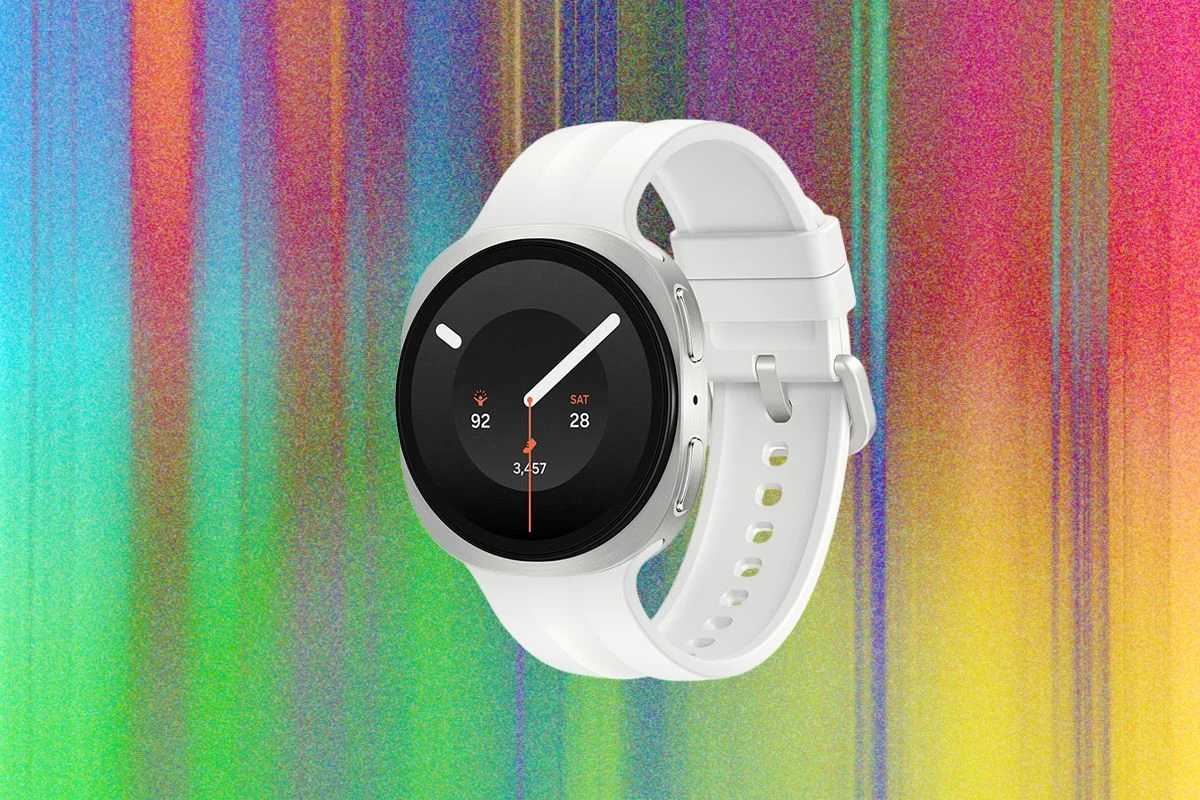
Samsung Electronics officially expanded its wearable portfolio this past summer with the dual release of the Galaxy Watch 9 and the Galaxy Watch Ultra 2, marking a strategic pivot in how the South Korean conglomerate approaches the fitness and lifestyle technology sectors. While the Galaxy Watch Ultra 2 targets the enthusiast and "prosumer" market with its ruggedized, shock-resistant chassis designed for extreme outdoor conditions, the Galaxy Watch 9 serves as the company’s primary consumer-facing device. Positioned as an everyday essential, the Galaxy Watch 9 integrates a comprehensive suite of health monitoring tools with a refined aesthetic, though it arrives as a measured iterative update rather than a radical departure from its predecessor, the Galaxy Watch 8.
The Galaxy Watch 9 is currently available in two distinct configurations: a 40-mm model offered in cream and graphite finishes, and a larger 44-mm variant available in graphite and silver. Samsung’s aggressive market strategy for this generation includes a starting price point of $80, a figure that suggests a push for ecosystem dominance by lowering the barrier to entry for users already utilizing Samsung Galaxy smartphones. This pricing model, combined with the device’s enhanced internal hardware, positions the Watch 9 as the logical choice for consumers invested in the Samsung ecosystem, particularly those upgrading from legacy hardware like the Galaxy Watch 6 or earlier.
Technical Architecture and the Snapdragon Wear Elite Platform
The primary hardware advancement within the Galaxy Watch 9 is the transition to the Qualcomm Snapdragon Wear Elite platform. This new processor represents a significant leap in wearable computing, designed specifically to handle the multitasking requirements of modern smartwatches. Samsung claims that the new silicon architecture provides substantial improvements in both CPU and GPU performance, allowing for smoother UI transitions and faster application load times.
In real-world testing scenarios over a 14-day period, the performance gains of the Snapdragon Wear Elite were palpable. The interface, powered by Wear OS 7, responds with minimal latency when navigating through complex menus, dismissing high volumes of notifications, or toggling between health-tracking widgets. This efficiency is critical for a device that is expected to run background processes—such as heart rate monitoring and blood oxygen tracking—without compromising the foreground user experience.
The integration of Wear OS 7 also brings a more cohesive software experience to the wrist. The operating system introduces highly customizable widgets and "live updates" from third-party applications, reducing the need for users to open full apps for simple data checks. A standout feature in this software update is the "raise-to-talk" functionality for Gemini, Google’s generative AI assistant. By simply lifting the wrist toward the mouth, users can trigger the AI without a physical button press or a "Hey Google" wake word. While this feature has been a staple of the Google Pixel Watch series for two generations, its arrival on the Galaxy Watch 9 represents a significant narrowing of the feature gap between Samsung and Google’s flagship wearables.
Battery Capacity and Charging Dynamics
One of the most scrutinized aspects of any wearable is its power management. For the Galaxy Watch 9, Samsung has implemented a modest increase in battery capacity across both size variants. The 40-mm model now features a 390-mAh battery, an increase from the 325-mAh cell found in the Watch 8. Similarly, the 44-mm model has been upgraded to a 445-mAh battery from the previous 435-mAh capacity.
Despite these incremental gains in raw capacity, the actual battery life remains largely consistent with previous generations. Samsung’s official documentation estimates up to 30 hours of usage on a single charge. However, empirical testing suggests that with the "Always-On Display" (AOD) enabled and standard health tracking active, the device averages closer to 25 hours of longevity. This results in a "daily charge" requirement, which may be a point of contention for users accustomed to the multi-day battery life offered by some dedicated fitness trackers or the Watch 9’s more expensive sibling, the Ultra 2.
The charging speed of the Galaxy Watch 9 also remains a bottleneck. A full recharge from zero to 100 percent takes approximately 100 minutes. When compared to the Google Pixel Watch 5, which can reach a full charge in roughly 45 minutes, the Galaxy Watch 9 lags in rapid-recovery capability. This discrepancy is particularly noticeable for users who utilize the watch for sleep tracking, as the window of time available for charging between waking up and starting the workday is often insufficient for a full top-off.
Health and Wellness: An Expanded Suite of Metrics
The stability in battery life, despite larger cells, is largely attributed to the energy demands of the Watch 9’s expanded health and wellness suite. Samsung has doubled down on its BioActive Sensor technology, which combines three powerful health sensors: Optical Heart Rate, Electrical Heart Signal, and Bioelectrical Impedance Analysis.
The Galaxy Watch 9 introduces more sophisticated wellness metrics, including advanced sleep coaching and a new "Energy Score" that synthesizes sleep data, activity levels, and heart rate variability to provide a daily readiness assessment. Furthermore, the watch includes FDA-cleared features for detecting signs of irregular heart rhythms (AFib) and has improved its sleep apnea detection capabilities. These features require constant sensor polling and data processing, which explains why the increased battery capacity does not necessarily lead to longer runtimes; the energy is instead being diverted to provide more granular health insights.
Historical Chronology and Market Context
To understand the positioning of the Galaxy Watch 9, it is essential to look at the timeline of Samsung’s wearable development.
- Summer 2022 (Galaxy Watch 5): Samsung focused on durability, introducing sapphire crystal glass and removing the physical rotating bezel from the standard model.
- Summer 2023 (Galaxy Watch 6/8): The company reintroduced the Classic model with a rotating bezel and improved the screen-to-body ratio. (Note: The Watch 8 followed the Watch 6 in this specific product cycle).
- Current Cycle (Galaxy Watch 9): The focus has shifted from external hardware changes to internal processing power and AI integration.
The transition from the Watch 8 to the Watch 9 is defined by refinement rather than revolution. While the Watch 8 established a solid baseline for Wear OS integration, the Watch 9 seeks to perfect the interaction model through AI and smoother performance. Industry analysts suggest that Samsung’s strategy is to mirror the iterative release cycle of the smartphone industry, providing a reliable "tick-tock" cadence of updates that ensure there is always a modern entry point for new users.
Competitive Analysis and Industry Implications
The Galaxy Watch 9 enters a crowded marketplace where it must compete not only with the Apple Watch Series 10 but also with Google’s deepening involvement in the wearable space via the Pixel Watch 5.
Samsung’s primary advantage remains its deep integration with the Android ecosystem, specifically for users of Galaxy-branded smartphones. Certain features, such as the ECG monitor and blood pressure tracking (in supported regions), still require a Samsung phone to function fully, creating a "walled garden" effect that encourages brand loyalty.
However, the slow charging speeds and the stagnation in battery life are areas where competitors are gaining ground. The Pixel Watch 5’s 45-minute charge time and Apple’s increasingly efficient fast-charging protocols put pressure on Samsung to innovate further in power delivery technology.
From a broader industry perspective, the Watch 9 signals the maturation of the smartwatch. We are moving away from an era where each year brings a new "must-have" hardware sensor. Instead, the focus has shifted to the software layer—how AI can interpret sensor data to give users actionable advice. The inclusion of Gemini’s raise-to-talk is a harbinger of a future where smartwatches act as primary interfaces for ambient computing and personal assistants.
Conclusion and Final Assessment
The Samsung Galaxy Watch 9 is a testament to the current state of wearable technology: a highly polished, reliable, and powerful tool that excels at its core functions while offering few surprises. For owners of the Galaxy Watch 8, the modest updates to the processor and battery may not justify the cost of an immediate upgrade. However, for those using older hardware or those entering the Samsung ecosystem for the first time, the Watch 9 represents the pinnacle of the standard Android smartwatch.
Its strengths lie in its smooth performance, comprehensive health tracking, and the seamless integration of Google’s AI tools. While the charging speeds remain a notable drawback in an otherwise high-performance package, the Watch 9’s balance of features and price makes it a formidable contender in the 2024-2025 wearable market. As Samsung continues to refine its "Ultra" and "Standard" tiers, the Watch 9 stands as the reliable, everyday anchor of a sophisticated mobile ecosystem.
