

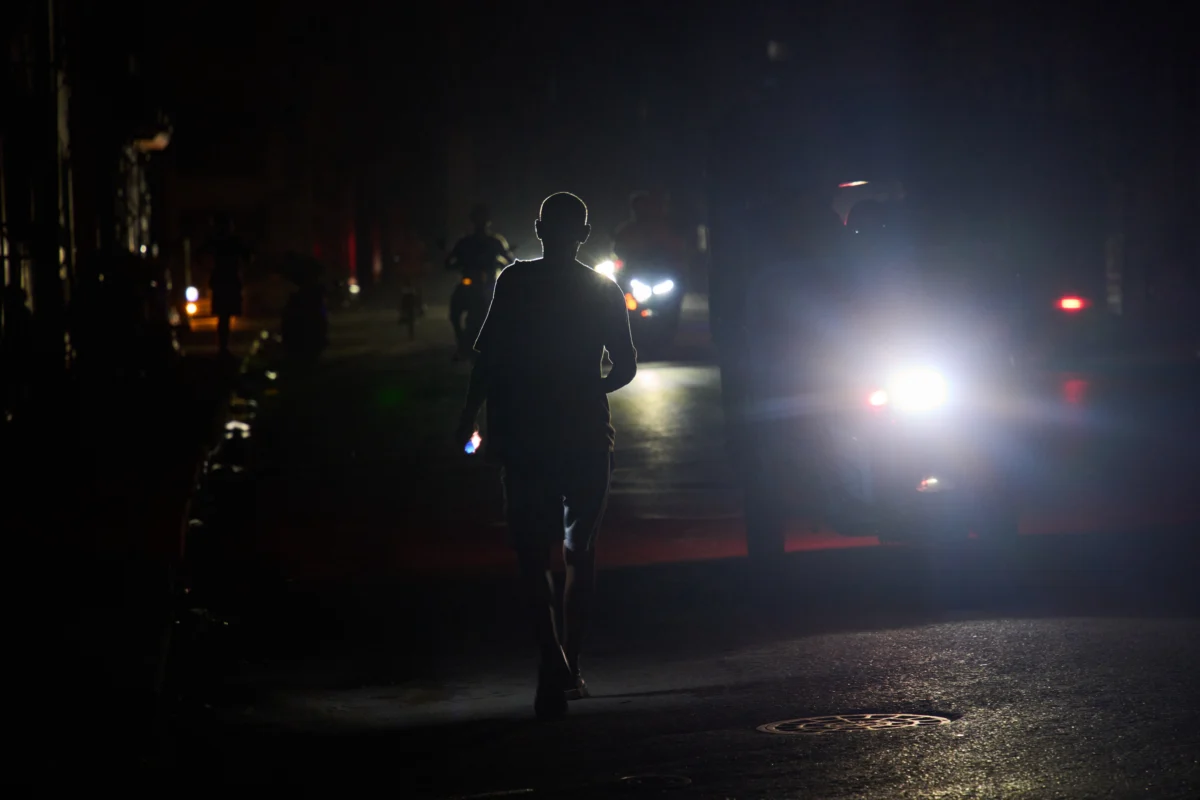
Cuba has once again grappled with widespread power outages, as a significant blackout left vast swathes of the Caribbean nation in darkness, marking at least the sixth such major incident this year alone and the twelfth since late 2024. The latest collapse of the antiquated national grid has underscored the severe vulnerabilities of Cuba’s energy infrastructure, exacerbated by a tightening United States-imposed energy blockade that went into effect in January. As the state-run utility, Unión Eléctrica (UNE), worked feverishly to restore power, the recurring disruptions have plunged daily life into an increasingly precarious state, drawing condemnation from international human rights experts and fueling a growing humanitarian crisis across the island.
Details of the Recent Blackout and Restoration Efforts
The most recent widespread power failure began on Friday, affecting five of Cuba’s eastern provinces initially, including parts of the capital city, Havana, before cascading across the entire island. Cuban authorities, through the Reuters news agency, attributed the initial collapse to a critical failure in high-voltage transmission lines located in the central part of the country. Further compounding the issue, UNE later cited "unstable weather conditions" as a contributing factor, suggesting a system already on the brink of collapse is highly susceptible to external pressures. The extensive nature of the blackout meant millions of Cubans were left without electricity, impacting essential services, communication, and basic living conditions.
In the aftermath, UNE initiated a gradual restoration process, acknowledging the complexity and fragility of the task. By Saturday, the company reported that nearly half of its customers in Havana had regained power, with efforts continuing across other affected regions. "The re-establishing is being done gradually, as conditions permit," UNE communicated via social media, providing intermittent updates to a populace accustomed to such disruptions but increasingly frustrated by their frequency and severity. The process of bringing major power plants back online and stabilizing the grid is a delicate operation, requiring careful synchronization to avoid further system overloads and subsequent failures. This intricate dance of power restoration highlights the precarious balance upon which Cuba’s national energy supply operates.
Cuba’s Fragile Energy Infrastructure: A Legacy of Decay
The recurrent blackouts are not a new phenomenon in Cuba but represent a deepening crisis rooted in decades of underinvestment, aging infrastructure, and a persistent lack of spare parts and fuel. Cuba’s power generation capacity relies heavily on a network of thermoelectric plants, many of which are decades old and operate far beyond their intended lifespan. These plants, designed to run on heavy fuel oil, are prone to frequent breakdowns, requiring extensive maintenance and costly repairs that are often delayed due to economic constraints and the difficulty in acquiring specialized components.
The majority of Cuba’s thermal power plants date back to the Soviet era, with some units operating since the 1960s and 1970s. For instance, plants like the Antonio Guiteras in Matanzas, the Máximo Gómez in Mariel, and the Lidio Ramón Pérez in Felton, while critical to the national grid, frequently experience technical issues, forcing them offline for repairs. The average efficiency of these plants is significantly lower than modern equivalents, leading to higher fuel consumption and greater environmental impact. Beyond generation, the transmission and distribution networks are also severely degraded, characterized by outdated cables, transformers, and substations that are vulnerable to environmental factors and daily wear and tear. This systemic decay means that even when generation capacity is available, the ability to reliably deliver power to consumers is compromised, leading to localized outages even when the national grid is nominally stable. The lack of modern grid management technologies, such as smart grids and automated fault detection systems, further hinders rapid response and efficient power distribution, making the entire system susceptible to cascading failures from minor incidents.
The Escalating Energy Crisis: A Chronology of Outages
While sporadic blackouts have been a part of Cuban life for years, their frequency and duration have intensified dramatically in recent months. The latest incident marks at least the twelfth significant nationwide or widespread regional blackout since late 2024, with six occurring within the first few months of 2025 alone. This accelerating trend points to a systemic breakdown rather than isolated incidents.
- Late 2024: Observers noted a discernible increase in scheduled and unscheduled power cuts, often lasting several hours a day in various provinces. These were largely attributed to maintenance issues at thermal plants and fuel shortages.
- January 2025: The implementation of the U.S. energy blockade coincided with a sharp spike in major outages. This month saw at least two island-wide or near island-wide blackouts, indicating a direct link between the sanctions and grid stability.
- February 2025: Several provinces, including Havana, experienced multiple prolonged blackouts. UNE frequently cited unexpected breakdowns at key power plants and challenges in acquiring fuel to run generators.
- March 2025: The current incident is one of several large-scale outages, reinforcing the pattern of increasing instability. The grid has become so fragile that a single fault can now trigger a domino effect across the entire island, a situation exacerbated by the lack of sufficient spinning reserve capacity.
This chronology paints a stark picture of a nation teetering on the brink of an energy catastrophe, with each subsequent blackout further eroding public confidence and deepening the daily struggles of its citizens.
The Impact of the U.S. Energy Blockade
The intensification of Cuba’s energy crisis is inextricably linked to the United States’ energy blockade, which commenced in January. This policy, designed to exert political and economic pressure on the Cuban government, targets the very lifeline of the island’s energy supply: fuel imports. Specifically, the sanctions aim to deter shipping companies and financial institutions from facilitating the transport of Venezuelan oil to Cuba, which has historically been a critical source of subsidized fuel.
Under the guise of sanctioning human rights abuses and support for Venezuela’s socialist government, the U.S. has imposed measures that:
- Sanction Shipping Companies: Foreign companies and vessels involved in transporting oil from Venezuela to Cuba face asset freezes and prohibitions from doing business with U.S. entities. This has made it exceedingly difficult and costly for Cuba to secure tankers and insurance for fuel shipments.
- Restrict Financial Transactions: Broader financial sanctions limit Cuba’s ability to engage in international trade, including purchasing fuel from alternative sources or acquiring spare parts for its power plants. Banks become hesitant to process transactions involving Cuban entities, fearing secondary sanctions.
- Target Specific Individuals and Entities: Key Cuban officials and state-owned enterprises, including those involved in the energy sector, have been placed on U.S. blacklists, further isolating the sector from international markets.
While the U.S. government maintains that its sanctions are aimed at the Cuban regime and not the Cuban people, the practical effect of an energy blockade is a direct and severe impact on the civilian population. Without sufficient fuel to run its power plants and backup generators, Cuba’s electrical grid becomes increasingly unreliable. This strategy mirrors a historical pattern of U.S. economic pressure on Cuba, but the current energy-focused blockade represents a significant escalation, pushing the island’s already struggling economy and public services to their breaking point.
International Condemnation and Humanitarian Concerns
The escalating energy crisis and the U.S. energy blockade have not gone unnoticed by the international community. United Nations human rights experts have vociferously condemned the U.S. oil blockade, issuing strong warnings about its humanitarian consequences. They have characterized the blockade as a violation of international law, arguing that it constitutes a form of collective punishment that disproportionately affects the most vulnerable segments of Cuban society.
In a particularly stark warning, UN experts cautioned that "Cuba risks becoming a ‘silent Gaza’" as shortages and blackouts grow ever more critical. This comparison highlights the severe and systemic impact of the blockade, drawing parallels to populations suffering from extreme deprivation due to ongoing conflicts and blockades. The UN’s concerns extend beyond mere inconvenience, pointing to severe impacts on:
- Healthcare: Hospitals struggle to maintain critical services, operate essential medical equipment, and preserve temperature-sensitive medicines and vaccines without reliable electricity.
- Food Security: Refrigeration failures lead to spoilage of perishable foods, exacerbating existing food shortages and nutritional deficiencies. The agricultural sector also suffers from lack of power for irrigation and processing.
- Water Supply: Water pumps, which are often electrically powered, cease to function during blackouts, leading to water scarcity in many areas, particularly in urban centers.
- Education and Communication: Schools and universities face disruptions, and the ability of citizens to communicate and access information is severely hampered.
The UN experts have called for an immediate lifting of the blockade, emphasizing the imperative to prioritize humanitarian considerations over political objectives. Other international organizations and non-governmental bodies have echoed these sentiments, urging for diplomatic solutions that alleviate the suffering of the Cuban people. While the U.S. government has often countered such criticisms by asserting that the Cuban government is responsible for its people’s welfare and that sanctions are targeted, the direct correlation between the blockade and the deepening energy crisis is undeniable to many observers.
Voices from the Ground: Daily Life Amidst Scarcity
For ordinary Cubans, the blackouts are not just news headlines but a harsh daily reality that dictates every aspect of their lives. The constant uncertainty of electricity supply creates immense stress and logistical challenges. Residents interviewed by news agencies like Reuters and AFP paint a vivid picture of the deteriorating conditions.
Frank Lorenzo, a 23-year-old Havana resident, shared his exasperation: "Yesterday, I’d gone without power for 24 hours. They turned the lights on for an hour, and then the grid collapsed." This anecdote perfectly encapsulates the fragility of the system – even brief periods of relief are quickly extinguished, fostering a sense of hopelessness. Such intermittent power makes planning impossible and disrupts even the simplest tasks.
Lidia Fernandez, a 36-year-old teacher, highlighted the cascading failures impacting multiple essential services. She explained to AFP that the lack of fuel makes it impossible to power backup generators, which typically run on imported diesel. "It’s one thing after another: no water, no gas for cooking, no electricity," Fernandez lamented. Her frustration is palpable as she added, "Honestly, I don’t know how we haven’t gone crazy." This sentiment is widely shared, as the absence of electricity often means no running water (due to electric pumps), no cooking gas (due to separate but related supply chain issues exacerbated by economic woes), and no internet access. The psychological toll of living in perpetual scarcity and uncertainty is immense, leading to widespread fatigue and despair. Families struggle to preserve food, students cannot study, and small businesses face ruin. The reliance on alternative energy sources like charcoal for cooking, where available, poses health risks and contributes to deforestation.
Economic and Social Repercussions
The relentless cycle of blackouts and shortages has profound economic and social repercussions for Cuba. Economically, the instability of the energy supply directly impacts productivity across all sectors.
- Tourism: A vital source of foreign currency, tourism is severely hit. Hotels struggle to maintain services, deterring potential visitors and damaging Cuba’s reputation as a reliable destination.
- Small and Medium Enterprises (SMEs): The burgeoning private sector, crucial for job creation and economic diversification, is particularly vulnerable. Without reliable electricity, businesses cannot operate machinery, refrigerate goods, or process payments, leading to closures and bankruptcies.
- Industrial Output: State-run industries and factories face significant production losses due to power cuts, further hindering economic growth and the availability of essential goods.
- Foreign Investment: The unpredictable energy landscape makes Cuba an unattractive prospect for foreign investors, limiting opportunities for economic recovery and infrastructure development.
Socially, the blackouts fuel discontent and exacerbate existing inequalities. Access to electricity often becomes a class issue, with those having access to private generators or living in areas prioritized for power restoration faring better. The lack of basic services strains social cohesion and can contribute to public protests, as witnessed in some Cuban cities in recent years. The worsening living conditions also act as a powerful push factor for migration, with increasing numbers of Cubans seeking to leave the island in search of better opportunities and more stable living conditions, often undertaking perilous journeys to the United States or other countries. This brain drain further depletes Cuba’s human capital and long-term recovery prospects.
Looking Ahead: Challenges and Potential Pathways
The immediate future for Cuba’s energy sector appears bleak without significant intervention. The fundamental challenges of an aging infrastructure, fuel dependency, and the tightening grip of U.S. sanctions present a formidable hurdle. Cuba’s government continues to emphasize the need for efficiency and alternative energy sources, but progress is slow and capital-intensive. Projects to incorporate solar and wind power are underway but remain insufficient to meet the national demand or offset the reliance on thermal plants.
For a sustainable solution, Cuba would require substantial international investment to modernize its power grid, rehabilitate its thermal plants, and significantly expand its renewable energy capacity. This, however, is severely complicated by the U.S. embargo, which deters many potential investors and financial institutions. A fundamental shift in U.S. policy towards Cuba, particularly regarding the energy blockade, would be a critical first step in alleviating the humanitarian crisis and allowing Cuba to pursue necessary infrastructure development. Without such a change, or a significant reorientation of Cuba’s economic and energy strategy with substantial international backing, the cycle of blackouts and scarcity is likely to persist, further deepening the humanitarian plight and testing the resilience of the Cuban people. The ongoing crisis serves as a stark reminder of the complex interplay between geopolitics, economic policy, and the daily lives of millions.
