

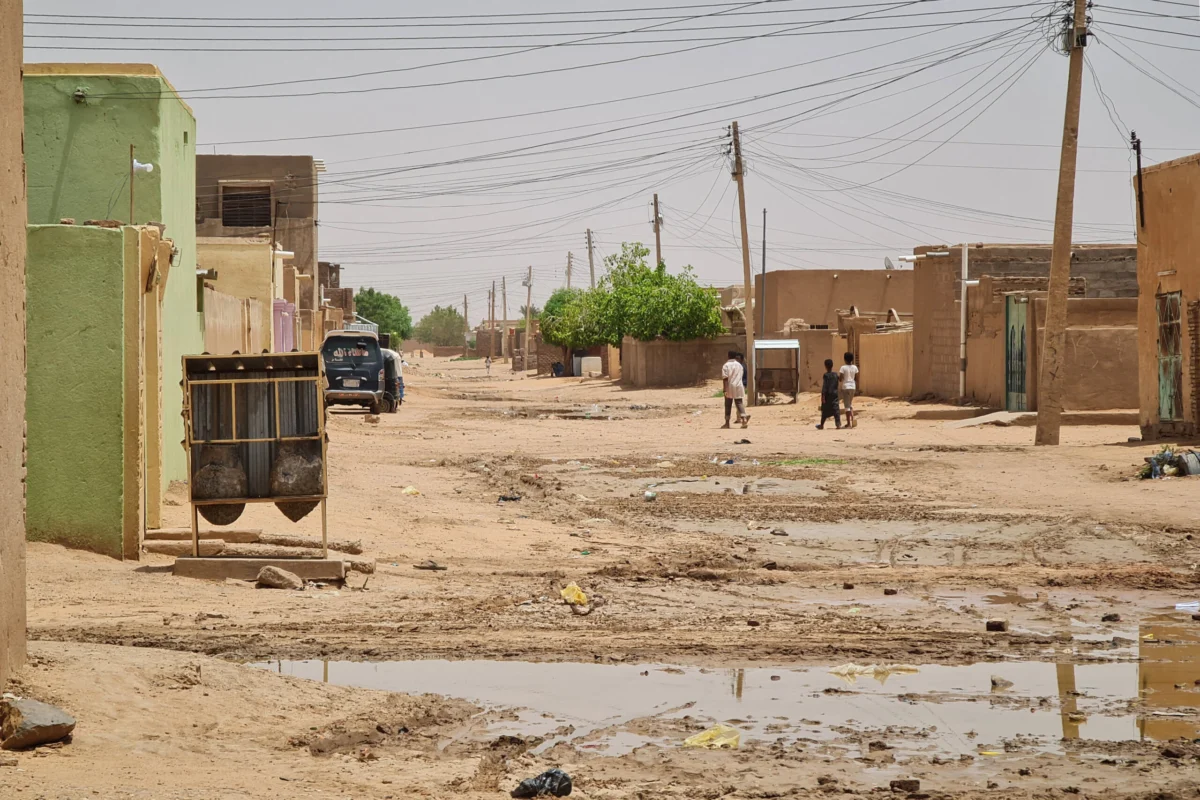
The humanitarian crisis in Sudan reached a grim new milestone on Saturday as an aerial bombardment struck a densely populated residential district in the capital city of Khartoum, resulting in the deaths of at least 17 individuals. Among the deceased were five children, according to local health officials, marking one of the most significant civilian casualty events in the capital since the outbreak of hostilities in mid-April. The strike targeted the Yarmouk neighborhood in southern Khartoum, an area that has become a central flashpoint in the ongoing power struggle between the Sudanese Armed Forces (SAF), led by General Abdel Fattah al-Burhan, and the paramilitary Rapid Support Forces (RSF), commanded by General Mohamed Hamdan Dagalo, commonly known as Hemedti.
The Sudanese Ministry of Health confirmed the casualties via a statement on social media, noting that the bombardment destroyed at least 25 homes and left dozens of others injured. While it remains unconfirmed whether the strike was executed by a fixed-wing aircraft or a drone, the nature of the destruction suggests a high-yield explosive impact in a neighborhood that houses a strategic military industrial complex currently under the control of the regular army. The RSF quickly issued a statement blaming the military’s air force for the "indiscriminate" bombing of civilian quarters, claiming they had successfully downed a SAF MiG fighter jet in retaliation. These claims, however, have not been independently verified, and the Sudanese military has historically maintained that its operations target RSF "rebel" positions while accusing the paramilitary group of using civilians as human shields.
Chronology of a Collapsing State: From Tensions to Total War
The seeds of the current conflict were sown long before the first shots were fired on April 15, 2023. Following the 2019 ousting of long-time autocrat Omar al-Bashir, a fragile power-sharing agreement between civilian leaders and the military was established. This arrangement was shattered in October 2021 when al-Burhan and Dagalo joined forces in a coup to dissolve the transitional government. However, the alliance between the two generals was one of convenience rather than conviction.
Tensions began to simmer throughout late 2022 and early 2023 over the proposed integration of the RSF into the national army. The SAF insisted on a rapid two-year integration timeline, whereas the RSF demanded a ten-year window that would allow it to maintain its independent command structure and vast economic interests. By early April, the RSF began mobilizing troops toward the Merowe airbase and other strategic locations in Khartoum.
On the morning of April 15, heavy gunfire and explosions erupted across the capital. What was initially characterized as a skirmish quickly evolved into a full-scale civil war. Over the subsequent weeks, the conflict spread from the administrative heart of Khartoum to the neighboring cities of Omdurman and Bahri, and eventually to the long-suffering region of Darfur. Despite numerous "permanent" ceasefires brokered by the United States and Saudi Arabia in Jeddah, neither side has demonstrated a sustained commitment to de-escalation, leading to the current state of entrenched urban attrition.
The Human Cost: Displacement and the Collapse of Infrastructure
The statistical reality of the Sudan conflict paints a picture of a nation in freefall. According to the United Nations and the International Organization for Migration (IOM), more than 2.2 million people have been uprooted by the violence. Of these, approximately 1.7 million are internally displaced within Sudan, seeking refuge in relatively stable provinces like Al Jazirah or the Red Sea coast. An additional 500,000 people have crossed international borders, fleeing into neighboring Chad, Egypt, South Sudan, and Ethiopia—nations that are themselves grappling with economic instability and resource scarcity.
The healthcare system in Khartoum and the Darfur region has effectively collapsed. The World Health Organization (WHO) reports that nearly 80% of hospitals in conflict zones are out of service. Facilities that remain open are operating at a fraction of their capacity, plagued by chronic shortages of oxygen, blood bags, surgical supplies, and electricity. In the Yarmouk neighborhood following Saturday’s strike, local volunteer groups, known as "Emergency Rooms," were the primary responders. These grassroots organizations have filled the vacuum left by international NGOs that were forced to evacuate or scale back operations due to the insecurity.
The death toll, officially cited in the low thousands, is widely believed by activists and medical unions to be a significant undercount. Many victims of airstrikes and crossfire are buried in backyards or makeshift graves because the intensity of the fighting prevents families from reaching cemeteries or hospitals.
The Siege of Darfur and the Assassination of Governor Abkar
While Khartoum remains the primary political prize, the western region of Darfur has seen a resurgence of ethnically motivated violence that mirrors the genocidal conflict of the early 2000s. In El Geneina, the capital of West Darfur, the conflict has taken on a sectarian dimension. The RSF, which evolved from the "Janjaweed" militias, has been accused by human rights groups of collaborating with allied Arab militias to target the non-Arab Masalit community.
The situation reached a nadir on Wednesday, June 14, when the Governor of West Darfur, Khamis Abdalla Abkar, was abducted and killed shortly after participating in a televised interview with Al-Hadath news. In the interview, Abkar had accused the RSF and its allies of committing "genocide" and urged international intervention. Video footage circulating on social media appeared to show Abkar being detained by men in RSF uniforms. Hours later, photos of his body were released. The United Nations called the assassination a "vicious act," while the RSF denied responsibility, blaming "outlaw" elements for the killing. The death of a high-ranking official like Abkar underscores the total breakdown of law and order and the vulnerability of even the most prominent civilian leaders.
Official Responses and Diplomatic Stagnation
The international community has struggled to find leverage to stop the fighting. The "Jeddah process," led by Washington and Riyadh, has been suspended multiple times due to repeated violations of humanitarian truces. Following the Saturday strike in Khartoum, the African Union (AU) issued a statement reiterating that there is "no military solution" to the crisis and calling for an immediate return to political dialogue.
Domestically, the rhetoric remains bellicose. General al-Burhan has increasingly relied on the air force’s superiority to compensate for the RSF’s greater mobility and presence on the ground. Conversely, the RSF has utilized its "hit-and-run" tactics, occupying civilian homes and converting them into barracks and sniper nests, a tactic that residents say invites the very airstrikes that killed the 17 civilians in Yarmouk.
The Sudanese Ministry of Foreign Affairs, which remains aligned with the SAF, has characterized the RSF as a "terrorist rebel militia" and has resisted international mediation efforts that treat the two warring factions as equal parties. Meanwhile, Hemedti’s RSF continues to project itself as a defender of democracy against "remnants" of the old Bashir regime within the army, despite its own history of human rights abuses.
Analysis: Implications for Regional Stability
The implications of the prolonged conflict in Sudan extend far beyond its borders. Sudan occupies a strategic position at the crossroads of Sub-Saharan Africa, North Africa, and the Red Sea. A total collapse of the Sudanese state would create a massive security vacuum that could be exploited by extremist groups and human traffickers.
- Refugee Crisis: The influx of hundreds of thousands of refugees into Chad and South Sudan threatens to destabilize these fragile neighbors. Chad, in particular, is struggling to accommodate the ethnic Masalit population fleeing Darfur, creating potential for cross-border ethnic conflict.
- Economic Disruption: Sudan is a major producer of gold and agricultural products. The halt in production and the destruction of infrastructure have sent shockwaves through regional markets. Furthermore, the conflict threatens the stability of the Red Sea trade routes, essential for global commerce.
- The "Somali-ization" of Sudan: Analysts fear that if neither side achieves a decisive victory, Sudan could fracture into permanent fiefdoms controlled by rival warlords. This "Somali-ization" would make any future transition to civilian rule nearly impossible and would necessitate decades of international peacekeeping and reconstruction.
The Saturday airstrike in the Yarmouk neighborhood serves as a poignant reminder that in the battle between two generals, it is the Sudanese citizenry that pays the highest price. As five more children are added to the list of the conflict’s casualties, the international community faces mounting pressure to move beyond toothless condemnations and toward a more robust mechanism for enforcing a ceasefire and protecting the millions of lives hanging in the balance. For now, however, the skies over Khartoum remain filled with the sound of fighter jets and the smoke of burning neighborhoods, with no end to the bloodshed in sight.
