

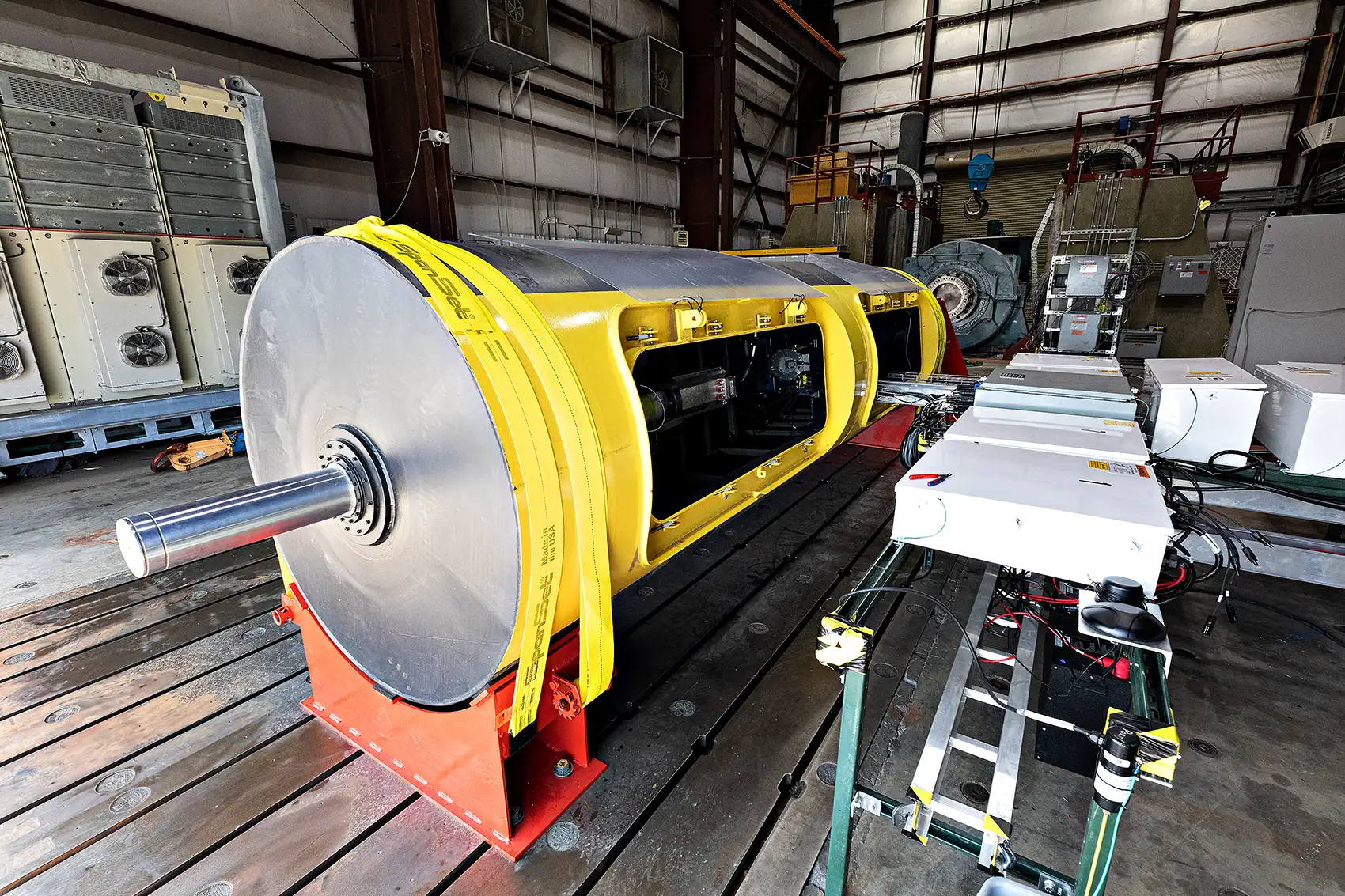
The global transition toward renewable energy has reached a critical juncture where land-based solar and wind power must be supplemented by more consistent, predictable sources of generation. Among the most promising of these is marine energy, derived from the movement of ocean waves, tides, and currents. However, the transition from laboratory prototypes to open-ocean deployment is fraught with technical and financial risks. To bridge this "valley of death," the National Laboratory of the Rockies (NLR) has deployed its Advanced Research on Integrated Energy Systems (ARIES) platform, a sophisticated validation environment designed to de-risk marine energy technologies before they face the unforgiving conditions of the sea.
Marine energy represents a massive untapped resource. According to data from the U.S. Department of Energy, the theoretical potential of wave energy alone along the United States coasts is estimated at 2.64 trillion kilowatt-hours per year—enough to power a significant portion of the country’s total electricity demand. Despite this potential, the industry remains in a nascent stage compared to solar and wind. The primary hurdles include the high cost of offshore maintenance, the corrosive nature of saltwater, and the difficulty of integrating variable wave-driven power into stable microgrids.
The ARIES Methodology: Simulating the Ocean on Dry Land
The ARIES platform, located at the NLR’s Flatirons Campus, serves as a nexus for hardware-in-the-loop (HIL) testing. It allows researchers to integrate physical hardware—such as wave energy converters (WECs) and power take-off (PTO) systems—with digital twins and emulated grid environments. This hybrid approach enables the simulation of complex scenarios that would be impossible or prohibitively expensive to test at sea.
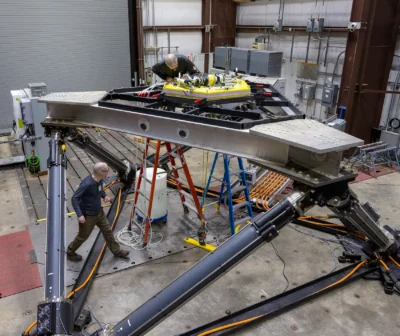
One of the most critical components of the ARIES infrastructure is the Large-Amplitude Motion Platform (LAMP). This dry simulator is a marvel of mechanical engineering, designed to move 10,000-kilogram wave energy converters across six degrees of freedom. By utilizing data from real-world ocean conditions, LAMP replicates the heave, surge, sway, roll, pitch, and yaw of the sea. This allows engineers to measure a device’s physical resistance and its ability to capture energy from multiple angles without the logistical nightmare of a maritime expedition.

"ARIES enables NLR and partners to validate and refine complex hybrid marine energy systems in a controlled, repeatable, and accessible environment," said Al LiVecchi, NLR water power laboratory program manager. "This helps de-risk and ready systems for ocean deployments and accelerate technology development. There isn’t a marine energy company which has leveraged NLR’s laboratory infrastructure who hasn’t incorporated the learnings in next-generation systems."
Addressing the Challenges of Remote Microgrids
While the ultimate goal of marine energy is utility-scale generation, the immediate applications are focused on "Powering the Blue Economy." This includes supporting offshore and coastal microgrids, which are essential for remote communities, military installations, and industrial operations like aquaculture and ocean sensing.
Logistically, coastal sites often face severe energy security risks. Distant U.S. military bases, isolated Tribal villages, and remote mining or fishing outposts frequently rely on expensive, carbon-intensive diesel generators. Marine energy offers a local, sustainable alternative, but the integration process is technically demanding. Wave energy produces varying and unsteady power, which can destabilize a small-scale grid.
Jen Kurtz, ARIES research director at NLR, emphasized the platform’s role in building confidence for these specific use cases. "For cutting-edge ocean energy solutions, it can be hard to feel confident about deploying new technologies when there are so many unknowns," Kurtz stated. "ARIES removes uncertainty and reduces risk. We create the marine and power system environment that partners expect to face, as close to real as possible."
Technical Synergy: Dynamometers and Power Electronics
Beyond physical motion, the ARIES platform utilizes high-fidelity dynamometers to validate power take-off systems. While LAMP simulates the motion of waves, dynamometers simulate the rotation or linear force that drives electrical generation. This is vital for testing both rotary and linear generators used in wave, tidal, and river current devices.
A prominent example of this capability was the validation of the SeaRAY Autonomous Offshore Power System. Researchers used the ARIES dynamometers to recreate the exact power generation profile the device would produce offshore. This allowed the team to test how the power would interact with microgrid and nanogrid configurations, specifically for applications such as charging autonomous underwater vehicles (AUVs).
Furthermore, the platform focuses heavily on power electronics—the hardware and software that convert raw, unsteady energy into usable electricity. In a marine environment, these electronics must be exceptionally robust. The ARIES team recently worked on the Hydraulic and Electric Reverse Osmosis Wave Energy Converter (HERO WEC) project. In this instance, ARIES was used to validate a charge controller designed to manage energy flow between an offshore generator and an onshore battery. This project provided a blueprint for future validations, ensuring that power electronics can handle the fluctuations inherent in wave energy.
Chronology of Development and Strategic Partnerships
The evolution of the ARIES platform reflects a broader strategic shift in renewable energy research, moving from component-level testing to full-system integration.
- Initial Concept and Launch: The ARIES platform was conceptualized to address the "integrated" nature of modern energy systems, recognizing that technologies like marine energy cannot be developed in isolation from storage and grid management.
- Expansion of the Flatirons Campus: Over recent years, the NLR has expanded its Flatirons Campus to include megawatt-scale testing capabilities, allowing for the simulation of larger and more complex systems.
- 2024 Technical Assistance Milestones: The NLR began providing significant technical assistance through programs like the Community Microgrid Assistance Partnership, supporting remote communities in their transition to localized power.
- 2026 Webinar Series and Future Outlook: In 2026, the NLR launched a comprehensive series of webinars aimed at sharing the data and methodologies developed through ARIES. These sessions focus on the specific challenges of integrating marine energy into islanded microgrids, ensuring that the lessons learned in the lab are accessible to commercial developers and government agencies.
Broader Impact and Economic Implications
The work being done at ARIES has implications that extend far beyond the laboratory. By reducing the failure rate of offshore deployments, the platform is directly lowering the Levelized Cost of Energy (LCOE) for marine renewables. In the capital-intensive energy sector, the ability to demonstrate a "long-term payoff" through simulated performance is often the deciding factor for private investment.
From an environmental perspective, the successful deployment of marine energy systems is a vital component of global decarbonization. Ocean-based energy is more predictable than wind or solar, providing a "baseload-like" quality to renewable microgrids. This reduces the need for massive battery arrays and provides a more resilient energy profile.

Moreover, the development of these technologies fosters a new industrial sector. The "Blue Economy" includes not just energy production, but the manufacturing of specialized power electronics, the development of advanced materials resistant to biofouling and corrosion, and the creation of a specialized workforce for offshore maintenance.
Conclusion: A Controlled Path to the Open Sea
The Advanced Research on Integrated Energy Systems platform represents a fundamental shift in how marine energy is developed. By combining the physical forces of the ocean with the digital complexity of modern power grids, the NLR provides a sandbox where failure is an informative data point rather than a multi-million-dollar disaster.
As the HERO WEC, SeaRAY, and other projects have demonstrated, the path to a sustainable maritime future is paved with rigorous validation. The cyber-physical resources at ARIES—including LAMP, the hydraulic dynamometers, and grid emulators—ensure that when these devices finally hit the water, they are ready to perform.
For communities and companies looking to the horizon for their next energy solution, the NLR continues to offer a collaborative environment. Through ongoing programs like the Energy Technology Innovation Partnership Project, the laboratory remains committed to transforming the raw power of the ocean into a reliable pillar of the global energy landscape.
