

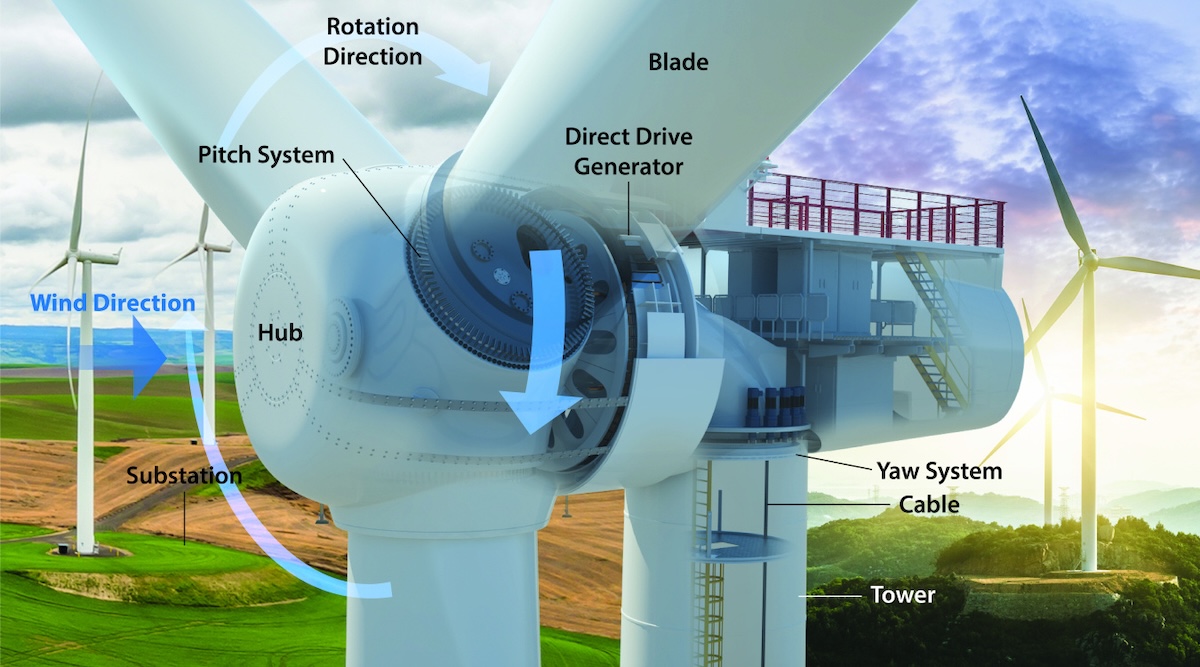
The United States Department of Energy (DOE) has initiated a significant rebranding of its renewable energy divisions, introducing a new lexicon that moves away from traditional terminology such as "wind power" in favor of more technical, engineering-focused descriptions. Central to this shift is the introduction of the term "aeromechanical energy systems" to describe wind turbine technology and its associated infrastructure. This change comes as the federal government undergoes a broader reorganization of its energy offices, merging previously distinct departments into the newly formed Integrated Energy Systems Office (IESO).
This administrative restructuring and linguistic pivot occur against a backdrop of complex federal policy regarding renewable energy. While the administration has publicly championed a doctrine of "American Energy Dominance," its relationship with the wind industry has been characterized by regulatory freezes, legal challenges, and a pivot toward fossil fuel rhetoric. The rebranding to "aeromechanical energy systems" is viewed by industry analysts as either a move toward technical precision or an attempt to distance the department’s work from the political connotations associated with "green" or "renewable" energy.
The Formation of the Integrated Energy Systems Office
On September 17, 2026, the Department of Energy announced the formal establishment of the Integrated Energy Systems Office (IESO). This new entity represents a consolidation of the former Solar Energy Technologies Office and the Wind Energy Technologies Office. According to official DOE communications, the mission of the IESO is to "enhance grid reliability and resilience, secure U.S. technological leadership across diverse energy generation sources, and lower energy costs for Americans."
The IESO operates under the organizational umbrella of the Office of Critical Minerals and Energy Innovation (OCMEI), a recently established branch reflecting the federal government’s focus on securing domestic supply chains for raw materials essential to energy infrastructure. The IESO’s portfolio includes advanced photovoltaics, solar thermal technologies, grid cybersecurity, and the newly termed aeromechanical energy systems.
The department’s description of the Aeromechanical Energy Systems branch emphasizes "addressing challenges to the long-term reliability and performance of wind energy systems" and "facilitating the recycling of end-of-life components." Despite the change in terminology, the department has continued to update Biden-era informational pages on wind manufacturing and supply chains, though critics note that these updates have not been accompanied by new funding opportunities for the wind sector.
Chronology of Federal Policy and Judicial Intervention
The current state of wind energy in the United States is the result of a series of executive actions and subsequent court rulings that have created a volatile environment for developers. The timeline below outlines the key events leading to the current administrative shift:
- August 2025: The Department of Defense (DoD) abruptly suspended a long-standing review process for onshore wind projects. This process, conducted in coordination with the Federal Aviation Administration (FAA), is mandatory for any turbine exceeding 200 feet in height. By ceasing to sign mitigation agreements, the DoD effectively placed a moratorium on numerous private and state-level wind developments.
- January 2026: A federal judge ruled that while the executive branch holds the authority to cease issuing new offshore wind leases on federal waters, it does not have the authority to retroactively halt projects that already possess valid leases.
- June 2026: Allegations surfaced regarding the "buyout" of offshore lease holders. Reports indicated that the administration, through the Department of Justice, may have funneled funds to incentivize developers to abandon existing offshore projects, a move characterized by some members of Congress as an illegal use of federal resources to stifle the industry.
- July 2026: A coalition of 19 state attorneys general, led by Washington State Attorney General Nick Brown, filed a lawsuit against the Trump administration. The suit alleged that the DoD’s freeze on wind farm permits was unlawful and damaging to state energy goals and economic interests.
- August 2026: A federal judge in Oregon ruled in favor of the states, declaring the DoD’s blockage of wind projects unlawful and ordering the resumption of the permit review process.
- August 27, 2026: Amid the legal turmoil, the PacWave South facility, a major wave energy research site, officially opened for business after years of development, signaling that some clean energy sectors continue to progress despite administrative friction.
- September 17, 2026: The DOE officially announces the rebranding of wind energy technology to "aeromechanical energy systems" within the IESO.
The Economic and Industrial Impact of Terminology Shifts
The shift to "aeromechanical energy systems" is not merely a matter of semantics; it reflects a shift in the department’s priorities toward manufacturing and "critical minerals" rather than climate mitigation. The IESO’s website currently lists several programs "under review," with most active funding opportunities directed toward space-based solar energy and general grid initiatives rather than traditional onshore or offshore wind.
Data from the wind industry suggests that this period of regulatory uncertainty has had a chilling effect on investment. While the United States remains a global leader in installed wind capacity, the pace of new project starts has slowed. Developers have expressed concern that the renaming of offices and the lack of fresh funding rounds for "aeromechanical" systems indicate a deprioritization of the sector.
However, proponents of the rebranding argue that the new terminology aligns the wind industry with the broader aerospace and mechanical engineering sectors. By framing turbines as complex mechanical systems rather than "environmentalist" tools, the DOE may be attempting to build a more bipartisan, industrial-base-focused justification for their existence. This strategy mirrors the administration’s focus on "energy dominance," where the source of energy is secondary to the domestic control of the technology and the reliability of the output.
Legal and Legislative Reactions
The rebranding and the broader "war on wind" have met with significant resistance from both the judicial system and state governments. The lawsuit filed by the 19 state attorneys general highlighted the economic dependence many states have on wind energy. In states like Iowa, Kansas, and Texas, wind power provides a substantial portion of the electricity mix and supports thousands of manufacturing and maintenance jobs.
Attorney General Nick Brown stated during the litigation that the federal government’s "abrupt" cessation of the permit review process was a breach of administrative procedure that ignored the "real-world economic consequences" for states attempting to diversify their energy portfolios. The August 2026 court victory for the states was seen as a major blow to the administration’s efforts to stifle onshore wind growth through bureaucratic delay.

In Congress, the scrutiny of the offshore lease buyouts continues. Legislators from coastal states have requested transparency regarding the valuation of these buyouts and the source of the funding. Some legal analysts suggest that if the buyouts are found to have been conducted outside of standard procurement or settlement protocols, they could be reversed, potentially allowing developers to resume projects that were previously considered "dead."
Broader Implications for the U.S. Energy Landscape
The transition of the Department of Energy into a more technical, jargon-heavy agency signals a new era of federal energy management. By folding wind and solar into a singular "Integrated Energy Systems" office and placing it under "Critical Minerals," the administration is signaling that its interest in these technologies is primarily based on their role in national security and domestic industrial capacity.
The long-term impact of this shift remains to be seen. While the rebranding to "aeromechanical energy systems" may satisfy certain political requirements within the current administration, the fundamental mechanics of the industry remain unchanged. Wind turbines continue to be a cost-effective source of power, and the private sector’s appetite for renewable energy remains high, driven by corporate sustainability goals and the falling costs of technology.
The "aeromechanical" label may eventually become a standard part of the federal government’s lexicon, or it may be viewed as a temporary artifact of a specific political moment. Regardless of the terminology used, the legal rulings of 2026 have affirmed that the executive branch’s power to dismantle the existing wind energy infrastructure is limited by law. As the DOE moves forward with its IESO framework, the industry will be watching closely to see if "aeromechanical energy systems" receive the same level of federal support and funding as the "wind power" they replaced.
For now, the wind industry exists in a state of "strategic hibernation" regarding federal partnership. While the wind continues to blow and turbines continue to turn, the administrative machinery in Washington D.C. is busy redefining what those turbines are called and how they fit into a vision of American energy that is increasingly focused on mechanical reliability and mineral security over environmental outcomes.
