

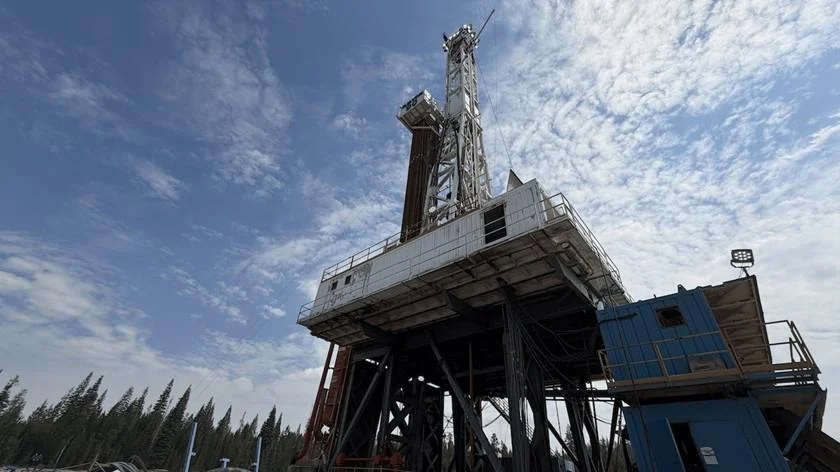
Mazama Energy, a Texas-based pioneer in the field of deep geothermal technology, has successfully closed a $135 million Series B funding round, signaling a significant shift in the renewable energy landscape as investors pivot toward high-density, baseload power solutions. The capital injection is earmarked for the rapid commercialization of "superhot rock" geothermal systems, a technology capable of reaching depths and temperatures previously considered inaccessible for energy extraction. This latest financial milestone comes at a critical juncture for the global energy transition, as utilities and grid operators grapple with the dual challenges of meeting skyrocketing electricity demand from data centers and achieving aggressive decarbonization targets.
The Series B round was led by Centaurus Capital and Doerr Capital, reflecting strong confidence from some of the most prominent names in climate technology investment. The round also saw strategic participation from global energy majors, including ConocoPhillips and Shell Ventures, alongside SiteGround Capital, H. Barton Asset Management, and the Jeffrey and Marieke Rothschild Foundation. Returning investors Khosla Ventures and Gates Frontier also joined the round, underscoring the long-term potential of Mazama’s engineering approach. The involvement of traditional oil and gas giants like Shell and ConocoPhillips is particularly noteworthy, as it highlights the growing synergy between the petroleum industry’s drilling expertise and the emerging geothermal sector’s need for advanced subsurface engineering.
The Engineering of Superhot Rock Geothermal
At the heart of Mazama Energy’s value proposition is its focus on Enhanced Geothermal Systems (EGS) optimized for superhot rock environments. While conventional geothermal energy relies on naturally occurring pockets of steam or hot water near the Earth’s surface—typically limited to tectonically active regions like Iceland or parts of California—EGS technology aims to create artificial reservoirs in hot, dry rock. Mazama takes this a step further by targeting "superhot" conditions, where temperatures exceed 750°F (400°C).
At these extreme temperatures, water enters a "supercritical" state. Supercritical water is a physical anomaly that possesses the density of a liquid but the flow characteristics of a gas. From an energy perspective, supercritical fluids are exponentially more efficient than subcritical steam. According to technical data provided by Mazama, reaching these temperatures allows a single well to deliver up to ten times the power output of a conventional geothermal well operating at 390°F (200°C). This massive increase in energy density is the primary driver behind the company’s claim that it can reduce the number of wells required for a project by 80%, drastically lowering capital expenditures and the physical footprint of power plants.
A Proven Track Record: The Newberry Milestone
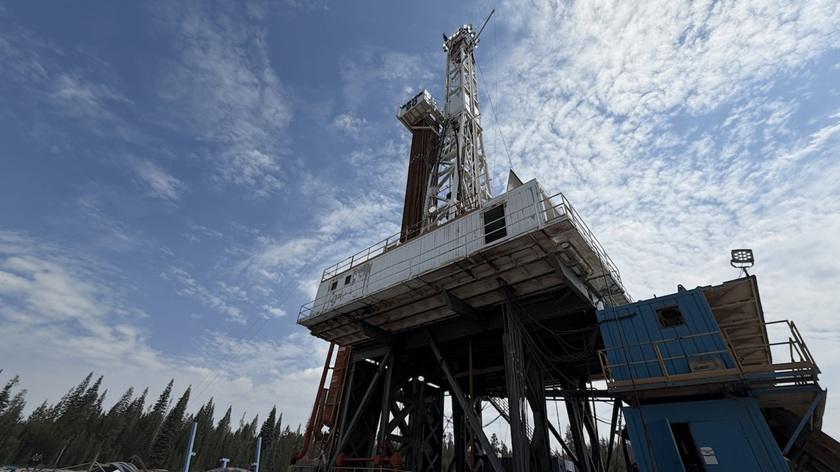
The funding follows a string of technical successes for Mazama. In 2025, the company made headlines by creating the hottest engineered geothermal system ever recorded at its test site in Newberry, Oregon. The well reached a temperature of 629°F (331°C), proving that EGS techniques could be adapted to withstand environments that would melt or degrade standard drilling equipment.
Building on that success, Mazama is currently executing "Project Athena." This second well at the Newberry site is designed to penetrate even deeper, reaching a mile further into the Earth’s crust to tap into the 750°F (400°C) threshold. The data gathered from Project Athena is expected to validate the commercial viability of supercritical heat harvesting. Sriram Vasantharajan, CEO of Mazama Energy, emphasized that the Newberry site has served as a crucible for integrating three high-risk components: extreme-temperature drilling, reservoir creation, and durable heat-harvesting infrastructure.
"At Newberry, we have demonstrated the critical pieces together," Vasantharajan stated. "We are now driving that integrated system toward greater speed, efficiency, and scale. That is the foundation for commercial superhot power."
Strategic Implications and Market Context
The surge in geothermal investment is part of a broader "geothermal renaissance." For years, geothermal was the "forgotten" renewable, overshadowed by the rapid cost declines of wind and solar. However, as the limitations of intermittent energy sources become more apparent, the value of firm, 24/7 baseload power has skyrocketed. Unlike solar, which requires massive battery arrays to provide power at night, or wind, which is subject to weather patterns, geothermal provides a steady, unchanging flow of electricity.
The market appetite for this stability was recently evidenced by Fervo Energy’s $1.9 billion initial public offering (IPO), which set a high-water mark for the industry. Mazama’s $135 million raise suggests that venture capital and private equity are now looking for the next technological leap—moving beyond standard EGS into the superhot regime to achieve even better economics.

John Doerr, Chairman of Doerr Capital and Kleiner Perkins, highlighted the urgency of the mission. "The world needs vastly more electricity, and we need to produce it cleanly and affordably," Doerr said. "Superhot geothermal has the potential to be a major new source of 24/7 clean power, delivering dramatically more energy with less land, water, and infrastructure. Mazama is making that promise real."
Project Ceres and the Path to 2027
A significant portion of the new capital will be dedicated to "Project Ceres," a venture supported by the U.S. Department of Energy (DOE). This project represents Mazama’s transition from experimental drilling to power generation. Project Ceres will focus on developing horizontal wells in superhot rock, a technique borrowed from the shale gas industry but adapted for the thermal stresses of the deep subsurface.
The goal of Project Ceres is to achieve a capacity of 15 megawatts-electric (MWe) per well. For context, many conventional geothermal wells produce between 2 and 5 MWe. By achieving 15 MWe, Mazama aims to prove that superhot geothermal can compete on price with natural gas and nuclear power. The company expects to demonstrate full-scale power generation at the site by 2027.
Beyond Newberry, Mazama is aggressively expanding its portfolio. The company has announced plans to seek independent certification for over 10 gigawatts-electric (GWe) of resource potential at the Newberry site alone. Simultaneously, the firm is evaluating sites across the Western United States and internationally, targeting regions with high "heat flow" where superhot rock is accessible at manageable depths.
Environmental and Resource Efficiency
One of the most compelling arguments for Mazama’s technology is its resource efficiency. Conventional energy production, including some forms of geothermal and nuclear, is often water-intensive. Mazama’s systems are designed to operate with 75% less water than traditional geothermal developments. By using closed-loop or highly efficient reservoir management, the company minimizes its impact on local aquifers—a crucial factor as many high-heat areas are located in water-stressed regions of the American West.

Furthermore, the high energy density of superhot rock allows for a much smaller surface footprint. Because fewer wells are needed to produce the same amount of power, the land area required for a 100 MW plant is significantly reduced. This makes the technology easier to permit and more palatable to local communities compared to vast solar farms or wind arrays that can cover thousands of acres.
The Role of Government and Policy
The U.S. Department of Energy has played a pivotal role in de-risking Mazama’s technology. Through the "Enhanced Geothermal Shot," the DOE has set a goal to reduce the cost of EGS by 90% to $45 per megawatt-hour by 2035. Mazama’s Project Ceres is a direct beneficiary of this policy framework, which provides not only funding but also access to national laboratory expertise and seismic monitoring resources.
The Inflation Reduction Act (IRA) has also provided a tailwind for the industry, offering investment tax credits that make deep-drilling projects more attractive to private investors. By aligning private capital with federal research goals, Mazama has been able to accelerate its R&D timeline, moving from a concept to a record-breaking well in just a few years.
Conclusion: A New Frontier for Clean Energy
The $135 million Series B round for Mazama Energy is more than just a corporate milestone; it is a signal that the energy industry is preparing for a future where "deep tech" provides the backbone of the grid. By successfully navigating the extreme temperatures of the Newberry volcano and securing the backing of both tech visionaries and fossil fuel titans, Mazama has positioned itself at the forefront of the superhot geothermal movement.
As the company moves toward its 2027 power generation demo, the industry will be watching closely. If Mazama can consistently harvest heat at 750°F and convert it into affordable electricity, the "superhot" revolution could unlock a virtually inexhaustible supply of clean energy, available anywhere on Earth where one can drill deep enough. In the quest for a carbon-free future, the heat beneath our feet may finally become our most valuable asset.
