

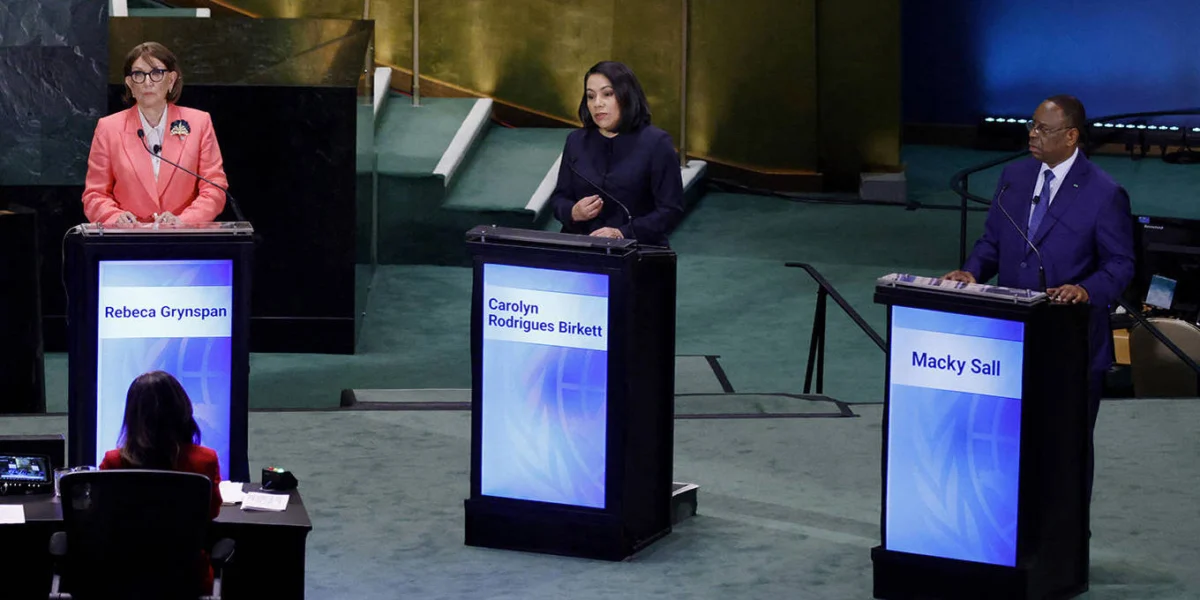
Effective multilateralism depends on institutions that are transparent, accountable, and able to enforce their own rules. The United Nations should lead by example, from how it selects its next secretary-general to how it plans to ensure that governments follow through on their climate commitments.
BERLIN – In January, a statement from then-President Donald Trump, suggesting that his newly established "Board of Peace" might eventually supersede the United Nations, reverberated through international diplomatic circles. While often characterized as characteristic hyperbole from the former US leader, the sentiment highlighted a palpable erosion of the UN’s standing and credibility on the global stage. This perceived decline, however, occurs at a moment when the world’s interconnected challenges, from the existential threat of climate change to the persistent specter of global pandemics and escalating geopolitical tensions, render an effective international body more critical than ever. The fundamental question facing the international community is not whether such an institution is needed, but rather how to salvage and reform the existing framework of the United Nations to meet the demands of the 21st century.
The Shifting Sands of Global Governance
The United Nations, established in the aftermath of World War II with the ambitious goal of preventing future global conflicts and fostering international cooperation, has navigated a complex and often tumultuous history. Its foundational principles, enshrined in the UN Charter, emphasize the sovereign equality of states, the peaceful settlement of disputes, and the promotion of human rights and economic and social progress. For decades, the UN has served as a vital forum for diplomacy, a platform for humanitarian aid, and a crucial coordinator of global efforts on issues ranging from peacekeeping to public health.
However, the geopolitical landscape has evolved dramatically since 1945. The rise of new global powers, the proliferation of non-state actors, and the increasingly transnational nature of contemporary challenges have strained the UN’s existing structures, many of which reflect the power dynamics of the mid-20th century. The Security Council, with its five permanent members holding veto power, has frequently been paralyzed by geopolitical rivalries, preventing decisive action on critical issues. This has led to accusations of impotence and a growing sense of frustration among member states who feel their voices are not adequately heard or their concerns addressed.
The Trump Administration’s Stance and its Implications
The Trump administration’s approach to international institutions, including the UN, was marked by a distinct skepticism towards multilateral agreements and a preference for bilateral dealings. The suggestion of a "Board of Peace" replacing the UN was not an isolated incident but rather indicative of a broader trend of questioning the efficacy and relevance of established international bodies. This stance, coupled with the US withdrawal from key international agreements and organizations during his tenure, amplified existing concerns about the future of global cooperation.
While the Biden administration has signaled a renewed commitment to multilateralism, the legacy of the Trump era has left a lasting imprint. Trust in established institutions has been tested, and the demands for greater transparency, accountability, and effectiveness have only intensified. The UN’s ability to secure the buy-in and active participation of all major powers remains a perennial challenge, and any perceived wavering from influential member states can have significant ripple effects.
The Paramountcy of Climate Action
Nowhere is the need for effective multilateralism more apparent than in the fight against climate change. The scientific consensus is unequivocal: the planet is warming at an alarming rate, driven by human activities, with devastating consequences for ecosystems, economies, and human lives. The Paris Agreement, a landmark accord aimed at limiting global warming to well below 2, preferably to 1.5 degrees Celsius, compared to pre-industrial levels, represents a crucial multilateral effort. However, the agreement’s success hinges on the unwavering commitment and concrete actions of its signatories.
Data from the Intergovernmental Panel on Climate Change (IPCC) consistently paints a stark picture. The past decade (2011-2020) was the warmest on record, with global average temperatures already exceeding pre-industrial levels by approximately 1.2 degrees Celsius. Extreme weather events, such as heatwaves, droughts, floods, and wildfires, are becoming more frequent and intense, causing immense human suffering and economic losses. Projections indicate that without significant and immediate emissions reductions, global warming could reach 2.7 degrees Celsius or higher by the end of the century, leading to irreversible environmental damage.
The UN Framework Convention on Climate Change (UNFCCC) process, including the annual Conference of the Parties (COP) meetings, serves as the primary global forum for negotiating and implementing climate action. However, progress has often been incremental, hampered by disagreements over burden-sharing, financial commitments, and the pace of transition to renewable energy. The UN’s role in ensuring that governments translate their pledges into tangible policies and measurable emissions reductions is therefore paramount. This includes robust monitoring, reporting, and verification mechanisms, as well as avenues for holding nations accountable for their commitments.
Reforming the UN: Key Areas for Action
The challenges facing the UN are multifaceted, requiring a comprehensive and forward-looking approach to reform. Several key areas demand immediate attention:
Security Council Reform
The composition and decision-making processes of the Security Council are widely seen as outdated and unrepresentative of the current global power balance. Calls for expanding permanent membership to include emerging powers from Africa, Asia, and Latin America, as well as reforming or limiting the veto power of the permanent five, have been persistent for years. Such reforms, while politically contentious, are crucial for enhancing the Council’s legitimacy and effectiveness in addressing contemporary security threats.
Strengthening Enforcement Mechanisms
A significant weakness of international law and multilateral agreements is the limited capacity for enforcement. While the UN can pass resolutions and issue sanctions, their effectiveness often depends on the political will of member states. Developing stronger, more independent enforcement mechanisms, particularly in areas like climate change and arms control, would bolster the UN’s authority and ensure greater compliance with international norms and commitments. This could involve exploring innovative approaches to dispute resolution and accountability.
Enhancing Transparency and Accountability
For the UN to regain and maintain public trust, its operations must be characterized by greater transparency and accountability. This extends to all levels of the organization, from the selection of its top leadership to the allocation of resources and the implementation of programs. Open access to information, independent oversight mechanisms, and robust anti-corruption measures are essential. The process for selecting the UN Secretary-General, currently a behind-the-scenes affair, could benefit from greater public scrutiny and a more meritocratic approach.
Adapting to New Global Threats
The nature of global challenges has evolved. The UN needs to be more agile and responsive to emerging threats such as cyber warfare, the weaponization of artificial intelligence, and the increasing risk of future pandemics. This requires investing in specialized agencies, fostering interdisciplinary collaboration, and developing proactive strategies for risk assessment and mitigation. The lessons learned from the COVID-19 pandemic, for instance, underscore the need for a strengthened World Health Organization (WHO) with greater authority and resources to coordinate global health responses.
The Path Forward: A Collective Responsibility
The notion that a single nation could unilaterally replace the United Nations, or that individual countries can effectively tackle global challenges in isolation, is a dangerous illusion. The interconnectedness of our world demands collective action. The UN, despite its flaws, remains the most comprehensive and legitimate platform for such action.
The path to reform will undoubtedly be arduous, fraught with political obstacles and competing national interests. However, the consequences of inaction are far more dire. The international community stands at a critical juncture. The choices made today regarding the future of multilateralism will shape the trajectory of global peace, security, and prosperity for generations to come. The United Nations must not only acknowledge its current challenges but actively embrace a vision of reform that prioritizes transparency, accountability, and effective action, thereby reaffirming its indispensable role in navigating the complex realities of the 21st century. The commitment of all member states, particularly the most influential, to this reform process is not merely desirable; it is an urgent necessity for the survival and well-being of our planet.
