

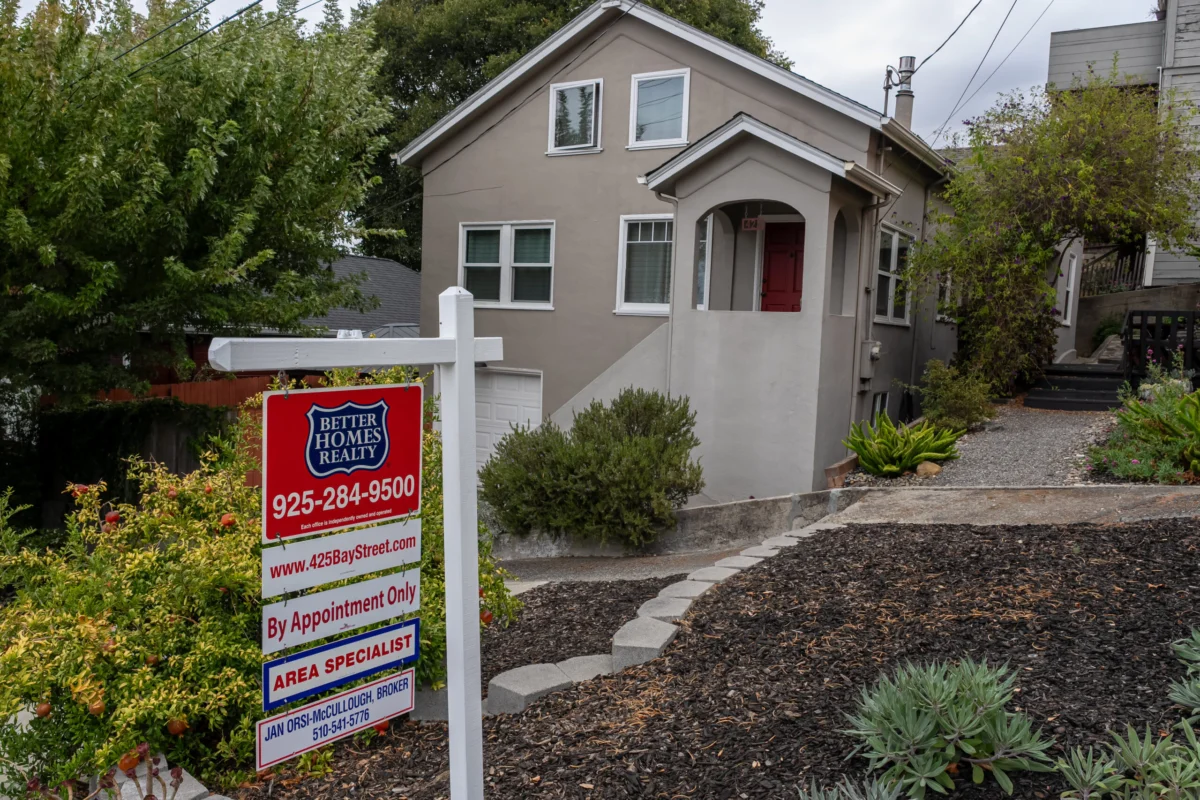
The residential real estate market is grappling with a significant downturn in activity, as rapidly escalating interest rates continue to erode affordability and dampen enthusiasm among both prospective homebuyers and existing homeowners. Data released by the Mortgage Bankers Association (MBA) reveals a substantial 4.1% drop in total mortgage application volume last week compared with the preceding period, a decline that notably includes a separate adjustment to account for the Labor Day holiday. This contraction underscores a growing apprehension within the market, driven by economic headwinds and a hawkish monetary policy stance.
Escalating Mortgage Rates and Their Immediate Impact
The primary catalyst for this precipitous decline is the relentless upward trajectory of mortgage interest rates. The average contract interest rate for a 30-year fixed-rate mortgage with conforming loan balances—those at or below $832,750—rose significantly to 6.97% from 6.85% percent. Accompanying this increase, points, including the origination fee, also climbed to 0.72 from 0.67 for loans requiring a 20% down payment. While this figure represents the weekly average compiled by the MBA, market conditions intensified rapidly. By last Thursday, a separate survey from Mortgage News Daily indicated that rates had already surged past the 7% threshold, signaling a quickening pace of rate escalation.
Joel Kan, Vice President and Deputy Chief Economist at the MBA, attributed the rising costs to a confluence of macroeconomic factors. "Ongoing market concerns over spiking energy prices, persistently high inflation, and future monetary policy pushed bond yields and mortgage rates higher last week," Kan explained. These interconnected issues create a challenging environment for the housing sector, directly impacting the financial calculations of millions of Americans.
The Federal Reserve’s Battle Against Inflation: A Key Driver
To fully comprehend the current state of mortgage rates, it is crucial to examine the Federal Reserve’s aggressive monetary policy. Since early 2022, the U.S. central bank has embarked on a series of unprecedented interest rate hikes, moving the federal funds rate from near-zero levels to its current elevated range. This proactive stance is a direct response to inflation reaching multi-decade highs, fueled by a combination of supply chain disruptions, robust consumer demand, and geopolitical events. The Fed’s primary objective is to cool down the economy by making borrowing more expensive, thereby reducing demand and bringing inflation back down to its target of 2%.
Mortgage rates, while not directly set by the Fed, are heavily influenced by the federal funds rate and the broader bond market, particularly the yield on the 10-year Treasury note. As the Fed signals continued tightening, bond yields react, and mortgage lenders adjust their rates accordingly. Each hike in the federal funds rate sends ripples through the financial system, pushing up the cost of borrowing for everything from credit cards to car loans, and most significantly, home mortgages. This ongoing battle against inflation remains the single most dominant factor shaping the current and future landscape of real estate finance.
A Chronology of Rate Hikes and Market Volatility
The journey to current mortgage rates has been a swift and often volatile one. Just two years ago, in late 2022, the average 30-year fixed mortgage rate hovered around 3-4%, a historic low that fueled an unprecedented housing boom. The first significant shifts began in early 2023, as the Federal Reserve initiated its tightening cycle. Rates steadily climbed throughout that year, breaching the 5% mark by mid-year and the 6% mark by late 2023. The turn of the current year (2024) saw continued upward pressure, with rates oscillating but generally trending higher.
The most recent surge has been particularly acute. "Over the past six business days, the average is up 0.33%, which is the most abrupt jump since October 2023," observed Matthew Graham, chief operating officer at Mortgage News Daily. This rapid acceleration highlights the market’s sensitivity to incoming economic data and shifts in monetary policy expectations. For instance, strong employment reports or higher-than-expected inflation figures can quickly push bond yields higher, causing mortgage rates to spike. The implications of recent economic data, coupled with the volatility in oil prices, are significant, as they directly feed into the Fed’s policy decisions and, by extension, mortgage rates. This week alone, the average rate on the 30-year fixed hit 7.22% on Tuesday, according to Mortgage News Daily, just ahead of the Federal Reserve’s anticipated meeting on Wednesday, where markets will keenly await further signals on the path of interest rates. This latest figure represents nearly a full percentage point increase compared to just one year ago.
The Demise of the Refinance Market
The sector most acutely sensitive to weekly rate fluctuations, and therefore the hardest hit, is the mortgage refinance market. Applications to refinance a home loan plummeted by 9% for the week, and perhaps more tellingly, stood a staggering 65% lower than during the same week one year ago. This dramatic year-over-year decline illustrates the complete evaporation of the refinancing boom that characterized the low-rate environment of 2020-2022. During that period, homeowners eagerly locked in historically low rates, often shaving hundreds of dollars off their monthly payments.
A year ago, the interest rate on the 30-year fixed mortgage was approximately 58 basis points, or more than half a percentage point, lower than current levels. This seemingly modest difference translates into significant financial implications for borrowers. As Joel Kan noted, "The current level of rates eliminated much of the benefit to refinance for many borrowers, resulting in declines in conventional, FHA, and VA refinance applications." Homeowners who secured rates below 4% or even 5% in previous years now find no financial incentive to refinance into a market where rates are above 7%. This has led to a dramatic reduction in business for mortgage lenders, many of whom had expanded operations significantly during the refinancing frenzy. The shift forces lenders to pivot their strategies, focusing more intensely on the purchase market, which itself is facing considerable headwinds.
Challenges for Homebuyers and a Stagnating Purchase Market
The purchase market, while not experiencing as sharp a weekly drop as refinancing, is nevertheless showing clear signs of strain. Applications for a mortgage to purchase a home declined by 1% for the week and were 19% lower than the same week one year ago. This sustained decline highlights the severe affordability crisis facing potential buyers. Despite rising interest rates, home prices in many regions of the country have remained stubbornly high, creating a formidable barrier to entry, especially for first-time homebuyers.
The supply of homes for sale has shown some signs of improvement in various parts of the country. However, much of this incremental supply is concentrated at the higher end of the market, offering little relief to average homebuyers seeking more affordable options. Furthermore, a phenomenon dubbed the "lock-in effect" is exacerbating the supply shortage. Many existing homeowners, having secured historically low mortgage rates (often below 4%), are reluctant to sell their current homes. Moving would mean trading their favorable rate for a significantly higher one, resulting in a substantial increase in their monthly housing costs, even if they purchase a similarly priced home. This reluctance to sell keeps a significant portion of potential inventory off the market, further constraining choices for aspiring buyers. This combination of high prices, high rates, and limited desirable inventory creates a formidable trifecta of challenges for anyone looking to enter or move within the housing market.
Broader Economic Context and Future Outlook
The current housing market dynamics are inextricably linked to broader economic trends. Persistently high inflation, driven in part by spiking energy prices and robust wage growth, continues to be a central concern for policymakers. Geopolitical tensions, particularly those impacting global energy markets, further complicate the inflation outlook, adding another layer of uncertainty. The Federal Reserve’s path forward remains contingent on incoming economic data, but the general consensus points towards a sustained period of higher rates until inflation is demonstrably brought under control.
This environment of elevated interest rates and economic uncertainty has significant implications beyond the housing market. A slowdown in real estate activity can ripple through various sectors, including construction, home furnishing, and related services, potentially contributing to a broader economic deceleration. Consumer confidence, a crucial determinant of spending and investment, is also likely to be impacted by rising housing costs and the general economic outlook. While some economists predict a "soft landing" where inflation cools without a significant recession, others warn of increasing risks of an economic downturn as the cumulative effect of rate hikes takes hold.
Expert Commentary and Industry Reactions
Beyond the MBA’s Joel Kan and Mortgage News Daily’s Matthew Graham, other industry experts echo similar sentiments. Analysts from the National Association of Realtors (NAR) have consistently highlighted the affordability crunch and its disproportionate impact on first-time buyers. Real estate agents across the country report longer listing times for homes, an increase in price reductions, and a noticeable drop in open house attendance, indicating a significant shift from the frenzied seller’s market of previous years. Mortgage lenders are adapting to the dramatically reduced volume, streamlining operations and focusing on maintaining market share in a more competitive environment. The prevailing mood among market participants is one of cautious observation, as everyone watches for signs of inflation moderation that could signal a potential pivot in the Fed’s policy.
Implications for the Housing Market and Beyond
The immediate implication of these trends is a continued cooling of the housing market. While widespread price crashes are not universally predicted due to persistent inventory challenges and strong underlying demand from demographic shifts, a period of price stabilization, or even modest declines in overvalued markets, is highly probable. The era of bidding wars and rapid appreciation has largely ended, replaced by a market that demands more patience and strategic negotiation from both buyers and sellers. For developers, higher borrowing costs will likely slow down new construction projects, further impacting future housing supply.
Looking ahead, the long-term outlook for interest rates will hinge on the Fed’s success in taming inflation. Should inflation prove more entrenched, rates could remain elevated for an extended period, fundamentally reshaping housing affordability for a generation. Conversely, a swift return to the Fed’s inflation target could pave the way for future rate cuts, though likely not to the historic lows seen during the pandemic. For those navigating this complex landscape, staying informed about market dynamics and expert analysis is paramount.
For new and evolving opportunities in the real estate sector, particularly for investors, CNBC’s Property Play with Diana Olick offers weekly insights delivered directly to your inbox. You can subscribe here to get access today.
