

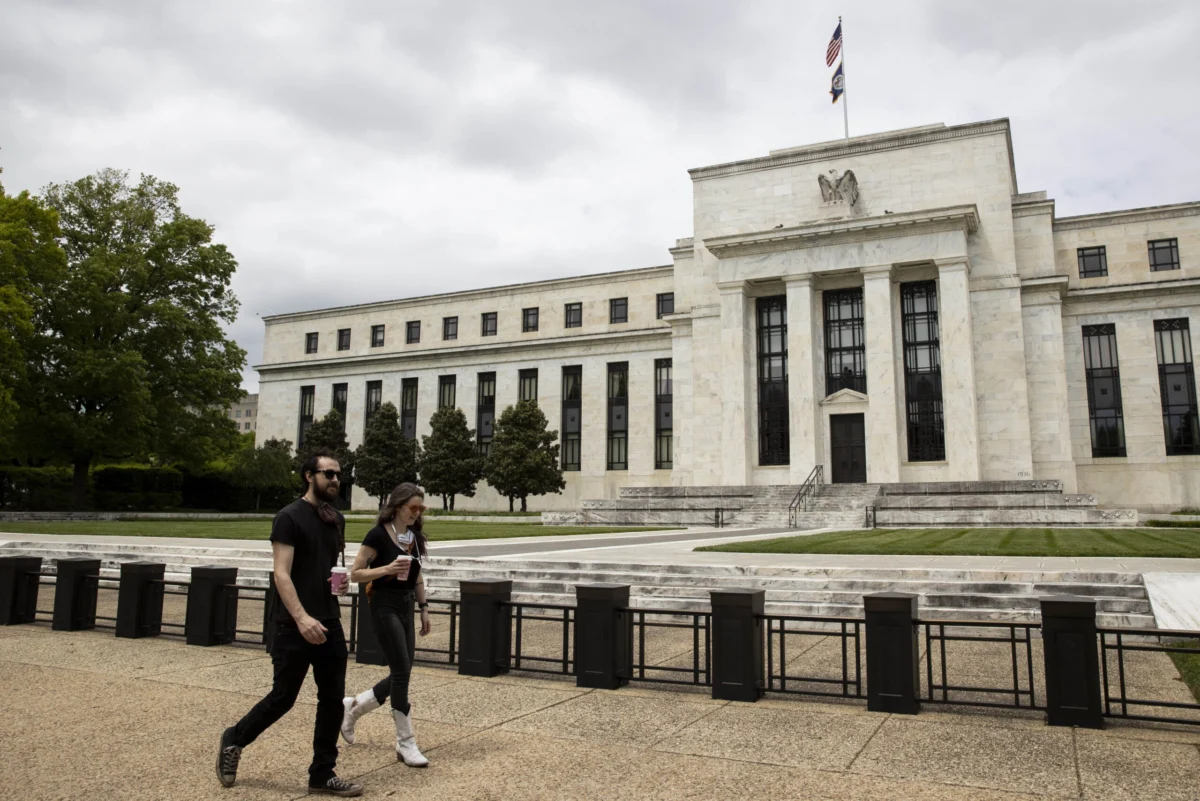
The Federal Reserve, at the conclusion of its September meeting, enacted a pivotal quarter-point increase to its benchmark interest rate, setting the new federal funds rate target range at 3.75% to 4.0%. This decision, the first such hike since July 2023, arrives amidst persistent inflationary pressures, notably a fresh rise in consumer prices in August 2026, and the compounding economic uncertainties stemming from the ongoing war with Iran. The move was made despite continued public pressure from President Donald Trump, who has consistently advocated for lower rates.
The Fed’s Mandate and the Persistent Battle Against Inflation
The Federal Reserve operates under a dual mandate from Congress: to achieve maximum employment and maintain price stability. For much of the period leading up to late 2023, the central bank had been grappling with inflation rates that significantly exceeded its long-term target of 2%. Following a period of aggressive monetary tightening that commenced in early 2022, the Fed had paused its rate hikes in July 2023, cautiously observing the lagged effects of its policy on the economy. This pause was a strategic attempt to avoid overtightening and triggering an unnecessary recession, balancing the need to cool the economy with the desire to preserve employment gains.
However, the latest Consumer Price Index (CPI) report for August 2026 revealed that inflation remained stubbornly high, with core inflation, which strips out volatile food and energy prices, also showing an upward trend. This renewed inflationary momentum, pushing the annual CPI rate to an estimated 5.8%, signaled to the Federal Open Market Committee (FOMC), chaired by Kevin Warsh, that the job of restoring price stability was far from complete. The committee’s consensus, as articulated in its post-meeting statement, underscored a commitment to achieving its inflation target, even if it meant risking a slowdown in economic growth. This resolve is crucial for maintaining the central bank’s credibility, a point emphasized by analysts like Richard Fisher of Jefferies, who noted that the Fed has "no choice" but to raise rates to uphold its mandate.
Geopolitical Headwinds: The War with Iran
Adding a complex layer to the economic landscape is the protracted conflict with Iran, which has significantly exacerbated global supply chain disruptions and driven up energy costs. The conflict, which escalated in early 2026, has impacted crude oil prices, pushing them to multi-year highs and filtering through to various sectors of the economy, from transportation to manufacturing. Defense spending has also surged, diverting resources and further straining government budgets, while increased geopolitical risk premiums have affected global financial markets. These external shocks make the Fed’s task of taming domestic inflation considerably more challenging, as some price pressures originate beyond the direct influence of monetary policy. The war introduces a layer of unpredictability that can quickly derail economic forecasts and complicate policy responses, compelling the Fed to act decisively to anchor inflation expectations.
Political Pressure and Central Bank Independence
The Fed’s decision to raise rates comes against a backdrop of vocal opposition from President Donald Trump. For months, President Trump has publicly criticized the central bank’s tight monetary policy, arguing that high interest rates put the U.S. at an economic disadvantage compared to other nations and impede domestic growth. His administration has repeatedly urged the Fed to lower rates, asserting that the economy could thrive even more robustly without the perceived drag of elevated borrowing costs. This dynamic highlights the delicate balance between political influence and the institutional independence of the Federal Reserve, which is designed to make policy decisions based solely on economic data and its dual mandate, free from short-term political considerations. The FOMC’s September hike, despite the White House’s objections, reaffirms its commitment to its independent role in guiding the nation’s monetary policy.
The Mechanics of the Hike: Federal Funds Rate and Prime Rate
The federal funds rate is the overnight interest rate at which commercial banks lend and borrow reserves from each other. While consumers do not directly borrow at this rate, changes in it ripple throughout the financial system, influencing a wide array of borrowing costs and savings returns. A quarter-point increase in the federal funds rate typically leads to a corresponding rise in the prime rate, which is the benchmark rate banks use for their most creditworthy customers. Historically, the prime rate tends to be approximately 3 percentage points higher than the upper bound of the federal funds rate target range. Thus, with the federal funds rate now at 3.75% to 4.0%, the prime rate is expected to immediately ascend to around 7.0% to 7.25%, making various forms of consumer credit more expensive.
Widespread Economic Ripple Effects
This latest rate hike is poised to exert significant influence across the U.S. economy. By making borrowing more expensive, the Fed aims to slow down overall demand, thereby easing inflationary pressures. The immediate effect will be felt by individuals and businesses that rely on variable-rate loans or are seeking new credit. Wealthier and generally older households are often better positioned to navigate higher rates, as they typically have lower debt burdens and benefit from increased returns on their savings. Conversely, households with tighter budgets, particularly those with significant variable-rate debt, will likely experience increased financial strain.
Mark Zandi, chief economist at Moody’s, elaborated on this disparity, stating, "Wealthier and generally older households will navigate higher rates better, as they are less likely to need to borrow and, if they have any debt, it is a low-rate mortgage loan they locked in during the pandemic. They are also more likely to have savings accounts that will earn higher rates." This underscores a growing divergence in financial experience based on wealth and debt profiles.
Impact on Households: A Detailed Breakdown

The Fed’s policy shift will manifest differently across various consumer financial products:
Credit Cards
Most credit cards feature variable interest rates directly tied to the prime rate. As the prime rate increases, credit card Annual Percentage Rates (APRs) will follow suit, typically within one or two billing cycles. For instance, a quarter-point hike will translate to a 0.25% increase in a cardholder’s APR. While this might seem minor, amounting to an additional dollar or two on a typical monthly bill for an average balance, the cumulative effect can be substantial. According to a recent analysis by WalletHub, this 25-basis-point increase is projected to cost U.S. credit card users an additional $2 billion in interest charges over the next 12 months. For consumers already struggling with high-interest debt, any increase, however small, can exacerbate financial difficulties. The average credit card balance in the U.S. currently hovers around $6,500, making these rate adjustments particularly impactful for a significant portion of the population.
Mortgages and Home Equity
The impact on home loans is nuanced. Fixed-rate mortgages (15-year and 30-year) are generally tied to the yield on the 10-year Treasury note and broader economic conditions, rather than directly to the federal funds rate. Therefore, existing fixed-rate homeowners will not see an immediate change in their monthly payments. However, the 10-year Treasury yield has been particularly sensitive to inflation expectations, and in the days leading up to the Fed’s decision, it briefly surpassed 5% on Tuesday, marking its highest level in 19 years. This surge signals that new fixed-rate mortgages are likely to tick higher as well.
Michele Raneri, vice president and head of U.S. research and consulting at TransUnion, illustrated the potential impact: "For perspective, a borrower financing the average new mortgage amount of $389,367 at an average APR of 6.78% could see monthly payments increase by approximately $65 if mortgage rates were to move one quarter point higher." This underscores the escalating cost of homeownership for new buyers.
In contrast, adjustable-rate mortgages (ARMs) and home equity lines of credit (HELOCs) are directly pegged to the prime rate. HELOCs typically adjust immediately following a Fed rate change, while most ARMs adjust annually. Borrowers with these products will see their interest rates rise, leading to higher monthly payments.
Car Loans
Similar to fixed-rate mortgages, auto loan rates are locked in at the time of purchase. Existing car loans will not be affected by this rate hike. However, prospective car buyers will face higher financing costs for new loans. Joseph Yoon, consumer insights analyst at Edmunds, noted the compounding pressure: "The direct financial hit to an individual car buyer’s monthly budget won’t look massive on paper – a quarter-point bump translates to a few dollars more each month on a typical $40,000 loan. The real headache is the overall borrowing landscape, as this rate hike stacks on top of auto loan rates that are already near multi-year highs and new-vehicle transaction prices hovering around $50,000 on average." This environment makes vehicle acquisition increasingly challenging for consumers.
Student Loans
Federal student loan rates are fixed for the life of the loan and are set once a year based on the 10-year Treasury note auction. Therefore, most federal student loan borrowers will not be immediately affected by the Fed’s September decision. However, rates for new federal loans taken out for the 2026-27 academic year were already higher, based on the May 2026 10-year Treasury auction. Private student loans, on the other hand, often have variable rates tied to benchmarks such as the Libor, prime rate, or Treasury bill rates. Borrowers with these private variable-rate loans will likely see their interest payments rise, with the exact increase depending on the specific benchmark their loan is tied to.
Savings Rates
The silver lining in a rising rate environment is for savers. While the Fed does not directly control deposit rates, banks tend to pass on increases in the federal funds rate to their savings products, albeit often with a lag and not always in full. Interest rates on high-yield savings accounts, certificates of deposit (CDs), and money market accounts are expected to head higher. Matt Schulz, LendingTree’s chief consumer finance analyst, advised, "It’s a great time to shop for an online high-yield savings account, CD or money-market account. Returns aren’t at the record levels we saw a couple years ago, but they’re still strong by historical standards, and a rate hike means they’re only going to get better in the near future." This offers a welcome boost to individuals and households looking to grow their cash reserves.
Expert Commentary and Outlook
Economists largely anticipate that the Fed will remain steadfast in its inflation-fighting stance, even if it means tolerating a period of slower economic growth or increased unemployment. The consensus among many analysts is that the Fed prioritizes restoring price stability to prevent inflation from becoming entrenched, which could lead to more severe economic consequences in the long run. The current rate hike is seen as a necessary, albeit potentially painful, step to achieve this.
There is ongoing debate among experts regarding the likelihood of a "soft landing"—where inflation is brought under control without triggering a recession—versus a more significant economic downturn. The geopolitical complexities introduced by the Iran conflict further complicate this outlook, making it harder for the Fed to precisely calibrate its policy. The central bank will continue to closely monitor key economic indicators, including employment figures, retail sales, and further inflation reports, to inform its future policy decisions.
The Road Ahead: Future Policy and Economic Outlook
Looking forward, the Federal Reserve faces a challenging path. While the September hike signals a renewed commitment to combating inflation, the ultimate trajectory of interest rates will depend heavily on incoming economic data and the evolving geopolitical landscape. The FOMC’s next meetings will be closely watched for any indications of further tightening or a potential shift back to a holding pattern. The central bank’s communication will be critical in guiding market expectations and maintaining confidence.
The implications extend beyond U.S. borders. Higher interest rates in the United States typically strengthen the dollar, which can make U.S. exports more expensive and imports cheaper. This also puts pressure on countries with dollar-denominated debt, as it becomes more expensive to service their obligations. Global capital flows may shift towards the U.S. in pursuit of higher yields, potentially affecting liquidity and investment in emerging markets.
Ultimately, the Federal Reserve’s September rate hike underscores its unwavering commitment to its price stability mandate. While it will undoubtedly impose additional financial burdens on many borrowers, it is a calculated move aimed at reining in inflation and securing the long-term health of the U.S. economy amidst a complex interplay of domestic economic forces and international geopolitical challenges.
