

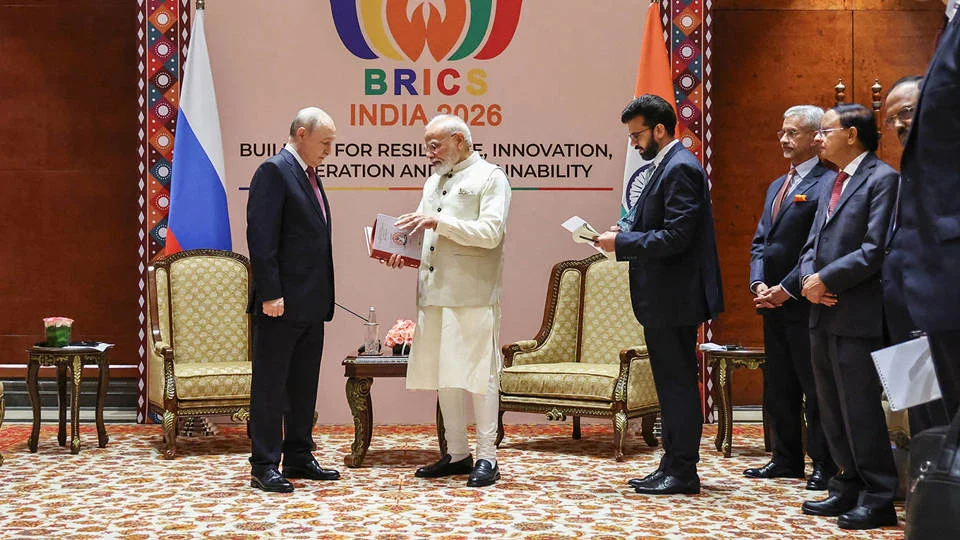
The ongoing conflict in Ukraine has dramatically reshaped the global geopolitical order, most notably transforming Russia from a key strategic partner for many nations into a junior partner of China. This seismic shift, driven by Russia’s international isolation and its increasing reliance on Beijing, serves China’s immediate economic and strategic interests. However, it simultaneously creates significant and complex challenges for India, a nation that has historically leveraged its relationship with Russia as a crucial counterweight to growing Chinese influence in the Indo-Pacific region.
While New Delhi and Beijing outwardly appear to adopt similar stances on the Ukraine war – maintaining ties with Moscow, continuing to purchase Russian energy, and eschewing Western sanctions – a deeper analysis reveals a fundamental divergence in their underlying objectives. India’s primary interest lies in the swift de-escalation and resolution of the conflict, seeking a return to stability that would alleviate global economic pressures and restore its strategic autonomy. Conversely, China appears to derive considerable benefit from the protracted nature of the war, viewing it as an opportunity to further its own geopolitical ambitions at a relatively low cost. This disparity in their immediate goals is not rooted in their respective sentiments towards Russia, but rather in their increasingly complex and often competitive bilateral relationship.
The Genesis of a New Power Dynamic
The Russian invasion of Ukraine, launched in February 2022, marked a pivotal moment in international relations. The ensuing Western sanctions, unprecedented in their scope and severity, aimed to cripple the Russian economy and isolate it on the global stage. For Moscow, this necessitated a pivot eastward, seeking to shore up economic ties and secure diplomatic support from its largest neighbor, China.
Historically, Russia and India have shared a robust and multifaceted strategic partnership, dating back to the Cold War era. This relationship was built on shared geopolitical interests, significant defense trade, and a mutual understanding of the need to counterbalance the rising power of China. India relied on Russia for a substantial portion of its military hardware and for its consistent support in international forums, including the United Nations Security Council. This partnership allowed India to maintain a degree of strategic flexibility and to pursue its own regional security objectives without being solely beholden to either the West or China.
China’s Calculated Advantages
From Beijing’s perspective, Russia’s diminished global standing presents a unique set of opportunities. Economically, China has benefited from discounted Russian oil and gas, helping to fuel its industrial growth and mitigate the impact of global energy price volatility. This has allowed China to secure vital energy resources at favorable terms, further solidifying its economic dominance.
Strategically, China views Russia’s growing dependence as a means to consolidate its influence in Central Asia and to weaken any potential for unified opposition to its regional ambitions. With Russia preoccupied with the conflict in Ukraine and facing international pariah status, its ability to exert independent influence in regions traditionally contested by both Moscow and Beijing has been significantly curtailed. This vacuum has allowed China to step in, strengthening its Belt and Road Initiative projects and expanding its economic and political footprint. Furthermore, a weakened Russia, unable to offer robust support to China’s adversaries, inadvertently bolsters China’s position in its ongoing territorial disputes with neighbors, including India.
India’s Strategic Quandary
The ascendance of China as Russia’s dominant partner has placed India in a precarious geopolitical position. The traditional pillar of India’s foreign policy – its ability to balance powers – is now under severe strain. As Russia becomes increasingly reliant on China, its capacity and willingness to act as a counterweight to Beijing diminish. This means India can no longer count on Russian support to the same extent in its ongoing border tensions with China, particularly in the Himalayas.
Data from the Stockholm International Peace Research Institute (SIPRI) highlights the historical significance of Russia as India’s primary defense supplier. While India has diversified its defense procurement in recent years, Russia has consistently accounted for a significant percentage of its arms imports. The current geopolitical climate raises questions about the long-term reliability of these supplies, potentially impacting India’s military readiness and its ability to deter potential aggression.
The continued entanglement of Russia in the Ukraine war also has broader implications for India’s economic stability. Global supply chain disruptions, energy price hikes, and inflationary pressures, all exacerbated by the conflict, directly impact India’s economic growth and development. While India has managed to navigate these challenges through strategic energy procurement from Russia, the long-term sustainability of such policies in a rapidly evolving global order remains a subject of careful consideration.
A Chronology of Shifting Alliances
The seeds of this new power dynamic were sown long before the 2022 invasion, but the conflict acted as a powerful accelerant.
- Pre-2022: India and Russia maintained a robust strategic partnership, characterized by significant defense trade and mutual diplomatic support. China and Russia had also been deepening their ties, particularly in the economic sphere, driven by shared opposition to Western dominance.
- February 2022: Russia invades Ukraine. Western nations impose extensive sanctions on Russia.
- March 2022 onwards: India, alongside China, abstains from UN votes condemning the invasion, signaling a nuanced approach. India begins to significantly increase its purchases of discounted Russian oil.
- 2023-2024: Russia’s reliance on China becomes increasingly apparent. Reports emerge of increased Chinese investment in Russian energy infrastructure and joint military exercises. India continues to engage with both Russia and China, seeking to maintain its strategic autonomy while navigating the complex regional dynamics.
- September 2026 (Current Context): The war has now entered its fifth year. Russia’s economic and diplomatic isolation from the West is entrenched, solidifying its position as a junior partner to China. India faces heightened strategic uncertainty as its traditional balancing mechanism weakens.
Reactions and Analysis
The evolving relationship between Russia and China, and its implications for India, has drawn considerable commentary from international relations experts.
"India finds itself in a difficult spot," notes Dr. Anya Sharma, a geopolitical analyst at the Institute for Strategic Studies. "For decades, Russia served as a crucial counterweight to China. Now, with Russia increasingly beholden to Beijing, India has lost a key element of its strategic toolkit. This necessitates a fundamental rethinking of its foreign policy and defense strategies."
Conversely, Professor Li Wei, a sinologist at Peking University, suggests that China views this development as a natural progression of global power shifts. "The world is moving towards a multipolar order," he states. "China’s growing influence is inevitable, and its partnership with Russia is a reflection of this new reality. India’s concerns are understandable, but they must adapt to the evolving global landscape."
Official responses from the respective governments remain carefully calibrated. India has consistently emphasized its commitment to multilateralism and its desire for a peaceful resolution to the Ukraine conflict, while reaffirming its historical ties with Russia. China, while professing neutrality, has largely aligned its rhetoric with Moscow’s, criticizing Western sanctions and advocating for dialogue without endorsing specific peace proposals that would require Russian concessions.
Broader Impact and Implications
The implications of Russia’s diminished status and China’s enhanced role are far-reaching, extending beyond the immediate Indo-Pacific theater.
- Weakening of Multilateral Institutions: The growing Sino-Russian alignment, coupled with their challenges to the Western-led international order, puts further strain on global institutions like the United Nations. Russia’s continued presence on the UN Security Council, despite its actions in Ukraine, highlights the limitations of these bodies in addressing major international crises.
- Increased Regional Tensions: The weakening of Russia’s ability to act as a regional stabilizer could embolden certain actors and exacerbate existing territorial disputes, particularly in Central Asia and along China’s periphery. India’s own border disputes with China could see increased pressure without the traditional Russian diplomatic buffer.
- Global Economic Repercussions: The ongoing war and the shifting alliances continue to disrupt global supply chains, contribute to energy price volatility, and fuel inflation. This has a disproportionate impact on developing economies, including India, which are more vulnerable to external economic shocks.
- Arms Race and Military Modernization: The perceived shift in the balance of power may prompt nations, including India, to accelerate their military modernization programs and seek new defense partnerships, potentially leading to an intensified arms race in the region.
In conclusion, the Ukraine war has irrevocably altered the geopolitical chessboard. Russia’s transformation into a junior partner of China, while beneficial for Beijing in the short to medium term, has created a complex strategic dilemma for India. New Delhi must now navigate a landscape where its traditional balancing mechanism has been significantly weakened, forcing a recalibration of its foreign policy and defense strategies to safeguard its national interests in an increasingly uncertain global environment. The long-term consequences of this new power dynamic will continue to unfold, shaping regional stability and global security for years to come.
