

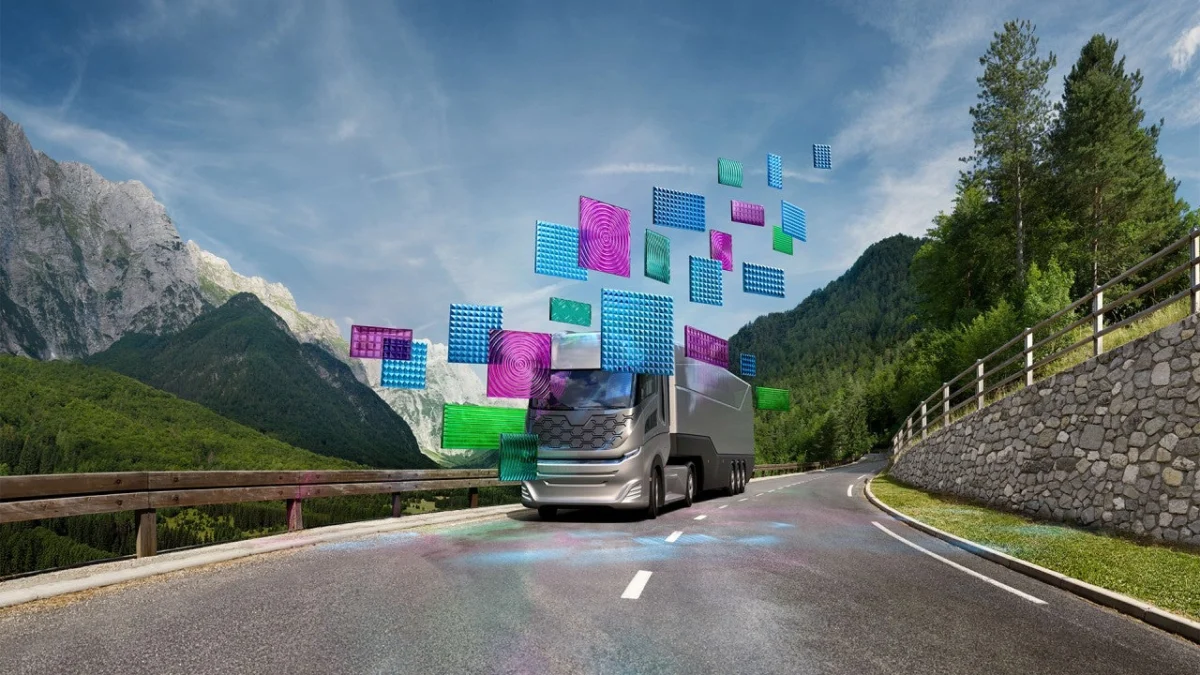
Stuttgart, Germany – In a significant declaration from the IAA Transportation Show in Hannover, Robert Bosch GmbH, a global leader in technology and services, unveiled an ambitious strategic blueprint aimed at substantially expanding its footprint in the high-performance powertrains and advanced software solutions market for heavy-duty commercial vehicles. The company, through its Mobility business sector, is actively pursuing aggressive growth targets, with an explicit goal to double its sales in this pivotal segment to over €8 billion by the mid-2030s, building on its current annual revenue exceeding €4 billion. This forward-looking strategy, articulated by Dr. Markus Heyn, deputy chairman of the Bosch board of management and chairman of the Mobility business sector, underscores Bosch’s profound commitment to shaping the future of freight transport through electrification, automation, and digital innovation.
A Strategic Pivot Towards Future Mobility
The announcement, made on September 15, 2026, highlights Bosch’s proactive response to the profound transformation sweeping the automotive industry, particularly within the commercial vehicle sector. This transformation is characterized by an accelerating shift towards electric propulsion, increasingly sophisticated software-defined vehicle architectures, and the burgeoning promise of automated driving. Bosch’s strategy is meticulously designed to capitalize on these megatrends, positioning the company as an indispensable partner for commercial vehicle manufacturers and fleet operators globally.
A cornerstone of this strategy is Bosch’s reinforced leadership in electric powertrains. The company proudly announced a major new order from long-time global commercial vehicle manufacturing partner, Daimler Truck. This significant agreement pertains to the supply of electric powertrain components for the highly anticipated eActros electric truck, a testament to Bosch’s advanced technological capabilities and its robust manufacturing infrastructure within Europe. This collaboration not only secures a long-term partnership but also solidifies Bosch’s position as a preferred supplier for next-generation electric trucks. The company’s immediate impact is already evident: by 2026, an impressive one in three newly registered electric trucks in Europe is projected to be powered by an electric motor and inverter supplied by Bosch, signaling a rapid market penetration and a strong vote of confidence from the industry.
Beyond hardware, Bosch is making significant strides in intelligent sensor technology and software development. These innovations are crucial enablers for automated driving functionalities and are designed to significantly reduce the total cost of ownership (TCO) for fleet operators. By integrating advanced software solutions, artificial intelligence, and cloud-based services, Bosch aims to make the operation of commercial vehicles not only safer and more efficient but also economically more viable in the long run.
Unpacking Bosch’s Growth Trajectory and Market Outlook
Bosch’s optimism is rooted in a comprehensive analysis of the global commercial vehicle market. While the broader global vehicle production is anticipated to experience an overall downward trend in 2026, the heavy-duty commercial vehicle segment (defined as vehicles weighing over six metric tons) stands out for its remarkable resilience. This segment is defying prevailing market headwinds, driven by sustained demand for logistics services, expanding e-commerce, and the ongoing need for infrastructure development worldwide.
Following a robust first half of the year, Bosch projects a moderate growth of approximately 1 percent in global truck production for 2026, reaching an estimated 3.3 million units. Looking further ahead, the company forecasts an increase to 4 million units by the mid-2030s. This optimistic market outlook, coupled with the anticipated accelerated uptake of corresponding technologies like electric powertrains and automated driving systems, provides the bedrock for Bosch’s ambitious goal of doubling its heavy-duty commercial vehicle technology sales by 2035. This implies a strategic expansion of its current market share and a deepening of its technological leadership across various product categories.
Despite the current challenging and demanding market environment, Bosch’s Mobility business sector is poised to maintain its 2026 revenue level, assuming a solid final quarter. This stability, in the face of broader economic uncertainties, underscores the strategic importance and inherent strength of its diversified portfolio and its focused investments in future-proof technologies.
The Imperative of Electrification and Software-Defined Vehicles
The commercial vehicle industry is at an inflection point, driven by a confluence of regulatory, environmental, and economic pressures. Globally, stringent emissions standards, such as Europe’s Euro VII, California’s Advanced Clean Trucks (ACT) rule, and various EPA regulations, are mandating a rapid transition away from traditional internal combustion engines (ICE) towards zero-emission powertrains. These regulatory frameworks provide a powerful impetus for manufacturers to invest heavily in battery-electric and, eventually, hydrogen fuel cell technologies. Bosch’s commitment to electric powertrains directly addresses these mandates, offering manufacturers proven, high-performance solutions that meet compliance requirements while also delivering operational advantages.
Beyond regulation, sustainability goals are increasingly influencing corporate purchasing decisions. Fleet operators are under pressure from consumers, investors, and their own corporate social responsibility initiatives to decarbonize their logistics operations. Electric trucks, powered by renewable energy, offer a compelling pathway to significantly reduce carbon footprints. Bosch’s role as a key enabler of electric mobility directly supports these sustainability objectives.
Moreover, the paradigm shift towards software-defined vehicles is fundamentally altering how commercial vehicles are designed, operated, and maintained. This evolution moves beyond mere hardware components, placing intelligence, connectivity, and adaptability at the core of vehicle functionality. Bosch’s comprehensive portfolio, encompassing hardware, intricate software, advanced artificial intelligence (AI), and secure cloud-based services, positions it uniquely to address this shift. These integrated solutions enable predictive maintenance, optimize routing and fuel consumption, enhance safety features, and facilitate over-the-air updates, all contributing to a lower TCO and improved operational efficiency for fleet managers. For instance, advanced telematics integrated with Bosch’s software can monitor battery health in real-time, predict maintenance needs, and optimize charging schedules, thereby maximizing vehicle uptime and extending asset life.
Key Partnerships and Technological Innovations
The collaboration with Daimler Truck on the eActros electric truck exemplifies Bosch’s strategy of forging deep, long-term partnerships with industry leaders. The eActros, representing Daimler Truck’s flagship electric heavy-duty vehicle, requires highly reliable and efficient powertrain components. Bosch’s electric motors and inverters, renowned for their robustness and performance in demanding commercial applications, are critical to the eActros’s success. This partnership is not merely transactional; it reflects a shared vision for sustainable and efficient freight transport and builds upon decades of collaborative innovation between the two German industrial giants.
Further demonstrating its global reach and strategic expansion, Bosch is establishing a new joint venture with Brakes India and Wheels India, two prominent subsidiaries of the TSF Group based in India. This joint venture is dedicated to the development and manufacturing of smart actuators, critical components for compressed air generation, compressed air treatment, air suspension systems, and advanced parking brakes. This strategic move allows Bosch to tap into the rapidly growing Indian commercial vehicle market, leverage local manufacturing expertise, and offer tailored solutions that meet regional demands while benefiting from the TSF Group’s established presence and supply chain. The localization of such advanced components is crucial for cost-effectiveness and faster market response in a diverse global market. Smart actuators, for example, can contribute to more precise control over braking and suspension systems, enhancing both safety and driver comfort, while also being integrated into future autonomous driving systems.
The Evolving Landscape of Commercial Vehicle Manufacturing
Bosch’s strategic moves have broader implications for the entire commercial vehicle manufacturing ecosystem. The shift towards electrification and software-defined vehicles necessitates a fundamental rethinking of supply chains, manufacturing processes, and workforce skills. Traditional suppliers focused on ICE components face a significant challenge to adapt, while companies like Bosch, with their diversified R&D capabilities, are poised to capture new market segments. This transformation also fuels demand for new talent, particularly in software engineering, electrical engineering, and data science, reshaping the future of automotive employment.
The competitive landscape in commercial vehicle technology is dynamic, with established players, new tech companies, and even truck manufacturers developing their own in-house solutions. Bosch’s comprehensive portfolio, ranging from foundational hardware like electric motors to sophisticated AI-driven cloud services, provides a distinct competitive advantage. By offering integrated, end-to-end solutions, Bosch simplifies the complexity for manufacturers and operators, allowing them to focus on their core competencies. This integrated approach is particularly appealing as vehicles become increasingly complex and interconnected.
Driving Sustainability and Efficiency Through Innovation
Ultimately, Bosch’s intensified focus on heavy-duty commercial vehicle technology is a testament to its commitment to sustainability and efficiency. Electric trucks, especially when charged with renewable energy, offer a pathway to drastically reduce greenhouse gas emissions from the freight sector, a significant contributor to global climate change. By enabling more widespread adoption of electric trucks, Bosch is playing a crucial role in the global effort to decarbonize transport and achieve ambitious climate targets.
Economically, the reduction in Total Cost of Ownership (TCO) is a powerful driver for fleet adoption. Electric trucks, while often having a higher upfront cost, can offer significant savings over their lifecycle through lower fuel costs (electricity vs. diesel), reduced maintenance requirements (fewer moving parts), and potential government incentives. Bosch’s intelligent software and sensor technologies further enhance these savings by optimizing operational parameters, preventing costly breakdowns through predictive analytics, and improving fuel efficiency even in hybrid or conventional vehicles. For example, intelligent routing software can minimize mileage, while advanced driver assistance systems (ADAS) can prevent accidents, leading to lower insurance premiums and reduced downtime.
Bosch’s vision extends beyond individual components; it encompasses a holistic approach to logistics. By providing the technological backbone for safer, more economical, and increasingly automated heavy-duty vehicles, Bosch is not only securing its own growth but also contributing to a more efficient, sustainable, and resilient global supply chain. This long-term commitment solidifies Bosch’s position as a pivotal innovator in the evolving world of mobility, ready to meet the demands of tomorrow’s commercial transport.
