

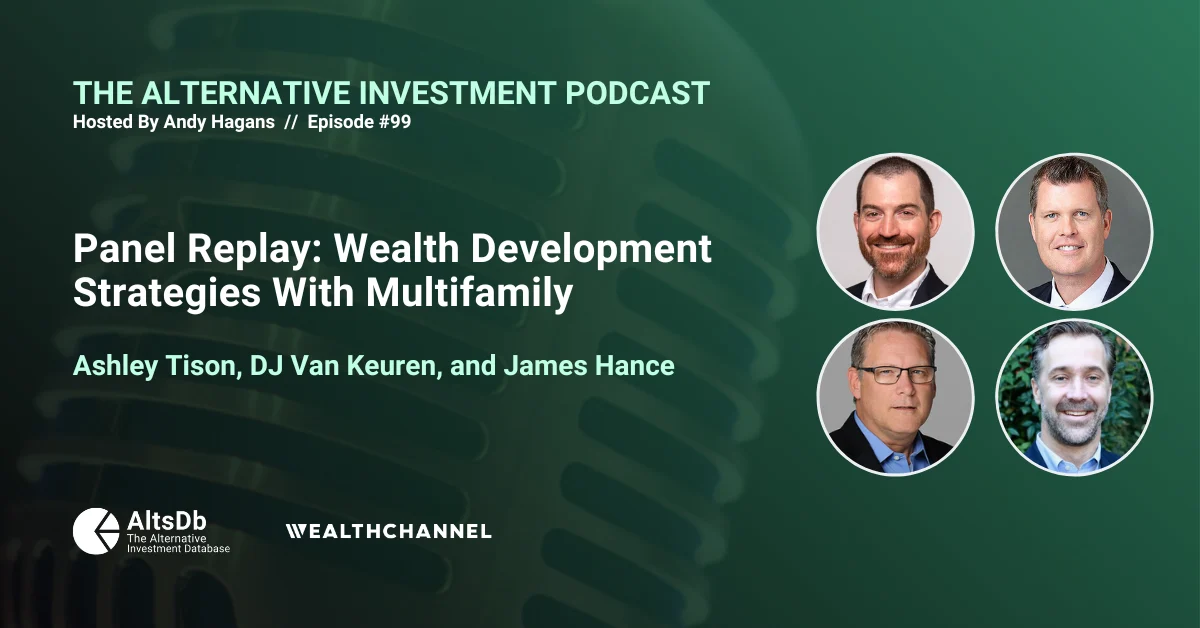
In a dynamic panel discussion at the Multifamily Investor Expo 2023, seasoned professionals convened to dissect the intricate strategies for wealth development through multifamily real estate. The session, moderated by Andy Hagans of AltsDb and WealthChannel, featured a distinguished lineup including Ashley Tison, founder and CEO of OZPros; DJ Van Keuren, co-managing member at Evergreen Property Partners and founder of the Family Office Real Estate Institute; and James Hance, founder of Green Bison Capital. These experts shared insights into why multifamily continues to be a cornerstone for building and preserving generational wealth, particularly in the evolving economic landscape of 2023.
The Enduring Appeal of Multifamily Real Estate
The core of the discussion revolved around the fundamental strengths of the multifamily sector. James Hance articulated the inherent value proposition, emphasizing that "people always need a place to live." This essential demand provides a foundational stability, differentiating multifamily from more volatile asset classes. Hance highlighted the advantage of multiple units, which mitigates risk compared to single-family investments, and the consistent cash flow potential. He also underscored the ability for investors to actively drive value through operational improvements, a concept known as "forced appreciation." From a tax perspective, Hance noted the significant benefits of direct real estate investment, particularly the ability to leverage depreciation to offset tax liabilities, framing it as a "deferred tax strategy."
DJ Van Keuren echoed these sentiments, drawing from his extensive experience with family offices, who consistently rank multifamily as their primary real estate investment. His research, conducted through the Family Office Real Estate Institute, indicates a sustained preference for this sector. Van Keuren pointed to the mitigating effect of numerous units on vacancy risk; a single tenant departure in a large apartment complex has a far less significant impact than in a commercial property. He also cited broader economic trends, such as the rising cost of homeownership and the ongoing student loan crisis, which are fueling demand for rental housing. As more individuals are priced out of the home-buying market, the need for accessible and affordable rental options, particularly in high-growth job markets, intensifies.
Ashley Tison added another layer to the multifamily appeal, framing it as an environmentally conscious investment. He argued that consolidating housing needs into multifamily developments reduces urban sprawl and necessitates less infrastructure compared to widespread single-family housing. This "green" aspect, he suggested, can be a powerful tool in navigating local zoning and development challenges, effectively using environmental benefits to counter NIMBYism. Tison also emphasized the scalability of multifamily investments, allowing for the efficient management of a large number of residents in a concentrated area, which translates to operational efficiencies and reduced per-unit management costs.
Navigating Tax Advantages and Investment Wrappers
A significant portion of the panel’s expertise was dedicated to exploring tax-advantaged strategies that enhance the attractiveness of multifamily investments. Ashley Tison elaborated on the power of Opportunity Zones (OZs), a program designed to spur economic development in distressed communities through tax incentives. He explained how OZs allow investors to defer capital gains taxes from prior investments, and with a 10-year hold, can eliminate capital gains taxes on the appreciation of the OZ investment itself. Furthermore, the program eliminates depreciation recapture taxes upon exit. Tison highlighted that layering OZ benefits with multifamily investments can potentially boost Internal Rate of Returns (IRRs) by around 3%, a substantial advantage when dealing with highly competitive deal metrics. He used the example of a deal with a 3% cap rate potentially yielding the equivalent returns of a 6% cap rate when OZ benefits are applied.
DJ Van Keuren identified the 1031 exchange as another crucial tax-saving mechanism. Despite its prevalence, he noted that a significant percentage of families do not utilize this strategy, often due to a lack of education. The 1031 exchange allows investors to defer capital gains taxes by reinvesting the proceeds from the sale of one investment property into a like-kind property. Van Keuren stressed its role in enabling wealth compounding over time, turning a 15% annual return into a much higher effective return through tax deferral. He also mentioned other, less commonly known tax credits such as Low-Income Housing Tax Credits (LIHTCs) and New Markets Tax Credits (NMTs), and even the potential for carbon credits in green real estate initiatives.
James Hance corroborated the widespread use of 1031 exchanges within his investor base, reporting that approximately 20% of capital raised by his group over the past two years originated from 1031 exchanges. He further explained that these exchanges can be effectively executed through syndications, allowing investors to transition from active property management to passive investing while deferring taxes and potentially achieving a step-up in basis. This offers a dual benefit of tax deferral and a more efficient use of their time and capital.
Ashley Tison offered a nuanced perspective on the 1031 exchange, particularly concerning estate tax implications. He cautioned that as lifetime estate tax exemptions are set to decrease, individuals with estates approaching the $10 million threshold should be mindful that the step-up in basis at death, a traditional benefit of 1031 exchanges, could result in taxable gains above that exemption amount. In contrast, he noted that Opportunity Zone investments can freeze the value of the contributed capital for estate tax purposes, offering a distinct advantage for ultra-high-net-worth individuals concerned about future estate taxes.
The 2023 Investment Climate: Opportunities Amidst Higher Interest Rates
A central question for investors in 2023 is whether the current environment of higher interest rates presents a compelling entry point or a reason for caution. James Hance acknowledged that the era of cap rate compression is over, emphasizing the need for investors to be "particularly astute" in their due diligence. He advised focusing on sponsors who are "rock solid from an operations standpoint, preferably vertically integrated, that they have a great track record, and that they’re well-capitalized." Hance indicated that the current market is ripe with opportunities, particularly distressed properties resulting from refinancing challenges and maturing debt. He anticipates these situations will become more prevalent throughout the year.

DJ Van Keuren observed that many family offices have been holding "dry powder," strategically waiting for market dislocations. Unlike previous downturns where investors entered late, families are now more proactive in seeking opportunities at what they perceive as a more advantageous point in the cycle. However, he stressed the importance of adhering to fundamental investment principles, such as evaluating cost of living, quality of life, and underlying demand in specific markets. Van Keuren predicted a "reckoning" for less competent operators, noting that those who thrived in the low-interest-rate environment of the past decade may struggle as negative leverage becomes a more significant concern. He advised investors to rigorously stress-test deals, considering scenarios with higher vacancy rates and increased interest expenses.
Ashley Tison, while inherently optimistic, acknowledged the need for pragmatism and robust deal analysis. He described the "OZ money" as being "in motion," creating a sense of urgency for investors to deploy capital before deadlines. This inherent time constraint, coupled with the potential for value-add opportunities within Opportunity Zones, often fuels a more bullish outlook among these investors. He highlighted that while projections are always optimistic, a thorough understanding of potential adverse scenarios is crucial.
Lessons from Family Offices for Individual Investors
DJ Van Keuren shared valuable insights gleaned from his work with family offices regarding wealth preservation and generational wealth transfer. He noted a common challenge where wealth created by patriarchs and matriarchs can be diminished by subsequent generations due to a lack of understanding and discipline. Van Keuren emphasized patience as a key virtue, advocating for a long-term perspective that aligns with the illiquid nature of real estate. He stressed the importance of finding trusted partners and sponsors with a proven track record, ideally having navigated multiple market cycles. Rigorous due diligence, including asking tough questions about potential downside scenarios, is paramount. Referrals and networking within the investment community, a practice deeply ingrained in family office operations, are also vital for identifying quality opportunities and reliable partners.
Ashley Tison further elaborated on the importance of intentionality in family wealth management. He advocated for the creation of a "family constitution" that outlines core values, mission statements, and guiding principles for wealth dispersal. This framework, he explained, can provide clarity for trustees and future generations, ensuring that wealth is managed and utilized in alignment with the family’s long-term vision. He highlighted that while business acumen is essential for wealth creation, a similar level of intentional planning and professional guidance is often required for wealth preservation and transfer.
Andy Hagans concluded by emphasizing the concept of humility for high-net-worth investors. He advised recognizing that expertise in one domain, such as business ownership or technology, does not automatically translate to expertise in real estate. The most successful individuals, he noted, understand the value of surrounding themselves with talented professionals—attorneys, financial advisors, and experienced real estate operators—who possess specialized knowledge. Partnering with sponsors who have a demonstrable track record, particularly through various market cycles, is a prudent strategy for safeguarding hard-earned capital.
Ground-Up vs. Value-Add: A Strategic Divide
In a rapid-fire question regarding the current environment, the panelists offered distinct perspectives on whether ground-up development or value-add strategies hold a better outlook. James Hance expressed a preference for value-add projects, citing a lower risk profile and a more manageable investment horizon compared to ground-up development, which he finds more challenging to underwrite in the current climate.
Ashley Tison, whose work often involves Opportunity Zones, leaned towards ground-up development. He explained that the "substantial improvement" threshold required by the OZ program often necessitates new construction rather than renovations, making ground-up projects a more frequent and necessary choice within his specialized area.
DJ Van Keuren offered a more nuanced view, stating that the optimal strategy depends heavily on the specific property type and market conditions. He noted that stalled development projects could present value-add opportunities, while emerging sectors like cold storage might require significant ground-up investment to meet demand. Ultimately, he emphasized that a thorough analysis of the return relative to the risk is crucial, regardless of the development approach.
The discussion underscored that while multifamily real estate remains a powerful engine for wealth creation, navigating the complexities of the current economic climate requires a blend of strategic foresight, meticulous due diligence, and a deep understanding of tax-advantaged investment vehicles. The insights shared at the Multifamily Investor Expo 2023 serve as a crucial roadmap for investors seeking to build and preserve sustainable, generational wealth.
