

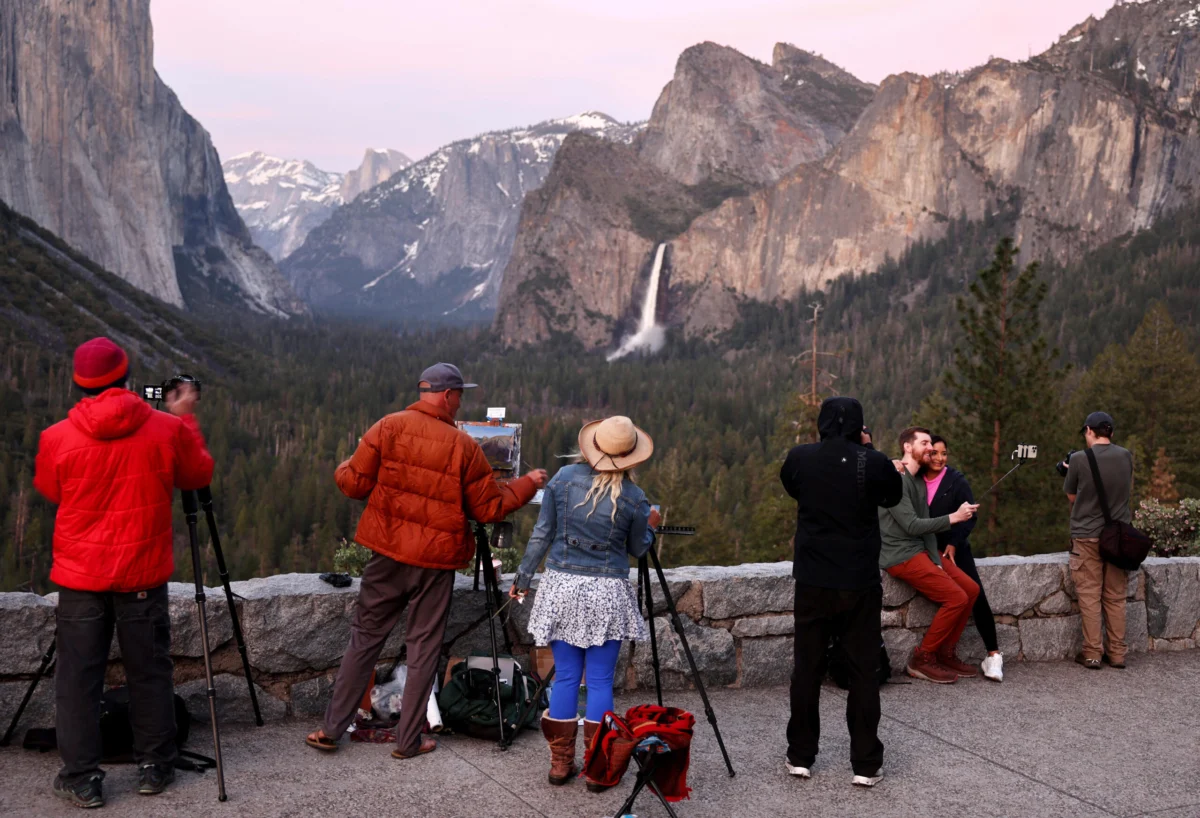
The Trump administration is actively considering a land exchange that could see a portion of Yosemite National Park, or an interest therein, transferred to a private developer seeking to construct a new access road. This proposal, confirmed by the Interior Department and the developer’s legal counsel, has ignited a fierce debate, drawing sharp criticism from conservation groups who warn against setting a dangerous precedent for America’s cherished national parks.
The National Park Service (NPS) has been engaged in discussions with Nevada-based Kingsbarn Realty Capital regarding a potential land swap. The core objective for Kingsbarn is to facilitate the construction of an access road, described as "under a mile" in length, to connect to an entrance of Yosemite National Park. Lanny Davis, an attorney representing Kingsbarn, affirmed these discussions in a public statement. Kingsbarn owns an 83-acre parcel, historically identified as Hazel Green Ranch, situated near Yosemite’s western boundary. As part of the proposed transaction, Kingsbarn would acquire land of equivalent value elsewhere in California and subsequently convey it to the National Park Service, according to documents initially obtained and reported by NOTUS.
A spokesperson for the Interior Department confirmed that no definitive decision has been reached regarding the proposal. The department emphasized that "Any land exchange or access proposal involving National Park Service lands would be subject to all applicable federal laws, regulations and Departmental policies, including required environmental review and public notification processes." They further assured that should the proposal advance, the department is committed to following "established procedures" to guarantee transparency and robust public involvement, consistent with federal law.
Yosemite National Park: A Jewel of Conservation
Yosemite National Park, established in 1890, stands as one of America’s most iconic and biologically diverse protected areas. Spanning over 750,000 acres across California’s Sierra Nevada mountains, it is renowned globally for its dramatic granite cliffs, including El Capitan and Half Dome, giant sequoia groves, expansive wilderness, and a rich array of flora and fauna. The park attracts over 4 million visitors annually, contributing significantly to the regional and state economy through tourism, generating hundreds of millions of dollars in visitor spending and supporting thousands of jobs. Its designation as a UNESCO World Heritage site underscores its universal natural value and the imperative for its protection.
The National Park Service, operating under its foundational mission, is charged with preserving unimpaired the natural and cultural resources and values of the National Park System for the enjoyment, education, and inspiration of this and future generations. This mission has historically informed a cautious approach to any actions that could alter park boundaries or facilitate private development within their sensitive ecosystems. The concept of "unimpaired" is central to the NPS mandate, suggesting a high bar for any proposal that might introduce new infrastructure or alter the natural character of park lands.
The Hazel Green Ranch Parcel and Historical Context
The 83-acre Hazel Green Ranch parcel, situated strategically near Yosemite’s western boundary, has a history marked by its private ownership within a region of significant public lands. Such "inholdings" – private lands surrounded or bordered by public lands – are not uncommon in the American West and often present complex management challenges for federal agencies. The existence of these private parcels can lead to disputes over access rights, resource use, and development potential, particularly when they are located adjacent to or within highly protected areas like national parks.
The property’s former owner previously pursued legal action in federal court, seeking easement rights over existing roads that lead toward Yosemite National Park. This legal battle culminated in a federal appeals court affirming the dismissal of those claims in 2012. This prior ruling is a critical piece of background, as it indicates a historical challenge in establishing direct access for private development to the park from this specific location and highlights the legal complexities involved in such endeavors. The current proposal by Kingsbarn Realty Capital represents a different approach – a land swap – but is still fundamentally aimed at securing access to the park’s entrance for private development purposes.
Proposed Land Swap Mechanics and Justification
The mechanics of the proposed land swap involve Kingsbarn Realty Capital purchasing land of "equal value" elsewhere in California. This acquired land would then be transferred to the National Park Service. Land exchanges are a recognized tool within the federal government for achieving various land management objectives, such as consolidating fragmented public land holdings, improving administrative efficiency, or acquiring lands with significant conservation value. They are typically governed by statutes such as the Federal Land Policy and Management Act (FLPMA) for Bureau of Land Management lands, and similar provisions within National Park Service regulations, all of which mandate that exchanges must be in the public interest and that lands exchanged must be of equal value. Determining "equal value" can be a contentious process, particularly when comparing developable private land to ecologically sensitive public land, or when considering the intrinsic, non-monetary value of national park acreage.
Kingsbarn’s attorney, Lanny Davis, has framed the proposal as environmentally beneficial, arguing that the shorter access route would lead to a reduction in driving distances and associated vehicle emissions. This perspective suggests an attempt to align the development goal with broader environmental sustainability objectives, potentially appealing to those concerned with climate change and air quality. However, this argument has been met with skepticism by conservation groups, who question whether the creation of a new road and the precedent of private development access outweigh potential ecological impacts and the long-term integrity of park lands.
Chronology of Events and Political Contributions
The timeline surrounding this proposal indicates a series of events leading to the current consideration:
- Pre-2012: Unspecified attempts by the former owner of Hazel Green Ranch to secure easement rights for access to Yosemite.
- 2012: A federal appeals court affirms the dismissal of claims by the property’s former owner regarding easement rights over roads leading to Yosemite. This established a legal precedent against unencumbered private access from this specific parcel.
- Undisclosed Period: Discussions commence between the National Park Service and Kingsbarn Realty Capital regarding a potential land swap. The exact start date of these discussions has not been publicly detailed.
- October 2024 – 2025: Jeff Pori, CEO of Kingsbarn Realty Capital, makes regular, mostly small-dollar donations to President Donald Trump’s campaign committee. NOTUS reported that Pori had no prior history of donating to national political campaigns before October 2024.
- April 27, 2023 (Date of image, context implies reporting later): NOTUS first reports on the Trump administration’s consideration of the land swap, bringing the discussions into public light.
- Subsequent Statements: The Interior Department and Kingsbarn’s attorney confirm the ongoing consideration and discussions.
While CNBC reported finding no evidence that Pori’s political contributions directly influenced the administration’s consideration of the proposal, the timing and nature of the donations have inevitably raised questions among critics. Such contributions, even if small-dollar, can foster perceptions of undue influence or quid pro quo, particularly when a donor’s business interests align with an administration’s policy decisions.
Strong Opposition from Conservation Groups
The proposal has provoked a strong and immediate backlash from leading environmental and conservation organizations.
The Sierra Club, a prominent environmental advocacy group, vehemently rebuked the plan, labeling it a "corrupt back-room deal." The organization argued that such a transaction would fundamentally breach a longstanding commitment to "protect Yosemite for the public good" by ceding national park land to a private developer. Their concern extends beyond this specific parcel, fearing that it could establish a dangerous precedent, making other national parks vulnerable to similar private development pressures. The Sierra Club emphasizes that national parks are held in public trust and should not be treated as commodities for private gain.
Similarly, the National Parks Conservation Association (NPCA) issued a powerful statement, asserting that the proposal "attempts to dismantle America’s conservation legacy." The NPCA described the initiative as "an attack on the American people that own this national park," highlighting the principle of public ownership of national park lands. The group also underscored the legal ramifications, stating, "It would also be unlawful, and a court previously rejected a road development proposal." This direct reference to the 2012 federal appeals court decision suggests that conservationists believe the legal hurdles for such access remain formidable, regardless of a land swap mechanism. The NPCA’s stance reflects a broader concern about the erosion of protections for national park boundaries and the potential for increased commercialization or privatization of these treasured public spaces.
Legal and Precedent-Setting Implications
The legal justification for exchanging National Park Service land for private development access remains a key point of contention and, as NOTUS reported, is currently unclear. While land exchanges are common elsewhere in the federal government, applying them to the core mission of national park preservation for the specific purpose of private development access is indeed unusual. The 2012 federal appeals court ruling that affirmed the dismissal of claims for easement rights over roads leading to Yosemite from the Hazel Green Ranch parcel adds a significant legal hurdle to any renewed attempts to secure access. While a land swap is a different legal mechanism than an easement claim, the underlying intent to facilitate private access to a park boundary remains, raising questions about whether the spirit of the previous legal decision would be undermined.
Any land exchange involving federal lands, especially those within the National Park System, would be subject to stringent environmental review processes under the National Environmental Policy Act (NEPA). NEPA requires federal agencies to assess the environmental effects of proposed actions before making decisions. This would involve a comprehensive analysis of potential impacts, including those on wildlife habitats, water quality, air quality, noise levels, and the overall visitor experience. Public comment periods are a mandatory component of the NEPA process, providing opportunities for citizens, organizations, and state and local governments to voice concerns and provide input. The Interior Department’s assurances of "transparency and public involvement" are directly tied to these NEPA requirements. However, critics argue that even with such reviews, the fundamental principle of protecting national park lands from development for private gain should preclude such proposals from advancing.
The potential for this proposal to set a precedent is a major concern for environmental groups. If a land swap is approved for private development access in Yosemite, it could embolden developers to pursue similar arrangements in other national parks, potentially leading to a fragmentation of protected areas and an erosion of the "unimpaired" standard. This "slippery slope" argument is central to the conservation community’s opposition, emphasizing that the integrity of the entire National Park System could be at risk.
Broader Impact and Future Outlook
Should this proposal move forward, the broader impacts could be multifaceted. Environmentally, a new access road, even "under a mile," could lead to habitat fragmentation, increased human-wildlife conflict, altered hydrological patterns, and visual intrusion within a sensitive natural area. While Kingsbarn argues for reduced emissions from shorter routes, the overall increase in vehicle traffic to a new park entrance could negate these benefits and add to congestion within the park.
From a policy perspective, approving such a land swap could signal a shift in the interpretation of the National Park Service’s mission, potentially prioritizing private economic interests over strict conservation principles. This could have long-term implications for how national parks are managed and protected. The public trust doctrine, which holds that certain natural and cultural resources are preserved for public use, and that the government is obligated to protect them, is a cornerstone of public land management. Any action perceived as undermining this doctrine would likely face significant legal and public challenges.
The path forward for this proposal will undoubtedly involve intense scrutiny. The Interior Department’s commitment to following "established procedures" means that if the proposal advances, it will likely trigger a detailed environmental assessment or an Environmental Impact Statement (EIS) under NEPA. This process would entail extensive scientific analysis, public hearings, and opportunities for formal public comments, all of which are critical for transparency and accountability. Given the strong opposition from conservation groups and the legal precedent of the 2012 court ruling, any approval of this land swap would almost certainly face immediate legal challenges, potentially leading to protracted court battles. The outcome of this debate will not only determine the future of a small piece of Yosemite but could also profoundly influence the future of conservation policy across the entire National Park System.
