

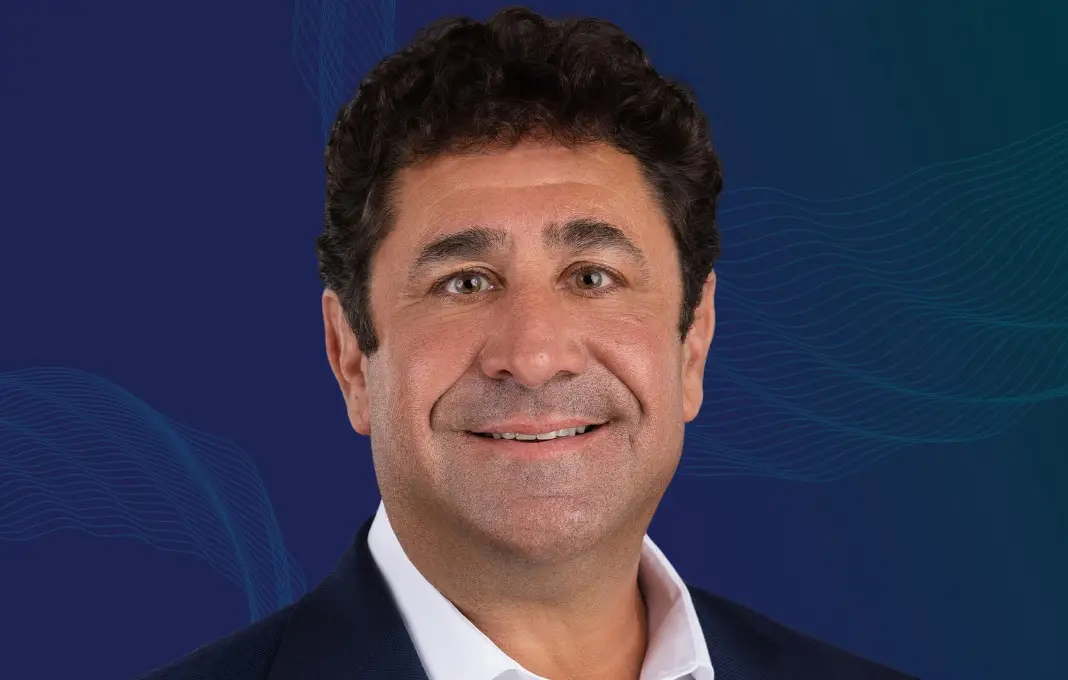
The explosive growth of artificial intelligence (AI) has transformed data centers from a niche technological necessity into one of the world’s most sought-after, yet profoundly complex, asset classes. While capital continues to pour into the sector, with hundreds of billions of dollars earmarked for new capacity, the fundamental drivers of success are shifting. According to Dave Ferdman, co-founder of Primary Digital Infrastructure (PDI), the era where sheer financial muscle guaranteed a winning data center bet is rapidly drawing to a close. Today, the critical differentiators lie in securing adequate power, navigating intricate supply chains, and executing projects with unparalleled operational efficiency.
Ferdman, a seasoned veteran with a deep understanding of the data center landscape, is positioning PDI to capitalize on this evolving paradigm. His extensive experience, including co-founding CyrusOne in 2000 and leading it through significant growth and a landmark $15 billion take-private transaction, provides a unique vantage point. During his tenure at CyrusOne, the company was instrumental in the development, acquisition, and operation of over 50 data centers globally, building a formidable track record in a nascent industry. Now, as president and co-founder of PDI, an Austin-based advisory and investment platform focused on hyperscale and AI-driven data centers, Ferdman believes that firms possessing profound operational acumen, in addition to robust capital access, will emerge as the dominant players in the current cycle.
The Shifting Landscape of Data Center Investment
The insatiable demand for AI compute power is outstripping the capabilities of existing data center infrastructure, which was largely designed for earlier generations of digital workloads. This mismatch has created a critical bottleneck, where the availability of power, essential grid infrastructure, and the ability to upgrade legacy facilities for next-generation computing are becoming paramount. Ferdman elaborates on this challenge, stating, "Demand for power and high-density computing is outrunning what existing facilities were designed to support, with grid constraints and rising costs making well-located, upgradeable sites more valuable by the month."
This dynamic underscores a crucial disconnect: while capital is readily available, it cannot magically conjure transformer capacity, expedite lengthy interconnection queues with utility providers, or re-engineer decades-old facilities to accommodate the immense power draw of modern AI hardware. It is precisely this gap between financial resources and tangible execution capabilities that PDI aims to bridge.
Primary Digital Infrastructure: A Dual Approach to Value Creation
PDI operates under a distinctive business model that combines deep operational expertise with strategic investment. The platform is dedicated to identifying, acquiring, and scaling high-quality data center assets that can support the burgeoning digital economy, with a particular focus on the demands of AI and hyperscale computing.
"PDI is an independent investment platform focused on data centers and the infrastructure powering the digital economy," Ferdman explains. "Our model combines deep operator expertise with institutional capital to identify, acquire and scale high-quality assets."
The current market environment, characterized by unprecedented AI-driven demand, presents a unique confluence of opportunities and challenges. Ferdman highlights this, stating, "We’re operating at a moment where AI is driving one of the largest digital infrastructure investment opportunities in decades. Demand for power, connectivity and high-density computing is outpacing what existing facilities were built to support, while grid constraints and rising costs are increasing the value of well-located, upgradeable, grid-connected assets."
PDI’s strategic positioning is a direct response to these market realities. The firm brings a collective wealth of over 200 years of operational experience, coupled with a disciplined investment strategy and a keen technical foresight to adapt and upgrade existing infrastructure for the demands of future computing. This approach prioritizes assets that are not only capable of meeting current performance benchmarks but are also architected for long-term adaptability, aligning capital deployment with the sustained trajectory of AI and cloud service demand.
Strategic Growth Through Operational Insight and Partnerships
PDI’s growth trajectory is intrinsically linked to the scale and timing of the current digital infrastructure shift. As the industry witnesses the deployment of hundreds of billions of dollars into new data center capacity, a parallel and equally significant opportunity emerges from the existing pool of assets requiring recapitalization and modernization. This creates a fertile ground for strategic repositioning of infrastructure to meet evolving demand.
Ferdman emphasizes that PDI’s expansion is driven by opportunities where operational insight and robust partnerships create a distinct competitive advantage. He cites the company’s collaboration with Crusoe and Blue Owl on the Stargate Abilene data center in Texas as a prime example. This project, recognized as one of the most ambitious hyperscale undertakings globally, achieved significant milestones within its initial year, underscoring the efficacy of PDI’s collaborative and execution-focused approach.
Despite the rapid pace of market expansion, PDI maintains a disciplined investment philosophy. This is rooted in seasoned intuition and extensive experience within the data center sector. Rather than pursuing growth for its own sake, the firm concentrates on assets situated at the critical nexus of power, capital, and computing power. This deliberate strategy has enabled PDI to scale effectively while remaining firmly aligned with enduring market fundamentals.
The Synergy of Advisory and Investment
PDI’s unique dual role as both an advisor and an investor provides a comprehensive and nuanced perspective on the data center market. On the advisory front, PDI engages with a diverse range of stakeholders, including major hyperscale companies and established data center owners and operators. This direct involvement offers real-time intelligence on capital flows, emerging market trends, and the specific constraints that are beginning to shape the industry.
"Operating as both an advisor and an investor gives us a more complete view of the market," Ferdman explains. "On the advisory side, we’re engaged with one of the largest hyperscale companies as well as data center owners and operators, which provides real-time insight into how capital is flowing and where constraints are emerging."
This market intelligence is then rigorously applied through PDI’s investment activities. In the current market climate, simply identifying demand is insufficient for success. A deeper understanding of the enabling factors for that demand is crucial. Ferdman elaborates on this point: "As investors, we apply that insight with discipline. In today’s market, success isn’t merely about identifying demand. It’s about understanding what enables that demand to be delivered. Power availability, equipment constraints and execution complexity are increasingly impacting outcomes as much as capital itself."
This integrated perspective allows PDI to transcend superficial investment decisions driven by market headlines and instead focus on the fundamental drivers of long-term asset performance. The firm’s competitive edge is derived from its ability to seamlessly bridge the worlds of capital and operations, understanding not only the existence of an opportunity but also the intricate requirements for its successful realization.
Evolving Roles in a Data-Centric Enterprise Landscape
As data centers increasingly become the bedrock of enterprise growth strategies, the roles of advisory and investment firms are undergoing a significant evolution. This transformation is leading to a more integrated, strategic, and ultimately critical function within the business ecosystem. The focus is shifting beyond mere capital allocation to the strategic alignment of the right infrastructure with appropriate long-term investment capital. Ferdman notes the nuanced nature of this challenge, stating, "As every data center is different, so are the objectives of each investor. Creating this alignment is an art, not a science."
The industry is entering a phase where complexity is the defining characteristic. Growth is being constrained by limitations in power infrastructure, supply chain disruptions, and workforce availability, even as demand continues its relentless acceleration. Concurrently, new sources of capital are entering the market, reshaping the traditional methods of infrastructure financing and scaling.
In this evolving landscape, firms that can successfully meld access to capital with profound operational and technical expertise will be best positioned to lead. The role is transitioning from that of a mere capital provider to that of a strategic partner. These partners will guide the data center ecosystem through its current constraints, help it capitalize on emerging opportunities, and ultimately translate infrastructure decisions into enduring enterprise value.
Supporting Data and Market Context
The global data center market is experiencing unprecedented expansion. According to a recent report by Statista, the market size was valued at approximately $200 billion in 2023 and is projected to grow at a compound annual growth rate (CAGR) of over 15% from 2024 to 2030. This growth is heavily influenced by the proliferation of AI, machine learning, and the continued demand for cloud computing services.
The demand for power is a critical bottleneck. AI workloads, particularly those involving large language models and complex simulations, require significantly more power than traditional IT loads. For instance, a single AI server rack can consume upwards of 30-50 kW, compared to 5-10 kW for a standard rack. This necessitates substantial upgrades to power infrastructure at both the facility and grid levels. The U.S. Department of Energy has highlighted that grid capacity in certain regions is already strained, and the projected demand from data centers could exacerbate these challenges.
Supply chain issues, exacerbated by global events and increased demand, have also become a significant factor. The lead times for critical components like transformers, switchgear, and high-performance cooling systems have extended considerably, often stretching into multiple years. This requires meticulous planning and robust inventory management strategies.
The financial implications are substantial. Major technology companies like Microsoft, Amazon, and Google are investing tens of billions of dollars in AI infrastructure, including building new data centers and procuring vast quantities of specialized hardware. This capital infusion underscores the urgency of the market but also highlights the critical need for operational expertise to deploy it effectively.
Chronology of Data Center Evolution
The modern data center industry has a history rooted in the early days of computing.
- 1940s-1950s: Early mainframe computers occupied entire rooms, serving as the precursors to today’s data centers.
- 1960s-1970s: The concept of centralized computing emerged, with companies establishing dedicated facilities for their IT infrastructure.
- 1980s-1990s: The rise of personal computers and the internet led to increased demand for server space and the development of more standardized data center designs. The concept of colocation facilities, where multiple companies share space and power, began to gain traction.
- 2000s: The dot-com boom and bust saw rapid expansion and subsequent contraction in the sector. Companies like CyrusOne, co-founded by Dave Ferdman, emerged, focusing on building and operating large-scale data centers. The rise of cloud computing began to fundamentally alter demand patterns.
- 2010s: Cloud computing giants like AWS, Azure, and Google Cloud dominated the market, driving massive investment in hyperscale data centers. Efficiency and scalability became key focus areas.
- 2020s-Present: The advent of advanced AI technologies has triggered a new wave of demand, characterized by extremely high power and computational requirements. This has shifted the focus from pure scalability to the critical factors of power availability, grid connectivity, and operational execution.
Broader Impact and Implications
The strategic importance of data centers has escalated beyond mere IT infrastructure to become foundational elements of national economic competitiveness and technological advancement. As AI continues to permeate every sector, the availability and efficiency of data center capacity will directly impact innovation, job creation, and global market positioning.
For enterprises, this means that data center strategy is no longer an IT concern but a core business imperative. Decisions regarding location, power sources, and the ability to scale will have direct consequences on their ability to develop and deploy AI-powered products and services.
For investors and operators, the emphasis on operational excellence and strategic foresight, as championed by Ferdman and PDI, signals a maturing market. Success will increasingly be determined by the ability to navigate complex regulatory environments, secure sustainable power sources, and manage intricate supply chains, all while ensuring the reliable and efficient operation of highly specialized facilities. The long-term implications suggest a consolidation of the market, favoring firms with integrated expertise that can effectively bridge the gap between capital and the tangible realities of infrastructure development and operation.
