

A federal judge in Massachusetts has formally ruled that the Trump administration violated a standing judicial injunction by proceeding with the deportation of eight migrants to South Sudan this week without providing them the legally required opportunity to challenge the move. District Court Judge Brian Murphy issued the ruling on Wednesday, asserting that the Department of Homeland Security (DHS) failed to adhere to a court order established in March. That order specifically prohibits the government from deporting individuals to a third country—a nation other than their country of origin—without first allowing them to raise formal claims regarding potential persecution, torture, or other life-threatening risks they might face upon arrival.
The ruling follows a series of high-stakes legal maneuvers and a secretive deportation flight that has drawn intense scrutiny from human rights organizations and immigration attorneys. During a heated hearing, Judge Murphy characterized the administration’s actions as an explicit breach of judicial authority, stating that the sequence of events leading to the deportation was designed to circumvent the legal system and deny the individuals their right to due process.
The Violation of the Judicial Injunction
The core of the legal dispute centers on an injunction issued by Judge Murphy in March, which was intended to serve as a safeguard against "third-country deportations." Under international and domestic law, the principle of non-refoulement prohibits the return of individuals to a country where they would likely face irreparable harm. Judge Murphy’s order mandated that any migrant slated for deportation to a country other than their own must be given sufficient notice to consult with legal counsel and file an emergency motion if they fear for their safety.
On Wednesday morning, the DHS confirmed that eight individuals were deported earlier in the week. These individuals originated from Myanmar (Burma), Laos, Vietnam, Cuba, and Mexico, as well as South Sudan. The inclusion of the non-South Sudanese nationals in a flight destined for the conflict-torn African nation triggered the immediate legal challenge. Judge Murphy noted that the individuals were only notified of their final destination late Monday evening, well outside of standard business hours. By the time legal offices opened on Tuesday morning, the migrants were already being processed for departure, with the flight taking off between 9:00 a.m. and 10:00 a.m.
"The department’s actions," Judge Murphy stated during the hearing, "are unquestionably violative of this court’s order." He emphasized that the timing of the notification made it "impossible" for the deportees to have a "meaningful opportunity to object" to their removal to a third country.
Chronology of the Deportation Flight
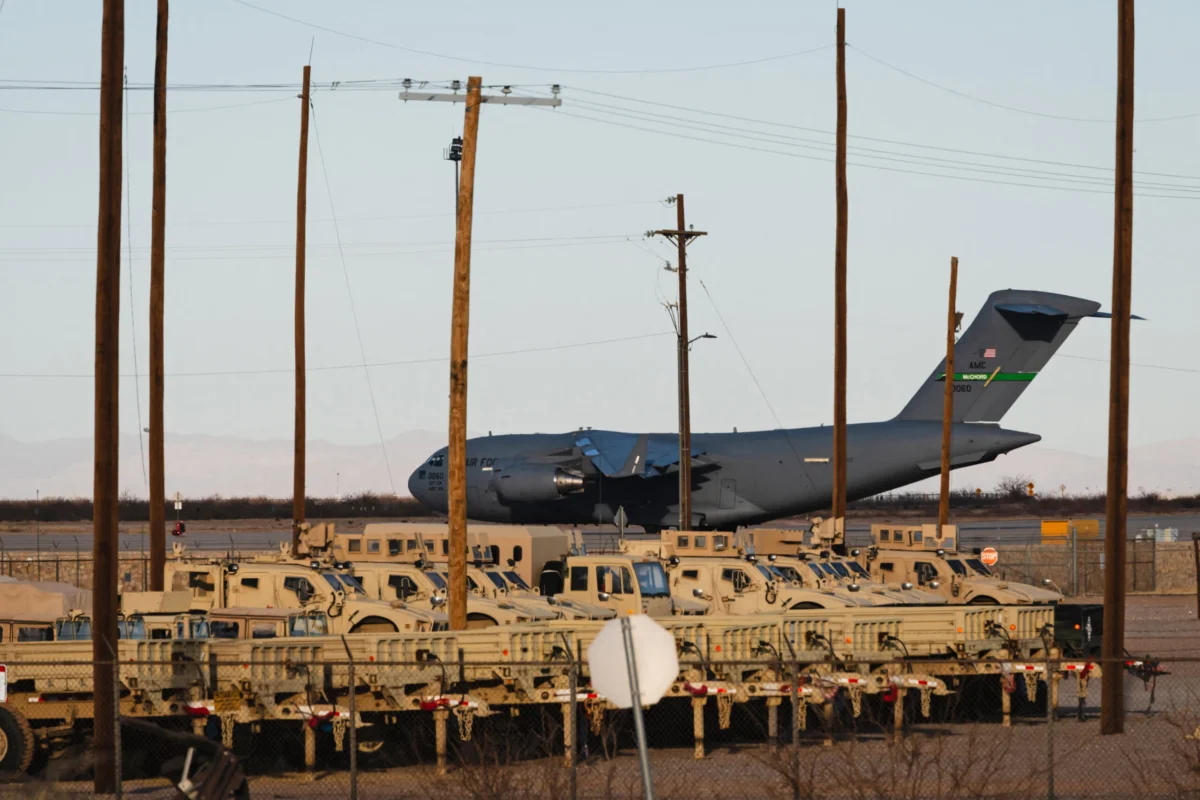
The events leading to the ruling began at Biggs Army Airfield in Fort Bliss, El Paso, Texas. On February 13, 2025, a United States Air Force Boeing C-17, a heavy-lift military transport aircraft often repurposed for large-scale deportation missions, was pictured preparing for operations. This specific flight was part of an intensified effort by the administration to accelerate removals of individuals with criminal records.
According to the timeline established during the court proceedings:
- Monday Evening: Migrants held in Immigration and Customs Enforcement (ICE) custody were notified that they would be sent to South Sudan. This notification occurred after 5:00 p.m., preventing immediate contact with attorneys.
- Tuesday Morning (Early Hours): The migrants were transported from the ICE facility to the airfield.
- Tuesday, 9:00 a.m. – 10:45 a.m.: The Boeing C-17 departed Texas.
- Wednesday Morning: DHS officials held a press briefing confirming the deportation of eight individuals.
- Wednesday Afternoon: Judge Murphy convened a hearing, including 30 minutes of sealed proceedings, before publicly declaring the administration in violation of the March injunction.
Government attorneys confirmed during the hearing that the plane has since landed and that the migrants remain in ICE custody at an undisclosed location. However, they refused to provide the specific coordinates or the final destination of the aircraft, leading to concerns from defense attorneys that their clients have been effectively "disappeared" within the global transit system.
Profiles of the Deportees and DHS Justification
The Department of Homeland Security has defended its actions by highlighting the criminal backgrounds of the individuals involved. According to DHS statements, several of the eight deportees had been convicted of violent crimes in the United States, including murder and sexual assault. The administration has consistently argued that the removal of "criminal aliens" is a matter of national security and public safety that should take precedence over procedural delays.
The individuals identified in the mission include Enrique Arias-Hierro, Jose Manuel Rodriguez-Quinones, Thongxay Nilakout, Jesus Munoz-Gutierrez, Dian Peter Domach, Kyaw Mya, Tuan Thanh Phan, and Nyo Myint.
The case of Nyo Myint, a migrant from Myanmar, has become a focal point of the controversy. His attorney, Jonathan Ryan, based in San Antonio, expressed deep concern over the lack of transparency. Ryan suggested that while the government claimed the flight was headed to South Sudan, there were unconfirmed reports that Myint might have been diverted to Burma. However, Ryan stated he has had no contact with his client and no official confirmation of his whereabouts.
"I have not heard from my client," Ryan said. "How am I supposed to take their word that they sent him to Burma? The government is acting as if due process is a privilege. It is a problem when we stop doing due process for unpopular people."
The Humanitarian Crisis in South Sudan
The decision to use South Sudan as a destination for deportees from other nations has been sharply criticized due to the country’s volatile security situation. South Sudan is currently under a Level 4 "Do Not Travel" advisory from the U.S. State Department—the highest possible danger rating. The advisory cites rampant crime, kidnapping, and ongoing armed conflict as primary threats.
In March, the State Department went as far as to order the departure of all non-emergency U.S. government employees from the country. The nation has been on the brink of a renewed civil war following the fraying of a 2018 power-sharing agreement between President Salva Kiir and Vice President Riek Machar. While that agreement ended five years of bloodshed that claimed hundreds of thousands of lives, violent clashes between rival factions have surged in 2025.
Legal experts argue that sending migrants from countries like Vietnam or Mexico to South Sudan—a place where they have no cultural, linguistic, or familial ties—is not only a violation of the March injunction but also a potential violation of international human rights treaties. The lack of infrastructure and the presence of active militias make it nearly impossible for the U.S. to guarantee the safety of those it deports to the region.
Broader Implications and Pattern of Conduct
This is not the first time Judge Murphy has had to intervene to block the administration’s third-country deportation strategy. Earlier this month, the court successfully blocked an attempt to deport individuals from the Philippines, Vietnam, and Laos to Libya. In that instance, the judge reaffirmed that the government could not bypass the legal requirement to vet the safety of the destination country for each specific individual.
The recurring nature of these legal battles suggests a strategic shift in the administration’s immigration enforcement. By utilizing military aircraft and rapid-response logistics, the DHS appears to be testing the limits of judicial oversight. Proponents of the administration’s policy argue that "third-country" agreements are necessary when a migrant’s home country refuses to accept them back. Opponents, however, view it as a "shell game" that endangers lives and undermines the American legal system.
The ruling by Judge Murphy may lead to further sanctions or orders for the government to return the individuals to U.S. soil, though such actions are logistically complex once a flight has left domestic airspace. The Department of Justice has not yet indicated whether it will appeal Murphy’s ruling or how it intends to comply with the injunction moving forward.
Analysis of the Legal Conflict
The conflict between the executive branch’s enforcement priorities and the judiciary’s mandate to protect constitutional rights is reaching a boiling point. At the heart of the matter is the definition of "due process" in the context of non-citizens. The administration’s move to conduct notifications outside of business hours is seen by the court as a tactical "end-run" around the law.
If the administration continues to ignore judicial injunctions, it could lead to a constitutional crisis regarding the separation of powers. For the migrants involved, the stakes are immediate and physical. As the legal battle continues in Massachusetts, the eight men remain in a state of legal and geographical limbo, caught between a rigorous U.S. deportation machine and the unpredictable dangers of a nation in the midst of a brewing civil war.
The case also highlights the logistical role of the U.S. Air Force in domestic policy enforcement. The use of the Boeing C-17, typically reserved for military deployments and humanitarian aid, underscores the scale and intensity of the current deportation push. As the DHS continues its operations, the eyes of the federal judiciary remain fixed on whether the government will honor the "meaningful opportunity" for legal recourse that Judge Murphy insists is a fundamental requirement of the law.
