

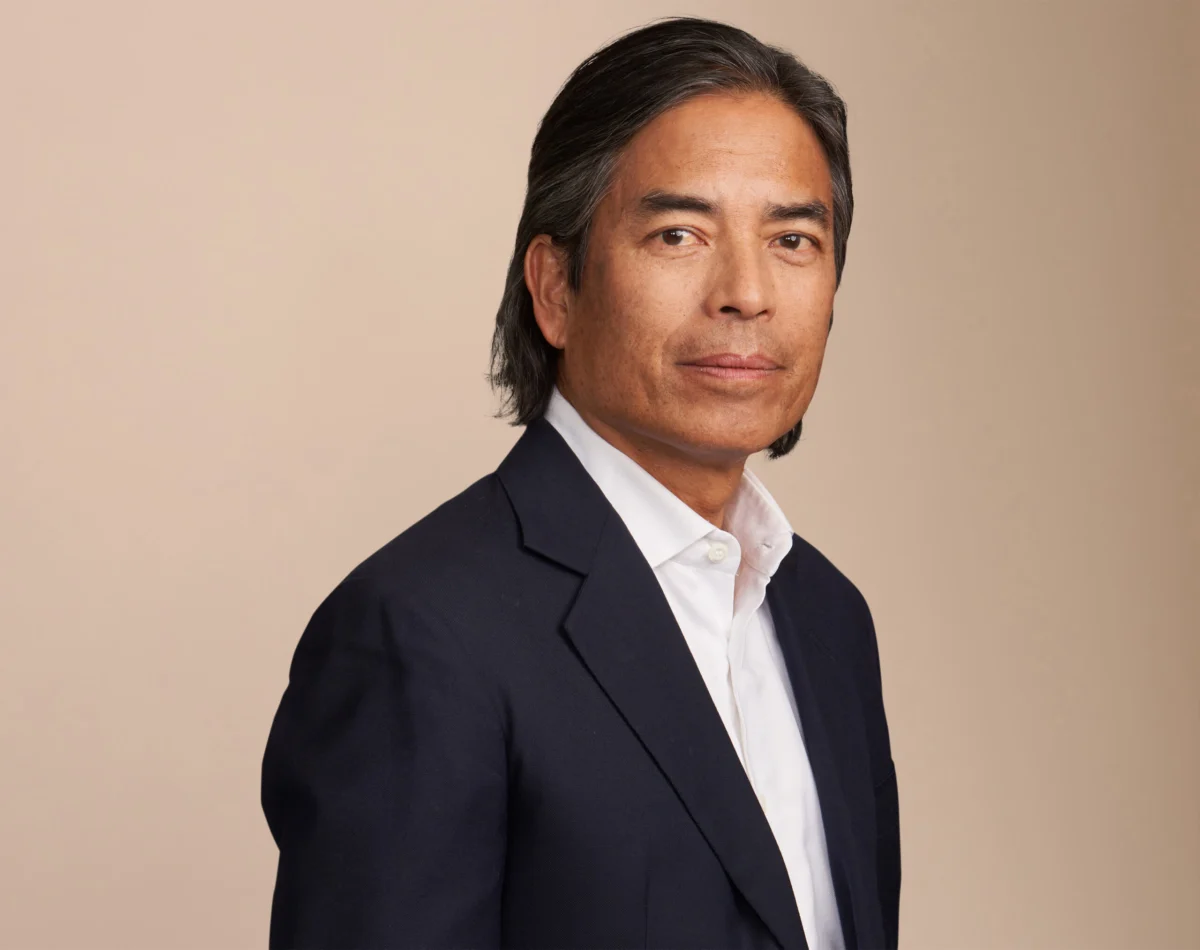
The morning of September 11, 2001, began like any other for Daniel Chung, then a tech analyst at Fred Alger Management. Yet, by sheer happenstance, a deviation from his routine would spare his life and ultimately thrust him into the crucible of leadership, tasking him with rebuilding a financial firm shattered by an unprecedented act of terror. This narrative of survival, resilience, and strategic vision has since cemented Chung’s legacy, transforming Fred Alger Management from the brink of collapse into a formidable $47 billion investment powerhouse, a testament to enduring spirit and an unwavering commitment to its founding philosophy.
A Day That Began Differently: Chung’s Fortuitous Absence
On that fateful Tuesday, Chung, who served as chief investment officer and CEO of Fred Alger Management, was not at his office on the 93rd floor of One World Trade Center, the North Tower. Instead, he found himself at the Intercontinental Hotel in Midtown Manhattan, attending a presentation by a company executive whose stock was underperforming. His delay in getting to the office that morning, driven by a desire to understand the intricacies of a key portfolio holding, proved to be a life-saving detour.
As the meeting commenced, the presenter was interrupted by an urgent note. "I’m not sure we can continue," Chung recalled the executive stating, relaying news of "a plane or something at the World Trade Center." The initial reports, vague and disorienting, suggested a tragic accident. However, the true horror of the situation began to unfold minutes later, at 9:03 a.m., when a second plane struck the South Tower. A chilling silence descended upon the room in Midtown. Cell phone networks, overwhelmed or damaged, ceased to function, forcing attendees to queue for a single landline, desperately attempting to reach loved ones and colleagues downtown. None of the calls to Lower Manhattan connected.
For Chung and countless others, the scale of the tragedy became starkly visible upon leaving the hotel. On 42nd Street, cars stood motionless as people gazed south down Lexington Avenue. A monstrous cloud of smoke and debris, billowing from the burning towers, obscured the skyline. The iconic symbols of New York’s financial might, once beacons of progress, were engulfed in an inferno. Chung, like so many, stood transfixed, grappling with the incomprehensible before the instinct for self-preservation kicked in, urging him to move uptown, away from the unfolding catastrophe.
The Devastation and the Search for Hope
The events of September 11, 2001, represented the deadliest terrorist attacks on American soil, forever altering the nation’s landscape and psyche. The coordinated attacks involved four commercial airplanes, two of which struck the Twin Towers of the World Trade Center, one hitting the Pentagon, and another crashing in a field in Shanksville, Pennsylvania, after passengers and crew fought back. The collapse of the Twin Towers, each standing over 110 stories tall, resulted in the deaths of 2,753 people in New York City alone, including firefighters, police officers, and thousands of civilians.
For financial firms like Fred Alger Management, the World Trade Center was not just an address; it was the epicenter of their operations, a vibrant ecosystem of capital, talent, and ambition. The North Tower, the first to be hit, bore the brunt of the initial impact, and firms located in its upper floors faced unimaginable devastation. The human toll at Alger was immense. Chung later learned that 35 of his colleagues, including then-chief executive David Alger, perished in the attack. The firm’s offices, along with all physical records and infrastructure within the building, were obliterated.
In the hours and days following the attacks, Chung joined a desperate search for survivors. He and other Alger colleagues fanned out across the city’s hospitals – St. Vincent’s in Greenwich Village, Bellevue, and others – clutching photographs of co-workers, waiting with thousands of anxious families for ambulances that rarely arrived with survivors. "By midday or later, you had thousands and thousands of people outside these hospitals, putting up signs and waiting, just waiting," Chung recounted. "I remember, by evening, you’re hoping to see one ambulance. I don’t actually recall seeing any that day." The scene was one of profound grief and a harrowing absence of hope. Chung finally made it home to his wife and children in Brooklyn long after midnight, carrying the indelible images of a city in mourning and a company in ruins.
Rebuilding from the Ashes: A Platinum Standard of Preparedness
In the immediate aftermath of 9/11, Daniel Chung, as the most senior surviving executive, was faced with an extraordinary challenge: to rebuild Fred Alger Management from its foundational elements. The firm’s founder, Fred Alger, Chung’s father-in-law, emerged from retirement to support this monumental task, placing his trust and the firm’s substantial capital account – initially intended for market crises – into Chung’s hands. The imperative was clear and urgent: restore client confidence, ensure operational continuity, and honor the legacy of those lost.
The ability to resume operations quickly was nothing short of miraculous, a testament to the foresight of Alger’s chief technology officer, Michael Howell, who tragically died on 9/11. Howell had meticulously planned and implemented a state-of-the-art backup recovery center in Morristown, New Jersey. This facility was not merely a data storage site but a fully replicated trading desk, mirroring Alger’s World Trade Center setup down to the precise order of seats for portfolio managers. Chung lauded it as "above gold standard… Platinum standard." All client records, proprietary trading models, and critical data were intact and accessible.
This unparalleled preparedness allowed Alger to resume operations on September 13, just two days after the attacks, a remarkable feat given the unprecedented shutdown of Wall Street. The New York Stock Exchange, along with NASDAQ and the American Stock Exchange, had closed immediately after the attacks and remained shut for four trading days, the longest closure since 1933. When markets reopened on September 17, the Dow Jones Industrial Average plunged nearly 685 points, a then-record one-day point drop. In this chaotic environment, Alger’s swift return to functionality was a beacon of stability, enabling them to hold a conference within days to update clients, consultants, and securities exchanges on the firm’s status and future. This rapid recovery not only reassured clients but also served as a critical blueprint for business continuity planning across the financial industry, highlighting the necessity of robust disaster recovery strategies.
A Philosophy Reaffirmed: "Positive Dynamic Change"
The path to recovery extended far beyond operational logistics; it involved rebuilding a team and reaffirming an investment philosophy. Chung, a Harvard Law graduate who had clerked at the Supreme Court, found himself at a crossroads. Many consultants advised him to recruit star portfolio managers from rival firms, suggesting a quick infusion of outside talent was the fastest route to solvency. However, Chung chose a different, more deeply personal approach. He believed that honoring the legacy of the firm and the 35 lives lost meant upholding Alger’s distinctive philosophy and culture.
Fred Alger, the firm’s founder, had established a growth-oriented investment style in 1964, a methodology that often placed him in direct contrast to value investors like Warren Buffett. Alger famously quipped, "You can go broke buying cheap stocks." Instead, he admired Gerald Tsai, the famed Fidelity fund manager who pioneered selecting stocks based on accelerating revenue growth. By the 1990s, Alger’s prescience in identifying high-growth companies had earned him accolades, with early investments in tech giants such as Intel (1977), Apple (1984), and Microsoft (1990). By 2000, Barron’s recognized Fred Alger as a member of its All-Century Team of legendary investors. This philosophy, rooted in "positive dynamic change," became the guiding principle for Chung’s rebuilding efforts.
Instead of poaching external talent, Chung sought out successful alumni who had "cut their teeth" at Alger, individuals deeply steeped in the firm’s unique culture and investment approach. He wanted to preserve the spirit of Alger, not simply create a new entity. "I became dedicated to the idea of not only rebuilding Alger and staying in business – but rebuilding Alger," Chung emphasized, underscoring his commitment to the firm’s identity.
The call resonated deeply within the Alger community. Former colleagues, moved by a sense of duty and loyalty, returned. Teresa McRoberts, a healthcare specialist, and David Hyun, who left a position at Oppenheimer Funds, were among those who rejoined. The poignant story of Jill Greenwald, a small-cap portfolio manager, exemplifies this sentiment. She approached Chung at a memorial service for Ginger Risco, a secretary who had worked her way up to an analyst position after attending night school at Columbia University, and who also perished on the 93rd floor. "Jill came up to me and said, ‘I heard you’re asking Alger alumni to return,’" Chung recounted. "I said yes, and she said something like, ‘When do I start?’" These reunions symbolized not just a professional regrouping but a profound act of collective healing and determination.
Post-9/11 Growth and the AI Frontier
In the 25 years since the 9/11 attacks, Fred Alger Management has not merely recovered; it has thrived. Under Daniel Chung’s leadership, the firm has seen its assets under management balloon to over $47 billion. The flagship Alger Spectra Fund (SPECX), a testament to Chung’s enduring confidence in transformative technologies, now manages $4.5 billion in total assets. This growth underscores the wisdom of adhering to the firm’s founding principles while adapting to new market dynamics.
In recent years, Chung’s strategic conviction in the artificial intelligence (AI) trade has propelled Alger to new heights. The Spectra fund was in the top 4% of its category last year and the top 2% in 2024, according to Morningstar, which also ranks the fund in the top quartile on a three-, five-, and ten-year basis. This performance is a direct reflection of Alger’s "positive dynamic change" philosophy applied to the most impactful technological shifts of the current era.
Chung remains bullish on AI, dismissing concerns about a potential bubble or future oversupply of data centers. He argues that the market is currently experiencing a significant shortage of computing power, indicating a prolonged period of growth. Nvidia (NVDA), the dominant AI chipmaker, exemplifies this conviction, representing 14% of the Spectra fund’s assets as of June. Despite its phenomenal returns since late 2022 and its spectacular earnings growth, Chung believes Nvidia will continue to command a higher-than-market price-to-earnings ratio, justifying its valuation based on its indispensable role in the AI revolution.
Other high-conviction bets include CrowdStrike (CRWD), a cybersecurity leader that Chung expects to maintain "very high rates of growth" for several years, given the increasing importance of digital security in an AI-driven world. Chipmakers Western Digital (WDC) and Micron (MU) are also poised to benefit from the escalating demand for memory. Furthermore, Nebius Group (NBIS), a neocloud company, identified early by Chung as a sector winner, is a top 10 holding in Spectra and has nearly tripled this year. Chung, a Stanford alumnus, likens the current phase of AI development to "1995, I think, than, say, 1999," suggesting that the industry is still in the nascent stages of what will likely be a full decade of AI-driven expansion.
An Enduring Legacy of Resilience and Optimism
The tragedy of 9/11 fundamentally shaped Fred Alger Management’s corporate culture, imbuing it with a profound sense of purpose and an emphasis on charitable giving. This commitment is exemplified by initiatives such as an annual fundraising golf tournament and the creation of the Alger 35 ETF. This exchange-traded fund, comprising 35 of the firm’s highest-conviction investment ideas, honors the 35 colleagues lost on 9/11. A portion of its management fees is donated to charities in memory of David Alger and their fallen colleagues, ensuring that their legacies live on through philanthropic impact. The ETF’s gold rating by Morningstar further underscores its investment merit, making it a powerful blend of financial acumen and social responsibility.
The arduous journey of recovery has also fortified Daniel Chung’s inherent optimism, even amidst contemporary challenges such as social polarization, anxieties surrounding artificial intelligence, and geopolitical unrest. His unwavering belief in the resilience of human spirit and institutions remains a cornerstone of his leadership.
"Look at how well New York has done. Look at how well America has done, actually. And look at how well Alger recovered," Chung reflected, drawing parallels between the firm’s triumph over adversity and the broader national narrative. He invoked the wisdom of "The Lord of the Rings" hobbits, stating, "It’s a reminder that there’s a lot of good in this world." This sentiment extends to "a lot of good in people, in our institutions, certainly in this city and in this country." He concluded with a powerful affirmation: "And it is because of that – that perseveres and goes on, even as there’s a lot of noise and uncertainty and worry – that we have recovered. We’re here today."
Daniel Chung’s story is more than just a tale of corporate resurgence; it is a profound testament to leadership forged in crisis, a steadfast dedication to a core philosophy, and an enduring belief in the power of human resilience to overcome unimaginable tragedy. From the ashes of 9/11, Fred Alger Management has not only rebuilt but emerged stronger, a vibrant symbol of continuity, innovation, and unwavering optimism in the face of adversity.
