

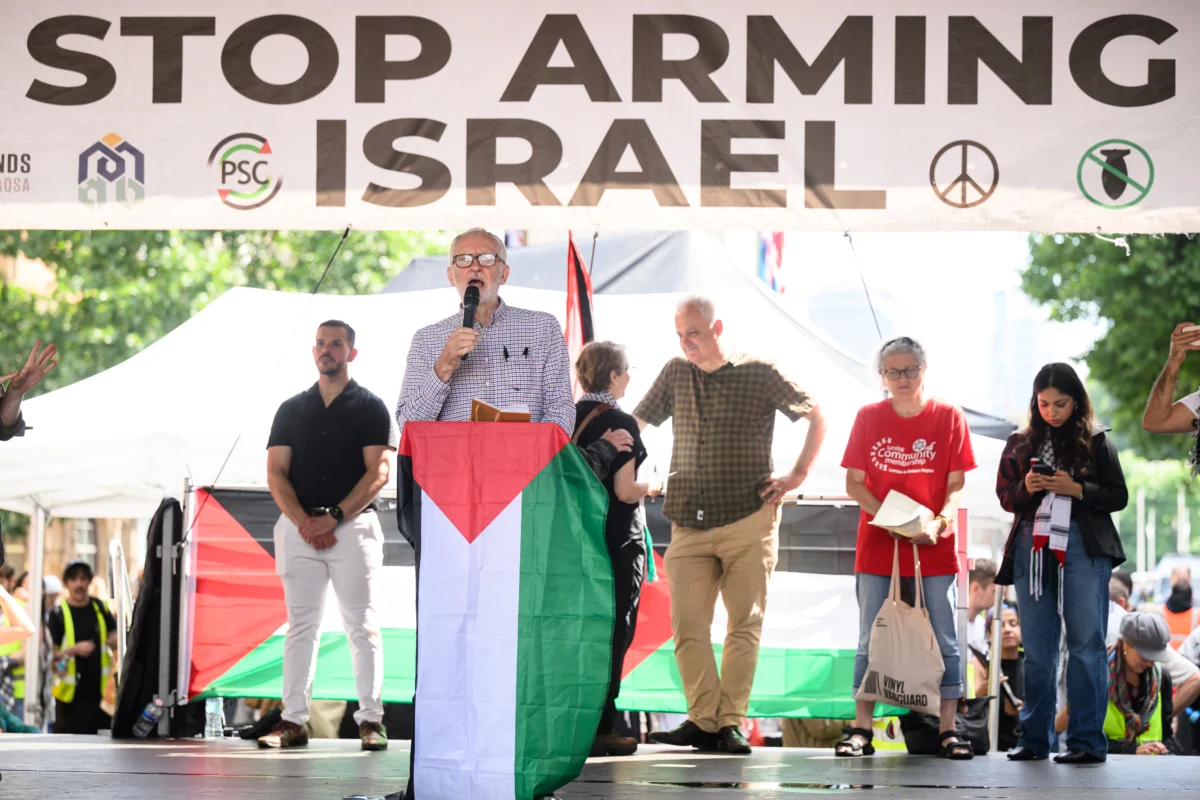
The Israeli government has officially barred entry to 11 British Members of Parliament, including the Independent MP for Islington North, Jeremy Corbyn, in a move that signals a significant escalation in diplomatic tensions between London and Tel Aviv. This decision follows the United Kingdom’s recent implementation of sanctions targeting goods produced in illegal Israeli settlements in the West Bank and comes amid heightening international legal pressure regarding Israel’s conduct in the Palestinian territories. The ban effectively prevents British lawmakers from conducting fact-finding missions or oversight visits to the West Bank and the Gaza Strip, areas where UK-funded humanitarian aid and diplomatic interest remain high.
The diplomatic rift centers on the UK’s shifting stance toward the Israeli occupation, which has moved toward a more critical posture following the July 2024 advisory opinion by the International Court of Justice (ICJ). The Israeli Ministry of Foreign Affairs reportedly justified the ban by citing the MPs’ support for policies that Israel deems hostile to its sovereignty and security interests. However, the affected lawmakers and various human rights organizations argue that the move is a calculated attempt to suppress international scrutiny of military operations and settlement expansion.
Context of the UK Sanctions and the ICJ Ruling
The catalyst for the entry ban was the British government’s decision to impose sanctions on goods and entities associated with illegal Israeli settlements. This policy shift follows years of advocacy from human rights groups and a landmark ruling by the ICJ on July 19, 2024. In that advisory opinion, the Hague-based court declared that Israel’s presence in the occupied Palestinian territories is unlawful under international law. The court further stipulated that all states, including the United Kingdom, are under an obligation not to recognize the illegal situation as lawful and to refrain from providing any aid or assistance that helps maintain the occupation.
In response to this legal framework, the UK government began auditing its trade and military relationships with Israel. The sanctions on settlement goods are intended to differentiate between Israel’s internationally recognized borders and the territories it has occupied since 1967. According to the United Nations, there are currently over 700,000 Israeli settlers living in the West Bank and East Jerusalem in approximately 279 settlements, all of which are considered illegal under international law. The UK’s decision to restrict trade with these entities is a direct application of the "differentiation" principle, which seeks to uphold international law without severing ties with Israel entirely.
Chronology of Diplomatic Escalation
The relationship between the UK and Israel has undergone several phases of friction over the past year, primarily driven by the ongoing conflict in Gaza and the expansion of settlements in the West Bank.
- October 7, 2023: Hamas launches an attack on southern Israel, leading to a massive Israeli military response in the Gaza Strip. The UK initially offers "unequivocal support" for Israel’s right to defend itself.
- Early 2024: As the humanitarian situation in Gaza worsens, UK lawmakers face domestic pressure to call for a ceasefire. Reports of mass starvation and the destruction of civilian infrastructure lead to increased parliamentary debate.
- May 2024: The International Criminal Court (ICC) prosecutor announces he is seeking arrest warrants for Israeli and Hamas leaders. The then-Conservative government in the UK expresses reservations, but the subsequent Labour government drops the UK’s legal challenge to the ICC’s jurisdiction.
- July 2024: The ICJ issues its advisory opinion declaring the occupation illegal. The UK government indicates it will review its policies to ensure compliance with the ruling.
- August–September 2024: The UK government suspends approximately 30 out of 350 arms export licenses to Israel, citing a "clear risk" that the equipment could be used to commit or facilitate a serious violation of international humanitarian law. This suspension specifically affects components for fighter jets, helicopters, and drones.
- October 2024: Following the announcement of sanctions on settlement-linked entities and violent settler groups, the Israeli government retaliates by banning the 11 British MPs from entering the country or the occupied territories.
Impact on Parliamentary Oversight and Fact-Finding Missions
The ban on British MPs significantly hampers the ability of the UK Parliament to conduct independent assessments of the situation on the ground. Traditionally, MPs have participated in delegations to the West Bank and Gaza to meet with local officials, NGOs, and humanitarian workers. These visits often inform parliamentary reports and debates concerning the allocation of UK foreign aid and the efficacy of British diplomatic efforts in the Middle East.
Jeremy Corbyn, the MP for Islington North and one of the banned individuals, has been a frequent visitor to the region over several decades. He and other banned lawmakers have argued that the Israeli government’s decision is an "authoritarian" measure designed to shield its military and administrative actions from international observers. By barring lawmakers, Israel limits the flow of firsthand information to the House of Commons, which remains a key venue for international policy-making.
Furthermore, the ban extends beyond MPs to include various United Nations investigators and international journalists. Human rights organizations, including Amnesty International and Human Rights Watch, have noted that such restrictions are part of a broader pattern of closing off the occupied territories to external monitoring. This lack of transparency is particularly concerning to the international community given the allegations of war crimes and the ongoing humanitarian crisis in Gaza, where the UN reports that nearly the entire population of 2.3 million people is facing acute food insecurity.
Supporting Data: The Situation in the Occupied Territories
The rationale behind the UK’s sanctions and the MPs’ criticisms is supported by data from various international monitors. According to the UN Office for the Coordination of Humanitarian Affairs (OCHA), settler violence against Palestinians in the West Bank reached record highs in 2024. Between October 2023 and September 2024, OCHA recorded over 1,300 attacks by Israeli settlers against Palestinians, resulting in casualties and significant property damage.
In Gaza, the scale of destruction has been unprecedented. Satellite imagery analysis indicates that over 60% of all buildings in the Gaza Strip have been damaged or destroyed as of late 2024. The healthcare system has largely collapsed, with only a fraction of hospitals remaining partially functional. These statistics have fueled the arguments of the banned MPs, who call for a more rigorous application of international law and a total cessation of military exports to Israel.
The UK government’s partial arms embargo, while criticized by some as insufficient, was a response to these specific data points. The suspension of licenses for F-35 components, however, remains a point of contention. While some parts were suspended, the UK continues to allow the export of components for the global F-35 program, citing the complexity of the international supply chain. Lawmakers like Corbyn have called for a total ban, arguing that "settlement goods" and military support are inextricably linked to the maintenance of the occupation.
Official Responses and Reactions
The Israeli government has defended its right to control its borders and determine who is permitted entry. Officials in Tel Aviv have characterized the banned MPs as supporters of "extremist narratives" that undermine Israel’s security. Prime Minister Benjamin Netanyahu’s administration has consistently rejected the ICJ’s findings, labeling them "distorted" and "antisemitic," and asserting that the Jewish people cannot be occupiers in their own ancestral homeland.
In London, the Foreign, Commonwealth & Development Office (FCDO) has expressed concern over the ban but has reiterated its commitment to a two-state solution. While the UK government has moved to impose sanctions on settlers, it maintains that Israel is a key strategic ally in the Middle East. This "balancing act" has been criticized by both sides: pro-Israel groups argue the UK is abandoning an ally during a war, while pro-Palestinian advocates argue the UK is not doing enough to stop the "genocide" in Gaza.
The 11 banned MPs issued a joint statement condemning the move, asserting that they will not be intimidated into silence. They emphasized that their pursuit of "truth, accountability, and justice" remains unchanged and that they will continue to advocate for the rights of Palestinians through parliamentary channels and public demonstrations.
Broader Geopolitical Implications and Analysis
The entry ban on British lawmakers is more than a localized diplomatic spat; it reflects a deepening isolation of Israel within the international legal community. For decades, Israel enjoyed relatively high levels of impunity regarding its settlement policies, largely due to the support of Western allies like the UK and the US. However, the ICJ’s July 2024 ruling has changed the legal landscape, providing a "green light" for nations to impose sanctions without violating international trade agreements.
The UK’s actions serve as a potential blueprint for other European nations. If more countries follow London’s lead in differentiating between Israel and its settlements, the economic and diplomatic pressure on Tel Aviv could reach a breaking point. The Israeli government’s decision to ban MPs may, therefore, be viewed as a defensive measure intended to deter other parliaments from adopting similar sanction regimes.
Furthermore, the controversy highlights the growing divide between grassroots movements and government policy in the West. In the UK, massive weekly demonstrations in solidarity with Palestine have put immense pressure on the Labour government to take a harder line. The ban on MPs like Corbyn—who remains a prominent figure in the British anti-war movement—serves to further galvanize these domestic activists, potentially leading to more significant policy shifts in the future, including a full arms embargo or the formal recognition of a Palestinian state.
As the conflict continues, the focus of the international community is likely to remain on the implementation of the ICJ’s recommendations. The UK’s ban on settlement goods is a first step toward fulfilling its legal obligations, but as the 11 banned MPs have noted, the integration of settlement economies with Israel’s wider economy makes "targeted" sanctions difficult to enforce. The ongoing diplomatic friction suggests that the "special relationship" between the UK and Israel is entering its most challenging period in decades, with the pursuit of international law increasingly at odds with traditional geopolitical alliances.
