

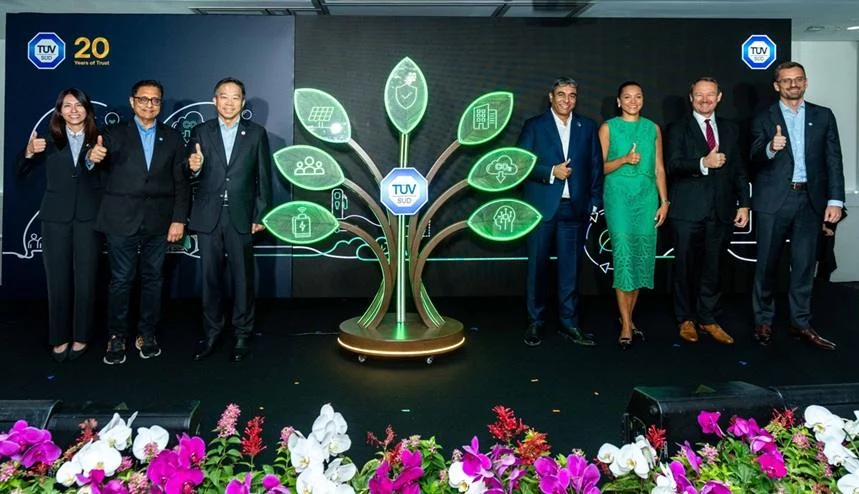
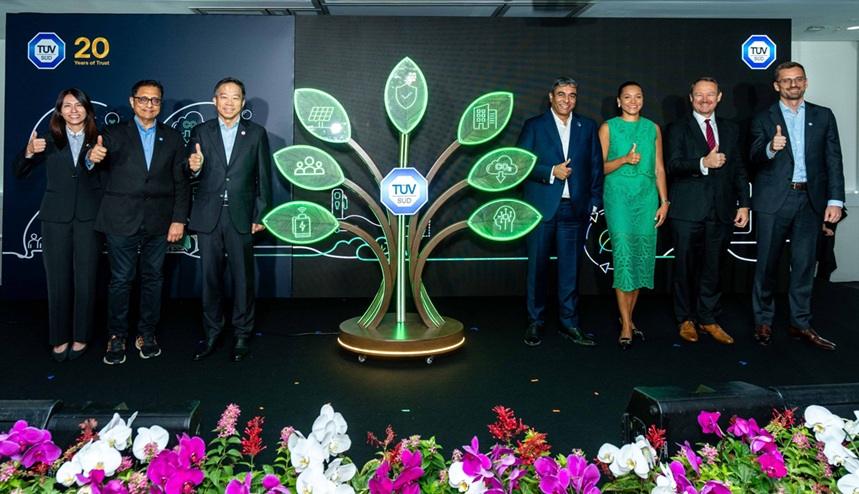
The German-based testing, inspection, certification, and auditing giant TÜV SÜD has officially inaugurated its Global Decarbonisation Centre of Excellence (CoE) in Singapore, marking a significant milestone in the evolution of the international carbon services sector. Representing a strategic investment exceeding USD $24 million, the new facility is poised to become a critical infrastructure node for the global carbon market, focusing on the twin pillars of market integrity and digital carbon verification. Developed with the active support of the Singapore Economic Development Board (EDB), the CoE aims to address the urgent need for transparency and standardization in carbon credit markets as corporations and governments accelerate their transition toward net-zero emissions.
The establishment of this hub arrives at a pivotal moment for the environmental, social, and governance (ESG) landscape. As the global community moves closer to the 2030 milestones set by the Paris Agreement, the demand for high-quality carbon credits has surged. However, this growth has been frequently hampered by concerns regarding the "permanence" and "additionality" of carbon offsets. By situating its primary decarbonization hub in Singapore, TÜV SÜD is positioning itself at the heart of Asia’s burgeoning green finance ecosystem, leveraging the city-state’s reputation as a stable, highly regulated financial and technological center.
Strategic Objectives and the Five Pillars of the CoE
The Global Decarbonisation Centre of Excellence is not merely a regional office but a specialized technical hub designed to pioneer new methodologies for climate action. TÜV SÜD has outlined five strategic areas that will define the CoE’s operations over the coming decade.
First, the center will focus on the implementation of Article 6 of the Paris Agreement. Article 6 governs how countries can cooperate to reach their Nationally Determined Contributions (NDCs) through the international transfer of carbon credits. The CoE will provide the regulatory expertise required to navigate these complex bilateral and multilateral frameworks, ensuring that cross-border carbon trading meets stringent international standards.
Second, the hub will lead the development of Digital Monitoring, Reporting, and Verification (dMRV) systems. Traditional MRV processes have historically been manual, time-consuming, and prone to human error or manipulation. By utilizing satellite imagery, IoT (Internet of Things) sensors, and blockchain technology, the CoE intends to automate the tracking of carbon sequestration and emission reductions. This digital-first approach is expected to significantly lower the cost of verification for project developers while providing investors with real-time, immutable data.
Third, the CoE will support the global energy transition. This involves auditing and certifying alternative fuels such as green hydrogen, ammonia, and sustainable aviation fuel (SAF). As industrial sectors look to decarbonize their energy mix, the hub will provide the technical assurance needed to prove that these fuels are truly low-carbon throughout their entire lifecycle.
Fourth, the center will address supply chain integrity and industrial decarbonization. With "Scope 3" emissions—those generated in a company’s value chain—representing the majority of most corporations’ carbon footprints, the CoE will provide tools for businesses to verify the decarbonization claims of their suppliers.
Finally, the CoE is tasked with capacity building and ecosystem development. This involves working directly with governments in Southeast Asia to draft carbon regulations and helping local industries understand the technical requirements of global carbon markets. Additionally, the hub will explore "blue economy" projects—focusing on carbon sequestration in coastal and marine ecosystems like mangroves and seagrasses—and other nature-based solutions.
Chronology of Expansion: From Acquisition to Integration
The launch of the Singapore hub is the culmination of a multi-year strategy by TÜV SÜD to dominate the climate services market. A critical precursor to this launch was the acquisition of SustainCERT in July 2026. SustainCERT, a prominent climate impact verification platform, brought with it a sophisticated digital infrastructure and a strong partnership with the Gold Standard, one of the world’s leading carbon credit registries.
By integrating SustainCERT’s digital capabilities with TÜV SÜD’s century-long history in technical auditing, the company created a powerhouse for end-to-end carbon assurance. The timeline of this expansion reflects a calculated move to capitalize on the shift from "analog" carbon markets to "digital" ones.
Following the acquisition, TÜV SÜD spent the third quarter of 2026 aligning its global advisory services with the new Singapore-based CoE. The goal is to create a seamless digital platform by 2030 that connects project developers in the ASEAN region with independent verification bodies and international carbon registries. This roadmap suggests that the Singapore hub will serve as the "brain" of a decentralized network of carbon projects across Southeast Asia, providing the oversight necessary to prevent "double counting" of emission reductions.

The Role of Singapore in the Global Green Economy
The choice of Singapore as the home for the Global Decarbonisation CoE is a reflection of the country’s proactive stance on climate finance. The Singapore Economic Development Board (EDB) has been instrumental in attracting global sustainability leaders to the region. Png Cheong Boon, Chairman of the EDB, emphasized that the launch of the CoE is a "strong vote of confidence" in Singapore’s role as a trusted hub for carbon services.
Singapore has already established several key pieces of the carbon market puzzle, including Climate Impact X (CIX), a global marketplace and exchange for high-quality carbon credits. The presence of TÜV SÜD’s CoE provides the technical "third-party" verification layer that exchanges like CIX require to maintain buyer trust. Furthermore, Singapore’s regulatory environment, characterized by the early implementation of a carbon tax and the development of a national "Green Taxonomy," provides a fertile testing ground for the CoE’s new dMRV methodologies.
Supporting data highlights the scale of the opportunity in the region. Southeast Asia is home to some of the world’s most significant carbon sinks, including Indonesia’s peatlands and the rainforests of Malaysia and Vietnam. Estimates suggest that nature-based solutions in ASEAN could provide up to 25% of the global supply of cost-effective carbon offsets by 2030. However, the lack of standardized verification has historically kept institutional investors on the sidelines. The $24 million investment by TÜV SÜD aims to bridge this "trust gap."
Official Perspectives and Leadership Vision
The leadership of TÜV SÜD views the Singapore hub as a cornerstone of the company’s future growth. Patrick Vollmer, CEO and Chairman of the Board of TÜV SÜD, noted that the demand for credible, transparent, and independently assured emissions reductions is no longer a "nice-to-have" but a fundamental requirement for global trade.
"As governments, businesses, and investors seek confidence that emissions reductions are credible, transparent, and independently assured, we are building on our strengths to accelerate decarbonization and advance trusted climate solutions from Singapore for Asia and the world," Vollmer stated during the opening ceremony.
His comments underscore a broader shift in the Testing, Inspection, and Certification (TIC) industry. Companies like TÜV SÜD are moving away from purely industrial safety audits and toward "environmental assurance." In this new paradigm, a ton of carbon dioxide removed from the atmosphere must be audited with the same rigor as a high-pressure boiler or a nuclear reactor.

Broader Implications and Market Impact
The implications of the $24 million Decarbonization CoE extend far beyond the borders of Singapore. By standardizing digital verification, TÜV SÜD is effectively helping to commoditize carbon credits. When credits are verified through a transparent, digital-first process (dMRV), they become more liquid and easier to trade on international exchanges. This could lead to more stable pricing in the Voluntary Carbon Market (VCM), which has recently suffered from volatility due to varying standards of quality.
Furthermore, the CoE’s focus on Article 6 implementation will be vital for the "compliance" markets. As more countries launch their own domestic carbon trading schemes—such as those recently initiated in Indonesia and Thailand—the need for interoperability between these systems becomes paramount. The Singapore hub is expected to play a "translator" role, ensuring that a credit generated in a reforestation project in Vietnam meets the regulatory requirements of a buyer in Europe or North America.
From a technical perspective, the CoE’s work on "Blue Carbon" is particularly groundbreaking. Marine-based carbon sequestration projects are notoriously difficult to monitor compared to terrestrial forests. The hub’s commitment to developing new methodologies for the blue economy could unlock billions of dollars in funding for ocean conservation, providing a dual benefit of climate mitigation and biodiversity protection.
In conclusion, the launch of the TÜV SÜD Global Decarbonisation Centre of Excellence represents a maturation of the carbon market. By combining significant capital investment with advanced digital technology and strategic government partnerships, the hub is set to provide the "infrastructure of trust" necessary for the next phase of the global energy transition. As the 2030 deadline for the CoE’s ecosystem integration approaches, the success of this Singaporean venture will likely serve as a blueprint for how technical assurance can drive the global fight against climate change.
