

The global energy landscape witnessed a stark divergence in strategy last week as Denmark recorded a historic surge in renewable generation while the United States continued to grapple with internal policy shifts regarding offshore wind development. On a recent Friday, Denmark’s wind energy infrastructure produced 140% of the nation’s total electricity demand, a milestone that allowed the country to transition from a domestic consumer to a significant regional exporter of clean energy. This achievement underscores the maturity of the European wind sector and highlights the growing economic potential of renewable exports, even as the United States remains locked in a complex debate over the future of its own vast offshore resources.
Denmark’s Record-Breaking Performance and the Energy Island Strategy
The peak production recorded in Denmark occurred during the early morning hours, specifically around 3:00 AM, when high wind speeds coincided with the low demand typical of overnight periods. While the 140% figure represents a specific window of time rather than a sustained daily average, it serves as a proof of concept for the Danish Energy Agency’s (DEA) long-term vision. The surplus power was not wasted; instead, it was funneled into the regional European grid, generating export revenue and stabilizing the power supply for neighboring nations.
To capitalize on these recurring surpluses, the Danish government is moving forward with the construction of two "energy islands" located in the North Sea and the Baltic Sea. These facilities are designed to function as offshore hubs, aggregating power from surrounding wind farms and distributing it to multiple countries. The North Sea hub is initially planned to manage between 3 and 4 gigawatts (GW) of wind capacity, with an eventual expansion target of 10 GW. The Baltic Sea facility is expected to add another 3 GW to the national portfolio.
Beyond mere transmission, these islands are being engineered to support green hydrogen production. By using electrolysis to convert excess electricity into hydrogen gas, Denmark aims to "store" wind energy in a chemical form that can be used for heavy industry or shipping, effectively solving the intermittency issues that often plague renewable grids. This infrastructure represents a paradigm shift from traditional coastal-tethered wind farms to a decentralized, offshore power-generation network.
The Untapped Potential of United States Coastal Waters
The United States possesses a geographical advantage that rivals, and in many areas exceeds, the wind resources of Northern Europe. A 2021 report from the U.S. Department of Energy (DOE) estimated the nation’s offshore wind potential at more than 35,000 megawatts (35 GW), a figure that could theoretically power millions of American homes and businesses. However, the development of this resource varies significantly by region due to bathymetry and local wind conditions.
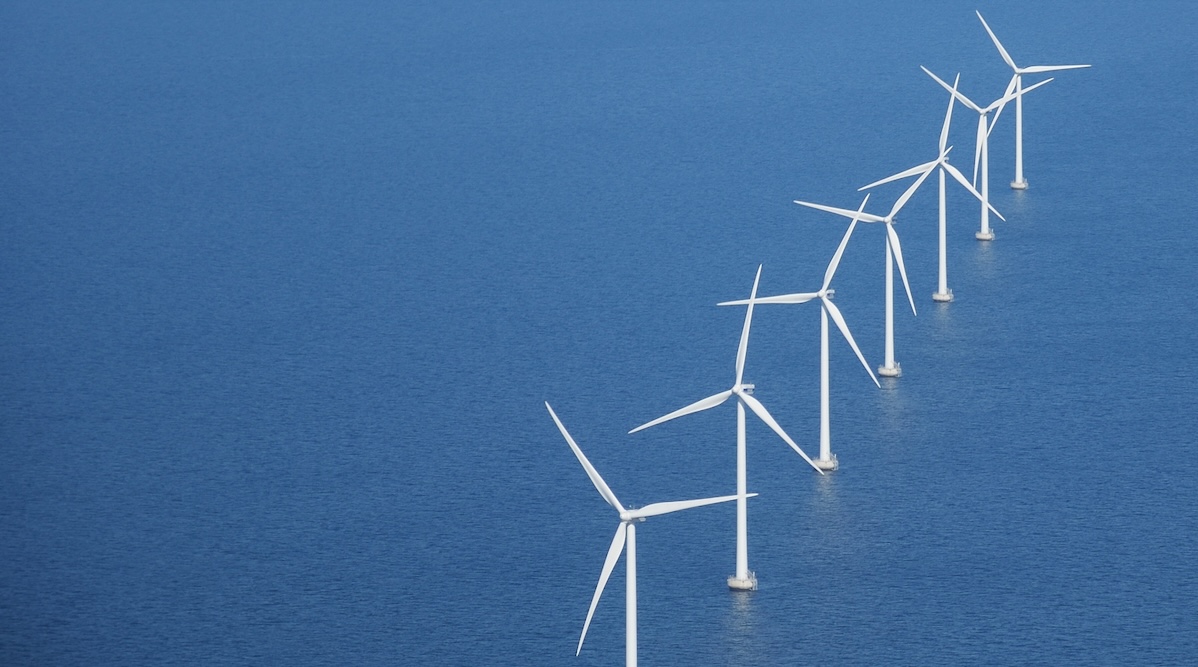
On the Atlantic Coast, relatively shallow waters have traditionally favored monopile foundations, which are driven directly into the seabed. States from Massachusetts to Virginia have been at the forefront of these proposals, viewing offshore wind as a vital component of their decarbonization goals. In contrast, the Gulf of Maine and the Pacific Coast feature deep-water environments that require floating offshore wind technology. Researchers in Maine have pioneered semi-submersible platforms tethered to the floor by high-strength cables, a technology that has already seen successful implementation in international markets like Norway and Japan.
The Gulf of Mexico presents a different set of opportunities and challenges. While wind speeds in the Gulf are generally lower than those in the North Atlantic, the region is home to a massive inventory of aging oil and gas infrastructure. A growing consortium of energy stakeholders is exploring the feasibility of repurposing these platforms to serve as substations for wind energy or hubs for green hydrogen production, potentially extending the economic life of offshore assets while transitioning the workforce to the renewable sector.
Federal Policy Shifts and Regulatory Stagnation
Despite the clear technical potential, the U.S. offshore wind industry has faced significant headwinds due to a series of executive and judicial maneuvers. Upon taking office, President Donald Trump declared an "energy emergency," a move that some analysts expected would lead to an acceleration of all domestic energy projects. However, the administration’s "American Energy Dominance" policy has focused primarily on conventional fuels and specific renewables that meet a strict "baseload" reliability standard.
In a move that surprised many industry observers, the Department of the Interior was directed to halt the issuance of new offshore wind leases. While federal courts eventually affirmed the President’s authority to pause new leasing, they were less supportive of efforts to retroactively delay projects already in the developmental pipeline. To circumvent these legal obstacles, the administration has recently engaged in the controversial practice of buying out existing leases. These buyouts effectively remove prime offshore territory from the development map, creating a period of prolonged uncertainty for investors and utility companies.
The rationale behind these actions appears to be a combination of personal conviction and political strategy. Critics point to the President’s long-standing opposition to wind turbines, which dates back to a legal battle over an offshore wind farm near his golf resort in Aberdeen, Scotland. Politically, the moratorium on offshore wind development falls most heavily on "blue" coastal states that have integrated wind energy into their long-term economic and environmental planning, creating a friction point between federal mandates and state-level energy independence.
The Debate Over Reliability and the Role of Storage
A central pillar of current U.S. energy policy is the requirement for "baseload" power—energy sources that can operate 24/7 regardless of weather conditions. Interior Secretary Doug Burgum has frequently argued that wind and solar are inherently unreliable, suggesting that solar plants effectively "fail" every night at sunset. This perspective, however, has been challenged by the Department of Energy’s ongoing support for advanced energy storage technologies.

Energy Secretary Chris Wright’s agency has continued to fund and authorize projects focused on long-duration storage, such as sodium-ion batteries and virtual power plants (VPPs). These technologies are designed to bridge the gap between peak production and peak demand. For example, a recent DOE-authorized project in Vermont focuses on long-duration storage that could allow wind and solar energy to be dispatched with the same reliability as coal or gas-fired plants. The tension between the Interior Department’s dismissal of renewables and the Energy Department’s investment in storage suggests a lack of alignment within the federal government’s broader energy strategy.
The Unintended Rise of Marine Energy
Interestingly, the administration’s focus on 24/7 reliability has inadvertently created a pathway for other forms of offshore renewable energy. Marine energy—which harvests power from waves, tides, and ocean currents—is increasingly viewed as a viable "baseload" renewable because ocean movements are predictable and constant.
The Department of Energy recently estimated that the kinetic energy in U.S. oceans and rivers could meet nearly 60% of the nation’s total electricity needs. Unlike wind, which can be intermittent, tidal and wave energy follow cycles that are easier to integrate into a traditional grid model. This has led to continued federal support for projects like PacWave South, a major wave energy test site off the coast of Oregon. While wave energy technology is currently decades behind wind in terms of commercial maturity and supply chain development, it has managed to bypass the political scrutiny directed at wind turbines, positioning itself as a potential future pillar of the U.S. offshore energy portfolio.
Economic Implications and Global Competition
The divergence between Denmark’s aggressive expansion and the U.S.’s cautious, often restrictive approach has significant economic implications. By investing in "energy islands" and green hydrogen, Denmark is positioning itself as a central energy bank for Europe, securing long-term revenue and high-tech jobs. The Danish wind industry is not just an environmental initiative; it is a major export sector that strengthens the nation’s geopolitical standing.
In the United States, the current policy environment has led to a "wait-and-see" approach among major energy developers. The buyout of leases and the cessation of new auctions have slowed the development of a domestic supply chain, potentially forcing the U.S. to rely on foreign expertise and equipment when the sector eventually matures. Furthermore, the focus on more expensive, slower-to-build alternatives in the name of "reliability" may result in higher costs for American ratepayers compared to the rapidly falling Levelized Cost of Energy (LCOE) associated with offshore wind.
As the global energy transition accelerates, the contrast between the North Sea and the American coastline serves as a case study in how policy can either catalyze or constrain industrial evolution. Denmark’s 140% milestone is a glimpse into a future where renewable energy is a primary commodity of trade, while the U.S. remains at a crossroads, balancing a desire for energy dominance with a complex internal debate over which technologies deserve a place in the national grid. For now, the "gold mine" of American offshore wind remains largely untapped, awaiting a regulatory environment that aligns with the nation’s vast geographical potential.
