

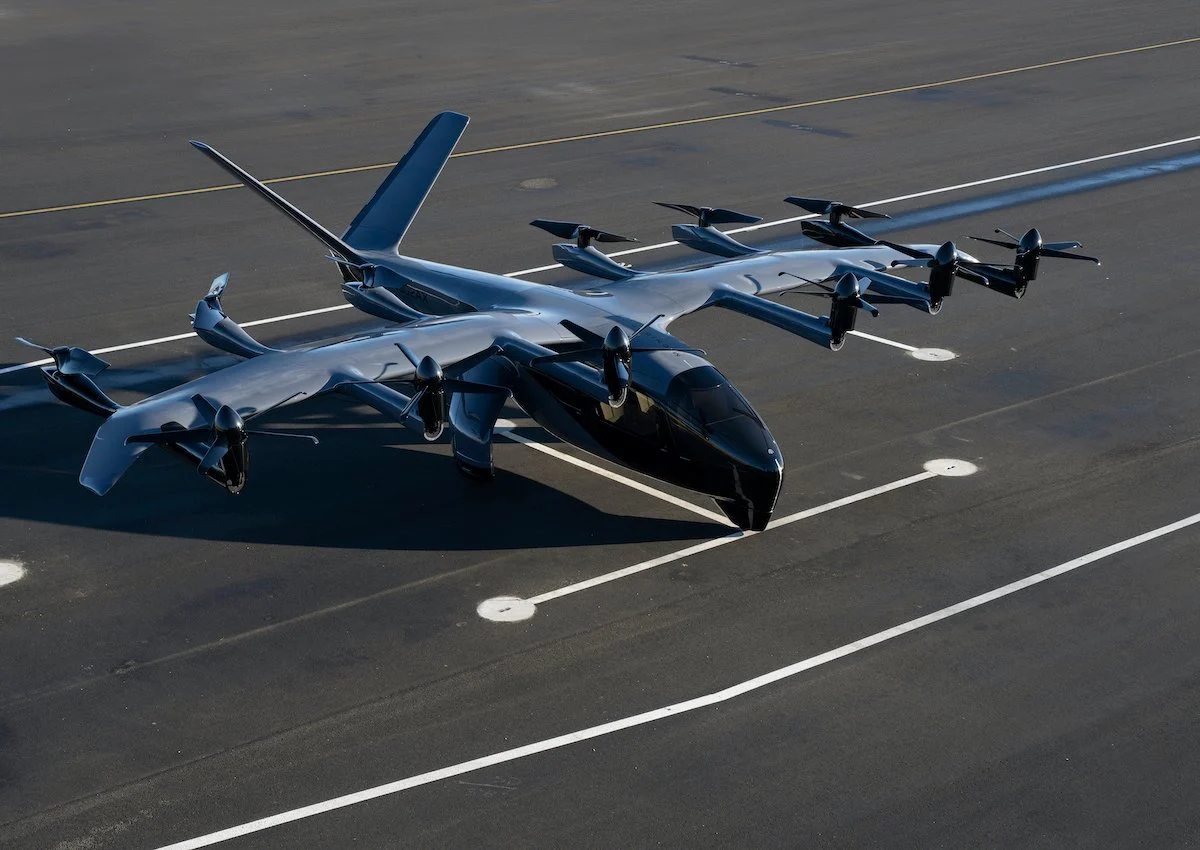
Archer Aviation (NYSE: ACHR) presents a compelling, albeit high-risk, proposition for investors with a significant appetite for near-term volatility. Trading at under $6 a share, the electric vertical take-off and landing (eVTOL) aircraft developer is currently operating in a pre-revenue phase, marked by substantial quarterly cash burn and the critical absence of Federal Aviation Administration (FAA) certification for commercial air taxi operations in the United States. This challenging financial and regulatory landscape underscores the speculative nature of an investment in Archer, yet recent strategic shifts signal a potential re-evaluation of its long-term trajectory.
The company’s initial vision centers on urban air mobility (UAM) through its flagship eVTOL aircraft, Midnight, designed for city travel. However, Archer is increasingly broadening its scope, venturing into defense and other commercial aerospace segments. This strategic diversification, particularly through a co-developed autonomous platform with Anduril and proposed acquisitions of Boeing’s Insitu and Wisk, could provide crucial revenue streams and technological advantages well before its passenger air taxi service achieves full commercialization.
The eVTOL Promise and Persistent Challenges
The urban air mobility market, characterized by the promise of quiet, emission-free, and efficient aerial transportation within cities, has attracted significant investment and innovation. Companies like Archer, Joby Aviation, Lilium, and Vertical Aerospace are vying to be pioneers in this nascent sector, envisioning a future where air taxis seamlessly integrate into urban transport networks. Market projections from various financial institutions, including Morgan Stanley, suggest the UAM market could reach trillions of dollars globally by 2040, driven by technological advancements, regulatory frameworks, and increasing demand for rapid, congestion-free travel.
Despite this immense potential, the path to commercialization is fraught with significant hurdles. For Archer, these challenges are particularly acute. The company is currently consuming millions of dollars each quarter, primarily funding extensive research and development, prototype construction, testing, and the complex certification process required by the FAA. With minimal revenue generation to offset these expenditures, Archer’s financial sustainability hinges on its ability to secure further funding and, critically, to commercialize its products.
Regulatory Hurdles and Certification Roadmap
The most formidable barrier to Archer’s commercial launch in the U.S. is obtaining FAA certification. This multi-stage process is designed to ensure the highest safety standards for novel aircraft and operations. It typically involves:
- G-1 Issue Paper: Agreement on the certification basis.
- G-2 Issue Paper: Agreement on the operational rules.
- Type Certification (TC): Approval of the aircraft’s design. This is a highly rigorous and data-intensive process that verifies every component and system meets safety and performance standards. Archer has made progress here, with its Midnight aircraft completing its first hover flight in December 2023, a critical step in flight testing for certification.
- Production Certificate (PC): Approval of the manufacturing process to ensure consistent quality and safety for mass-produced aircraft.
- Air Carrier Certificate (Part 135): Approval for the operator (Archer or its partners) to conduct commercial passenger operations.
Archer is actively engaged in the FAA certification process, with its Midnight aircraft progressing through flight test campaigns aimed at demonstrating compliance. However, the timeline for achieving full Type Certification, Production Certificate, and Air Carrier Certificate remains fluid and subject to the FAA’s rigorous evaluation schedule. Competitors like Joby Aviation are also deep into their certification efforts, highlighting the industry-wide challenge and the competitive pressure to be among the first to market. Analysts anticipate that the first commercial eVTOL operations in the U.S. might commence in late 2025 or 2026, assuming all regulatory milestones are met.
Beyond certification, scaling manufacturing operations presents another capital-intensive and complex undertaking. Producing eVTOLs at scale requires significant investment in facilities, automation, supply chain management, and skilled labor. Archer has announced partnerships, such as with Stellantis, aimed at accelerating its manufacturing capabilities, but the transition from prototype to mass production is a monumental task for any aerospace company, let alone a startup.
A Strategic Pivot: Diversifying into Defense and Commercial Aerospace
Recognizing the prolonged timeline and immense capital requirements for UAM commercialization, Archer has strategically begun to pivot towards broader aerospace applications. This diversification strategy aims to generate earlier revenue and leverage its core eVTOL technology in less regulated, or differently regulated, markets.
The Anduril Partnership: Autonomous Platforms for Defense
A significant aspect of this pivot is Archer’s collaboration with Anduril Industries, a prominent defense technology company known for its autonomous systems. Together, they are co-developing an autonomous platform that could extend Archer’s eVTOL technology beyond passenger transport into defense applications. The defense sector offers several advantages:
- Potential for Earlier Revenue: Defense contracts can provide substantial, recurring revenue streams, offering financial stability that is currently lacking in Archer’s UAM division.
- Reduced Regulatory Burden: While defense applications have their own regulatory frameworks, they often differ from the stringent requirements for commercial passenger aviation, potentially allowing for faster deployment.
- Diverse Use Cases: Autonomous eVTOLs could be utilized for logistics, reconnaissance, surveillance, and other tactical operations, addressing critical needs for military forces globally.
This partnership positions Archer to tap into the rapidly growing market for uncrewed aerial systems (UAS) and autonomous platforms within the defense industry.
The Insitu Integration: A Revenue Catalyst from Drones
Further bolstering its defense aspirations, Archer has expressed its intent to acquire Insitu, a subsidiary of Boeing. Insitu is a well-established leader in the uncrewed aircraft systems (UAS) market, primarily serving defense and government customers with fixed-wing and vertical takeoff and landing (VTOL) drones. The strategic rationale behind this proposed acquisition is multi-faceted:
- Immediate and Substantial Revenue: Insitu currently generates approximately $200 million in annual revenue. This figure is roughly 29 times Archer’s trailing-12-month revenue of about $7 million, representing an immediate and significant boost to Archer’s top line. This would transform Archer’s financial profile from a purely R&D-focused entity to one with a substantial, established revenue base.
- Proven Technology and Market Presence: Insitu brings decades of experience, established customer relationships (including with the U.S. military), and a portfolio of proven drone platforms like the ScanEagle and Integrator.
- Defense Market Access: The acquisition would instantly provide Archer with deep access to defense supply chains and contracting mechanisms, accelerating its penetration into this lucrative market.
- Synergies in Autonomous Flight: Insitu’s expertise in autonomous flight operations and drone manufacturing could be leveraged across Archer’s broader aerospace ambitions, including its eVTOL development.
The potential integration of Insitu’s operations into Archer’s ecosystem would be a transformative event, offering a clear pathway to diversify revenue and reduce reliance on the uncertain timeline of UAM commercialization.
Wisk and the Autonomous Future: Eliminating Pilot Costs
Another pivotal element of Archer’s strategic expansion is its plan to acquire Wisk Aero, another Boeing-backed company. Wisk has been a pioneer in the development of fully autonomous eVTOL aircraft, accumulating years of research and flight testing in this highly advanced field. The proposed acquisition of Wisk holds profound implications for Archer’s long-term UAM strategy:
- Accelerated Autonomous Capabilities: Wisk’s extensive work in autonomous flight technology, including its self-flying eVTOL prototypes, could be integrated into Archer’s Midnight platform. This would fast-track Archer’s ability to develop and certify fully autonomous passenger operations.
- Elimination of Pilot Costs: The most significant operational advantage of fully autonomous eVTOLs is the potential elimination of pilot training and salary expenses. For an air taxi service, pilot salaries represent a major recurring cost, directly impacting the economic viability and scalability of operations. Autonomous flight could drastically reduce per-flight costs, making air taxi services more affordable and competitive with ground transportation.
- Technological Leadership: Acquiring Wisk would position Archer at the forefront of autonomous eVTOL technology, creating a distinct competitive advantage in an industry where autonomy is widely considered the ultimate goal.
While the regulatory path for autonomous passenger flight is even more complex and protracted than for piloted eVTOLs, Wisk’s experience and intellectual property would provide Archer with an invaluable head start. The FAA is currently developing frameworks for autonomous aviation, and companies with proven technology and extensive testing data will be best positioned to navigate these future regulations.
Industry Landscape and Competitive Dynamics
Archer’s strategic moves occur within a highly dynamic and competitive eVTOL landscape. Competitors like Joby Aviation have also made significant strides in certification and have established partnerships with companies like Delta Air Lines and the U.S. Air Force for defense applications. Lilium, another European player, focuses on regional air mobility and has secured partnerships for infrastructure development.
Archer’s diversification strategy stands out by explicitly targeting immediate revenue generation through defense acquisitions, while simultaneously aiming for long-term technological leadership in autonomy. This multi-pronged approach potentially mitigates some of the pure-play eVTOL risks by creating alternative revenue streams and market opportunities. The potential acquisition of Insitu and Wisk also highlights the ongoing consolidation and strategic maneuvering within the nascent UAM and advanced air mobility (AAM) sectors, as companies seek to build comprehensive ecosystems and gain competitive edges.
Financial and Operational Outlook: Risks and Opportunities
Despite the promising strategic pivots, significant risks continue to surround Archer Aviation. The successful integration of Insitu and Wisk, should the acquisitions proceed, will present operational challenges, requiring careful management of different corporate cultures, technologies, and market segments. The FAA Type Certification for Midnight remains a critical hurdle, as does the ability to scale manufacturing efficiently and cost-effectively.
However, the potential rewards for Archer are increasingly looking larger. The transformation into a broader aerospace business, encompassing defense drones, autonomous flight technology, and eventually urban air mobility, creates multiple avenues for value creation. An established revenue base from Insitu could provide the financial stability to weather the prolonged UAM certification process. Wisk’s autonomous technology could unlock unprecedented operational efficiencies for future air taxi services.
From an investment perspective, if Archer successfully executes this ambitious transformation, its current stock price could indeed appear remarkably cheap in retrospect. The company would evolve from a speculative eVTOL startup into a diversified aerospace player with a much stronger financial footing and a broader portfolio of advanced aerial platforms.
Market Reactions and Expert Perspectives
Industry analysts have largely viewed Archer’s diversification strategy as a prudent move, acknowledging the inherent difficulties and extended timelines associated with commercial UAM. The prospect of integrating established revenue streams from Insitu is seen as a de-risking factor, providing a clearer path to profitability and reducing reliance on capital markets for funding. Experts also highlight the strategic value of Wisk’s autonomous flight technology, which could be a game-changer for the long-term economics of air taxi operations.
Boeing’s potential divestment of Insitu and Wisk could be interpreted as a strategic realignment for the aerospace giant, allowing it to focus on its core commercial and defense aircraft programs while leveraging partnerships for emerging technologies. For Archer, these potential acquisitions represent a significant vote of confidence in its long-term vision and technological capabilities.
The Broader Implications for Urban Air Mobility and Aerospace
Archer’s evolving strategy has broader implications for both the urban air mobility industry and the wider aerospace sector. It demonstrates that eVTOL companies may need to adopt diversified business models to survive the capital-intensive and regulatory-heavy journey to commercialization. The convergence of defense and commercial aerospace technologies, particularly in autonomous systems, could accelerate innovation and deployment across both sectors.
Moreover, the emphasis on autonomous flight, as exemplified by the Wisk acquisition, underscores the industry’s ultimate ambition to remove human pilots from the cockpit. While this presents formidable regulatory and public acceptance challenges, the economic benefits are undeniable, potentially making air travel more accessible and affordable in the long run.
Conclusion: Archer’s Ambitious Trajectory
Archer Aviation is at a pivotal juncture, attempting to navigate the complex landscape of advanced air mobility by expanding its vision beyond mere urban air taxis. By strategically pursuing defense contracts through partnerships like Anduril and eyeing acquisitions of revenue-generating drone businesses like Insitu, as well as cutting-edge autonomous technology from Wisk, Archer is striving to build a more resilient and diversified aerospace enterprise.
While the inherent risks of FAA certification, capital expenditure, and operational execution remain substantial, the company’s ambitious trajectory suggests a profound transformation from a single-product eVTOL developer to a multi-faceted player in the advanced aerospace domain. The success of this pivot will determine whether Archer Aviation can indeed carve out a significant and profitable niche in the skies of the future.
